Essential Guide: PGR Cannabis Trichomes What to Look For

PGR cannabis trichomes: what to look for can be a mystery for many, whether you’re a first-time buyer or a seasoned grower. These tiny structures play a crucial role in determining the overall quality, potency, and safety of your cannabis. But what exactly should you be looking for? Let’s break it down in simple terms so you can easily identify the key differences and make better-informed decisions.
First off, PGR stands for Plant Growth Regulators. These are chemicals that can alter the growth patterns of your cannabis plants. In the context of trichomes, they can significantly change how these resinous glands develop. While PGRs can help increase yield, they might also affect the quality of the trichomes, which are responsible for the potency and flavor of the cannabis.
Recommended Strains

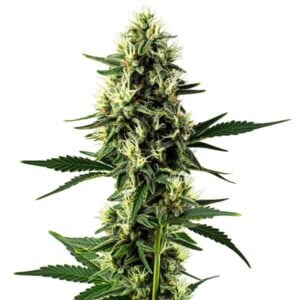
GG4

|
THC | 27% (High) |

|
Type | Feminized |

|
Yield | High |

|
Phenotype | 40% Indica / 60% Sativa |
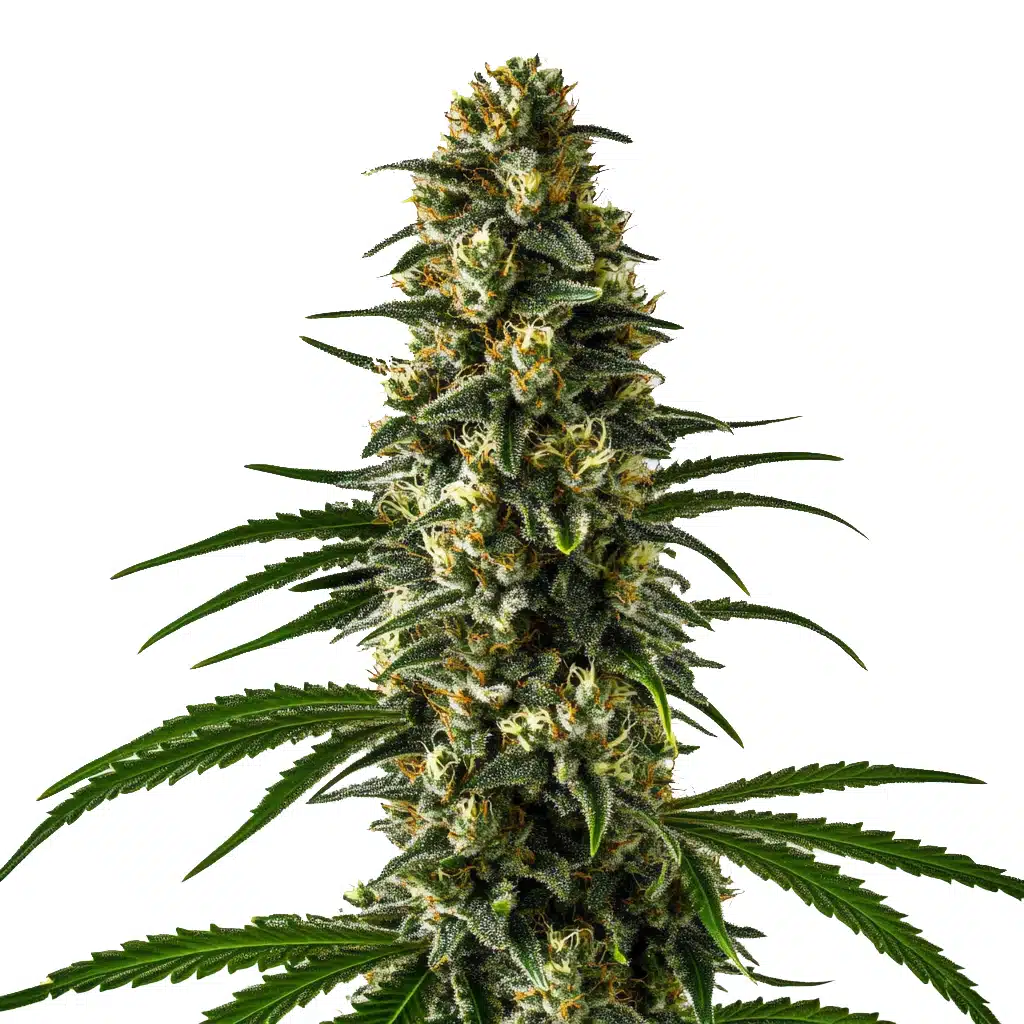
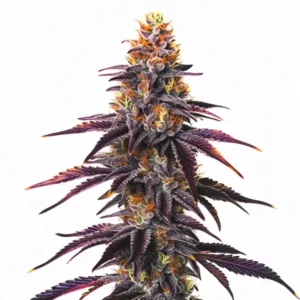
Girl Scout Cookies
|
|
THC | 18% - 25% (High) |
|
|
Type | Feminized |
|
|
Yield | High |
|
|
Phenotype | 60% Indica / 40% Sativa |
When examining PGR cannabis trichomes, pay close attention to their color, size, and density. These factors can give you vital clues about the plant’s health and readiness for harvest. By focusing on these aspects, you can maximize the potency and aroma of your cannabis, whether you’re growing Blimburn Seeds GG4, Girl Scout Cookies, or Blue Dream.
Identifying PGR Cannabis Trichomes
PGR cannabis trichomes identification tips are crucial for any grower. Trichomes are small, hair-like structures on the plant’s surface. Under normal conditions, they appear clear or milky white. However, PGRs may lead to trichomes that are less sticky or appear different in color.
Clear trichomes indicate that the plant is not yet ready for harvest. They are still developing, and harvesting too soon could lead to a less potent product. On the other hand, milky or cloudy trichomes suggest that peak potency is near. This is often the ideal time for harvest to maximize the effects and flavors.
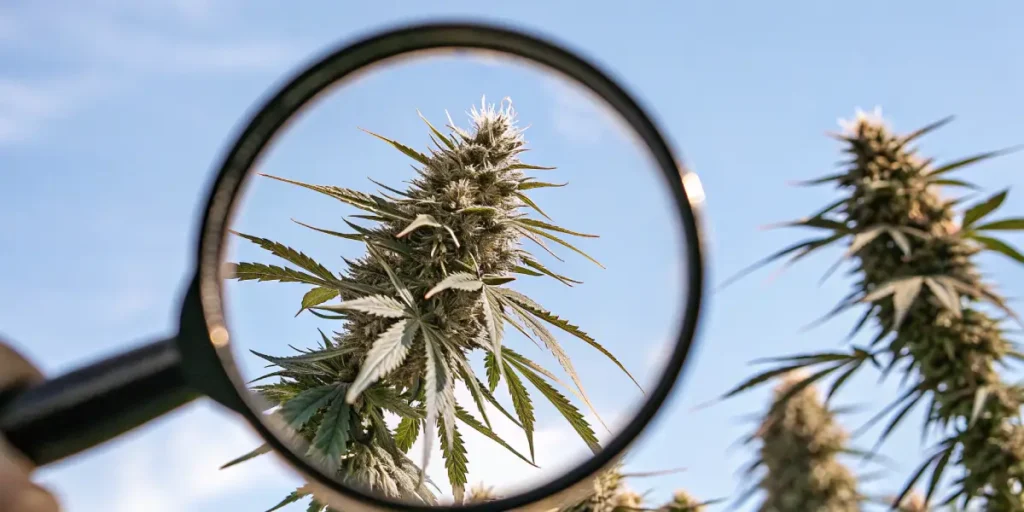
For those seeking to master PGR cannabis trichomes: what to look for, it’s important to use a microscope to examine these tiny structures closely. This tool allows you to gauge the trichomes’ readiness and ensure you’re harvesting at the optimal time. The differences in PGR cannabis trichomes appearance can be subtle, but through careful observation, growers can make informed decisions.
Additionally, growers should be aware of any unusual trichome formations that may arise due to PGR influence. Sometimes, trichomes may not develop uniformly, which can signal stress or imbalance in the plant’s growth. Regular monitoring and adjustments in growing conditions can help mitigate these issues, leading to a healthier and more potent final product.
Development of PGR Cannabis Trichomes
Knowing PGR cannabis trichomes development is vital. As the plant matures, trichomes go through several stages. Initially, they are clear, then turn milky, and finally amber. Amber trichomes indicate that the THC levels are starting to degrade, which might be desirable for those seeking a more sedative effect.
Differences in PGR cannabis trichomes appearance can be subtle but significant. PGRs may affect the trichomes’ ability to mature properly, leading to an uneven development. This can result in a mix of clear, milky, and amber trichomes, making it harder to determine the right harvest time.
The lifecycle of PGR cannabis trichomes is a delicate one, and knowing how PGR affects cannabis trichomes growth is crucial. Growers need to be patient and observant, carefully watching for the transition from clear to milky to amber. This progression is a key indicator of the plant’s maturity and readiness for harvest.
Furthermore, PGR influence on cannabis trichomes quality can be profound. PGRs may accelerate or delay these stages, which can impact both the timing of the harvest and the final product quality. By knowing the nuances of trichome development, growers can better tailor their cultivation practices to achieve the desired outcome.
How PGR Affects Cannabis Trichomes Growth
When considering how PGR affects cannabis trichomes growth, it’s essential to recognize both the advantages and potential downsides. PGR cannabis trichomes: what to look for becomes a key question for growers and consumers aiming to assess quality. While PGRs can lead to larger yields, they might also compromise trichome development, density, and resin production. The influence of PGR on cannabis trichomes quality is ultimately a balancing act between quantity and potency.
PGRs can cause trichomes to be less sticky, which may reduce the plant’s overall potency. Sticky trichomes are often an indicator of high cannabinoid content, which is what many consumers are after. Therefore, while the plant might look more abundant, the quality of the trichomes could be lower.
Besides to affecting stickiness, PGR cannabis trichomes identification tips include watching for changes in size and density. Trichomes that do not develop to their full potential may result in a less satisfying end product. Knowing these factors can help growers adjust their practices to maintain trichome quality.
The PGR influence on cannabis trichomes quality also extends to their chemical composition. PGRs may alter the balance of cannabinoids and terpenes, which can affect the flavor profile and therapeutic effects of the cannabis. By keeping a close eye on these changes, growers can work to preserve the plant’s natural attributes.
Maximizing Trichome Quality in PGR Cannabis
To get the best results, it’s crucial to focus on maximizing trichome quality in PGR cannabis. This means observing and adjusting growing conditions, such as temperature and humidity, to support healthy trichome development.
Using organic methods and nutrients, even when growing PGR cannabis, can help maintain trichome quality. This approach minimizes the negative effects of PGRs and ensures that the trichomes retain their natural potency and aroma.
Incorporating sustainable growing practices can also enhance the quality of PGR cannabis trichomes. By reducing reliance on chemicals and focusing on natural alternatives, growers can ensure a cleaner and more potent product. This commitment to quality can resonate with consumers who value organic cultivation methods.
Additionally, knowing PGR cannabis trichomes development allows growers to make timely interventions. By carefully monitoring trichome changes, adjustments can be made to optimize conditions, resulting in a superior final product that meets both yield and quality expectations.

Promos & Deals
FAQs about PGR cannabis trichomes: what to look for
What are the signs of poor trichome quality due to PGRs?
Poor trichome quality due to PGRs can often be identified by a lack of stickiness and a dull appearance. These signs indicate that the trichomes may not have developed to their full potential, which can affect the final product’s potency and flavor.
Growers should also watch for uneven trichome development, where you see a mix of clear, milky, and amber trichomes on the same plant. This inconsistency can lead to a product that doesn’t meet the expected quality standards.
Beyond visual cues, the scent of cannabis can also signal poor trichome quality. A less aromatic plant may indicate compromised terpenes, a result of PGR influence on cannabis trichomes quality. Keeping an eye and nose on these factors can help ensure a satisfying harvest.
Moreover, feedback from consumers can provide insights into trichome quality. If a batch of cannabis receives negative reviews for its effects or flavor, it might be worth re-evaluating your cultivation approach and making necessary adjustments to improve trichome development.
How can I improve trichome quality when using PGRs?
Improving trichome quality when using PGRs involves focusing on growing conditions. Ensuring optimal temperature, humidity, and nutrient levels can help mitigate the negative effects of PGRs. Organic methods also support better trichome development.
Utilizing high-quality seeds, like those from Blimburn Seeds, can also make a difference. Quality genetics play a significant role in how well trichomes develop, even under the influence of PGRs.
Besides to environmental factors, knowing PGR cannabis trichomes development through research and education can provide valuable insights. By staying informed about the latest cultivation techniques, growers can enhance their practices and achieve better trichome quality.
Furthermore, collaboration with other growers and sharing experiences can lead to improved outcomes. By learning from others who have successfully balanced PGR use with trichome quality, you can adopt strategies that enhance your own cultivation efforts.
Why is trichome color important in determining harvest time?
Trichome color is a key factor in determining the right harvest time because it indicates the maturity and potency of the cannabis. Clear trichomes mean the plant is still maturing, while milky trichomes suggest peak potency.
Amber trichomes indicate that THC is beginning to degrade, which can lead to a more sedative effect. Monitoring these color changes helps growers decide the optimal time to harvest for the desired effects.
For those learning PGR cannabis trichomes: what to look for, color changes serve as a reliable guide. By observing trichome transitions, growers can fine-tune their harvest schedules to capture the plant’s full potential, ensuring both potency and flavor.
It’s also important for growers to consider their target audience when determining harvest time. Some consumers may prefer the energetic effects of milky trichomes, while others might seek the calming sensations offered by amber trichomes. Aligning harvest times with consumer preferences can enhance satisfaction and marketability.
Are there any strains that perform better with PGRs?
Some strains might respond better to PGRs, providing larger yields without significantly compromising quality. Blimburn Seeds offers strains like GG4 that can thrive even with PGR use, offering robust growth and resilient trichomes.
However, it’s important to experiment and monitor each strain’s response to PGRs. Different genetics will react differently, and what works for one strain may not be suitable for another.
Knowing which strains have more resilient trichomes under PGR influence can be beneficial. By selecting strains that naturally exhibit robust trichome development, growers can minimize quality loss while still reaping the benefits of increased yield from PGRs.
Additionally, growers should document the performance of various strains under PGR conditions. This data can provide valuable insights and help refine cultivation practices, leading to consistently high-quality results across different harvests.
What are the ethical considerations of using PGRs in cannabis cultivation?
Ethical considerations of using PGRs in cannabis cultivation include potential health concerns and the impact on trichome quality. Consumers often prefer products that are grown naturally and free from synthetic chemicals.
Growers should weigh the benefits of increased yield against the potential downsides of reduced trichome quality and consumer demand for organic products. Transparency about growing practices can also build trust with consumers.
Moreover, knowing PGR cannabis trichomes development can help address ethical concerns. By ensuring that trichomes develop naturally and healthily, growers can deliver a product that aligns with consumer expectations and ethical standards.
Engaging in open dialogue with consumers about the use of PGRs and their effects can further enhance transparency. By educating consumers on the reasons behind PGR use and its impact on trichome quality, growers can cultivate a more informed and trusting customer base.