Cannabutter with Ghee and Lecithin: A Better Infusion

Quick answer: Ghee (clarified butter) makes an excellent base for cannabutter because it has no milk solids, a higher smoke point and a long shelf life, so it infuses cleanly and keeps well. Lecithin (soy or sunflower) is an optional emulsifier that helps bind cannabinoids to the fat and can improve consistency; a common amount is roughly 1 teaspoon of liquid lecithin (or 1 tablespoon of powder) per cup of fat. Decarb your flower first, and dose finished edibles carefully.
Cannabutter is the backbone of many edibles, and two tweaks can make it better: using ghee instead of regular butter, and adding a little lecithin. Ghee is clarified butter with the water and milk solids removed, which makes it a cleaner, more stable fat for infusing cannabinoids. Lecithin is an emulsifier that helps those fat-soluble cannabinoids bind evenly to the fat.
Recommended Strains

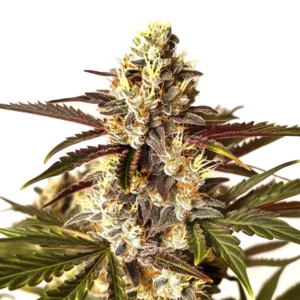
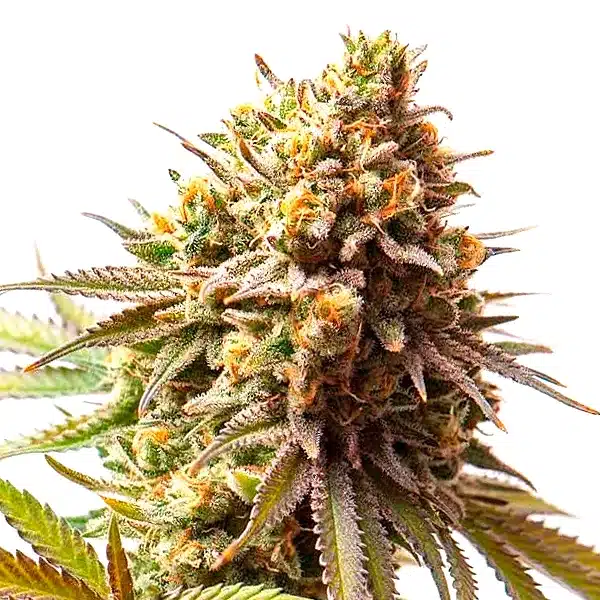
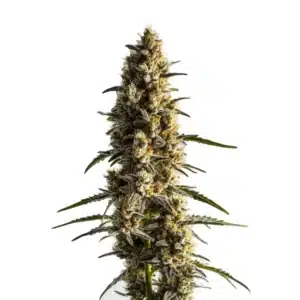
Cereal Milk

|
THC | 23% - 25% (High) |

|
Type | Feminized |

|
Yield | Medium |

|
Phenotype | 50% Indica / 50% Sativa |
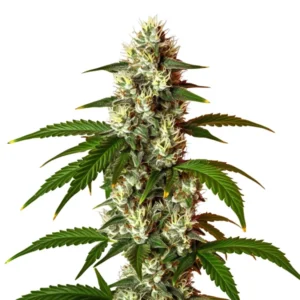
Cereal Milk Cannabis Extraction
|
|
THC | 23% - 25% (High) |
|
|
Type | Cannabis Extraction |
|
|
Yield | Medium |
|
|
Phenotype | 50% Indica / 50% Sativa |
This guide explains why ghee works so well, what lecithin actually does (and how much to use), and how to put them together in a simple cannabis ghee recipe. As with any edible, the key safety point is dosing, so we cover that too.
| Choice | Why use it | Note |
|---|---|---|
| Ghee (clarified butter) | No milk solids, higher smoke point, longer shelf life | Great carrier; strong, clean fat for infusion |
| Regular butter | Classic flavor, easy to find | Contains water/milk solids; can scorch more easily |
| Lecithin (soy/sunflower) | Emulsifier; helps bind cannabinoids to fat | May improve consistency/absorption; use a small amount |
Why Ghee Works So Well
Benefits of Ghee Over Regular Butter
Ghee is simply butter that has been cooked to remove its water and milk solids, leaving pure butterfat. For infusing cannabis that is a real advantage: with no milk solids to burn, ghee tolerates gentle heat better, is less likely to scorch, and stores far longer than regular butter, often without refrigeration. The pure fat also carries cannabinoids efficiently.
Compared with regular butter, ghee gives a cleaner infusion and a nuttier flavor, and it is naturally lactose- and casein-light, which some people prefer. Regular butter still works and tastes classic, but if you want a more robust, longer-lasting infused fat, ghee is the upgrade, which is exactly why ‘cannabis ghee vs butter’ is such a common question.
How Ghee Enhances Cannabutter Potency
The absence of water in ghee prevents the dilution of cannabinoids, making the infusion process more efficient. When cannabinoids are heated with ghee, they bind more effectively, resulting in a stronger product. This is particularly beneficial for those seeking maximum potency in their edibles, as the cannabinoids are more concentrated and bioavailable.
Moreover, ghee’s long shelf life, which can extend up to 12 months when stored properly at 59-70°F (15-21°C), ensures that your cannabutter remains fresh and potent over time. This stability makes ghee an ideal choice for those who make large batches of cannabutter and wish to store it for extended periods.
Promos & Deals
What Lecithin Does (and How Much to Use)
How Much Lecithin to Use
Lecithin is a natural emulsifier (from soy or sunflower) that helps fat and water-based ingredients mix and helps bind cannabinoids to the fat. In cannabutter, many makers add it to improve consistency and, some believe, the evenness of absorption in the finished edible, so each portion is more uniform.
A common guideline is about 1 teaspoon of liquid lecithin, or roughly 1 tablespoon of lecithin powder, per cup of fat, added during infusion, you do not need much. If you do not have lecithin, you can skip it; it is an enhancement, not essential. Sunflower lecithin is a popular soy-free option. Treat these as general amounts and adjust to your recipe.
The Impact of Lecithin on Cannabutter
By improving the bioavailability of cannabinoids, lecithin ensures that the effects of your edibles are more pronounced and longer-lasting. It helps the body metabolize cannabinoids more efficiently, leading to a quicker onset of effects, typically within 30 to 60 minutes. This is particularly beneficial for those seeking immediate relief or a more intense experience.
Additionally, lecithin aids in the even distribution of cannabinoids throughout the cannabutter, ensuring consistency in potency across different servings. This uniformity is crucial for dosing, as it allows for more predictable and controlled experiences, reducing the risk of overconsumption or underdosing.
| Feature | Bubblegum | Golden Goat | Colombian Gold Regular |
|---|---|---|---|
| THC Content | 17-20% | 18-22% | 19-22% |
| Dominant Terpene | Myrcene | Limonene | Caryophyllene |
| Flavor Profile | Sweet, Bubblegum | Citrus, Sweet | Earthy, Spicy |
| Effect | Relaxing, Euphoric | Energetic, Uplifting | Creative, Focused |
| Yield | 1.5 oz/ft² (450 g/m²) | 1.8 oz/ft² (550 g/m²) | 1.6 oz/ft² (500 g/m²) |
Step-by-Step Cannabis Ghee Recipe
Decarboxylation Process
Decarboxylation is a critical step in activating the THC in cannabis. Begin by grinding 20 to 30 grams of dried cannabis flower, ensuring it’s not too fine. Spread it evenly on a baking sheet and bake at 240°F (115°C) for 30-40 minutes. This process converts THCA into THC, the psychoactive compound that delivers the desired effects.
Without decarboxylation, the cannabinoids remain inactive, rendering your cannabutter ineffective. Ensure even heating by stirring the cannabis halfway through the baking process. This step is crucial for achieving the full potency of your edibles, as it directly affects the bioavailability of THC.
Infusion Process
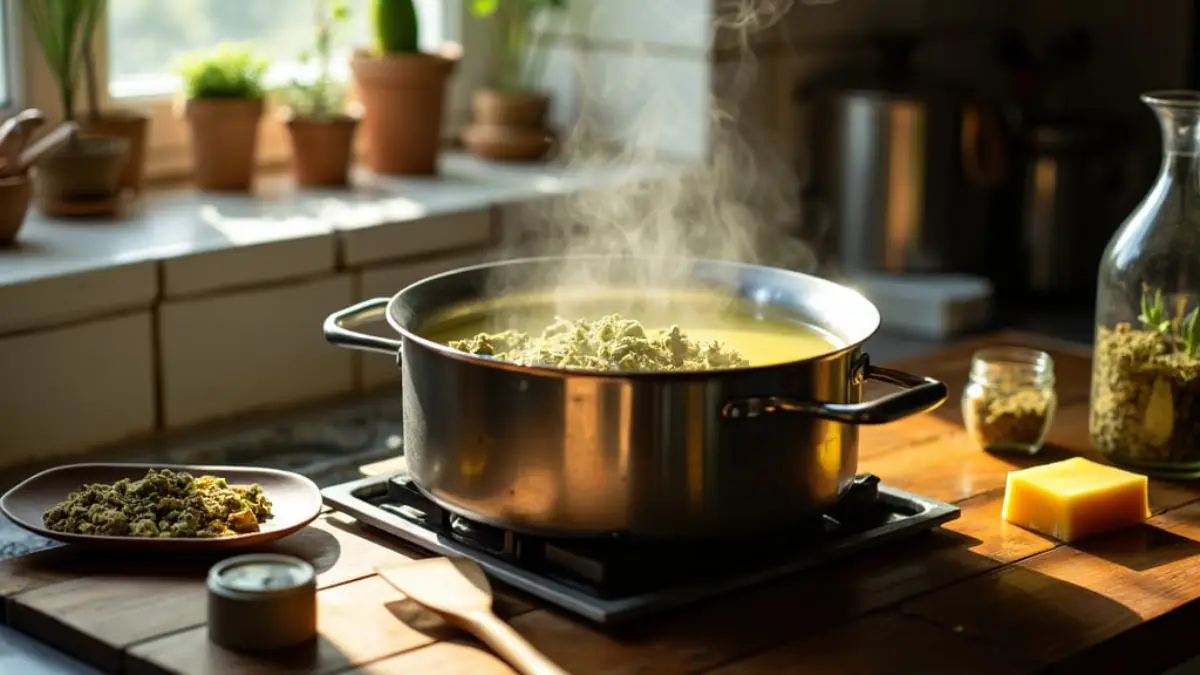
After decarboxylation, gently melt 1 cup (approximately 250g) of ghee in a saucepan over low heat. Add the decarboxylated cannabis and let it simmer for 2-3 hours, stirring occasionally. Maintain a temperature below 200°F (93°C) to prevent degradation of cannabinoids. This slow infusion allows the cannabinoids to bind effectively with the ghee.
In the final 20 minutes, incorporate 1 tablespoon of lecithin, stirring until fully dissolved. This addition enhances the potency and absorption of the cannabinoids. Once the infusion is complete, strain the mixture through a cheesecloth into a glass jar, ensuring no plant material remains. Store the cannabutter in the fridge to maintain its potency and freshness.
Enhancing Cannabutter with Lecithin
Adding lecithin to your cannabis ghee recipe can significantly improve the efficiency of cannabinoid absorption. Lecithin acts as a surfactant, reducing the surface tension between the cannabinoids and the ghee, allowing for better emulsification. This not only enhances the potency but also ensures a more uniform distribution of cannabinoids throughout the mixture.
For those wondering how much lecithin for cannabutter is optimal, the standard recommendation is 1 tablespoon per cup of ghee. This proportion maximizes the bioavailability of THC and other cannabinoids, ensuring that your edibles deliver the desired effects consistently.
Professional Tips for Making Cannabutter
- Maintain a simmering temperature below 200°F (93°C) during infusion to prevent THC degradation.
- Use 1 tablespoon of lecithin per cup of ghee to enhance cannabinoid absorption by up to 30%.
- Store cannabutter at 59-70°F (15-21°C) to preserve potency for up to 12 months.
- Ensure even decarboxylation by stirring cannabis halfway through the baking process.
- Use a cheesecloth to strain the mixture, avoiding plant material in the final product.
- Start with a small dose when cooking with cannabutter to gauge potency and effects.
Making and Dosing Cannabis Ghee
The method mirrors standard cannabutter. First decarboxylate your flower (bake it so the THC activates), then simmer it gently in the ghee on low heat for a while, stir in the lecithin if using, and strain out the plant material. Let it set and store it, ghee keeps especially well. For the decarb step, see our guide on decarboxylation methods.
Dose carefully: homemade infusions vary in strength, so start with a small amount in your recipe, wait one to two hours before more, and label everything clearly away from children and pets. For the standard version and related recipes, see our guides on cannabis-infused butter, cannabutter from kief, and gentle dosing via microdosing.
Storing and Using Cannabis Ghee
One of ghee’s best features is how well it keeps. Because the water and milk solids are gone, cannabis ghee stores longer than cannabutter, often for weeks in the fridge and even at cool room temperature, in a sealed, labeled container away from light. Always label infused ghee clearly so no one uses it by mistake, and keep it well away from children and pets.
Using it is easy: swap cannabis ghee in for butter or oil in recipes, drizzle it over cooked food, or stir it into warm drinks. Keep cooking temperatures moderate, since high heat degrades cannabinoids. Because potency is spread through the fat, measure how much ghee a recipe uses and how many servings it makes, so you can estimate a sensible dose per portion.
FAQs About Ghee and Lecithin in Cannabutter
Is ghee better than butter for cannabutter?
Ghee has advantages: with no water or milk solids it resists scorching, stores much longer, and gives a clean, efficient infusion with a nutty flavor. Regular butter works and tastes classic but can burn more easily and keeps less well. If you want a robust, long-lasting infused fat, ghee is the better choice.
How much lecithin should I use for cannabutter?
A common guideline is about 1 teaspoon of liquid lecithin, or roughly 1 tablespoon of lecithin powder, per cup of fat, added during infusion. You do not need much, and it is optional. Sunflower lecithin is a popular soy-free option. Adjust to your recipe; it enhances consistency rather than being essential.
What does lecithin do in edibles?
Lecithin is an emulsifier that helps fat and other ingredients blend and helps bind fat-soluble cannabinoids to the fat. In edibles, makers use it to improve texture and consistency and, many believe, to make dosing more even across portions. It is an optional enhancement rather than a required ingredient.
How long does cannabis ghee last?
Longer than cannabutter, because ghee has no water or milk solids. Stored in a sealed container away from light, it keeps for weeks in the fridge and can tolerate cool room temperature better than butter. Always label it clearly and keep it away from children and pets, and use clean utensils to avoid introducing moisture.
Can I use ghee instead of butter in any edible?
Mostly yes. Cannabis ghee can replace cannabutter or oil in most recipes, baking, sauteing, drizzling or stirring into drinks, with a slightly nuttier flavor. Keep heat moderate to protect the cannabinoids, and recalculate your dose per serving based on how much infused ghee the recipe uses.