THCA to THC Calculator: Conversion Rate and Formula

To estimate how much THC your cannabis will deliver, multiply its THCA percentage by 0.877. That number, the THCA to THC conversion rate, reflects the weight THCA loses as a carboxyl group when heat converts it to THC during decarboxylation. So a product testing at 20% THCA has a theoretical maximum of about 17.5% THC (20 x 0.877).
That figure is the ceiling, not the real-world result, because decarboxylation is never perfectly efficient. The calculator below, and the worked examples further down, apply a realistic efficiency so the THC estimate matches what you are likely to actually get.
Recommended Strains

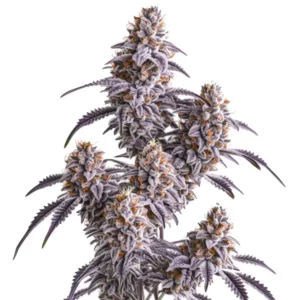
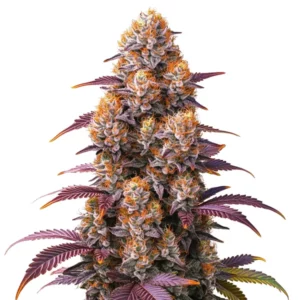
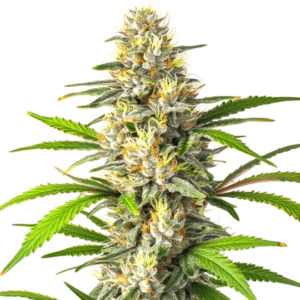
Permanent Marker

|
THC | 32% - 34% (High) |

|
Type | Feminized |

|
Yield | High |

|
Phenotype | 50% Indica / 50% Sativa |

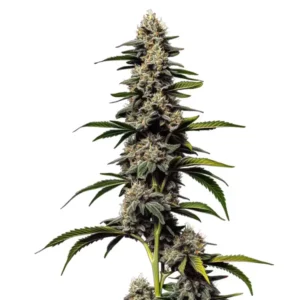
Permanent Marker Auto
|
|
THC | 32% - 34% (High) |
|
|
Type | Autoflowering |
|
|
Yield | High |
|
|
Phenotype | 50% Indica / 50% Sativa |
THCA to THC Conversion Rate: Worked Examples
The maximum conversion rate is fixed by chemistry at 0.877, but how much THCA actually becomes THC depends on your decarboxylation, heat, time and method. A rushed or low-temperature decarb converts less; a careful one converts more, though never quite 100%. The table below shows both the theoretical maximum and a realistic figure at around 75% efficiency:
| THCA on the label | Max THC (x0.877) | Realistic THC (~75% decarb) |
|---|---|---|
| 15% | 13.2% | about 9.9% |
| 20% | 17.5% | about 13.2% |
| 25% | 21.9% | about 16.4% |
| 30% | 26.3% | about 19.7% |
Read it as a range: your flower will usually land somewhere between the two columns, which is why lab labels quote THCA separately from THC.
Promos & Deals
Why Convert THCA to THC?
“Raw THCA is non-psychoactive, so eating or juicing raw cannabis will not get you high. Only heat, through smoking, vaping or cooking, decarboxylates THCA into the THC that produces effects, which is exactly why anyone making edibles or oils has to account for the conversion rather than assuming the label THCA equals the high.
It matters for dosing precision too. Knowing your real THC lets you portion edibles accurately, which is especially important for medical users managing conditions like chronic pain or nausea, where consistent dosing helps avoid taking too much or too little.”
The Science: Decarboxylation
Decarboxylation simply means knocking a carboxyl group off the THCA molecule, which leaves as carbon dioxide when cannabis is heated, turning THCA into THC. It gets going around 220 F (104 C) and works best in the 220-245 F range, where you convert efficiently without scorching the flower.
Time and temperature trade off against each other: lower and slower preserves terpenes but converts gradually, while too much heat destroys both cannabinoids and aroma. Hitting that balance is what gives you a potent result, and it is the real-world variability the calculator’s efficiency setting is designed to capture.
How to Use the Calculator
Using it takes three inputs from your product label or lab report:
- THCA content: the non-psychoactive percentage listed on the label.
- Existing THC: any THC already present, which some products have, added for accuracy.
- Decarb efficiency: in Advanced Mode, set how complete your conversion is; Quick Mode assumes about 75%.
The formula behind it is simply (THCA x 0.877) + existing THC, adjusted for efficiency, giving a realistic total THC rather than an inflated maximum.
It helps to be clear on why THCA and THC are reported separately in the first place. THCA is the raw, non-psychoactive acid the living plant produces; THC is what it becomes once heat removes a carboxyl group. A lab lists both because the number that matters depends on how you use the product, raw versus heated.
This is also why total THC on a label is usually calculated, not measured directly: labs apply the same 0.877 factor to the THCA they find and add any existing THC. Knowing that is the whole point of the calculator, because it lets you sanity-check a product real strength instead of trusting a single big number on the package.

FAQs about THCA to THC Conversion
What is the THCA to THC conversion rate?
The chemical maximum is 0.877, meaning each percent of THCA can become at most 0.877% THC after decarboxylation, because THCA loses weight as it converts. In practice the real rate is lower, often around 70-80%, since decarb is never perfectly efficient. Multiply THCA by 0.877 for the ceiling, then adjust down.
How much THCA actually converts to THC?
Not all of it. The theoretical maximum is 87.7% by weight, but real decarboxylation typically converts around 70-80% depending on heat, time and method. Low, slow heat converts gradually; excessive heat destroys cannabinoids. That is why a 25% THCA flower realistically yields roughly 16-19% THC, not the full 21.9% maximum.
What is the THCA to THC conversion formula?
The formula is THC = (THCA x 0.877) + any THC already present. The 0.877 factor accounts for the carboxyl group lost during decarboxylation. For a realistic estimate, multiply the result by your decarb efficiency (often about 0.75), since no conversion is complete in practice.
What is the 0.877 factor?
It is the ratio of the molecular weight of THC to THCA. When THCA decarboxylates it sheds a carboxyl group (lost as CO2), so it becomes lighter, and the resulting THC weighs about 87.7% of the original THCA. That is why you multiply THCA by 0.877 to get the maximum possible THC.
Does smoking convert all THCA to THC?
No. Combustion is fast and inefficient, so smoking converts a good portion but not all of the THCA, and some is simply lost. Vaping at a controlled temperature is more efficient. This is why real-world THC usually falls below the 0.877 maximum, and why the calculator applies a decarb-efficiency factor.
Is THCA stronger than THC?
Not in its raw form. THCA is non-psychoactive and will not get you high until heat converts it to THC. A high THCA percentage signals high potential THC once decarboxylated, but the active, intoxicating compound is always THC. The calculator estimates how much THC that THCA will actually deliver.
Why do lab labels show THCA and THC separately?
Because the useful number depends on how you use the product. Raw cannabis contains mostly THCA, which is non-psychoactive, and only heat converts it to THC. Labs report both so you can see the raw content and estimate the active THC after decarboxylation, which is exactly what the calculator does.