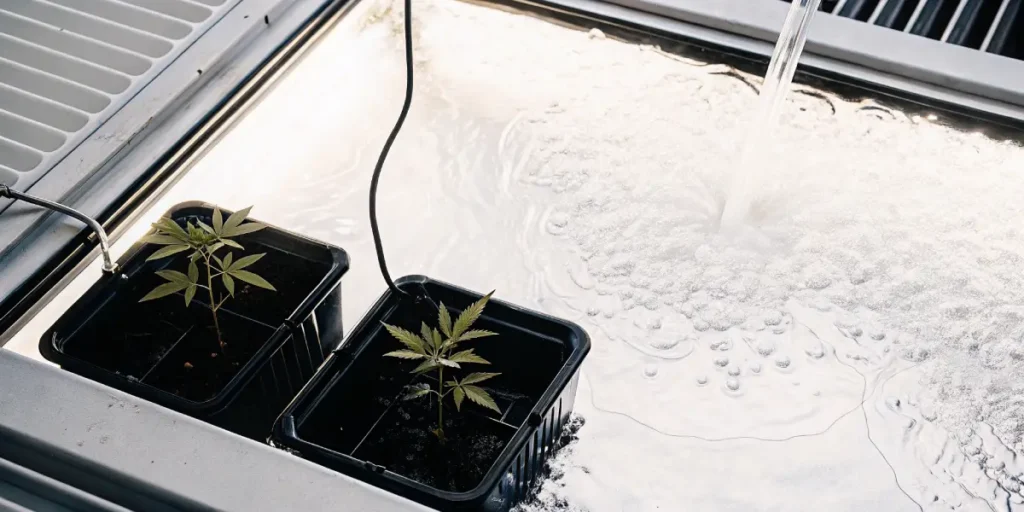
Cannabis Root Health Strategies

Quick Summary: Healthy cannabis roots require a stable pH of 6.0, high oxygen levels, and protection from pests like voles. By using beneficial microbes, proper drainage, and mechanical barriers, you ensure your plant grows upward exactly as much as its root system expands downward.
Essential Cannabis Root Health Strategies
Strong roots are the heart of your cannabis plant. They drink water and eat nutrients to help the plant grow tall. Many growers only look at the leaves, but the real work happens under the dirt. A big root system means a big harvest. If your roots are weak, your plant will be small and sickly.
Recommended Strains
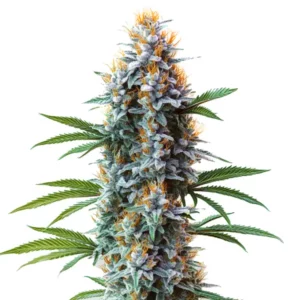
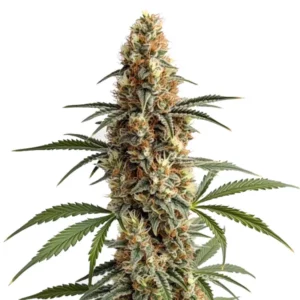
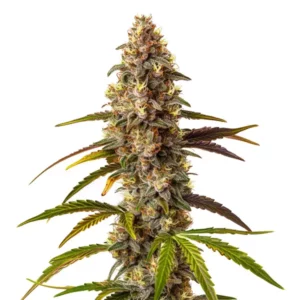
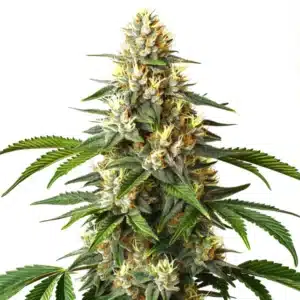
Blue Cheese

|
THC | 16% - 20% (Medium) |

|
Type | Feminized |

|
Yield | High |

|
Phenotype | 80% Indica / 20% Sativa |
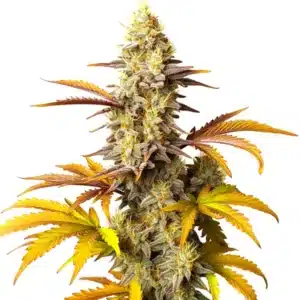
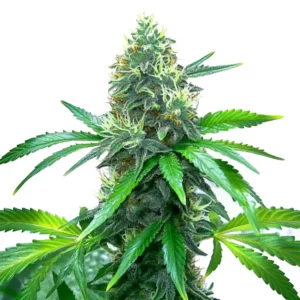
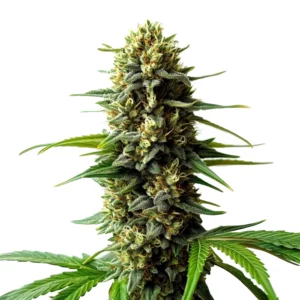
Blue Cheese Autoflower
|
|
THC | 14% - 16% (Medium) |
|
|
Type | Autoflowering |
|
|
Yield | Medium |
|
|
Phenotype | 80% Indica / 20% Sativa |
To keep roots happy, you must provide plenty of air. Roots need oxygen to breathe just like we do. If the soil is too packed or too wet, the roots will drown. This stops them from sending food to the rest of the plant. A healthy root should be bright white and fuzzy. If they turn brown, you have a big problem.
The plant grows upward only as much as the roots can grow downward. This means if you use a small pot, you will get a small plant. Always give your roots enough space to stretch out. In the ground, watch out for animals like voles that eat roots. Smart growers use wire mesh in the holes to keep these pests away from their precious plants.
Promos & Deals
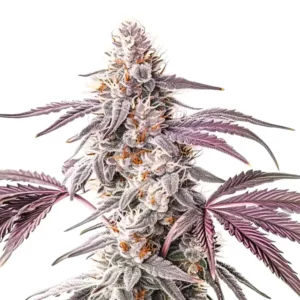
Preventing Diseases for Healthy Cannabis Roots
Root rot is the most common enemy. It happens when there is too much water and not enough air. Harmful germs love wet, dark places. Once root rot starts, it is very hard to stop. You will see the leaves turn yellow and the plant will wilt. To prevent this, always make sure your pots have holes in the bottom for water to leave.
Cleanliness is also very important. Always wash your tools with alcohol before working on your plants. This stops diseases from spreading from one plant to another. If you see a plant that looks sick, move it away from the healthy ones. Checking your roots every few days helps you catch problems early before they kill the whole crop.
Technical Root Comparison Table
| Feature | Standard Potting Soil | Hydroponic (DWC) | Aeroponics |
|---|---|---|---|
| Oxygen Levels | Low to Medium | High (via Air Stones) | Maximum (Mist) |
| Ideal pH Range | 6.0 – 7.0 | 5.5 – 6.0 | 5.0 – 5.5 |
| Watering Frequency | Every 2-3 days | Constant Immersion | Short Bursts (Minutes) |
| Disease Risk | Medium (Pests/Rot) | High (Pythium) | Low (High Oxygen) |
| Nutrient Delivery | Slow Release | Instant Absorption | Highly Efficient Mist |
| Growth Speed | Standard | Fast | Explosive |
Organic Methods for Strong Roots
Using nature is the best way to get healthy cannabis roots. You can add special fungi called mycorrhizae to your soil. These tiny organisms act like a helper for your roots. They grow onto the roots and help them find more water and nutrients. It is like giving your plant a bigger mouth to eat more food.
Organic teas are also great. You can make tea from worm castings or compost. This liquid is full of good bacteria that fight off diseases. When you pour it on your soil, it makes the roots stronger and more resilient. This is much better than using harsh chemicals that can burn the delicate root hairs.
Professional Tips for Root Mastery
- The 45-Degree Secret: When taking cuttings for clones, always cut at a 45-degree angle. This gives more surface area for new roots to pop out.
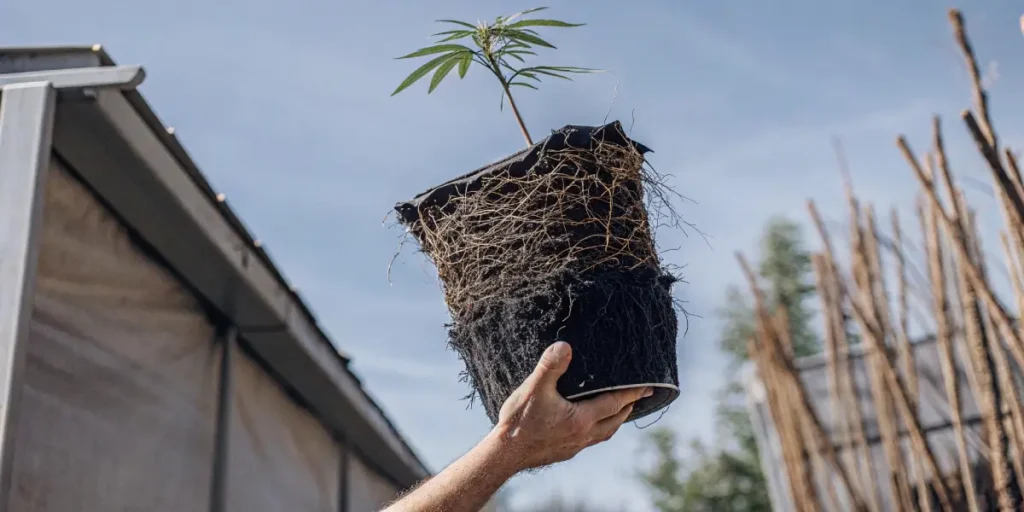
- Air Pruning: Use fabric pots. When roots hit the air at the edge of the bag, they stop growing and start making many small branch roots. This creates a dense root ball.
- Temperature Control: Keep your roots between 65°F and 75°F. If the dirt gets hotter than 85°F, the roots will stop growing and the plant will get stressed.
- pH Vigilance: Always keep your water at a pH of 6.0. If the pH is wrong, the roots cannot “unlock” the nutrients in the soil.
- Vole Protection: If planting outdoors in the ground, line your holes with metal mesh. This keeps rodents from eating through the main root system.
Frequently Asked Questions
What are the signs of healthy cannabis roots?
Healthy roots should be bright white or light cream in color. They should look crisp and have many tiny, fuzzy root hairs. These hairs are what actually absorb water and minerals. If the roots are white and smell like fresh earth, your cannabis root health strategies are working perfectly. Brown or slimy roots are a sign of trouble.
Why is pH 6.0 important for root health?
Cannabis plants are very picky eaters. They can only absorb certain nutrients when the soil is slightly acidic. At a pH of 6.0, essential elements like nitrogen, phosphorus, and potassium are most available. If the pH drifts too high or too low, the roots get “locked out” and the plant begins to starve, even if food is present.
How does root space affect plant size?
There is a direct link between the size of the root system and the size of the plant canopy. The roots produce hormones that tell the top of the plant how big it is allowed to get. If the roots are cramped in a small pot, they send signals to slow down growth. For the biggest yield, ensure the container size matches the plant’s age.
Can I use beneficial microbes in hydroponics?
Yes, beneficial microbes like Trichoderma are excellent for hydroponic systems. They help prevent “root snot” and Pythium, which are common in water-based grows. These microbes form a protective layer around the roots, making them much tougher. They also help break down any dead organic matter in the reservoir to keep things clean.