How to Lower AW Without Overdrying Cannabis

Preserving Cannabis Quality: Lowering water activity (AW) in cannabis without overdrying is essential for maintaining its quality and potency. By carefully balancing humidity and temperature, you can effectively reduce AW while keeping your cannabis fresh. Experienced growers recommend maintaining humidity around 60% and temperature at 70°F to achieve this balance, preventing overdrying and preserving terpenes.
Maintaining the terpene profile and flavor of your cannabis is crucial for a premium experience. By focusing on the drying process, you can ensure your buds retain their aromatic and psychoactive properties. The flowering time, typically 8-9 weeks, plays a significant role in determining the final quality of your harvest. Knowing these nuances is key to successful cannabis cultivation.
Recommended Strains

Moby Dick

|
THC | 24% - 27% (High) |

|
Type | Feminized |

|
Yield | High |

|
Phenotype | 40% Indica / 60% Sativa |

Trainwreck
|
|
THC | 15% - 20% (Medium) |
|
|
Type | Feminized |
|
|
Yield | Medium |
|
|
Phenotype | 20% Indica / 80% Sativa |
Water Activity (AW) in Cannabis
What is Water Activity?
Water activity (AW) measures the free moisture in cannabis, which affects its stability and shelf life. AW is crucial because it influences microbial growth; a higher AW can lead to mold and bacteria, while a lower AW can preserve the product. Keeping AW below 0.65 is recommended to inhibit microbial activity without overdrying. For growers wondering how do I lower AW without overdrying cannabis, maintaining the proper drying and curing environment is essential to achieve a safe moisture balance while preserving quality.
AW is different from moisture content, which is the total water in the plant. AW focuses on the water available for microbial growth. Cannabis typically has an AW of 0.55 to 0.65, which is optimal for preventing spoilage while maintaining potency and flavor.
Importance of AW in Cannabis Preservation
Maintaining the right AW is vital for preserving cannabinoids and terpenes. These compounds are sensitive to environmental conditions, and improper AW can lead to degradation. For example, terpenes like myrcene, present at 0.8-1.2%, can evaporate if AW is too low, affecting aroma and therapeutic effects.
AW also impacts the drying process. If AW is too high, your cannabis may develop mold within days. Conversely, if AW is too low, it can lead to overdrying, which diminishes the quality and potency of the buds.
Promos & Deals
How Do I Lower AW Without Overdrying Cannabis
Techniques to Control Humidity
Controlling humidity is essential to lower AW without overdrying. Use a dehumidifier to maintain a consistent environment, especially in regions with high ambient humidity. Aim for a relative humidity (RH) of 58-62% during the drying phase to balance AW and prevent overdrying.
For quick drying, some growers report that buds dry in 5 days when humidity is controlled precisely. This rapid drying method can be effective but requires careful monitoring to avoid overdrying, which can lead to a harsh smoking experience.
Tools and Equipment Needed
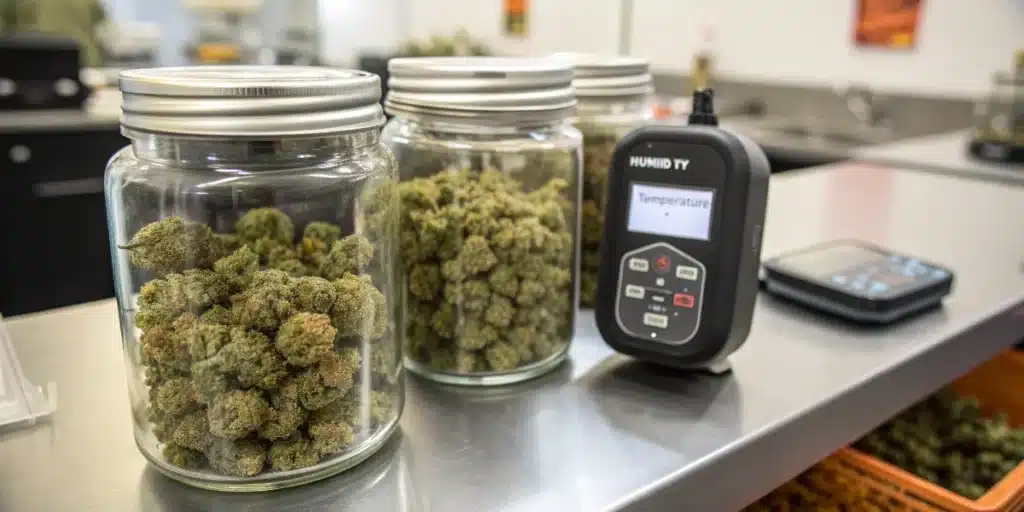
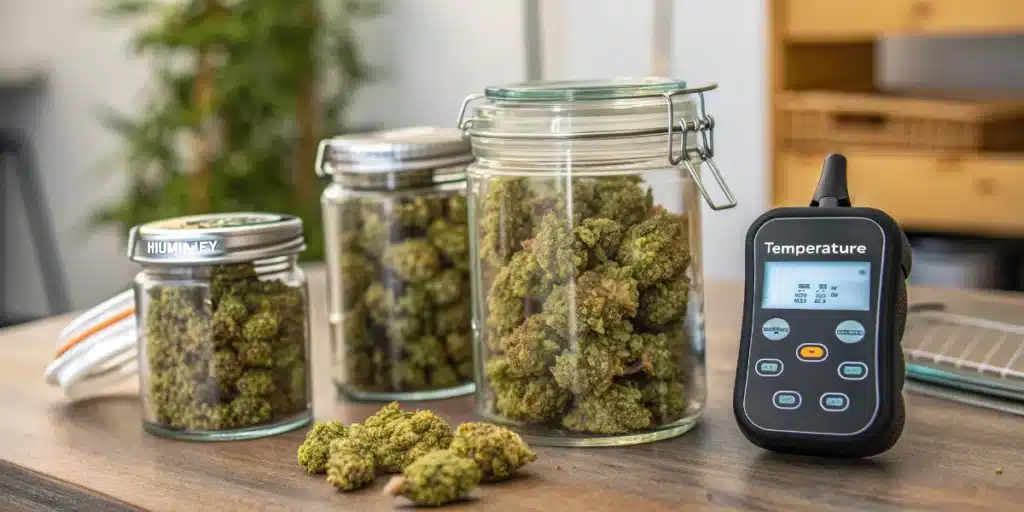
Investing in the right tools is crucial for managing AW effectively. A hygrometer is essential for monitoring humidity levels. Pair it with a cannabis drying chart to track the progress and adjust conditions as needed. Using a digital hygrometer ensures accuracy, which is vital for maintaining the desired AW.
Dehumidifiers and fans can help circulate air and control humidity levels. Ensure your drying room is equipped with these tools to achieve optimal drying conditions. Master growers emphasize the importance of consistent airflow to prevent mold and maintain quality.
| Feature | GG4 | Moby Dick | Trainwreck |
|---|---|---|---|
| THC Content | 27% | 24-27% | 15-20% |
| Dominant Terpene | Humulene | Caryophyllene | Humulene |
| Flavor Profile | Fruity, Pine, Spicy | Citrus, Pine, Sweet | Citrus, Earthy, Sweet |
| Flowering Time | 8-10 weeks | 9-10 weeks | 8-10 weeks |
| Yield | High | High | Medium |
Best Practices for Drying Cannabis
Best Temp and Humidity for Drying Cannabis
To achieve the best results, maintain a drying temperature of 70°F (21°C) with a relative humidity of 60%. This environment helps preserve terpenes and cannabinoids, ensuring a high-quality product. Adjusting these parameters for different strains, such as autoflowers, can optimize the drying process further.
Drying cannabis at 70 degrees is a standard practice among experienced cultivators. This temperature supports the slow evaporation of moisture, which is crucial for maintaining the integrity of the cannabinoids and terpenes.
The 60-60 Drying Method Explained
The 60-60 drying method involves maintaining 60% humidity and 60°F (15°C) temperature. This method is praised for its ability to preserve the full spectrum of cannabinoids and terpenes. It provides a controlled environment that prevents overdrying while ensuring the buds are free from mold.
This method is particularly effective for those looking to maintain the highest quality in their harvest. It requires careful monitoring and adjustment to ensure the conditions remain stable throughout the drying period.
Common Mistakes and How to Avoid Them
Signs of Overdrying and How to Fix Them
Overdrying is evident when buds become brittle and lose their aroma. To fix overdried cannabis, rehydrate it by placing it in a jar with a humidity pack. This method gradually restores moisture without compromising quality. For growers wondering how do I lower aw without overdrying cannabis, maintaining proper humidity levels during storage is essential to preserve quality while controlling water activity.
Knowing how long to dry buds before jarring is crucial. Typically, 7-10 days is ideal, but this can vary based on environmental conditions. Monitoring the drying process closely helps prevent overdrying.
Drying and Curing for Beginners
Beginners should focus on maintaining consistent conditions during drying and curing. Start with a humidity level of 60% and a temperature of 70°F (21°C). These parameters are forgiving and provide a solid foundation for preserving your cannabis.
Using a hygrometer to monitor conditions is essential. This tool helps you adjust the environment as needed, ensuring your cannabis dries evenly and retains its quality.
Professional Tips for Lowering AW Without Overdrying
- Maintain 58-62% RH during drying to prevent overdrying and preserve terpenes. Use a digital hygrometer for accuracy.
- Ensure consistent airflow with fans to avoid mold growth while drying. Stagnant air can lead to uneven drying and spoilage.
- Use a dehumidifier to control humidity levels in high humidity regions. This tool helps maintain the desired RH for optimal drying.
- Monitor the drying process closely, especially in the first few days. Rapid moisture loss can lead to overdrying if not checked.
- Rehydrate overdried buds with humidity packs. This method gradually restores moisture without affecting potency.
- Consider the 60-60 drying method for preserving the full spectrum of cannabinoids and terpenes. This method requires precise control of environmental conditions.
FAQs about how do I lower aw without overdrying cannabis
How to fix cannabis that is too dry?
To fix cannabis that is too dry, place it in a jar with a humidity pack. This method gradually reintroduces moisture over a few days, restoring the buds’ texture and aroma. Aim for a relative humidity of 58-62% to maintain the quality and prevent further drying.
What is the 60-60 rule for drying cannabis?
The 60-60 rule involves drying cannabis at 60°F (15°C) with 60% humidity. This method preserves cannabinoids and terpenes, ensuring high-quality buds. It requires careful monitoring to maintain these conditions, preventing overdrying and mold growth.
What happens if you overdry cannabis?
Overdrying cannabis results in brittle buds that lack aroma and flavor. The loss of moisture can degrade cannabinoids and terpenes, reducing potency. To avoid this, monitor humidity levels and use humidity packs to rehydrate if necessary.
What fertilizer makes buds bigger?
Fertilizers with a higher phosphorus content, like an N:P:K ratio of 1:3:2, promote larger buds. Phosphorus supports flower development and enhances resin production. Applying during the flowering stage maximizes bud size and potency.
How long to dry buds before jarring?
Typically, buds should dry for 7-10 days before jarring. This allows for adequate moisture evaporation while preserving cannabinoids and terpenes. Monitor the drying environment to ensure conditions remain stable, preventing overdrying or mold growth.