Best Greenhouse Strains for Optimal Growth

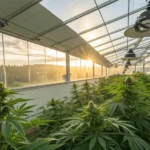
Greenhouse cultivation benefits: Growing cannabis in greenhouses leverages natural sunlight, enhancing THC levels and overall plant health. Strains like Blue Dream, Super Silver Haze, and Critical Mass Auto thrive in these conditions, offering high yields and robust growth. While initial setup costs can be high, the long-term savings on energy and the potential for increased potency make greenhouses an attractive option for cultivators.
Maximizing your cannabis yield in a greenhouse involves selecting strains that thrive under natural sunlight and controlled environments. Terpenes like Myrcene and Limonene play crucial roles in enhancing flavor and aroma, while flowering times can range from 8 to 10 weeks. These factors helps in achieving a successful harvest.
Recommended Strains

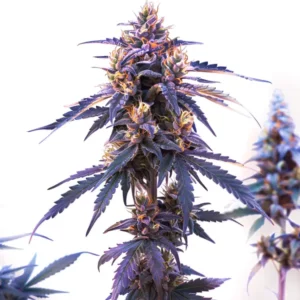
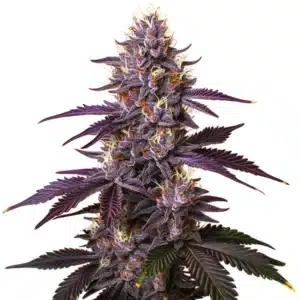
Blue Cheese

|
THC | 16% - 20% (Medium) |

|
Type | Feminized |

|
Yield | High |

|
Phenotype | 80% Indica / 20% Sativa |
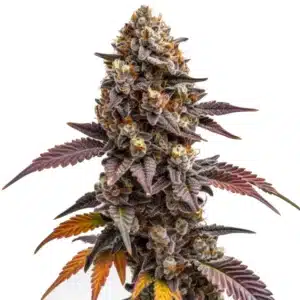
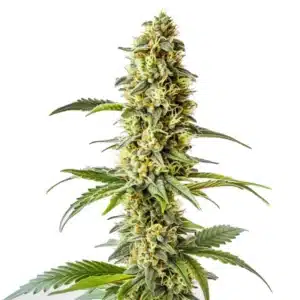
Blue Amnesia Auto
|
|
THC | 17% - 18% (Medium) |
|
|
Type | Autoflowering |
|
|
Yield | Low |
|
|
Phenotype | 40% Indica / 60% Sativa |
Best Strains for Greenhouse Growing
Blue Dream: A Greenhouse Favorite
Blue Dream is renowned for its adaptability in greenhouse settings. This sativa-dominant hybrid flourishes under natural sunlight, reaching heights of up to 6 feet (1.8 meters). Its terpene profile, dominated by Myrcene at 1.0-1.5%, offers a sweet berry aroma and enhances THC uptake, resulting in a euphoric high. The strain’s flowering period is approximately 9-10 weeks, making it ideal for greenhouse cultivation.
With THC levels ranging from 18-24%, Blue Dream delivers potent effects that are both uplifting and relaxing. It benefits from the greenhouse’s controlled environment, which minimizes pest issues and maximizes yield potential, often reaching 21-25 oz/plant (600-700 g/plant). Proper ventilation and humidity control are essential to prevent mold and ensure robust growth.
Super Silver Haze: Mold Resistant
Super Silver Haze is a sativa-dominant strain known for its resilience against mold and pests, making it a top choice for greenhouse growers. Its terpene profile features Limonene at 0.5-0.8%, providing a citrusy aroma that complements its energetic effects. This strain thrives in semi-controlled environments, with a flowering time of 10-11 weeks.
With THC content between 19-23%, Super Silver Haze offers a cerebral high that enhances creativity and focus. In greenhouses, it can yield up to 20 oz/plant (570 g/plant), benefiting from the consistent sunlight and controlled humidity. Regular pruning and training techniques like SCROG can optimize light exposure and airflow.
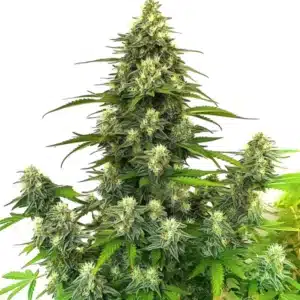
Critical Mass Auto: High Yield
Critical Mass Auto is an indica-dominant strain prized for its high yield and rapid growth cycle. Its terpene profile includes Caryophyllene at 0.4-0.6%, contributing to a spicy aroma and anti-inflammatory effects. This strain completes its life cycle in just 8-9 weeks, making it perfect for multiple harvests per season in a greenhouse.
With THC levels of 20-24%, Critical Mass Auto delivers a relaxing body high, ideal for stress relief. It thrives in greenhouses, where it can produce up to 18 oz/plant (510 g/plant) under optimal conditions. Maintaining temperatures between 70-80°F (21-27°C) and humidity around 50-60% RH is crucial for preventing bud rot and maximizing yield.
Promos & Deals
Greenhouse Weed vs Indoor Weed
Pros and Cons
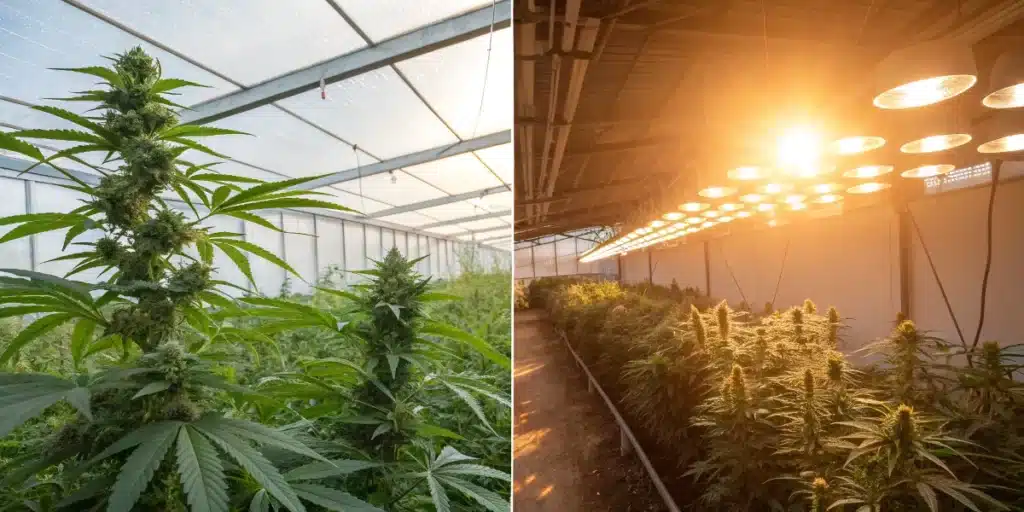
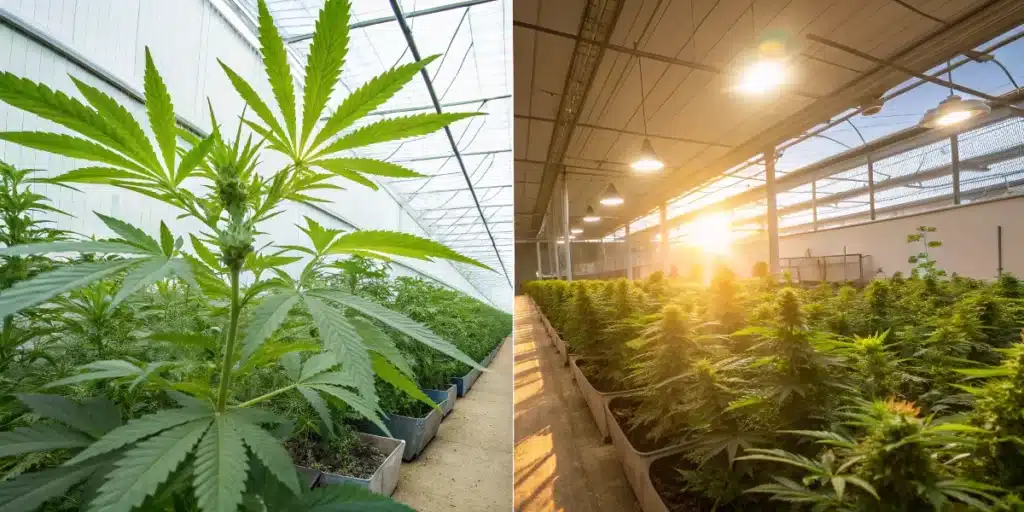
Greenhouse cultivation offers the advantage of natural sunlight, which enhances cannabinoid and terpene production, leading to more potent and aromatic buds. However, it requires significant initial investment and careful environmental control to prevent diseases. Indoor growing, while costly due to artificial lighting and climate control, allows for precise manipulation of growing conditions, resulting in consistent quality and potency.
Greenhouse weed often exhibits higher THC levels due to the full spectrum of sunlight, while indoor weed benefits from controlled conditions that can fine-tune cannabinoid profiles. The choice between the two depends on budget, space, and desired outcomes, with each method offering unique benefits and challenges.
Potency Comparison
When comparing potency, greenhouse-grown cannabis typically boasts higher THC concentrations, often reaching 25-30%, thanks to natural sunlight exposure. Indoor-grown cannabis, while sometimes lower in THC, can achieve high potency through precise nutrient and light management. Both methods can produce high-quality cannabis, but the environmental factors play a significant role in the final product.
For optimal potency, greenhouse growers should focus on maximizing sunlight exposure and maintaining ideal humidity levels, while indoor growers should invest in advanced lighting systems and climate control technology. Both approaches require careful monitoring to ensure the best results.
| Feature | Blue Dream | Super Silver Haze | Critical Mass Auto |
|---|---|---|---|
| THC % | 18-24% | 19-23% | 20-24% |
| Dominant Terpene | Myrcene | Limonene | Caryophyllene |
| Yield (oz/plant) | 21-25 oz | 20 oz | 18 oz |
| Flowering Time (weeks) | 9-10 | 10-11 | 8-9 |
| Height (ft) | Up to 6 ft | 5-7 ft | 4-5 ft |
Greenhouse Weed Effects
Physiological Framework
Greenhouse-grown cannabis often exhibits a more complex cannabinoid and terpene profile due to natural sunlight exposure. This results in a robust entourage effect, where cannabinoids and terpenes work synergistically to enhance therapeutic benefits. For instance, Myrcene, prevalent in many greenhouse strains, can increase THC absorption, leading to more pronounced effects.
With higher THC levels, greenhouse cannabis can offer stronger psychoactive effects, including euphoria and relaxation. The presence of diverse terpenes like Limonene and Caryophyllene further enhances the sensory experience, contributing to mood elevation and stress relief. These effects are often more pronounced compared to indoor-grown cannabis.
Sensory/Effect Profile
Greenhouse cannabis typically boasts a richer aroma and flavor profile due to the full spectrum of sunlight. This enhances the development of terpenes, resulting in more aromatic and flavorful buds. The sensory experience is often described as more natural and vibrant, with distinct notes of citrus, spice, and earthiness.
The effects of greenhouse weed can vary depending on the strain but generally include a balanced mix of cerebral stimulation and physical relaxation. This makes it suitable for both recreational and medicinal use, offering benefits such as pain relief, anxiety reduction, and mood enhancement.
FAQs on Greenhouse and Indoor Weed
What is the strongest strain of all time?
The strongest strain of all time is often debated, but strains like GG4 and Bruce Banner 3 are known for their high THC content, reaching up to 30%. These strains deliver powerful effects, making them popular among experienced users seeking intense psychoactive experiences.
What strains are good for Crohn’s disease?
Strains high in CBD, such as CBD White Widow 11, are beneficial for Crohn’s disease. They offer anti-inflammatory properties and pain relief without intense psychoactive effects. With CBD levels reaching 11%, these strains help manage symptoms effectively.
What is the most profitable plant to grow in greenhouses?
Tomatoes are among the most profitable plants for greenhouse cultivation, offering high yields and consistent demand. Cannabis, particularly high-THC strains like Blue Dream, can also be highly profitable due to their market value and yield potential.
What is the highest yielding strain outdoors?
Critical Mass Auto is known for its high outdoor yield, producing up to 25 oz/plant (700 g/plant) under optimal conditions. Its robust growth and dense buds make it a favorite among outdoor cultivators seeking maximum productivity.
How does greenhouse weed differ in effects from indoor weed?
Greenhouse weed often has a more complex terpene profile due to natural sunlight, leading to enhanced flavors and effects. It typically offers a balanced high with both cerebral and physical effects, while indoor weed may focus more on potency and specific cannabinoid profiles.