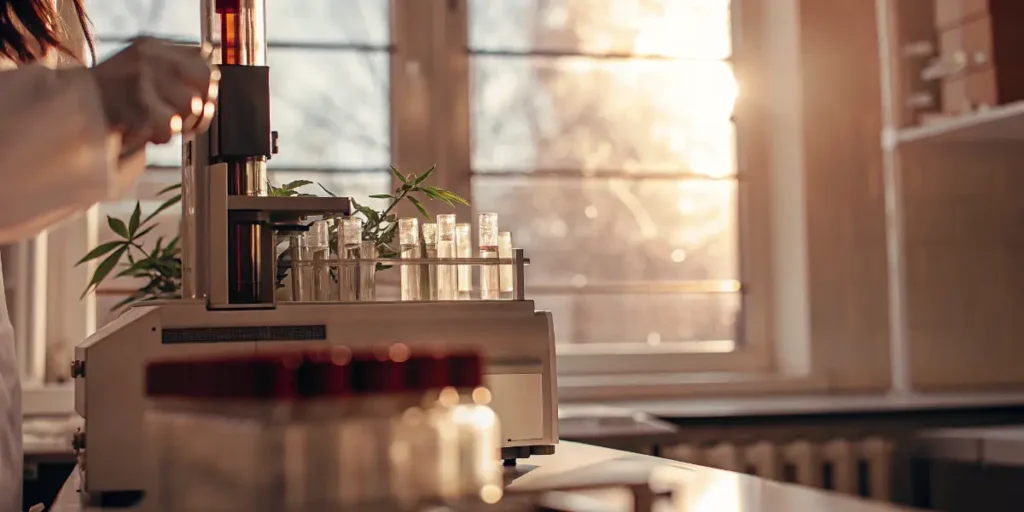
Expert HPLC Testing for Plant Growth Regulators in Cannabis

HPLC testing for plant growth regulators in cannabis is crucial for ensuring optimal plant growth and high-quality yields. By employing this method, growers are able to identify and quantify the presence of specific plant hormones, which play a significant role in plant development. This testing is vital for both first-time cannabis seed buyers and seasoned cultivators. It helps in maintaining the integrity and potency of popular strains like the Glookies from Blimburn Seeds.
High Performance Liquid Chromatography (HPLC) is a powerful tool used to separate, identify, and quantify each component in a mixture. In the cannabis industry, it’s used to analyze plant growth regulators, providing insights into how these chemicals influence plant growth. This can be critical when cultivating strains such as Mango Kush, known for its robust growth and aromatic profile.
Recommended Strains


HPLC testing for plant growth regulators in cannabis involves extracting plant hormones and running them through a liquid chromatography system. This process helps in knowing the plant’s growth patterns and making necessary adjustments to improve the yield and quality of strains like Blue Dream from Blimburn Seeds.
What is High Performance Liquid Chromatography?
High Performance Liquid Chromatography, or HPLC, is a technique used to separate a mixture of compounds in the cannabis plant. It’s an essential tool in the analysis of plant hormones. By using this method, growers can pinpoint the exact composition of growth regulators, allowing for precise adjustments in their cultivation techniques.
HPLC enables detailed analysis by using a liquid solvent to carry the cannabis extract through a column filled with a solid adsorbent material. Each component interacts with the adsorbent differently, allowing for separation and identification. This is particularly useful for monitoring growth hormones in cannabis strains like Bruce Banner 3 from Blimburn Seeds, ensuring they develop as intended.
Beyond its ability to separate and identify compounds, HPLC also provides valuable information about the concentration levels of each plant growth regulator. This is essential for growers who need to maintain a balanced hormonal environment for their cannabis plants. By knowing these concentrations, cultivators can make informed decisions about nutrient application and environmental adjustments.
Moreover, the precision of HPLC testing for plant growth regulators in cannabis allows for the detection of even trace amounts of hormones. This sensitivity is crucial for identifying potential hormonal imbalances early, thus preventing any adverse effects on plant growth and ensuring that strains such as OG Kush develop their characteristic traits effectively.
Promos & Deals


Why Test for Plant Growth Regulators?
Testing for plant growth regulators ensures that cannabis plants develop properly, maximizing their potential. These regulators are natural or synthetic compounds that influence the rate of plant growth, their response to environmental stimuli, and the differentiation of tissues.
For instance, auxins, a type of plant hormone, can be quantified using HPLC to ensure balanced growth. This process is crucial for maintaining the quality of cannabis plants, especially when cultivating sensitive strains like OG Kush from Blimburn Seeds. By knowing the hormonal balance, growers can make informed decisions about nutrient management and environmental conditions.
Another important aspect of HPLC analysis of plant hormones in cannabis cultivation is its ability to track changes over time. By regularly testing and analyzing cannabis growth hormones with HPLC, growers can observe how plants respond to different growing conditions, allowing for continuous optimization of cultivation practices.
Furthermore, HPLC testing for plant growth regulators in cannabis can help in detecting unwanted synthetic growth regulators that may have been introduced inadvertently. By ensuring that only the desired natural plant hormones are present, growers can maintain a more organic and sustainable cultivation process, enhancing the overall quality and safety of the cannabis produced.
HPLC Analysis of Cannabis Plant Growth Regulators
HPLC analysis of plant hormones in cannabis cultivation involves several steps. First, samples are collected from the plant. Then, the hormone compounds are extracted and purified. The purified samples are injected into the HPLC system, where they are separated and identified.
This method provides a comprehensive profile of the plant’s hormonal status, enabling growers to adjust their cultivation practices accordingly. For example, gibberellins, another type of growth hormone, can be monitored to enhance the flowering phase of cannabis strains. This is particularly beneficial for maximizing the yield of strains like Tangie from Blimburn Seeds.
Through HPLC method development for cannabis plant growth regulators, growers can tailor the testing process to meet their specific cultivation needs. This involves selecting appropriate solvents, optimizing column conditions, and choosing the best detection methods. Such customization ensures that the analysis is precise and reflective of the plant’s current hormonal state.
Additionally, the process of cannabis plant growth regulator quantification using HPLC allows for the comparison of different cultivation techniques or environmental conditions. By studying the effects of various factors on hormonal levels, growers can identify the most effective strategies for enhancing plant growth and achieving the desired traits in their cannabis strains.

Benefits of HPLC Testing in Cannabis Cultivation
HPLC testing offers numerous benefits in cannabis cultivation. It allows for precise quantification of plant growth regulators, ensuring that plants receive the right balance of hormones for optimal growth. This is particularly important for first-time growers who are unfamiliar with the complexities of cannabis cultivation.
Experienced growers also benefit from HPLC testing, as it provides detailed insights into plant health and development. By analyzing cannabis growth hormones with HPLC, growers can identify potential issues early and make necessary adjustments to their cultivation practices, ensuring the best possible yields.
One of the significant advantages of HPLC testing for plant growth regulators in cannabis is its role in enhancing the consistency of crop quality. By maintaining a stable hormonal environment, growers can produce cannabis plants with uniform characteristics, meeting consumer expectations and market demands consistently.
Moreover, HPLC testing supports sustainable cultivation practices by enabling growers to optimize their use of resources. By knowing the precise hormonal needs of their plants, cultivators can reduce waste and improve the efficiency of their operations, leading to more environmentally friendly and cost-effective cannabis production.
FAQs about HPLC testing for plant growth regulators in cannabis
What is HPLC testing for plant growth regulators in cannabis?
HPLC testing for plant growth regulators in cannabis is a process that involves using High Performance Liquid Chromatography to identify and quantify plant hormones. These hormones are crucial for regulating growth processes in cannabis plants. The testing helps growers ensure that their plants have the right hormonal balance for optimal growth and development.
This method is important for both new and experienced growers. It provides valuable insights into the plant’s health and growth patterns, allowing for precise adjustments in cultivation techniques. By using HPLC, growers can ensure that their plants are developing properly, resulting in high-quality yields.
As the cannabis industry continues to evolve, HPLC testing for plant growth regulators remains at the forefront of innovative cultivation practices. By incorporating this advanced analytical technique, growers can stay ahead of regulatory requirements and consumer expectations, ensuring that their products meet the highest standards of quality and safety.
Furthermore, the integration of HPLC testing into everyday cultivation practices can lead to the discovery of new insights into plant growth and development. This ongoing research and analysis can drive the development of more sophisticated cultivation techniques, benefiting both growers and consumers alike.
How does HPLC work in analyzing cannabis plant growth regulators?
HPLC works by separating a mixture of compounds in the cannabis plant. This is done by passing a liquid solvent through a column filled with a solid adsorbent. Each compound interacts differently with the adsorbent, allowing them to be separated and identified.
In the context of cannabis cultivation, HPLC is used to analyze plant hormones like auxins and gibberellins. This process provides a detailed profile of the plant’s hormonal status, enabling growers to make informed decisions about their cultivation practices.
The precision and accuracy of HPLC testing make it an invaluable tool for cannabis cultivators looking to optimize their growth conditions. By knowing the specific hormonal needs of different strains, growers can tailor their cultivation techniques to enhance plant development and yield.
Moreover, HPLC testing for plant growth regulators in cannabis aids in the detection of contaminants or impurities that could adversely affect plant health. By ensuring the purity of plant growth regulators, growers can maintain the integrity and quality of their cannabis strains, providing consumers with safe and effective products.
Why is it important to test for plant growth regulators in cannabis?
Testing for plant growth regulators is important because these hormones play a vital role in the plant’s development. They influence growth rates, response to environmental stimuli, and tissue differentiation, all of which are crucial for producing high-quality cannabis.
By testing for these hormones, growers can ensure that their plants are receiving the right balance of growth regulators. This helps in maximizing yield, improving quality, and maintaining the integrity of popular cannabis strains.
Another key reason for testing is the ability to maintain the genetic expression of specific strains. By knowing and controlling the hormonal balance, growers can preserve the unique characteristics of strains like Citronella Sunrize Auto and Mango Kush, ensuring that they continue to deliver the desired effects and flavors.
Additionally, testing for plant growth regulators helps in managing the lifecycle of cannabis plants more effectively. By monitoring hormonal levels throughout the growth stages, growers can optimize flowering times and improve the overall efficiency of their cultivation operations, leading to better resource management and increased profitability.
What are some cannabis strains that benefit from HPLC testing?
Many cannabis strains benefit from HPLC testing, as it ensures they develop properly and achieve their full potential. Strains like Tangerine Dream Auto, Durban Poison Regular, and Amnesia Regular from Blimburn Seeds are particularly well-suited for this type of analysis. HPLC testing helps in monitoring their growth hormones, ensuring they develop robustly and yield high-quality results.
By using HPLC to analyze the growth hormones in these strains, growers can make informed decisions about nutrient management and environmental conditions. This ensures that each strain reaches its maximum potential, delivering the desired effects and flavors.
Furthermore, HPLC testing for plant growth regulators in cannabis is invaluable for experimental or newly developed strains. By knowing their hormonal profiles, breeders and cultivators can refine their techniques to enhance desirable traits, paving the way for innovative and unique cannabis varieties.
Besides, classic strains like OG Kush and Bruce Banner can benefit from the precision of HPLC analysis, maintaining their reputation for quality and consistency. This ensures that consumers receive the same high standard of product that they have come to expect from these well-known strains.
Can HPLC testing improve cannabis cultivation practices?
Yes, HPLC testing can significantly improve cannabis cultivation practices. By providing detailed insights into the plant’s hormonal status, it allows growers to make informed decisions about their cultivation techniques. This results in healthier plants and higher-quality yields.
Whether you’re a first-time grower or an experienced cultivator, HPLC testing offers valuable information that can enhance your cultivation practices. It helps in identifying potential issues early and making necessary adjustments, ensuring the best possible outcomes for your cannabis plants.
Moreover, the data obtained from HPLC testing for plant growth regulators in cannabis can contribute to more effective breeding programs. By knowing the hormonal dynamics of parent strains, breeders can develop new varieties with improved growth characteristics and resilience.
Additionally, HPLC testing supports the adoption of precision agriculture techniques in cannabis cultivation. By aligning cultivation practices with the specific hormonal needs of each strain, growers can optimize their operations, reduce waste, and enhance the sustainability of their production processes.