Weed High pH Symptoms: Identification and Solutions

High pH levels in cannabis: Elevated pH in cannabis cultivation can lead to nutrient lockout, resulting in yellowing leaves and stunted growth. Early identification of these weed high pH symptoms is vital for plant health. Adjusting the pH to optimal levels, typically between 6.0 and 6.5 for soil, enhances nutrient uptake and boosts plant vitality. Monitoring and adjusting pH levels can prevent these issues.
In cannabis cultivation, terpenes like Myrcene and Limonene not only define aroma but also influence plant health. Myrcene, with its earthy scent, enhances THC uptake, while Limonene, citrusy in nature, boosts mood. Flowering typically spans 8-10 weeks, during which maintaining optimal pH levels is crucial for maximizing terpene production and overall plant vitality.
Recommended Strains
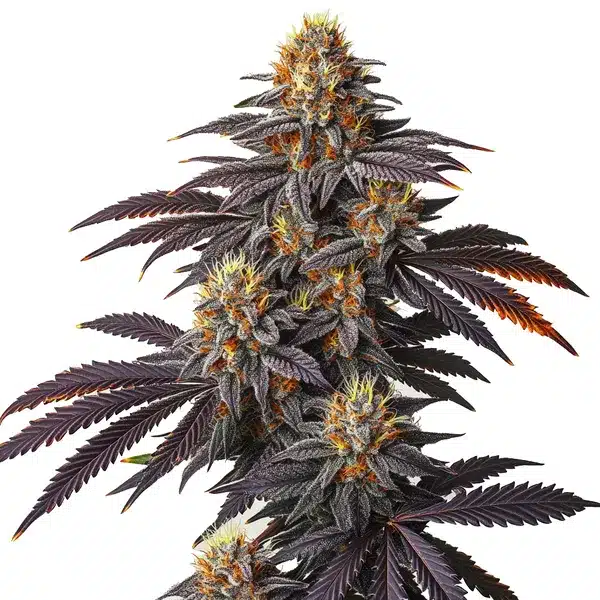
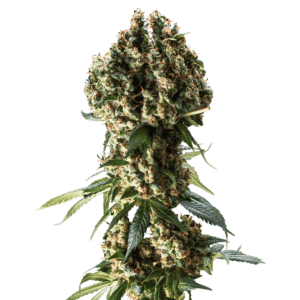
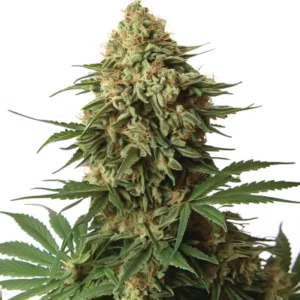
Blueberry Badazz

|
THC | 19% - 24% (High) |

|
Type | Feminized |

|
Yield | Medium |

|
Phenotype | 80% Indica / 20% Sativa |
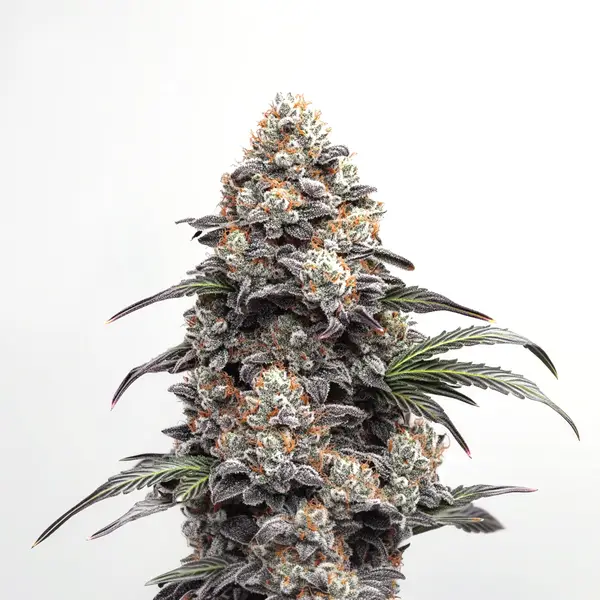
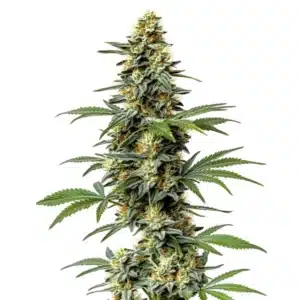
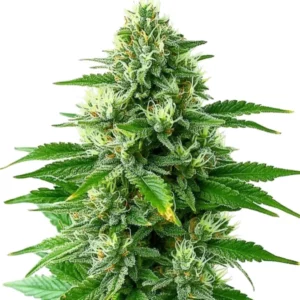
Alien GG
|
|
THC | 23% - 24% (High) |
|
|
Type | Feminized |
|
|
Yield | High |
|
|
Phenotype | 70% Indica / 30% Sativa |
pH Levels in Cannabis Cultivation
What is pH and Why is it Important?
pH measures the acidity or alkalinity of a solution, crucial in cannabis cultivation as it affects nutrient availability. A pH scale ranges from 0 to 14, where 7 is neutral. Cannabis thrives in slightly acidic environments, with soil pH ideally between 6.0 and 6.5, and hydroponics around 5.5 to 6.0. Deviations can cause nutrient lockout.
In soil, a pH of 6.0 to 6.5 ensures optimal nutrient uptake, preventing deficiencies. For hydroponics, maintaining a pH range of 5.5 to 6.0 is critical for nutrient absorption. Incorrect pH levels can lead to yellow leaves and poor growth, impacting yield and potency.
pH’s Role in Nutrient Uptake
pH directly influences nutrient solubility. At a pH of 7.0, essential nutrients like phosphorus and iron become less available, leading to deficiencies. Maintaining the correct pH ensures nutrients remain soluble and accessible to the plant roots, promoting healthy growth and maximizing yield.
Experienced growers use pH meters to monitor levels, adjusting with pH up or down solutions as needed. Regular checks prevent nutrient lockout, ensuring plants receive the necessary nutrients for robust growth and high-quality buds.
Promos & Deals
Weed High pH Symptoms
Signs of High pH in Plants
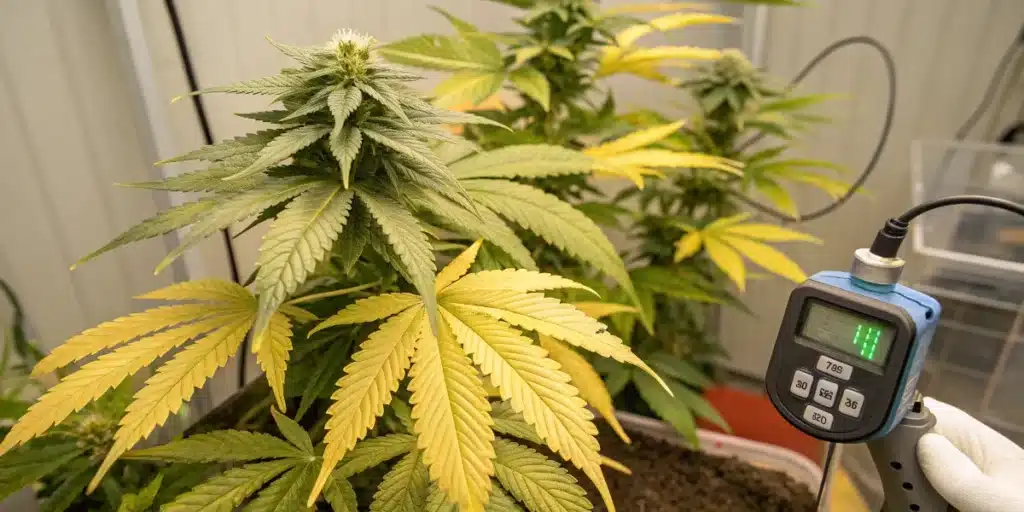
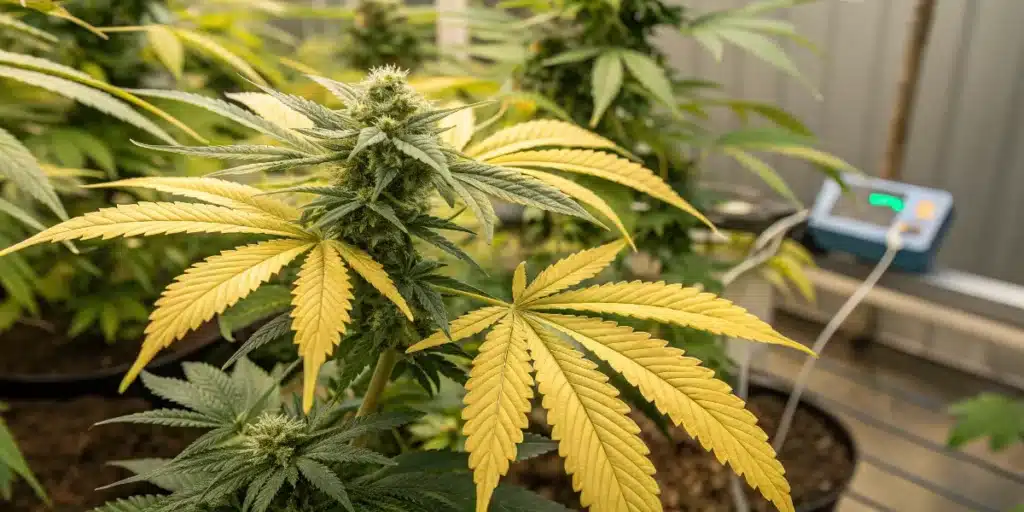
High pH in cannabis can lead to specific signs such as yellowing leaves and stunted growth. These symptoms indicate nutrient lockout, where essential nutrients are unavailable to the plant. Leaves may develop brown spots, and growth slows significantly. Refer to the pictures below to identify high pH symptoms in your cannabis plants.
While low pH can cause different issues, it’s crucial to distinguish these from high pH symptoms. Low pH often results in dark green leaves and nutrient burn, whereas high pH symptoms manifest as yellowing and poor growth. Recognizing these differences is key to effective pH management.
Impact of High pH on Cannabis Health
High pH levels can severely impact cannabis health by hindering nutrient absorption. This results in deficiencies of vital nutrients like magnesium and calcium, essential for plant development. Over time, this can lead to reduced yields and lower potency, affecting the overall quality of the harvest.
To mitigate these effects, growers should regularly test soil pH and make necessary adjustments. Using pH-adjusting solutions can help maintain optimal levels, ensuring plants receive adequate nutrients for healthy growth and maximum yield potential.
How to Test and Adjust pH Levels
Tools and Techniques for Accurate pH Measurement
Accurate pH measurement is essential for cannabis cultivation. Tools such as digital pH meters and pH test strips provide reliable readings. Digital meters offer precision, while strips are cost-effective and easy to use. Regular testing helps maintain optimal pH levels, preventing nutrient lockout and promoting healthy growth.
To test pH, collect a soil or water sample and use the chosen tool to measure. For soil, mix a sample with distilled water before testing. For hydroponics, test the nutrient solution directly. Adjust pH using pH up or down solutions to reach the desired range.
Adjusting pH for Optimal Growth
Adjusting pH involves using pH up or down solutions to reach the ideal range. For soil, a pH of 6.0 to 6.5 is optimal, while hydroponics requires 5.5 to 6.0. Apply solutions gradually, retesting after each adjustment to avoid overcorrection.
Experienced growers recommend making small adjustments and retesting frequently. This approach prevents drastic pH swings, which can stress plants and disrupt nutrient uptake. Consistent monitoring and adjustment ensure plants thrive, leading to robust growth and high-quality yields.
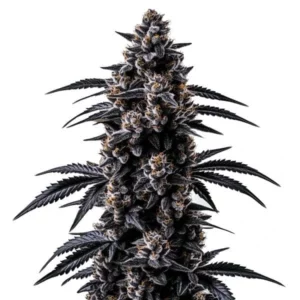
| Feature | Alien GG | Blueberry Badazz OG | Grandaddy Purple |
|---|---|---|---|
| THC Content | 23-24% | 19-24% | 25% |
| Dominant Terpene | Caryophyllene | Myrcene | Linalool |
| Aroma | Citrus, Herbal, Pine | Berry, Blueberry | Berry, Fruity |
| Effect | Calming, Happy, Relaxed | Calming, Happy, Relaxed | Happy, Relaxed, Talkative |
| Flowering Time | 8-10 weeks | 8-10 weeks | 8-10 weeks |
Best Practices for Maintaining Optimal pH
Best pH for Flowering Stage in Soil, Coco, and Hydroponics
For soil, the best pH during flowering is typically between 6.0 and 6.5. This range ensures nutrients like phosphorus and magnesium remain available. In coco, maintaining a pH of 5.8 to 6.0 is ideal for flowering, promoting optimal nutrient uptake. Hydroponic systems perform best with a pH range of 5.5 to 6.0 during flowering.
According to discussions on Reddit, many growers recommend a slightly acidic pH for optimal flowering. This consensus highlights the importance of maintaining specific pH levels tailored to each growing medium, ensuring plants receive the nutrients needed for healthy development and high yields.
Consistency in pH Management
Consistency is key in pH management. Regular testing and adjustments prevent nutrient lockout and ensure plants thrive. Use calibrated pH meters for accuracy, and adjust gradually to avoid stress. Many cultivators share that maintaining stable pH levels throughout the growth cycle is crucial for maximizing yield and quality.
Master growers have pointed out that fluctuations in pH can lead to nutrient deficiencies and reduced plant health. By consistently monitoring and adjusting pH, growers can prevent these issues, ensuring plants remain healthy and productive throughout their lifecycle.
How to Fix Nutrient Deficiency in Weed Plants
Identifying Nutrient Deficiencies
Nutrient deficiencies manifest as specific symptoms, such as yellowing leaves or stunted growth. Correcting pH imbalances is essential to resolving nutrient deficiencies in cannabis. Testing soil or nutrient solutions regularly helps identify and address deficiencies promptly, ensuring plants receive the necessary nutrients for healthy growth.
Growers should look for signs like leaf discoloration and slow growth, which indicate nutrient deficiencies. By adjusting pH levels and supplementing with the appropriate nutrients, these issues can be resolved, promoting robust plant health and maximizing yield potential.
Strategies for Correcting Deficiencies
To correct nutrient deficiencies, first test pH levels and adjust as needed. Use nutrient-specific supplements to address deficiencies, ensuring plants receive balanced nutrition. Regular monitoring and adjustments prevent future issues, maintaining optimal plant health and productivity.
Experienced growers report that addressing pH imbalances is the first step in correcting nutrient deficiencies. By maintaining stable pH levels and providing balanced nutrients, growers can ensure plants thrive, leading to high-quality harvests and increased yields.
Professional Tips for pH Management
- Maintain 6.0-6.5 pH in soil during flowering for optimal nutrient uptake. Avoid exceeding 7.0, as it causes nutrient lockout.
- Use digital pH meters for precise readings. Avoid test strips for hydroponics, as they lack accuracy.
- Adjust pH gradually using pH up or down solutions. Sudden changes can stress plants and disrupt growth.
- Test pH weekly to ensure stability. Fluctuations can lead to nutrient deficiencies and poor plant health.
- For coco, maintain a pH of 5.8-6.0 during flowering. This range ensures optimal nutrient availability.
- In hydroponics, keep pH between 5.5-6.0 to prevent nutrient lockout and maximize plant growth.
FAQ on pH Levels in Cannabis Cultivation
How to tell if your pH is too high?
High pH levels in cannabis plants often present as yellowing leaves and stunted growth. A pH above 6.5 in soil or 6.0 in hydroponics can cause nutrient lockout, leading to deficiencies. Regular testing with a digital pH meter can help detect and address high pH levels promptly.
Does weed mess with your pH levels?
Cannabis cultivation can affect soil pH levels, especially when using nutrient solutions. Over time, nutrient buildup can alter pH, impacting plant health. Regular testing and adjustments are necessary to maintain optimal pH levels, ensuring plants receive the nutrients needed for healthy growth.
What happens if pH gets too high?
If pH levels become too high, nutrient lockout occurs, preventing plants from absorbing essential nutrients. This can lead to deficiencies, yellowing leaves, and stunted growth. Maintaining a pH of 6.0-6.5 in soil and 5.5-6.0 in hydroponics prevents these issues, promoting healthy plant development.
How to tell if soil pH is too high?
Soil pH that exceeds 6.5 can cause nutrient lockout, evident by yellowing leaves and poor growth. Testing soil with a pH meter provides accurate readings, allowing for necessary adjustments. Correcting high pH levels ensures plants receive the nutrients needed for robust growth.
Can high pH affect cannabis potency?
Yes, high pH can impact cannabis potency by hindering nutrient uptake, affecting terpene and cannabinoid production. Maintaining optimal pH levels ensures plants receive the nutrients needed for producing high-quality, potent buds. Regular pH monitoring and adjustments are crucial for maximizing potency.