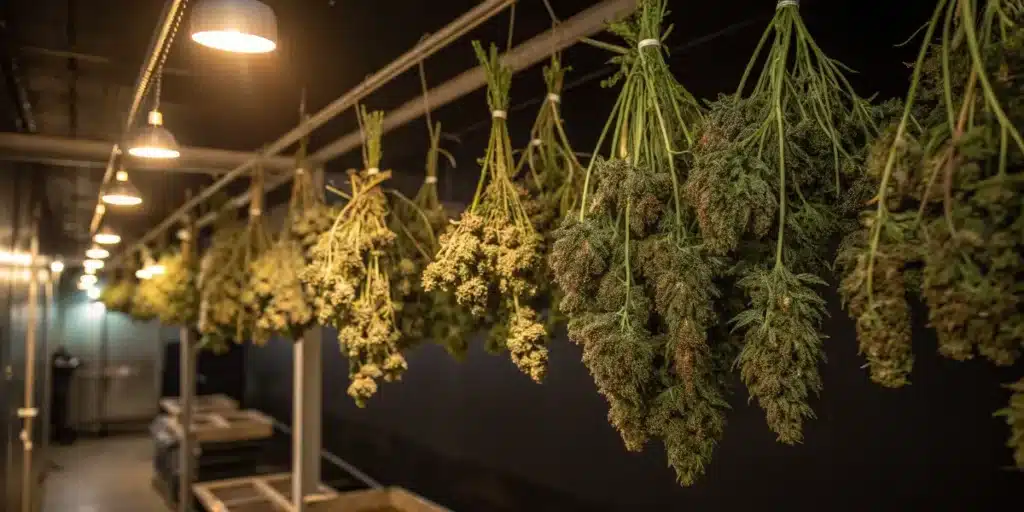
Slow Drying vs Fast Drying: Terpene Loss and VOCs Explained

Terpene preservation in cannabis: When comparing slow drying vs fast drying terpene loss VOCs, slow drying retains significantly more terpenes than fast drying, which can cause substantial loss of these essential compounds and volatile organic compounds (VOCs). Experienced growers report that drying cannabis at lower temperatures over an extended period can preserve up to 40% more terpenes compared to rapid drying techniques. This method helps maintain the aromatic profile, flavor, and therapeutic qualities of the cannabis.
In the world of cannabis cultivation, preserving terpenes is as crucial as maximizing THC content. Terpenes contribute significantly to the aroma and therapeutic effects of cannabis. Slow drying methods, taking 10-14 days, are preferred for maintaining terpene integrity, while fast drying can lead to a noticeable reduction in these volatile compounds. Knowing the drying process is essential for any grower aiming to produce high-quality cannabis.
Recommended Strains

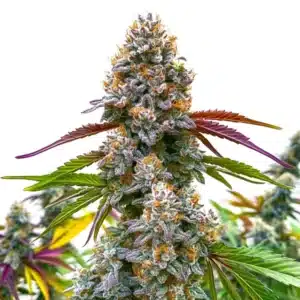
Gelato Auto

|
THC | 19% - 21% (Medium) |

|
Type | Autoflowering |

|
Yield | High |

|
Phenotype | 40% Indica / 60% Sativa |

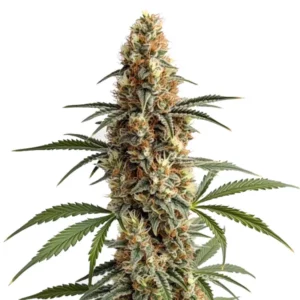
Banana Sherbet
|
|
THC | 22% - 26% (High) |
|
|
Type | Feminized |
|
|
Yield | High |
|
|
Phenotype | 70% Indica / 30% Sativa |
Terpenes and VOCs: The Essentials
What Are Terpenes?
Terpenes are aromatic compounds found in cannabis that contribute to its scent and flavor profile. They play a significant role in the plant’s interaction with the environment, attracting pollinators and deterring pests. In cannabis, terpenes like myrcene and limonene enhance the plant’s therapeutic effects by interacting with cannabinoids such as THC and CBD. Discussions around slow drying vs fast drying terpene loss VOCs are important because these compounds are highly volatile and can easily evaporate during improper drying processes.
For instance, myrcene, which is responsible for earthy and musky aromas, can enhance THC’s psychoactive effects by facilitating its passage through the blood-brain barrier. Typically, myrcene levels in cannabis range from 0.5% to 1.5%. Maintaining these levels is crucial for preserving the desired effects and aroma of the strain.
The Function of VOCs in Cannabis
Volatile Organic Compounds (VOCs) in cannabis include terpenes and other aromatic compounds that contribute to the plant’s overall profile. These compounds are essential for the plant’s defense mechanisms and play a role in its medicinal properties. However, VOCs are sensitive to temperature and humidity changes, making the drying process critical in preserving them.
During the drying phase, maintaining a temperature of 60°F – 70°F (15°C – 21°C) and a relative humidity of 55% – 65% is ideal to minimize VOC loss. This careful balance prevents the degradation of terpenes and ensures the retention of the plant’s full aromatic and therapeutic potential.
Promos & Deals
Slow Drying Method
Benefits of Slow Drying
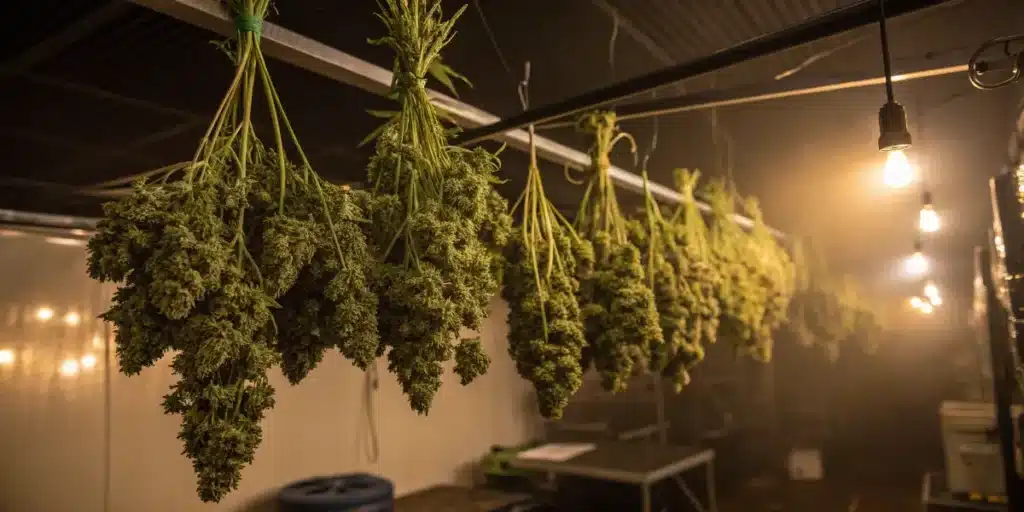
When comparing slow drying vs fast drying terpene loss VOCs, slow drying cannabis involves maintaining a controlled environment where the plant’s moisture is gradually reduced over 10–14 days. This method helps preserve terpenes and VOCs by preventing rapid evaporation. The slow process also allows for a more complete breakdown of chlorophyll, resulting in a smoother smoke and a more enhanced flavor profile.
By keeping the drying room at a steady 60°F (15°C) and 60% humidity, you can ensure that the terpenes remain intact. This method is particularly effective for strains with delicate terpene profiles, such as Blue Dream, which boasts a high myrcene content.
Potential Drawbacks
While slow drying is beneficial for terpene retention, it requires careful monitoring to prevent mold and mildew, which thrive in humid conditions. Ensuring proper air circulation and checking for mold regularly is crucial. Additionally, the extended drying period can be a drawback for growers looking for a quicker turnaround.
Despite these challenges, the benefits of slow drying often outweigh the risks, especially for high-terpene strains like Gelato Auto. Properly executed, this method results in a superior product with a rich aroma and enhanced effects.
Fast Drying Method
Advantages of Fast Drying
Fast drying methods involve higher temperatures and reduced humidity to quickly remove moisture from cannabis. This approach is often used to expedite the drying process, allowing growers to move product to market faster. It can be completed in as little as 3-5 days, significantly reducing the time from harvest to sale.
For commercial operations, fast drying can increase turnover and reduce storage space requirements. However, this method often leads to a reduction in terpene content, impacting the final product’s aroma and flavor profile.
Risks Involved
The primary risk of fast drying is the significant loss of terpenes and VOCs, which can degrade at temperatures above 70°F (21°C). This loss results in a less aromatic and flavorful product, diminishing the overall quality. Additionally, fast drying can lead to uneven moisture content, causing harsh smoke and reduced potency.
To mitigate these risks, growers should carefully monitor drying conditions and consider hybrid methods that balance speed with quality preservation. This approach can help maintain some of the aromatic compounds while still achieving a faster drying time.
Comparing Terpene Loss: Slow vs Fast Drying
Experienced Grower Insights
Experienced growers have observed that slow drying methods can retain up to 40% more terpenes compared to fast drying. This retention is crucial for maintaining the desired effects and flavors of cannabis strains. For example, strains like Critical Daddy Purple benefit from slow drying, preserving their rich, fruity aroma.
Data from cultivation circles suggest that maintaining a stable drying environment is key to minimizing terpene degradation. By keeping temperatures below 70°F (21°C) and humidity around 60%, the aromatic profile of the cannabis is preserved, enhancing the consumer’s experience.
Practical Tips for Minimizing Loss
To minimize terpene loss, consider using a hygrometer to monitor humidity levels closely. Aim for a relative humidity of 55% – 65% and a temperature range of 60°F – 70°F (15°C – 21°C). Avoid fluctuations that can cause terpene evaporation and ensure proper air circulation to prevent mold growth.
Additionally, consider using a slow drying method for strains with complex terpene profiles, such as Banana Sherbet. This approach will help maintain the strain’s unique characteristics and enhance its overall quality.
Professional Tips for Drying Cannabis
- Maintain 60°F – 70°F (15°C – 21°C) during drying to preserve terpenes. Temperatures above 70°F can cause terpene degradation.
- Ensure 55% – 65% relative humidity to prevent mold and mildew. Use a digital hygrometer for accurate readings.
- Use fans for air circulation but avoid direct airflow on buds to prevent uneven drying.
- Check for mold daily during slow drying, especially in high humidity conditions.
- Consider hybrid drying methods for a balance between speed and quality preservation.
- Store dried cannabis in airtight containers at 58% – 62% RH to maintain quality.
FAQs about slow drying vs fast drying terpene loss VOCs
What temperature destroys terpenes?
Terpenes begin to degrade at temperatures above 70°F (21°C). To preserve these compounds, it’s crucial to maintain drying temperatures between 60°F and 70°F. Exceeding this range can lead to significant terpene loss, affecting the aroma and therapeutic properties of the cannabis.
What happens when your bud dries out too quickly?
Fast drying can cause cannabis buds to lose terpenes and VOCs, resulting in a harsh smoke and diminished flavor. Rapid moisture loss can also lead to uneven drying, which may affect potency. Ideally, cannabis should dry slowly over 10-14 days to preserve quality.
What destroys terpenes?
Terpenes are destroyed by high temperatures, excessive light, and improper humidity levels. To protect these compounds, dry cannabis in a dark, cool environment with stable humidity. Avoid exposing buds to direct light and high temperatures to maintain their aromatic profile.
How can I preserve terpenes during drying?
Preserve terpenes by maintaining a drying environment of 60°F – 70°F (15°C – 21°C) and 55% – 65% humidity. Use a hygrometer to monitor conditions and ensure proper air circulation. Avoid direct airflow on buds and check for mold regularly to keep terpenes intact.
Why is slow drying preferred for cannabis?
Slow drying is preferred because it retains more terpenes and VOCs, enhancing the flavor and aroma of cannabis. This method also allows for a smoother smoke and preserves the plant’s therapeutic properties. Slow drying typically takes 10-14 days, ensuring high-quality results.