Best Fertilizer for Big Buds Outdoors: Flowering Nutrients

Quick answer: the best fertilizer for big buds outdoors is a bloom formula high in phosphorus and potassium (P-K) and lower in nitrogen, fed in step with the flowering stage. Keep your soil pH between 6.0 and 7.0 so the plant can actually use it. The feeding chart below shows exactly what to give, and when, for dense, heavy colas.
| Flowering phase | Timing | Feeding focus | Example NPK |
|---|---|---|---|
| Early flower (transition) | Weeks 1-2 | Ease off nitrogen, start phosphorus and potassium | ~3-12-6 |
| Mid-flower (bud swell) | Weeks 3-5 | Peak P-K; add a PK booster for density | ~1-3-2 + PK boost |
| Late flower (ripening) | Weeks 6+ | High potassium, taper feeding | ~0-10-10 |
| Final flush | Last 1-2 weeks | Plain pH-balanced water only | Flush |
Why Feeding Changes at Flowering
When outdoor plants sense the longer nights of late summer, they flip from growing leaves to building buds, and their diet has to flip with them. In veg they crave nitrogen for leafy growth; in flower they want far less of it and much more phosphorus and potassium. Keep feeding heavy nitrogen now and you risk airy, low-potency buds or even re-vegging. For more on this switch, see our guide to budding vs flowering.
Recommended Strains
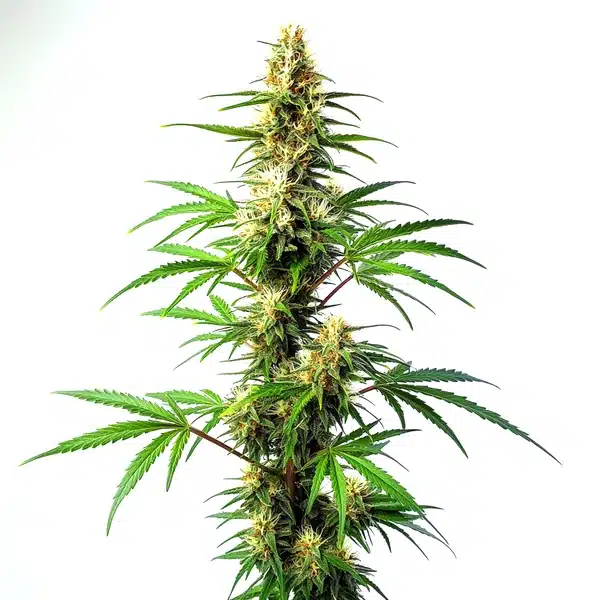
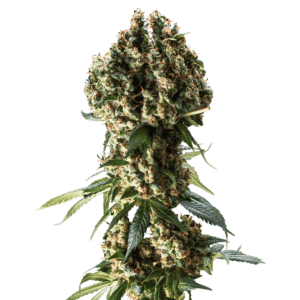
Blue Amnesia Auto

|
THC | 17% - 18% (Medium) |

|
Type | Autoflowering |

|
Yield | Low |

|
Phenotype | 40% Indica / 60% Sativa |

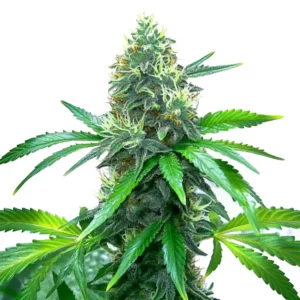
Blue Cheese
|
|
THC | 16% - 20% (Medium) |
|
|
Type | Feminized |
|
|
Yield | High |
|
|
Phenotype | 80% Indica / 20% Sativa |
In flower, phosphorus and potassium do the heavy lifting. Phosphorus powers the energy the plant needs to build new bud sites, while potassium runs its plumbing, moving water and nutrients up to fuel fat, resin-heavy colas. Skimp on either and buds stay small and loose no matter how good your genetics are.
Promos & Deals
Flowering NPK Ratios and Secondary Nutrients
The key is reading the NPK on the label instead of trusting the marketing name. A veg “Grow” feed is nitrogen-heavy (say 10-5-5); a true “Bloom” feed flips that toward phosphorus and potassium (around 3-12-6 early, up to 0-10-10 late). The real magic happens in weeks 3-5, the bud-swell window: a PK booster here gives the plant the raw material to fatten calyxes to their maximum size, exactly as the chart above lays out.
Do not forget the secondary nutrients. Magnesium keeps photosynthesis running so the plant can make the sugars that become resin, and calcium builds strong cell walls that hold up heavy outdoor branches and help resist heat stress and mold. A cal-mag supplement is cheap insurance outdoors, where temperature swings are common.
Feeding by Strain Type
| Factor | Indica | Sativa | Autoflower |
|---|---|---|---|
| Flowering time | 7-9 weeks | 10-16 weeks | 5-8 weeks (from bloom) |
| Peak NPK | 1-4-2 (heavy P) | 2-3-2 (keeps more N) | 1-2-2 (lighter) |
| Ideal pH | 6.2-6.8 | 6.0-6.5 | 6.0-6.3 |
| Feeding note | Handles heavy P-K fast | Needs steady N (long bloom) | Feed at 1/4-1/2 strength |
Micronutrients, Terpenes and the Outdoor Sun
Big buds are only half the goal; aroma matters too. The terpenes behind that citrus or earthy smell rely on trace micronutrients like sulfur, zinc and manganese, so a complete feed (not just N-P-K) produces a richer, more flavorful flower. Sulfur in particular is a building block for many of those aromatic compounds.
Outdoor growers have a secret weapon: real sunlight, including the UV rays that push plants to make more protective resin than most indoor lights can. Lean into that with organic supplements like seaweed or kelp, which act as gentle, natural growth boosters and help build sticky, resilient, terpene-rich flowers. It is a big reason a well-fed outdoor plant can rival an indoor one.
Pro Tips for Bigger Outdoor Buds
- Molasses in the final weeks: add unsulphured blackstrap molasses to feed soil microbes, which help the plant take up its last minerals.
- Chase the sun: make sure flowering plants are not shaded by trees or structures in the afternoon; more direct light means more resin.
- Mid-bloom flush (week 4-5): a light flush with plain pH-balanced water clears built-up salts and prevents nutrient lockout.
- Add silicon early: potassium silicate strengthens stems so they can hold heavy outdoor colas without snapping.
- Let it fade: yellowing fan leaves in the last 10-14 days is normal and good; do not add nitrogen now or you will hurt the flavor.
This guide focuses on outdoor flowering. For a broader overview across every stage, see our guide to the best fertilizer for cannabis, or go natural with the best organic cannabis fertilizer.
FAQs: Outdoor Flowering Nutrients
What is the best fertilizer for big buds outdoors?
The best fertilizer for big buds outdoors is a bloom feed high in phosphorus and potassium (around 1-3-2), lower in nitrogen. Outdoors, slow-release organic amendments like bat guano or bone meal work beautifully, topped up with a liquid PK booster during the mid-bloom swell (weeks 3-5) to pack on density.
How do I identify nutrient lockout during flowering?
Nutrient lockout shows up as sudden discoloration or burnt leaf tips even though you have not fed more than usual. The usual cause is soil pH drifting outside 6.0-7.0, which stops the roots absorbing minerals like phosphorus. Check your runoff pH and PPM, and correct the pH before adding any more nutrients.
Why do sativas need different feeding than indicas?
It comes down to how long they flower. Sativas bloom for 12 weeks or more, so they need steady, moderate nitrogen the whole time to avoid yellowing early. Indicas finish in 7-9 weeks, so they can take heavier phosphorus and potassium in a shorter window to bulk up buds fast. Match the feed to the flowering length.
What are the signs of phosphorus deficiency?
Phosphorus deficiency shows as dark green or bluish leaves that develop purple or bronze spots, often with red or purple stems. Because phosphorus is mobile, the plant pulls it from older growth first, so symptoms appear on the lower, older leaves before the top. It is common in cold soil, since roots absorb P poorly when chilly.
Should I feed outdoor autoflowers differently?
Yes. Autoflowers have shorter lives and smaller roots, so they are easily overfed. Start at a quarter to half the recommended dose and build up only if they can take it. And never switch an outdoor autoflower to 12/12; they flower by age, so keep them in the longest, sunniest spot you have to maximize their short window.