Managing Cold Temps During Flowering Outdoor

Cold temperatures during flowering: Managing cold temps during the outdoor flowering stage is essential to prevent bud rot and cold stress. Optimal temperatures range from 65°F to 80°F, while temperatures below 40°F can significantly damage cannabis plants. Ensuring proper airflow and spacing can mitigate the adverse effects of cold and moisture, safeguarding your harvest from potential losses.
Cold temperatures during the flowering stage can challenge even seasoned growers. Terpenes like myrcene and limonene can be affected by cold stress, altering the plant’s aroma and potency. Additionally, the flowering time might extend beyond the typical 8-9 weeks due to slowed metabolic processes. Understanding these impacts is crucial for a successful outdoor harvest.
Recommended Strains
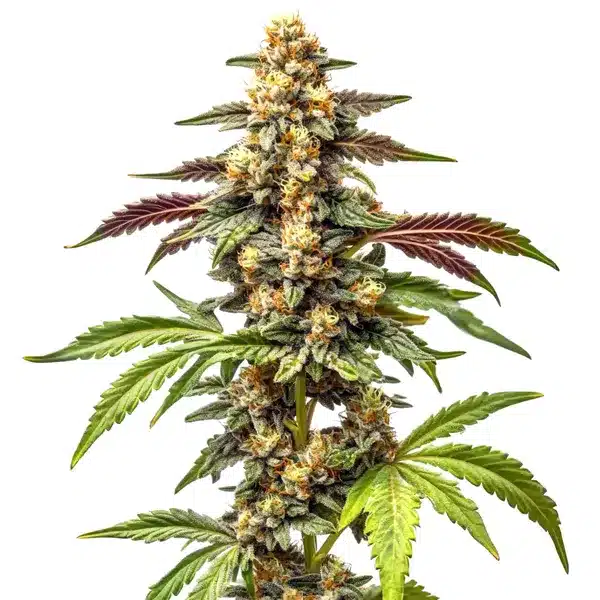
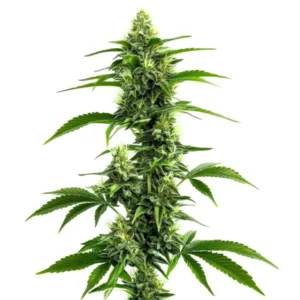
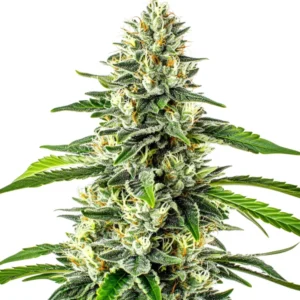
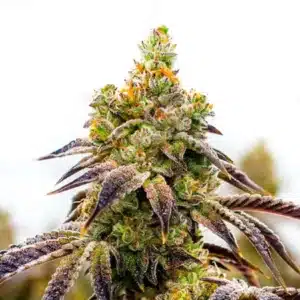
Alien Rock Candy F1

|
THC | 22% - 24% (High) |

|
Type | Feminized F1 |

|
Yield | High |

|
Phenotype | 50% Indica / 50% Sativa |

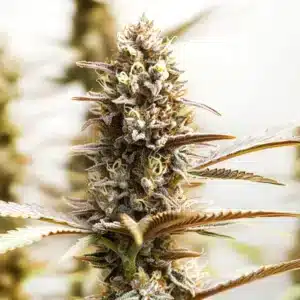
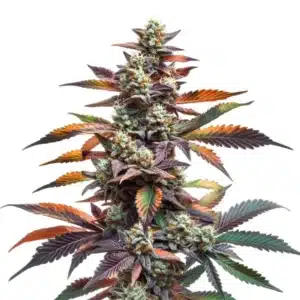
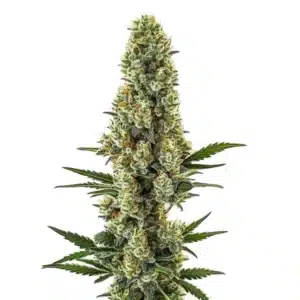
Amnesia Haze Auto
|
|
THC | 16% - 17% (Medium) |
|
|
Type | Autoflowering |
|
|
Yield | Medium |
|
|
Phenotype | 25% Indica / 75% Sativa |
Cold Stress in Cannabis
What is Cold Stress?
Cold stress in cannabis occurs when temperatures drop below the plant’s optimal range, affecting its physiological functions. This stress can lead to reduced photosynthesis, nutrient uptake, and overall growth. The plant’s metabolic rate decreases, causing slower development and potential stunted growth. Cold stress is particularly detrimental during the flowering stage, where energy demands are high.
Cold stress can cause visible symptoms such as wilting, purpling of leaves, and slowed bud development. Cannabis plants thrive in temperatures between 65°F and 80°F (18°C – 27°C). When temperatures dip below 55°F (13°C), the risk of cold stress increases, potentially leading to irreversible damage. Monitoring temperatures is crucial to prevent these adverse effects.
Symptoms of Cold Stress
Symptoms of cold stress include leaf curling, discoloration, and slowed growth. The plant’s leaves may turn purple due to anthocyanin production, a defense mechanism against cold. This pigmentation can be aesthetically pleasing but indicates stress. Cold stress can also lead to nutrient lockout, where essential nutrients become unavailable to the plant.
Cold stress can be mitigated by using protective measures such as frost covers or greenhouses. These structures help maintain a stable environment, reducing temperature fluctuations. Additionally, selecting cold-resistant strains like Critical Kush Auto can enhance resilience against cold stress.
Promos & Deals

Optimal Flowering Temperatures
Best Temperature for Flowering Stage Outdoors
The best temperature for outdoor flowering ranges from 65°F to 80°F (18°C – 27°C). This range supports optimal photosynthesis and metabolic activity, promoting healthy bud development. Temperatures below this range can slow growth and reduce yield. Monitoring daily temperature fluctuations is essential to maintain this optimal range.
Temperature swings of more than 20°F (11°C) between day and night can stress the plant, affecting its growth cycle. Using mulch or ground covers can help stabilize soil temperatures, providing a more consistent environment for root development. Consistent temperatures ensure the plant’s energy is focused on bud production rather than stress response.
How Cold is Too Cold for Cannabis?
Temperatures below 40°F (4°C) are too cold for cannabis plants, leading to potential cell damage and halted growth. Prolonged exposure to such cold can cause irreversible harm, including bud rot and nutrient lockout. It’s crucial to monitor weather forecasts and take preventive measures to protect plants from extreme cold.
Using thermal blankets or moving plants to sheltered areas can prevent cold damage. In regions prone to frost, planting later in the season can help avoid the coldest temperatures during the critical flowering stage. These strategies ensure plants remain healthy and productive throughout the flowering period.
Strategies to Combat Cold and Moisture
Airflow and Spacing Techniques
Ensuring proper airflow is vital in combating moisture-related issues like bud rot. Spacing plants at least 5-6 feet (1.5-2 meters) apart allows air to circulate freely, reducing humidity around the buds. This spacing prevents the buildup of damp air, which can lead to mold and mildew development.
Using stakes or cages can help open up the plant’s structure, allowing more air to reach the inner canopy. This technique is particularly useful in dense foliage, where airflow is often restricted. Maintaining good airflow is a proactive measure against moisture-related diseases.
Pruning for Better Air Circulation
Pruning is an effective method to enhance air circulation within the plant. Removing large fan leaves and lower foliage opens up the plant’s structure, allowing air to penetrate the canopy. This practice reduces humidity around the buds, minimizing the risk of mold and mildew.
Pruning should be done carefully to avoid stressing the plant. It’s best to prune during the early flowering stage, allowing the plant time to recover before the critical bud development phase. Proper pruning techniques ensure a healthier, more productive plant.
| Feature / Merkmal | Critical Kush Auto | Z OG | Blue Widow |
|---|---|---|---|
| THC % | 20-24% | 22-25% | 18-22% |
| Dominant Terpene | Myrcene | Limonene | Pinene |
| Flowering Time | 8-9 weeks | 9-10 weeks | 8-9 weeks |
| Yield (oz/plant) | 21-25 oz | 18-22 oz | 20-24 oz |
| Cold Resistance | High | Moderate | High |
Effects of Frost on Cannabis
What Does Frost Do to Trichomes?
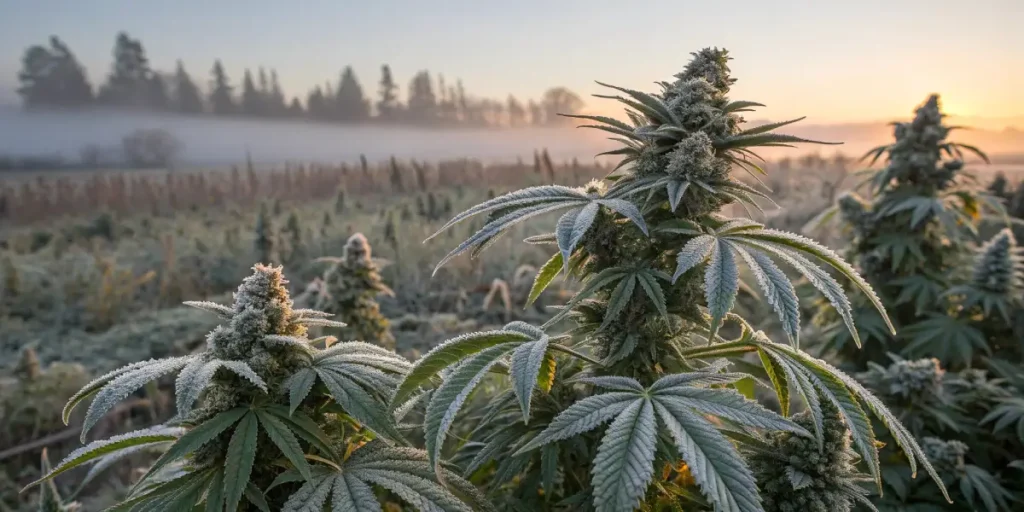
Frost can damage trichomes, the resinous glands responsible for producing cannabinoids and terpenes. When exposed to freezing temperatures, trichomes can become brittle and break off, reducing the plant’s potency and aroma. This damage can significantly impact the quality of the final product.
Trichomes are most vulnerable during the late flowering stage when they are fully developed. Protecting plants from frost by using covers or moving them indoors can prevent trichome damage. Ensuring a stable environment is crucial for preserving the plant’s cannabinoid and terpene profile.
Preventative Measures Against Frost
Preventing frost damage involves using protective covers and monitoring weather forecasts closely. Frost covers or row covers can provide an additional layer of insulation, protecting plants from sudden temperature drops. These covers should be used during the night and removed during the day to allow sunlight and airflow.
In regions with frequent frost, consider planting strains like Blue Widow, known for their cold resistance. These strains are better equipped to handle low temperatures, reducing the risk of frost damage. Proactive measures ensure a healthy, productive harvest.
Professional Tips for Cold Weather Cultivation
- Maintain 65-80°F (18-27°C) during flowering. Below 55°F (13°C) can cause cold stress, reducing yield. Use mulch to stabilize soil temperatures.
- Space plants 5-6 feet (1.5-2 meters) apart. This ensures airflow, preventing moisture buildup and reducing bud rot risk.
- Prune large fan leaves early in flowering. This enhances air circulation, reducing humidity and mold risk.
- Use thermal blankets during cold nights. This prevents frost damage, preserving trichomes and plant health.
- Monitor weather forecasts closely. Prepare for sudden temperature drops by having frost covers ready.
- Choose cold-resistant strains like Critical Kush Auto to enhance resilience against cold stress.
Frequently Asked Questions
Is 40 degrees too cold for outdoor plants?
Yes, 40°F (4°C) is too cold for cannabis plants, potentially causing cell damage and halted growth. Prolonged exposure can lead to bud rot and nutrient lockout. Protect plants with thermal blankets or move them to sheltered areas to prevent cold damage and ensure a healthy harvest.
What fertilizer makes buds bigger?
Fertilizers with high phosphorus and potassium levels, such as a 1:3:2 NPK ratio, promote larger buds. These nutrients support flower development and enhance bud density. Avoid over-fertilizing, which can lead to nutrient burn and reduced yield. Monitor nutrient levels to optimize bud growth.
What is the best temperature for the flowering stage outdoors?
The ideal temperature for outdoor flowering is 65°F to 80°F (18°C – 27°C). This range supports optimal photosynthesis and bud development. Temperatures outside this range can slow growth and reduce yield. Use mulch or ground covers to stabilize soil temperatures and maintain this optimal range.
What is the secret to big buds?
The secret to big buds lies in maintaining optimal conditions: 65-80°F (18-27°C) temperatures, high phosphorus fertilizers, and proper pruning. Ensuring adequate airflow and spacing prevents mold and enhances bud growth. Avoid nutrient imbalances, which can stunt growth and reduce bud size.
How cold can weed plants get?
Cannabis plants can tolerate temperatures as low as 55°F (13°C) without severe stress. However, prolonged exposure to temperatures below 40°F (4°C) can cause significant damage, including halted growth and bud rot. Protect plants from extreme cold with thermal covers or by moving them indoors.