Black Spots on Weed Leaves: Causes and How to Fix Them

Quick answer: Black spots on weed leaves usually point to one of a few causes: fungal leaf spot (like septoria), a calcium or phosphorus problem, pH issues that lock out nutrients, pests, or light and heat stress. Identify which by where the spots appear and what else is wrong, then fix the cause, improving airflow and humidity for fungus, or correcting feeding and pH for deficiencies.
Few things worry a grower like black or dark spots appearing on their cannabis leaves. The good news is that it is almost always a solvable problem once you identify the cause, and the pattern of the spots, where they appear, what they look like, and what other symptoms show, usually points to the culprit.
Recommended Strains

Super Critical

|
THC | 18% - 20% (Medium) |

|
Type | Feminized |

|
Yield | High |

|
Phenotype | 70% Indica / 30% Sativa |
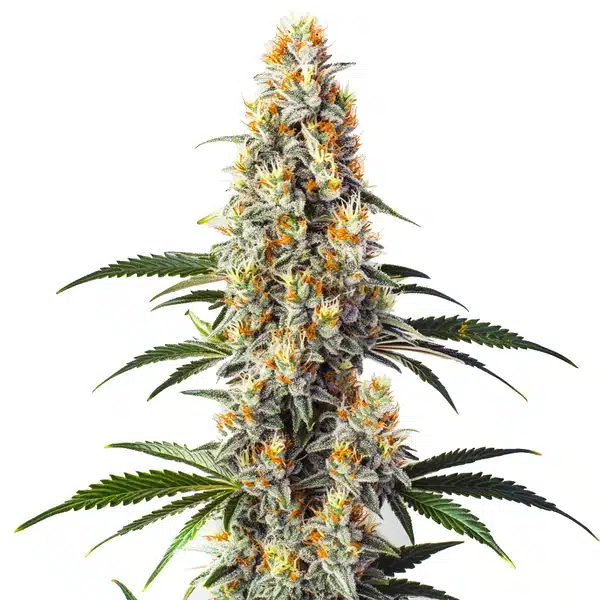
Super Glue
|
|
THC | 16% - 19% (Medium) |
|
|
Type | Feminized |
|
|
Yield | High |
|
|
Phenotype | 60% Indica / 40% Sativa |
The common causes fall into a handful of groups: fungal disease, nutrient or pH issues, pests, and environmental stress. The table below sums them up with signs and fixes, and the sections after explain how to tell them apart and treat them, so you can stop the spread and protect your harvest.
| Cause | Signs | Fix |
|---|---|---|
| Fungal leaf spot (e.g. septoria) | Round brown-black spots, often lower leaves first | Improve airflow, remove affected leaves, reduce humidity; treat fungus |
| Calcium / phosphorus issues | Dark or rusty spots with discoloration | Correct feeding and pH so nutrients are available |
| pH problems | Spots plus deficiency signs despite feeding | Set pH to the right range for your medium |
| Pests (e.g. thrips, mites) | Tiny dark specks, bronzing, bugs present | Identify and treat the pest; inspect undersides |
| Light / heat stress | Spots near the canopy top | Raise lights, lower temperature |
What Causes Black Spots on Weed Leaves
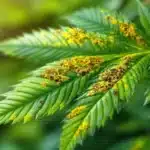
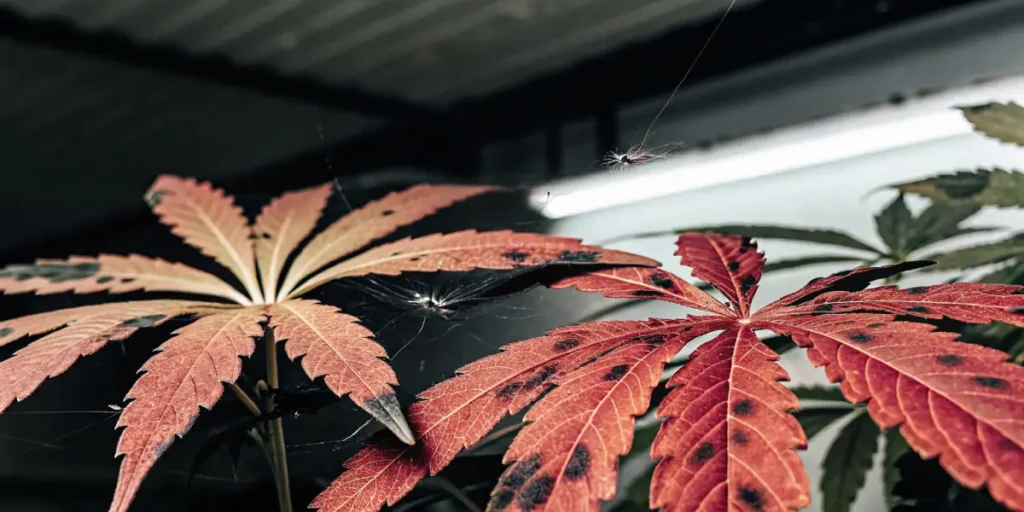
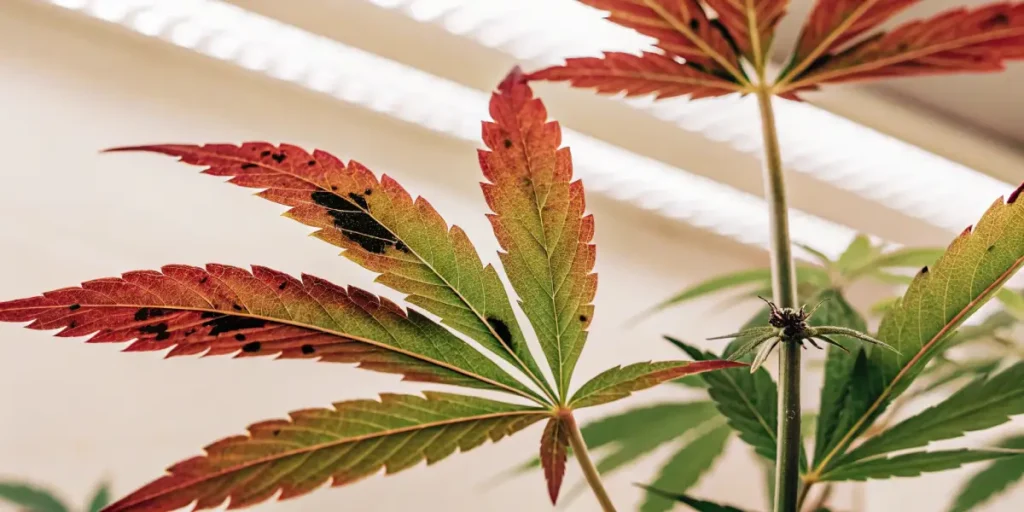
Fungal leaf spot, such as septoria, is one of the most common causes: it shows as round brown-to-black spots, typically starting on lower, older leaves in warm, humid, poorly ventilated conditions. Nutrient issues are another big group, calcium or phosphorus problems (often tied to pH) can cause dark, rusty or spotted patches alongside other deficiency signs.
pH is frequently the hidden driver behind ‘deficiencies’, because the wrong root-zone pH locks out nutrients even when they are present. Pests like thrips or mites can leave tiny dark specks, bronzing and bite damage (check leaf undersides for bugs), and light or heat stress can mark leaves near the top of the canopy. Reading the pattern is how you narrow it down.
Promos & Deals
How to Fix and Prevent Black Spots
Treat the cause, not just the symptom. For fungal leaf spot, improve airflow, lower humidity, remove badly affected leaves, avoid wetting the foliage, and treat the fungus if needed; for nutrient issues, correct feeding and, crucially, set the right pH so calcium and phosphorus become available again. For pests, identify the insect and treat accordingly, and for stress, adjust light distance and temperature.
revention is mostly good environment and routine: steady humidity and airflow, correct pH and balanced feeding, clean plants and regular inspection to catch problems early. If you suspect fungus or mould specifically, see our guides on marijuana mold and treating powdery mildew, and for calcium issues, our guide on cal-mag for cannabis.
Are Buds With Black Spots Safe?
If black spots are on the buds themselves rather than the leaves, be more cautious, that can indicate mould or rot, which is not safe to smoke. Dusty, fuzzy or web-like black/grey growth on dense buds, especially with a musty smell, should be treated as mould: discard affected buds rather than risk inhaling it. Leaf spots are usually a plant-health issue, but bud contamination is a safety one.
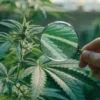
When the spots are clearly on leaves and caught early, you can often save the plant and still harvest healthy buds by fixing the cause and removing damaged foliage. When in doubt about anything on the flowers, inspect closely (a loupe helps) and err on the side of caution. Protecting a healthy harvest is always worth more than saving a few questionable buds.
Fungal vs Nutrient vs Pest: Telling Them Apart
Because the fixes differ, it helps to tell the causes apart. Fungal leaf spot usually starts on lower, older leaves in humid, still air, as fairly round brown-to-black spots that may have a yellow halo and spread over time. Nutrient or pH issues tend to come with other classic deficiency signs (yellowing, curling) and often affect the plant more broadly rather than as neat spots.
Pest damage looks different again: tiny dark specks, stippling or bronzing, with insects or their eggs often visible on leaf undersides. Environmental stress marks tend to appear near the canopy top closest to the light or heat. Checking the location, the shape of the marks, and what other symptoms are present usually narrows it to one cause, which tells you how to treat it.
FAQs About Black Spots on Weed Leaves
What causes black spots on weed leaves?
Usually fungal leaf spot (like septoria), a calcium or phosphorus issue, pH problems that lock out nutrients, pests such as thrips or mites, or light and heat stress. The location and other symptoms help identify which. Fix the underlying cause, airflow and humidity for fungus, feeding and pH for deficiencies, rather than just the spots.
How do you treat black spots on cannabis leaves?
Identify the cause first. For fungal leaf spot, improve airflow, lower humidity, remove affected leaves and treat the fungus; for nutrient issues, correct feeding and set the right pH so calcium and phosphorus are available; for pests, treat the specific insect. Prevention is steady environment, correct pH and regular inspection.
Are black spots on weed dangerous to smoke?
Spots on leaves are usually a plant-health problem, not a smoking hazard, and you can often save healthy buds. But black or grey spots on the buds themselves can indicate mould or rot, which is not safe to inhale, especially if dusty, fuzzy or musty-smelling. When buds are affected, discard them rather than risk it.
Can you save a plant with black spots on the leaves?
Often yes, if you catch it early and fix the cause. Remove badly affected leaves, correct the underlying issue (airflow and humidity for fungus, feeding and pH for deficiencies, treatment for pests), and the plant can usually recover and still produce healthy buds. Act quickly to stop it spreading, and watch the buds for any sign of mould.