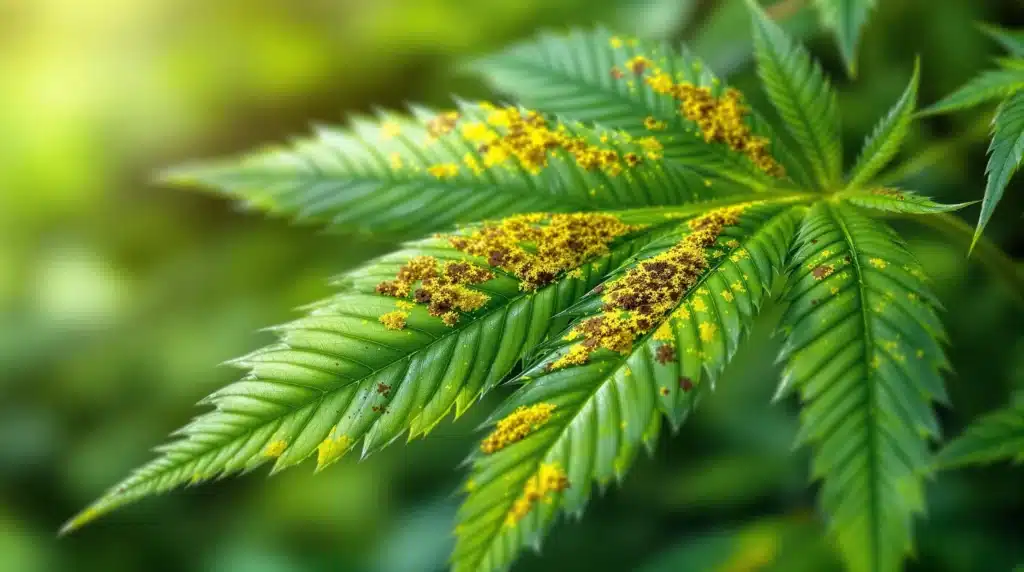
Why Are Cannabis Leaves Turning Yellow with Brown Spots?

Key Insight: Yellowing cannabis leaves with brown spots often indicate nutrient deficiencies, pest infestations, or environmental stress. Identifying the root cause is essential for effective treatment. For example, nitrogen deficiency can cause yellow leaves, while spider mites might lead to brown spots. Regular monitoring and timely interventions can help maintain plant health and prevent these issues.
When cannabis leaves turn yellow with brown spots, it signals potential issues such as nutrient imbalances or pest infestations. Terpenes like Myrcene enhance THC uptake, playing a crucial role in plant health. Additionally, maintaining a stable environment with optimal light and humidity levels is vital for healthy growth. Let’s explore these factors in detail.
Recommended Strains

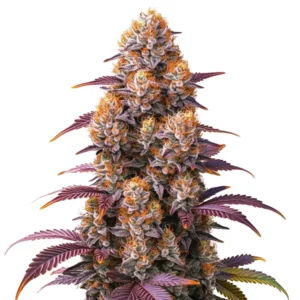
Fat Bastard

|
THC | 30% - 38% (High) |

|
Type | Feminized |

|
Yield | High |

|
Phenotype | 50% Indica / 50% Sativa |

Fat Bastard Auto
|
|
THC | 30% - 38% (High) |
|
|
Type | Autoflowering |
|
|
Yield | High |
|
|
Phenotype | 50% Indica / 50% Sativa |
Causes of Yellowing and Brown Spots on Cannabis Leaves
Nutrient Deficiencies in Cannabis
Nutrient deficiencies are a primary cause of yellowing leaves with brown spots on cannabis plants. Essential nutrients like nitrogen, magnesium, and calcium are crucial for plant health. A nitrogen deficiency often results in yellowing leaves starting from the tips and moving inward. Magnesium deficiency, on the other hand, causes yellowing between the veins, leaving the veins green.
Ensuring your soil has the right nutrient balance is critical. Regular soil testing can help maintain optimal nutrient levels, preventing deficiencies. For example, using fertilizers with a balanced N:P:K ratio of 3:1:2 during the vegetative stage can support healthy growth and prevent yellowing.
Pest Infestations Impacting Cannabis Health
Pests like spider mites, aphids, and thrips can cause significant damage to cannabis plants, leading to yellowing leaves and brown spots. These pests feed on the plant’s sap, weakening it and affecting its overall health. Regular inspections, especially on the underside of leaves, can help detect infestations early.
Using organic insecticides or neem oil can effectively manage pest issues without harming the plants or the environment. Maintaining good airflow in your grow area can also deter pests from settling on your plants. Vigilance and early intervention are key to protecting your plants from pest damage.
Promos & Deals

How to Fix Yellow and Brown Spots on Cannabis Leaves
Adjusting Nutrient Levels
Correcting nutrient deficiencies involves adjusting the nutrient levels in your soil. For instance, if you notice yellowing leaves due to nitrogen deficiency, consider using a high-quality fertilizer rich in nitrogen. Regular soil testing can help you identify which nutrients are lacking and allow you to take targeted action.
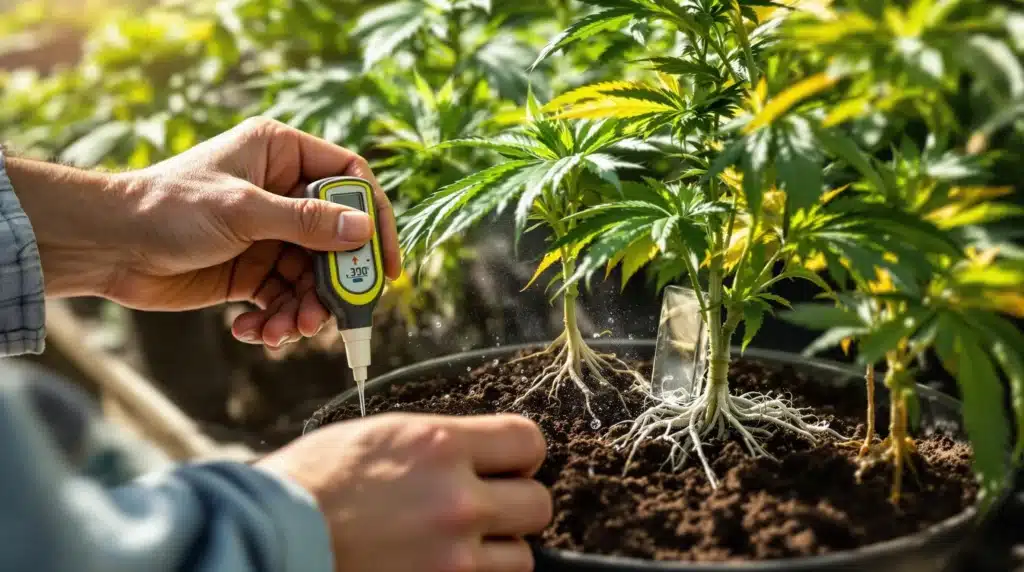
Maintaining a soil pH between 6.0 and 7.0 is crucial for nutrient uptake. If the pH is off, your plants may not absorb nutrients effectively, leading to deficiencies. Using a pH meter can help you monitor and adjust the pH levels as needed.
Effective Pest Control Methods
Implementing effective pest control measures is essential for maintaining healthy cannabis plants. Regularly cleaning the undersides of leaves can prevent pests from laying eggs and nesting. If you spot pests, act quickly with organic solutions like neem oil or insecticidal soap.
Preventive measures, such as maintaining good airflow and keeping your grow area clean, can help deter pests. Regular inspections and prompt action are crucial in preventing pest infestations from causing significant damage.
Environmental Factors and Their Impact
Environmental stressors such as improper lighting and humidity can lead to yellowing leaves with brown spots on cannabis plants. During the vegetative phase, maintain a light schedule of 16-24 hours with high intensity to support robust growth. In the flowering phase, adhere to a strict 12/12 photoperiod.
Humidity levels should be kept at 60-70% during vegetative growth and reduced to 40-50% during flowering to prevent bud rot. Temperature control is also vital, with optimal daytime temperatures between 20°C – 25°C (68°F – 77°F) and a nighttime drop of 8°C – 11°C.
| Feature / Merkmal | Bruce Banner X Mochalope | GG Autoflower F1 | Critical Fast Version |
|---|---|---|---|
| THC Content | 24-28% | 20-24% | 18-22% |
| Dominant Terpene | Myrcene | Caryophyllene | Limonene |
| Flavor Profile | Earthy, Chocolate | Pine, Diesel | Citrus, Sweet |
| Yield | 1.5-1.8 oz/ft² (450-550 g/m²) | 1.2-1.5 oz/ft² (350-450 g/m²) | 1.8-2.2 oz/ft² (550-650 g/m²) |
| Flowering Time | 8-9 weeks | 9-10 weeks | 7-8 weeks |
Preventative Measures for Healthy Cannabis Growth
Regular Monitoring and Maintenance
Consistent monitoring of your cannabis plants is crucial for early detection of issues. Regularly check for signs of nutrient deficiencies, pests, and environmental stress. Maintaining a grow diary can help track changes and identify patterns that may indicate problems.
Using tools like pH meters and hygrometers can assist in maintaining optimal growing conditions. Keeping a close eye on your plants’ health will allow you to take corrective action before issues become severe.
Soil and Water pH Management
Maintaining the correct pH levels in your soil and water is essential for nutrient uptake. Cannabis plants thrive in soil with a pH between 6.0 and 7.0. Regularly testing your soil and water pH can help prevent nutrient lockout and deficiencies.
Adjusting pH levels as needed can ensure your plants have access to the nutrients they need for healthy growth. Using pH-adjusting solutions can help maintain the ideal pH range for your cannabis plants.
Professional Tips for Healthy Cannabis Growth
- Maintain 58-62% RH during curing to prevent mold and preserve terpenes. Check with a digital hygrometer.
- Use a light schedule of 18/6 for vegetative growth to optimize energy absorption and prevent light stress.
- Ensure soil pH is between 6.0 and 7.0 for optimal nutrient uptake. Test regularly with a pH meter.
- Monitor temperature between 70°F and 85°F (20°C to 30°C) to prevent stress and ensure healthy growth.
- Inspect leaves’ undersides weekly for pests to catch infestations early and prevent damage.
- Use N:P:K 3:1:2 during vegetative stage to support robust growth and prevent deficiencies.
Frequently Asked Questions
Why are my cannabis leaves turning yellow with brown spots?
Cannabis leaves turning yellow with brown spots often indicate nutrient deficiencies, pest infestations, or environmental stress. For example, a nitrogen deficiency can cause yellowing, while pests like spider mites may lead to brown spots. Regular monitoring and prompt action are essential to address these issues effectively.
Why are my plant leaves turning yellow with brown spots?
Yellowing leaves with brown spots on plants can result from nutrient imbalances, pest attacks, or environmental factors. Ensuring proper nutrient levels, pest control, and stable environmental conditions can help prevent these symptoms. Regular inspections and adjustments are crucial for maintaining plant health.
What does overwatered cannabis look like?
Overwatered cannabis typically exhibits yellow, droopy leaves and may develop root rot. The soil may remain excessively damp, hindering nutrient absorption. To prevent overwatering, allow the soil to dry out between waterings and ensure pots have proper drainage.
How do you fix nutrient burn?
To fix nutrient burn, flush your plants with pH-balanced water to remove excess nutrients. Reduce nutrient concentrations in future feedings and monitor your plants for improvement. Maintaining a balanced nutrient regimen is crucial to prevent recurrence.
Can pests cause yellow leaves on cannabis plants?
Yes, pests like spider mites and aphids can cause yellow leaves on cannabis plants by feeding on sap and weakening the plant. Regular inspections and early intervention with organic pesticides can help manage pest issues and maintain plant health.