Strongest THCA Flower: The Highest-Potency Strains

The strongest THCA flower is raw cannabis packed with tetrahydrocannabinolic acid, usually testing above 25% THCA while staying under 0.3% delta-9 THC. Raw, it is non-intoxicating, but heat from smoking or vaping converts that THCA into delta-9 THC and unlocks a full high. That is what makes high-potency THCA flower so versatile for raw and activated use alike.
Beyond the raw numbers, the strongest THCA flower stands out for its terpenes and careful cultivation. Myrcene and limonene shape a full-bodied aroma and flavor, and a typical 8-10 week flowering window gives the plant time to build up cannabinoids and terpenes. If you want that potency at home, it starts with the right high-THC seeds.
Recommended Strains
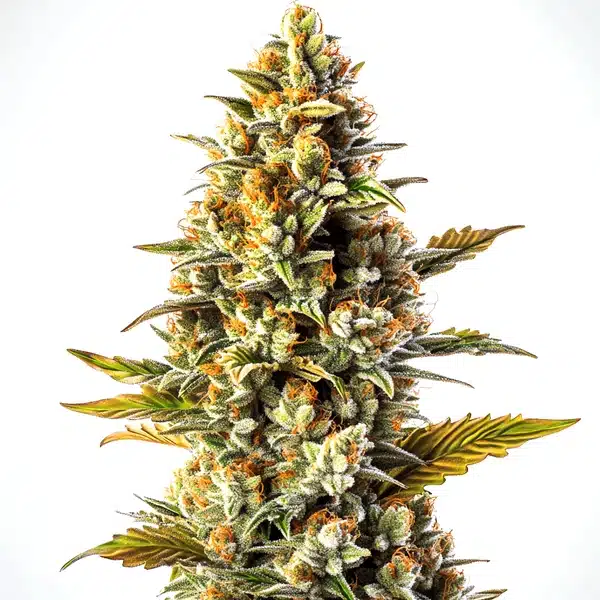
Gorilla Blue Auto

|
THC | 18% - 20% (Medium) |

|
Type | Autoflowering |

|
Yield | High |

|
Phenotype | 50% Indica / 50% Sativa |

GG4 Fast Version
|
|
THC | 19% - 22% (Medium) |
|
|
Type | Feminized |
|
|
Yield | High |
|
|
Phenotype | 40% Indica / 60% Sativa |
What Is THCA Flower?
Chemical Properties of THCA
THCA (tetrahydrocannabinolic acid) is a cannabinoid found in raw, living cannabis. Unlike THC, it is non-psychoactive until it goes through decarboxylation, the reaction that strips off a carboxyl group when the flower is heated and turns THCA into THC. In the strongest strains, THCA can top 25%, and that is the potent base that gets unlocked once you activate it.
THCA behaves differently in the body than THC. It does not bind well to the brain’s CB1 receptors, which is why it stays non-intoxicating in raw form. Early research is also looking at possible anti-inflammatory and neuroprotective effects, though these are not proven medical uses. Knowing how THCA works helps you get the most from high-potency flower.
How THCA Differs From THC
Both THCA and THC start from the same precursor, cannabigerolic acid (CBGA), but they act very differently. THCA stays non-intoxicating until heat activates it, while THC binds directly to the brain’s CB1 receptors and produces the high right away. That gap is what lets you choose raw THCA flower when you want the plant without the euphoria. For a full breakdown, see our guide on THCA flower vs THC flower.
THCA is also being studied for how it might behave without the high. Some early research is exploring anti-nausea and neuroprotective effects, but none of it is confirmed as a treatment, so it should not replace medical advice. What is clear is that raw THCA flower gives users flexibility across both everyday and recreational use.
Promos & Deals

The Strongest THCA Flower
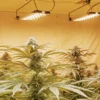
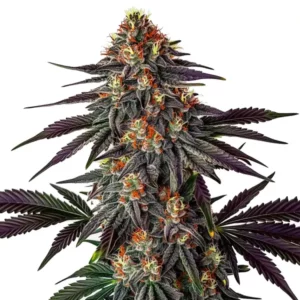
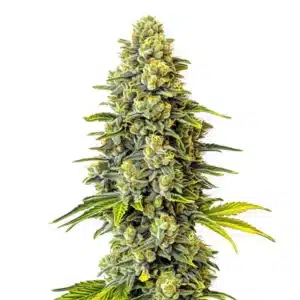
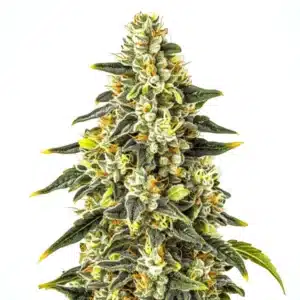
The strongest THCA flower is defined by its THCA content, often pushing past 30%. Premium genetics like the Tiramisu strain are a favorite among growers chasing that ceiling. Once decarbed, these high-THCA flowers deliver a powerful high. Getting there depends on dialed-in cultivation, starting with 60-70% humidity in the vegetative stage to push THCA production as high as possible.
Environment is just as important for the most potent THCA flower. Daytime temperatures of 20-25°C (68-77°F) work best, paired with an 8-11°C drop at night to mimic nature. That day-to-night swing keeps the plant’s metabolism healthy and pushes THCA synthesis toward its peak. If you are comparing options, our roundups of the best THCA flower and exotic THCA strains go deeper into specific cultivars.
One honest caveat: be skeptical of sky-high numbers. THCA percentages above 30% are rare, and a 35%+ claim often reflects generous lab testing rather than real-world potency. For most people, well-grown flower in the 25-30% THCA range already delivers an intense high once activated, so consistency and a trustworthy lab matter far more than chasing the biggest number on the label.
| Feature | Super Glue | Godfather OG Auto | Cinderella 99 Fast |
|---|---|---|---|
| THCA content | 27-30% | 25-28% | 24-27% |
| Dominant terpene | Myrcene | Caryophyllene | Limonene |
| Flavor profile | Earthy, pine | Spicy, herbal | Citrus, sweet |
| Effect | Relaxing | Euphoric | Uplifting |
| Flowering time | 8-9 weeks | 9-10 weeks | 7-8 weeks |
Benefits of the Strongest THCA Flower
Potential Uses of THCA
Raw THCA flower is popular with people who want the plant without the high. Early studies are exploring whether THCA has anti-inflammatory or neuroprotective effects, but it is not an approved treatment for arthritis, neurodegenerative disease, or any condition, so talk to a doctor first. Potency still matters to fans: strains like the Z Runtz strain can carry THCA above 28%.
Some early research has looked at whether THCA may influence nausea and appetite, which is part of why it draws interest, but the evidence is preliminary and it is not a medical treatment. Its main practical advantage is simple: in raw form it stays non-intoxicating, so it can be used during the day without the cognitive effects of THC.
How to Identify the Most Potent THCA Flower
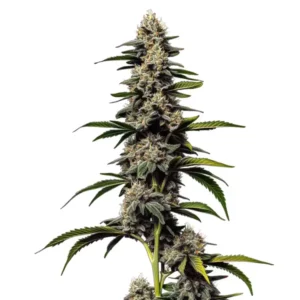
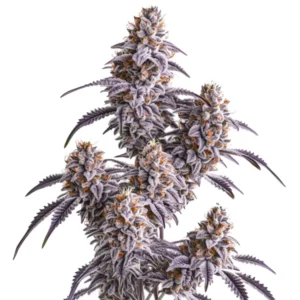
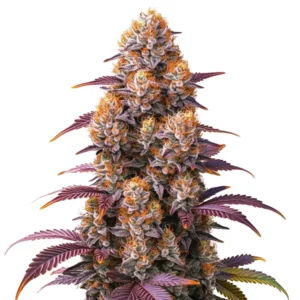
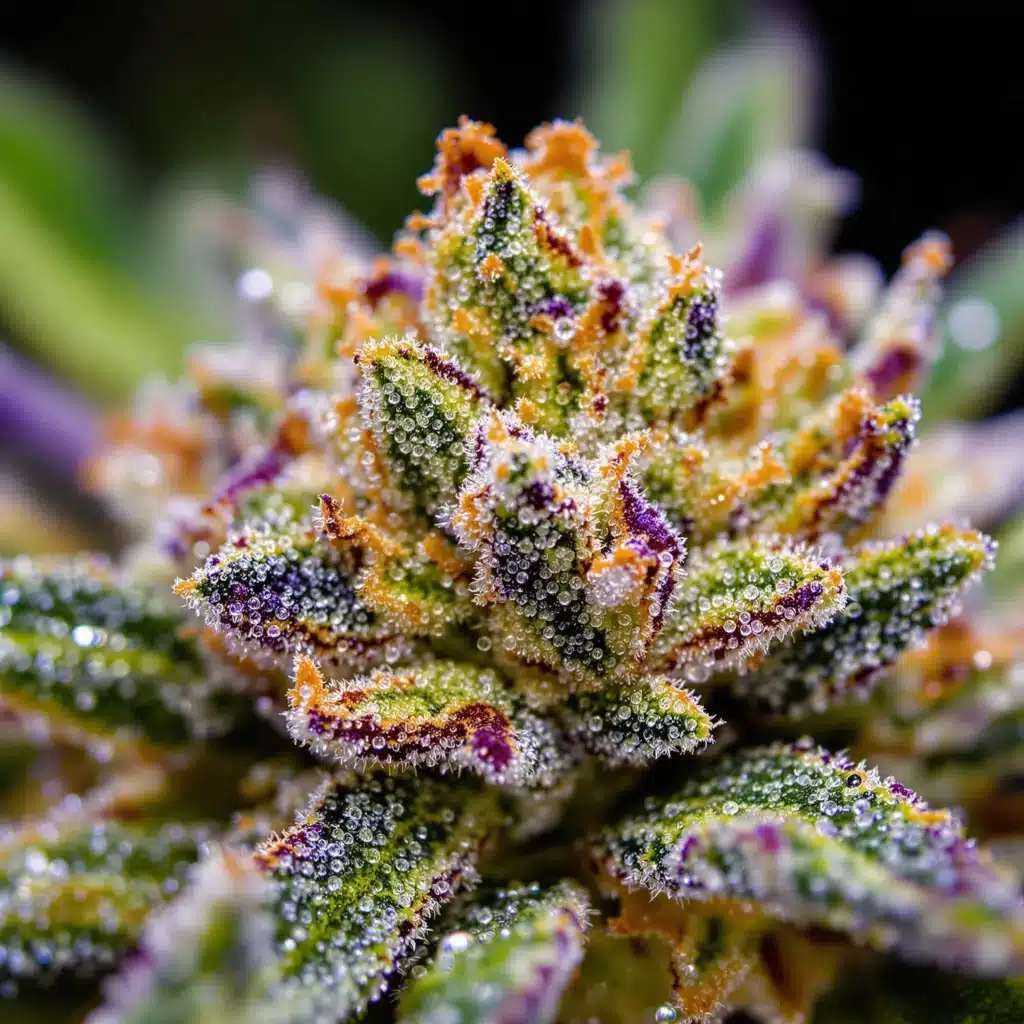
Spotting the most potent THCA flower starts with the lab report. Check the certificate of analysis and look for THCA above 25% to confirm high potency, and look at the terpene profile, since terpenes like myrcene and limonene shape both flavor and effect. Beyond the paperwork, judge quality by eye: strong flower has dense buds coated in frosty trichomes, a loud aroma and vibrant color, all signs of careful cultivation and proper curing that separate top-tier flower from average buds.
Beyond the lab sheet, your senses confirm potency. Top-shelf THCA flower is dense and sticky, coated in a thick frost of trichomes, with a loud, complex aroma and a clean cure that makes the buds snap rather than crumble to dust. Treat extreme claims with caution, though: THCA much above 30% is rare, so a 35%+ label often reflects generous lab testing rather than reality, and buds that smell like hay, feel damp, or show gray powder are degraded or moldy no matter how high the number on the jar.
Best Ways to Consume THCA Flower
Smoking vs Vaping
Smoking and vaping are the two most common ways to enjoy THCA flower. Smoking uses combustion, which instantly converts THCA into THC and delivers effects right away. It is the go-to for anyone who wants a fast, familiar cannabis experience.
Vaping gives you more control, letting you set an exact temperature to activate the THCA. Lower, precise heat protects the terpenes, so the flavor and aroma come through cleaner. A flower vaporizer converts THCA efficiently without the harshness of smoke, which many users prefer.
Using THCA in Edibles
THCA flower also makes potent edibles, but there is one required step: decarboxylation. You gently heat the flower at a low temperature to convert the THCA into active THC, then infuse it into oil or butter for cooking. Skip this step and your edibles will not get you high. From there, dosing is everything: edibles are discreet and long-lasting, but the effects can take up to two hours to arrive, so start with a small dose, wait, and only then decide whether to take more. Careful dosing also matters given upcoming federal limits on total THC.
Expert Tips for THCA Flower
- Store at 58-62% RH to protect potency and prevent mold; airtight containers keep humidity steady.
- Decarboxylate at 220°F (104°C) for 30-40 minutes before making edibles, so the THCA fully converts to THC.
- Choose strains testing above 25% THCA for the strongest effects, and stick to lab-tested flower for accurate numbers.
- Use a vaporizer set to 315-430°F (157-221°C) for a smoother hit that preserves terpenes and cannabinoids.
- With edibles, start low and wait 1-2 hours before taking more, since the onset is slow.
- Keep flower in a cool, dark place at 59-70°F (15-21°C) to hold potency over time.
FAQs About the Strongest THCA Flower
Does THCA get you very high?
Raw THCA does not get you high on its own. It has to be heated so it converts into THC, the psychoactive cannabinoid. Once activated, the strongest THCA flower feels like traditional cannabis, and the potency tracks the original THCA level; flower testing around 28% THCA can deliver a strong high.
Is THCA flower just as good?
Yes, high-quality THCA flower can be just as good as regular THC flower, because once heated it becomes the same active THC. Raw, it stays non-intoxicating, and strong strains often test above 25% THCA, so they hit hard when activated. That flexibility is exactly why THCA flower has become so popular.
What exactly is a THCA flower?
THCA flower is simply raw cannabis that is high in tetrahydrocannabinolic acid, a non-psychoactive compound. It stays non-intoxicating until you heat it, and then it converts into THC. In the strongest THCA flower, THCA can climb well above 25%, giving you a potent base for either raw or activated use.
Why do people smoke or not smoke THCA?
There is nothing unsafe about it, but smoking THCA flower activates it into THC and produces a high, which is not what everyone wants. If you are after the non-intoxicating side of THCA, keep it raw, for example juiced or added cold to food, rather than smoking or heating it. That keeps the THCA intact without the high.
How do you store THCA flower properly?
Store THCA flower in a cool, dark spot at 59-70°F (15-21°C) and 58-62% relative humidity to keep it potent and stop it degrading. Use airtight glass containers to shield it from moisture and light. Done right, THCA flower can hold its cannabinoid and terpene profile for up to 12 months.
Which is the strongest THCA flower strain?
The strongest THCA flower usually comes from high-THC genetics testing above 28-30% THCA, such as Super Glue, Tiramisu or Z Runtz. Exact numbers vary by grow and phenotype, so always check the lab report. To reach that potency at home, start with proven high-THC seeds and dial in your environment.