Are Cannabis Seeds Banned? Federal Hemp THC Law Status (2026)

STATUS: Updated 21 August 2026
The federal effective date is still 12 November 2026. A one-month delay to 11 December has passed the Senate but is not law yet, it still needs House approval. The House is in recess until early September and its own funding bill did not contain the hemp language. Expect a decision in early-to-mid September.
Recommended Strains

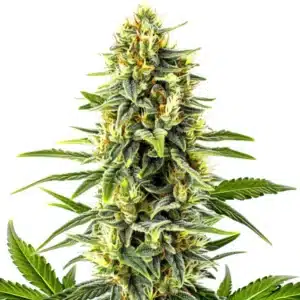
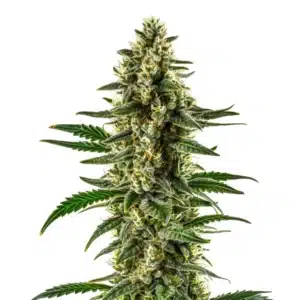
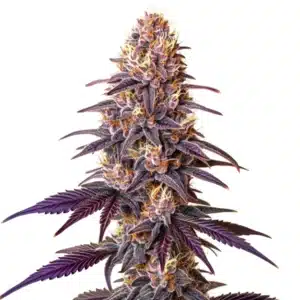
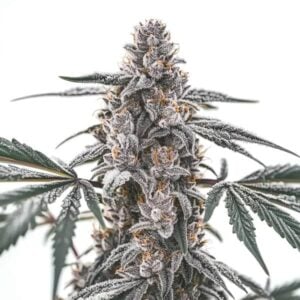
Cafe Racer

|
THC | 25% (High) |

|
Type | Feminized |

|
Yield | Medium |

|
Phenotype | 30% Indica / 70% Sativa |

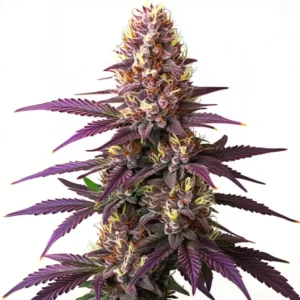
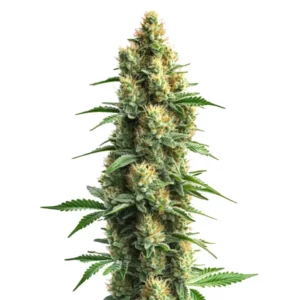
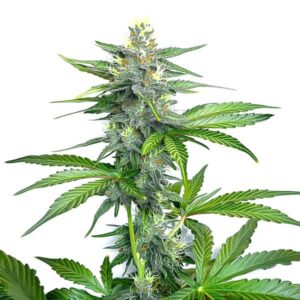
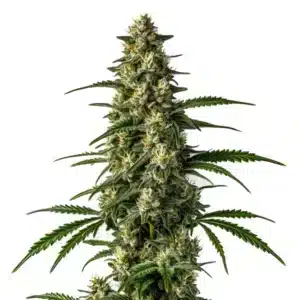
Runtz
|
|
THC | 19% - 22% (Medium) |
|
|
Type | Feminized |
|
|
Yield | Medium |
|
|
Phenotype | 50% Indica / 50% Sativa |
A separate bill, the Lawful Hemp Protection Act (H.R. 9830), would repeal Section 781 outright and fix the seed provision, but it has had no hearing, markup or vote since being introduced on 22 July.
If you are planning around this, plan for 12 November until the House acts.
The 2018 Farm Bill created a legal opening that the cannabis seed trade grew into. A provision signed in November 2025 closes it and it reaches seeds directly. For breeders, seed banks and growers in the US, the practical questions are simple: what exactly changes, when does it change, and is the deadline actually moving?
This article tracks the answers as they develop, with links to the primary sources so you can verify any of it yourself.
What the Federal Hemp THC Ban Says About Cannabis Seeds
The provision is Section 781 of Division B of Public Law 119-37, the appropriations act signed on 12 November 2025 that reopened the federal government. It amends the statutory definition of hemp at 7 U.S.C. § 1639o, with a 365-day runway before it takes effect.
Three changes matter:
1. The standard moves from delta-9 THC to total THC. The 2018 Farm Bill measured only delta-9 THC at no more than 0.3% dry weight. The new definition uses total THC concentration, including THCA, at the same 0.3% ceiling. This is the change that closes the THCA loophole.
2. Finished products are capped at 0.4 mg total THC per container. Not per serving — per container, defined as the innermost packaging in direct contact with the product.
3. Seeds are named explicitly. The first exclusion in the amended definition covers any viable seeds from a cannabis plant that exceeds a total THC concentration, including THCA, of 0.3 percent in the plant on a dry weight basis. Intermediate hemp-derived products above 0.3% total THC and final products above the 0.4 mg cap are excluded too. Anything falling outside the definition is no longer hemp, it reverts to marijuana under the Controlled Substances Act.
Note the three words that carry the weight: “in the plant.” The test is applied to the mother plant, not to the seed.
That third point is what changes the seed market. The old framework asked what a seed contains. The new one asks what a plant grown from it would produce.
Primary sources: you can read the current statutory text at 7 U.S.C. § 1639o. The Congressional Research Service has published three official briefs, on the statutory definition change and agricultural policy implications, the implications for federal enforcement, and the legal considerations under the Controlled Substances Act. All are worth reading directly rather than relying on secondary coverage.
Promos & Deals
Is the Cannabis Seed Ban Delayed to December 2026?
Partly, conditionally, and not in the way most coverage describes it.
What happened: On 8 August 2026 the Senate passed a continuing resolution (H.R. 6500) by 90-6, funding the government through 11 December and including a hemp provision. An amendment from Sen. Ted Budd to strip that provision out was tabled 61-32.
What the provision does and does not do: It does not move the effective date. Section 781 still switches on 12 November 2026. Instead, until 11 December 2026, Section 781 would apply only to products containing cannabinoids that cannot be naturally produced by a cannabis plant, that is, synthetics such as HHC and THC-O.
Everything else in the new definition, the total-THC standard, the 0.4 mg cap, and the seed exclusion, would sit idle for roughly four weeks and then take effect on 11 December.
What still has to happen: The House has not passed it. It approved its own continuing resolution without any hemp language, and it is in recess until early September. Until the House acts and the President signs, 12 November remains the operative date.
Cannabis Seed Ban Dates: The Possible Outcomes
| Scenario | What it means for seeds | Status |
|---|---|---|
| House passes the Senate CR | Seed provision takes effect 11 Dec 2026 | Nearest-term path; decision expected early-to-mid September |
| House does not pass it | Seed provision takes effect 12 Nov 2026 | Default if nothing moves |
| A longer delay passes | Effective date pushed back two years | Hemp Planting Predictability Act (H.R. 7024) in committee, no vote scheduled |
| Lawful Hemp Protection Act passes | Section 781 repealed; seed test rewritten | H.R. 9830, introduced 22 July, no hearing or vote |
The Lawful Hemp Protection Act: The Bill That Would Fix the Seed Problem
The most consequential bill for the seed sector is the Lawful Hemp Protection Act, filed as H.R. 9830 on 22 July 2026 by Rep. Andy Barr (R-KY) with Rep. Angie Craig (D-MN) as cosponsor. It would expressly repeal Section 781 and replace the hemp definition with a 1% total-THC standard that includes THCA.
For seeds, the change is precise and worth reading side by side. Under the current law, the exclusion covers viable seeds from a plant that exceeds 0.3% total THC in the plant. Under H.R. 9830, the exclusion would cover a viable seed where the seed exceeds 1% total THC.
Two words do the work. Moving the measurement from the plant to the seed means the test is applied to the thing actually being bought and sold and since seeds carry no meaningful THC, an ungerminated seed would clear a 1% threshold comfortably. It removes the retroactive traceability problem at a stroke: no seller has to produce a certificate of analysis for a mother plant that may no longer exist.
Where the bill actually stands. Introduction is not passage, and the official record is clear about how early this is. H.R. 9830 was referred to four House committees, Ways and Means, Energy and Commerce, Agriculture, and Transportation and Infrastructure. There has been no hearing, no markup, no committee vote, no floor vote, no Senate companion bill and no enactment. “Bipartisan” at this stage means one Republican sponsor and one Democratic cosponsor, not broad adoption or any guarantee of a vote.
An important caveat. The bill is a fix for seeds, not for everything. Because its 1% definition counts THCA toward the total, hemp attorneys analysing the filed text have argued it would leave the lawful THCA flower market outside its protections. If your exposure is THCA flower rather than seeds, this bill as introduced does not solve your problem.
Why Cannabis Seeds Cannot Be Tested for THC
Here is the practical contradiction at the centre of this, and it deserves more attention than it gets.
A cannabis seed contains no meaningful THC. Cannabinoid production happens in the trichomes of a mature flowering plant, not in the seed. There is no way to test an ungerminated seed for total THC and get a number that means anything, because the number is essentially zero regardless of what the seed would become.
So the statute does not classify seeds by what they contain. It classifies them by the theoretical chemical output of a plant that does not exist yet. To determine whether a given seed is lawful under the new definition, you would have to germinate it, grow it to maturity, and test the resulting flower, at which point you are testing a plant, not a seed.
That is an unusual standard, and how federal agencies intend to apply it in practice has not been explained.
Unresolved Questions: FDA Lists, Clones and State Law
The FDA has not published the lists it was required to publish. Public Law 119-37 directed the FDA, within 90 days of enactment, to publish lists of naturally occurring cannabinoids, THC-class cannabinoids, and other cannabinoids with similar effects and to further define the term “container.” As of August 2026, these have not been published.
That matters because the November carve-out turns entirely on which cannabinoids are “capable of being naturally produced by a cannabis plant”, a line the FDA was supposed to draw and has not.
Clones and tissue culture are not addressed. The statute names seeds. Whether non-seed propagation material is treated the same way has not been clarified, which leaves genuine ambiguity around interstate clone shipments.
Federal and state law will diverge. States with legal cannabis markets maintain their own frameworks, but under the Supremacy Clause federal law can preempt state law where a state permits what federal law prohibits. The practical exposure is greatest in interstate commerce.
Impact of the Seed Ban on Cannabis Genetics and Breeding
The seed trade is the research and development layer of the cannabis industry. Restricting it has effects that take years to show up and years to reverse.
Pheno-hunting gets smaller. Breeders find standout genotypes by popping large numbers of seeds and selecting from them. Restrict legal seed acquisition and hunts shrink, which means fewer keeper mothers, fewer new cultivars, and slower cultivar turnover on retail shelves.
Small breeders are the most exposed. Compliance costs and federal risk are absorbable for large operators and existential for craft breeders, who are, disproportionately, where genetic innovation actually happens.
Alternative propagation does not substitute cleanly. Clones are expensive to ship, need cold-chain handling, are fragile, and cannot be stored long-term the way seeds can. Tissue culture scales, but not on the timeline this creates.
Landrace and heirloom material is the quiet loss. Afghan, Thai, Colombian and African landraces held in private collections are irreplaceable. Genetics that fall out of circulation do not come back.
The US falls behind on breeding infrastructure. European and Asian breeding programmes have operated with legal continuity for decades and hold deep genetic archives. US hemp breeding was already rebuilding from the prohibition era when the 2018 Farm Bill re-opened it.
There is also a workable alternative that the industry has been arguing for: test plants rather than seeds, license seed businesses, and create a genetics-research exemption. Regulation solves the stated problem, unregulated intoxicating products reaching consumers without age controls, without dismantling the genetics layer as collateral damage.
How Breeders and Growers Can Prepare for the Seed Ban
- Plan for 12 November, not 11 December. The delay is not law. Treat December as an upside case.
- Audit and document your inventory now, before either date.
- Preserve genetics properly. Long-term seed storage and tissue-culture libraries are the hedge against material becoming unobtainable.
- Watch the House in early September. That vote determines which date applies.
- Track H.R. 9830 separately. A repeal would change the picture entirely, but only once it moves, introduction alone changes nothing.
- Track the December funding deadline. 11 December is also when government funding lapses again, which is the next realistic window for a longer-term fix.
- Get jurisdiction-specific legal advice. This article is general information, not legal advice, and the federal-state picture varies considerably.
Cannabis Seed Ban FAQs
Are cannabis seeds banned in the US?
Not yet. Under the current federal definition from the 2018 Farm Bill, they remain lawful. Section 781 of P.L. 119-37 will exclude seeds from cannabis plants exceeding 0.3% total THC from the definition of hemp, making them marijuana under the Controlled Substances Act. That change takes effect 12 November 2026 unless Congress moves the date.
When exactly does the seed ban take effect?
The statutory date is 12 November 2026. The Senate has passed a measure that would push most of the new definition, including the seed exclusion, to 11 December 2026, but it requires House approval and is not law. Until the House acts, 12 November is the operative date.
Will cannabis seeds be illegal in 2026?
Federally, yes, once the new definition takes effect, for seeds from plants exceeding 0.3% total THC. Seeds from certified hemp at or below that threshold remain lawful. State law governs separately and does not change automatically with the federal definition.
Does the ban cover THCA?
Yes, that is the central change. The federal standard moves from delta-9 THC alone to total THC, which includes THCA. Material that qualified as hemp under the delta-9 measurement can exceed 0.3% once THCA is counted.
Does it apply to clones and tissue culture?
The statute names seeds. Federal agencies have not clarified whether other propagation material is treated the same way, and that ambiguity is itself a risk for interstate shipments.
Is there a bill that would fix the seed problem?
Yes. The Lawful Hemp Protection Act (H.R. 9830), introduced on 22 July 2026 by Reps. Barr and Craig, would repeal Section 781 and measure THC in the seed itself rather than in the mother plant, at a 1% threshold. That would resolve the testing contradiction. However, it has had no hearing, markup or vote, and no Senate companion, so it remains a proposal rather than law.
How can a seed be tested for THC if it has none?
It cannot, in any meaningful way. Cannabinoids are produced in mature flowering plants, not seeds. The law classifies seeds by the projected output of the plant they would grow into rather than by their own composition, which is why the seed provision is the hardest part of the statute to apply in practice.
This article is general information and not legal advice. Federal hemp policy is moving quickly; verify the current status against the primary sources linked above before making business decisions.