Nutrients That Increase Terpene and VOC Production

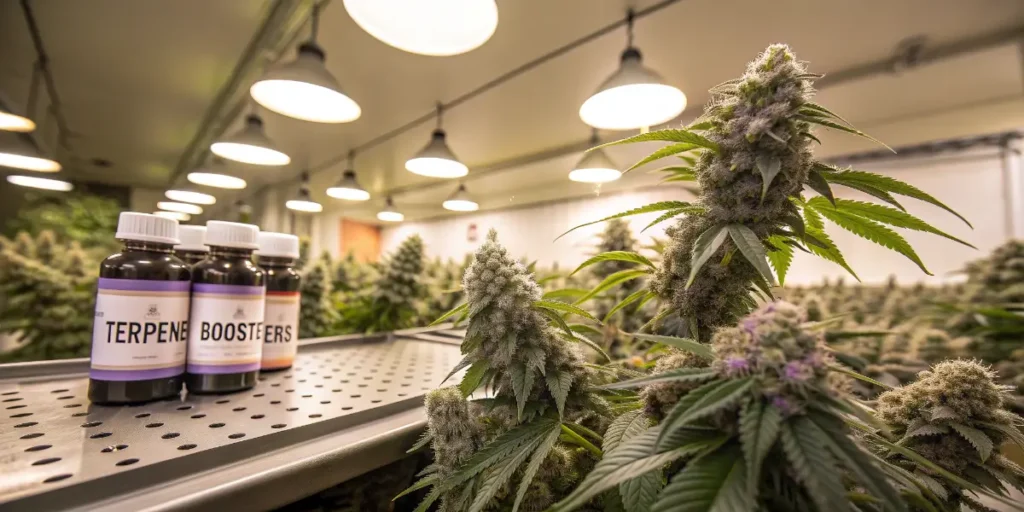
Boosting Terpene Levels: Enhancing terpene and VOC production in cannabis is achievable by using targeted nutrients like nitrogen, phosphorus, and potassium. Knowing the function of nutrients that increase terpene and VOC production is essential for growers aiming to maximize aroma, flavor, and resin quality. Products such as Advanced Nutrients Tasty Terpenes and Terpinator are popular among cultivators for their effectiveness in boosting these aromatic compounds. This approach can significantly improve the aroma and flavor profiles of cannabis plants, making them more appealing to consumers.
For growers aiming to enhance the sensory appeal of their cannabis, focusing on terpene and VOC production is essential. The flowering period, typically 8-9 weeks, is crucial for terpene development. Utilizing nutrients like potassium and magnesium can optimize this process, resulting in richer flavors and aromas. Knowing these elements can transform your cultivation results.
Recommended Strains

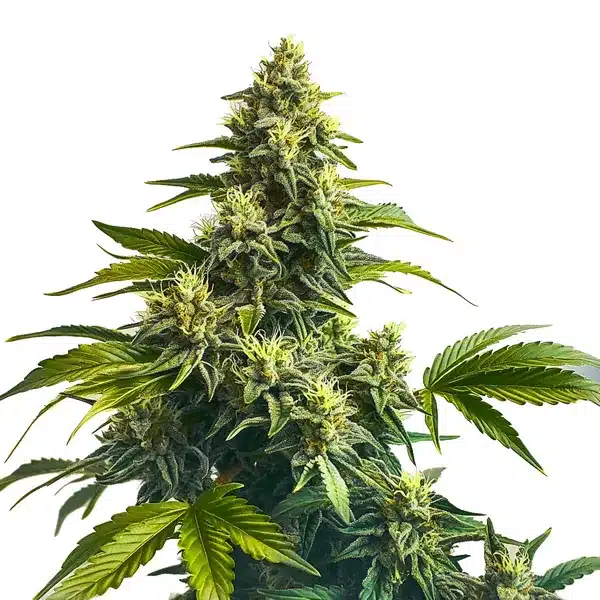
Green Crack Auto

|
THC | 18% - 20% (Medium) |

|
Type | Autoflowering |

|
Yield | High |

|
Phenotype | 50% Indica / 50% Sativa |
Bruce Banner x Carmen
|
|
THC | 20% - 24% (High) |
|
|
Type | Feminized |
|
|
Yield | High |
|
|
Phenotype | 30% Indica / 70% Sativa |
Knowing Terpenes and VOCs
What Are Terpenes?
Terpenes are organic compounds responsible for the distinct aromas and flavors in cannabis. These compounds, like myrcene and limonene, contribute to the plant’s overall sensory profile. Myrcene, often found in strains like GG4, provides earthy and musky notes, while limonene offers citrusy scents. Terpenes also play a role in the entourage effect, enhancing THC’s effects by increasing its absorption rate through the blood-brain barrier.
In cannabis cultivation, terpene percentages can vary significantly. For example, myrcene levels might range from 0.8% to 1.2%, impacting the strain’s aroma and potential therapeutic effects. Knowing these variations allows growers to select strains that meet specific consumer preferences.
Importance of VOCs in Plants
Volatile organic compounds (VOCs) are crucial in plant communication and defense. In cannabis, VOCs contribute to the plant’s aroma and can influence pest resistance. These compounds are released during flowering, with peak production occurring under optimal environmental conditions. Maintaining temperatures between 68°F and 77°F (20°C and 25°C), along with providing the right nutrients that increase terpene and VOC production, can help maximize VOC output and enhance overall aromatic quality.
Experienced growers report that VOCs not only enhance aroma but also improve the plant’s resilience against environmental stressors. By optimizing nutrient levels, particularly during the flowering stage, growers can increase VOC production, leading to healthier plants with more robust flavors.
Promos & Deals

Key Nutrients for Terpene Enhancement
Nitrogen and Phosphorus
Nitrogen is vital for vegetative growth, but its role extends into terpene production. When managing nutrients that increase terpene and VOC production, growers should understand that excessively high nitrogen levels can suppress terpene synthesis, while balanced amounts during the flowering phase support overall plant health and indirectly boost terpene levels. Phosphorus, on the other hand, is crucial for energy transfer and flower development, directly impacting terpene production.
For optimal results, maintain a nutrient ratio of N:P:K 1:3:2 during flowering. This balance supports robust flower formation and terpene synthesis. Many cultivators share that adjusting phosphorus levels can significantly affect the plant’s aromatic profile, enhancing specific terpenes like caryophyllene, which offers spicy and woody notes.
Potassium and Magnesium
Potassium is essential for enzyme activation and photosynthesis, both critical for terpene production. Magnesium, a key component of chlorophyll, aids in energy capture and conversion, indirectly supporting terpene synthesis. A nutrient ratio of N:P:K 1:2:3 is recommended during the late flowering stage to boost these processes.
Master growers have pointed out that potassium deficiencies can lead to reduced terpene levels and diminished plant vigor. Ensuring adequate magnesium intake is equally important, as it prevents chlorosis and supports overall plant health, contributing to a richer terpene profile.
Top Products for Boosting Terpenes
Advanced Nutrients Tasty Terpenes
Advanced Nutrients Tasty Terpenes is a specialized formula designed to enhance terpene production and is often considered one of the best nutrients that increase terpene and VOC production. This product contains a blend of essential nutrients and organic compounds that stimulate terpene synthesis. Many cultivators report noticeable improvements in aroma and flavor when using this product during the flowering stage.
To maximize results, apply Tasty Terpenes according to the manufacturer’s guidelines, typically during the last 4-6 weeks of flowering. This ensures that the plants receive the necessary nutrients to boost terpene levels without over-fertilization, which can lead to nutrient burn.
Terpinator
Terpinator is another popular product among growers aiming to increase terpene and VOC production. It works by enhancing the plant’s natural ability to produce terpenes, resulting in more aromatic and flavorful buds. Terpinator is suitable for use in both soil and hydroponic systems, offering versatility for different growing environments.
When using Terpinator, follow the recommended dosage of 15-20 ml per gallon of water during the flowering phase. This ensures that the plants receive an optimal nutrient boost, enhancing the overall terpene profile without risking nutrient lockout.
How to Increase Terpenes in Flower
Indoor vs Outdoor Strategies
Indoor cultivation offers precise control over environmental conditions, allowing for targeted nutrient application to enhance terpene production. By maintaining consistent temperatures and humidity levels, growers can optimize terpene synthesis. Many cultivators share that using LED lights with a full spectrum can further boost terpene levels by mimicking natural sunlight.
Outdoor strategies focus on leveraging natural elements to increase trichome production outdoors. Ensuring adequate sunlight exposure and using organic fertilizers can enhance terpene profiles. Experienced growers report that strains like Green Crack Auto thrive outdoors, producing high terpene levels when grown in nutrient-rich soil.
Professional Tips for Terpene Enhancement
- Maintain 68-77°F (20-25°C) during flowering for optimal terpene synthesis. Temperatures outside this range can reduce terpene levels.
- Use a full-spectrum LED light to mimic natural sunlight, enhancing terpene production.
- Apply Advanced Nutrients Tasty Terpenes in the last 4-6 weeks of flowering to boost aroma.
- Ensure a nutrient ratio of N:P:K 1:3:2 during flowering to support terpene synthesis.
- Regularly check pH levels, maintaining between 6.0 and 6.5 for soil and 5.5 to 6.0 for hydroponics to prevent nutrient lockout.
- Rotate strains like Bruce Banner X Carmen to explore different terpene profiles and effects.
FAQs about nutrients that increase terpene and VOC production
What nutrients are best for increasing terpenes?
Nutrients like phosphorus and potassium are essential for boosting terpene production. A balanced nutrient ratio of N:P:K 1:3:2 during flowering supports terpene synthesis. Products like Advanced Nutrients Tasty Terpenes and Terpinator are also effective in enhancing terpene levels, leading to richer flavors and aromas.
How do terpenes affect cannabis flavor?
Terpenes significantly influence cannabis flavor by providing distinct aromatic profiles. For instance, myrcene offers earthy, musky notes, while limonene delivers citrusy scents. These compounds not only enhance flavor but also contribute to the entourage effect, which can amplify the overall experience of consuming cannabis.
What products are most effective for improving terpenes?
Advanced Nutrients Tasty Terpenes and Terpinator are popular among growers for enhancing terpene production. These products provide essential nutrients that stimulate terpene synthesis. Applying them during the flowering stage can result in more aromatic and flavorful cannabis, appealing to both recreational and medicinal users.
How can you increase terpenes in outdoor grows?
To boost terpene levels in outdoor grows, ensure adequate sunlight exposure and use organic fertilizers. Strains like Green Crack Auto thrive in nutrient-rich soil, producing high terpene levels. Maintaining optimal environmental conditions, such as temperature and humidity, is also crucial for maximizing terpene production.
What are VOCs and why are they important in plants?
VOCs, or volatile organic compounds, are crucial for plant communication and defense. In cannabis, they enhance aroma and can improve pest resistance. VOC production peaks during flowering, with optimal conditions being 68-77°F (20-25°C). By boosting VOCs, plants become more aromatic and resilient to environmental stressors.