How to Identify and Treat Light Burn in Cannabis

Light Burn in Cannabis: Light burn in cannabis happens when grow lights are overly intense or placed too near the plant’s canopy, resulting in chlorophyll damage and interference with photosynthesis. This condition primarily impacts the top leaves and buds, leading to bleaching, upward leaf curling, and crispy tips. Adjusting light distance can mitigate light stress by up to 30%.
Light burn in cannabis can severely impact your grow, causing visible damage to leaves and buds. While GG4 is known for its resilience, even it can suffer under intense lighting conditions. Balancing light intensity and duration is key to preventing damage and ensuring optimal growth and yield.
Recommended Strains

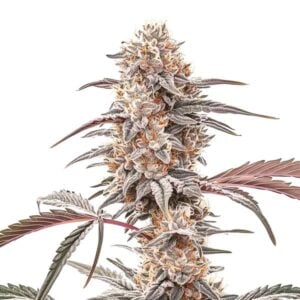
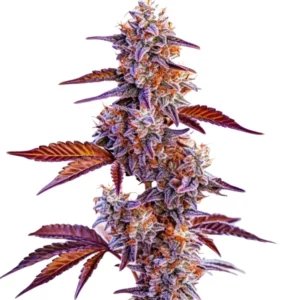
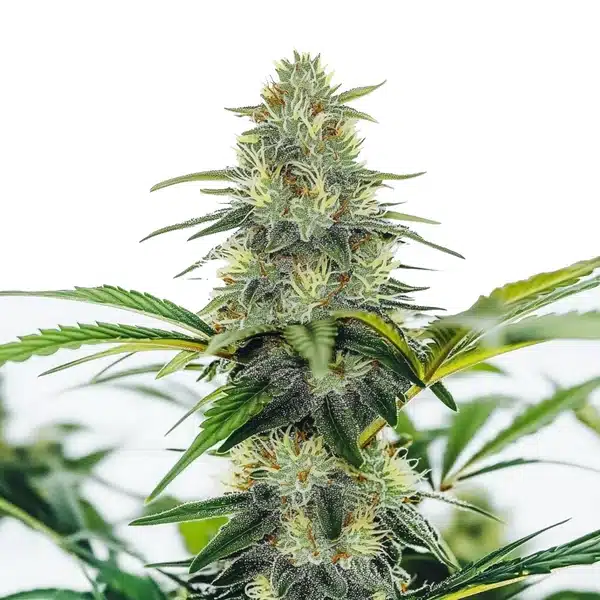
Tropicana Cookies Purple

|
THC | 21% - 22% (Medium) |

|
Type | Feminized |

|
Yield | High |

|
Phenotype | 55% Indica / 45% Sativa |
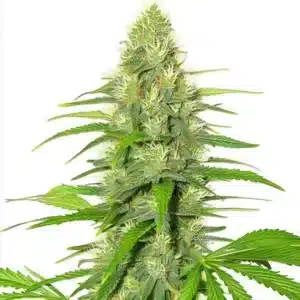
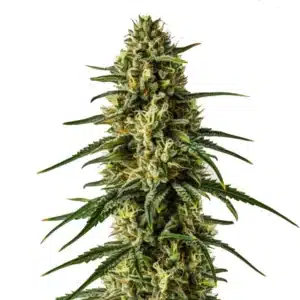
AK x White Widow Auto
|
|
THC | 18% - 24% (High) |
|
|
Type | Autoflowering |
|
|
Yield | Medium |
|
|
Phenotype | 60% Indica / 40% Sativa |
What is Light Burn in Cannabis?
Causes of Light Burn
Light burn occurs when cannabis plants are exposed to excessive light intensity, typically from grow lights that are too close. This can damage the chlorophyll, disrupting photosynthesis. For optimal growth, maintain light intensity at 800-1000 µmol/m²/s during peak flowering. Excessive light can lead to bleaching and leaf curling, crucial indicators of light stress cannabis.
Experienced growers suggest maintaining a distance of at least 18-24 inches (45-60 cm) between the light source and the plant canopy. This helps prevent the first signs of light burn, such as crispy leaf edges and upward curling. Monitoring light intensity with a PAR meter can prevent these issues.
Symptoms of Light Burn in Cannabis
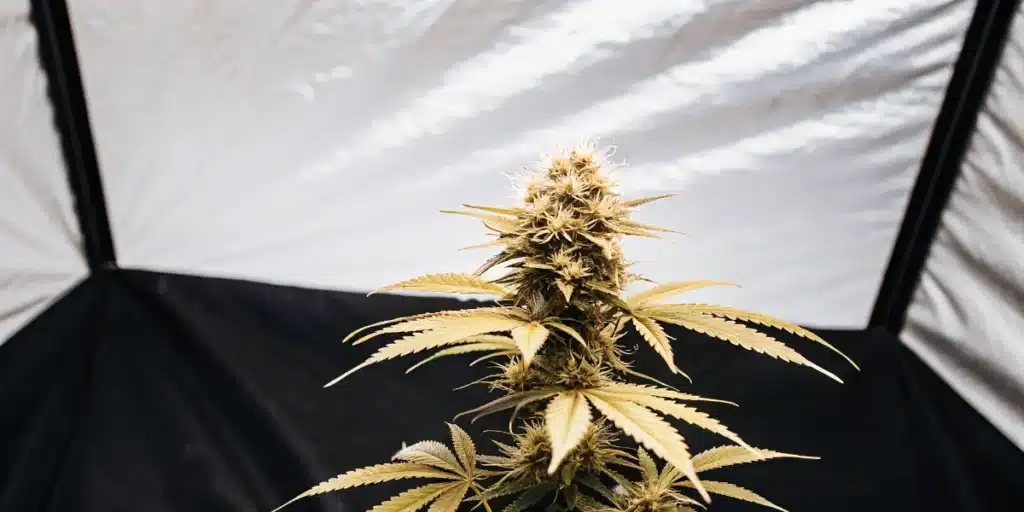
Recognizing cannabis light burn symptoms early is crucial to prevent irreversible damage. Symptoms include bleached leaves, upward curling, and crispy tips. These are often mistaken for nutrient deficiencies, but the key difference lies in the location—light burn affects the uppermost leaves.
To differentiate, observe the plant’s response to light adjustments. If symptoms improve with increased distance, it’s likely light burn. The growing community has communicated that regular monitoring and adjustment can prevent long-term damage.
Promos & Deals
Light Burn vs Nutrient Burn
Key Differences
Knowing nutrient burn vs light burn cannabis is essential for accurate diagnosis. Nutrient burn typically presents as browning leaf tips and edges, affecting lower leaves first. In contrast, light burn affects the top leaves, causing bleaching and curling.
Master growers have pointed out that nutrient burn results from excessive fertilizer use, while light burn is due to intense lighting. Adjusting nutrient levels can resolve nutrient burn, whereas light burn requires modifying light intensity and distance.
Cannabis Light Burn Recovery Steps
To ensure effective cannabis light burn recovery, follow these steps: First, increase the distance between the light and the plant canopy to at least 24 inches (60 cm). Next, reduce light intensity if possible, and ensure proper ventilation to dissipate heat.
Many cultivators share that providing adequate water and nutrients can aid recovery. Monitor plants closely for signs of improvement, typically visible within a week. If symptoms persist, further adjustments may be necessary.
| Feature | Tropicana Cookies Purple | Ak X White Widow Auto | Biscotti |
|---|---|---|---|
| THC Content | 21-22% | 18-24% | 25-30% |
| Dominant Terpene | Limonene | Myrcene | Caryophyllene |
| Flavor Profile | Fruity, Hashish, Incense, Sweet | Sweet, Woody | Spicy, Sweet |
| Resistance to Light Burn | Moderate | High | Moderate |
| Yield Indoor | 1.31 – 1.8 oz/ft² | 400 – 550 g/m² | 0.98 – 1.31 oz/ft² | 300 – 400 g/m² | 1.31 – 1.8 oz/ft² | 400 – 550 g/m² |
Preventing Light Stress in Cannabis
Too Much LED Light Stress Plants
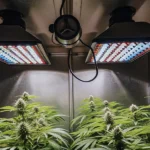
Excessive LED light stress plants can lead to significant growth issues. LEDs, while efficient, can emit intense light that causes light burn. To prevent this, maintain a distance of 18-24 inches (45-60 cm) from the plant canopy and use dimmable lights to adjust intensity.
Managing light stress cannabis involves regular monitoring and adjusting light schedules. A 20/4 light schedule for autoflowers and 12/12 for photoperiodic strains is recommended to balance growth and prevent stress.
Visual Guide: Cannabis Light Stress Pictures
Identifying Cannabis Light Stress Symptoms
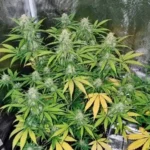
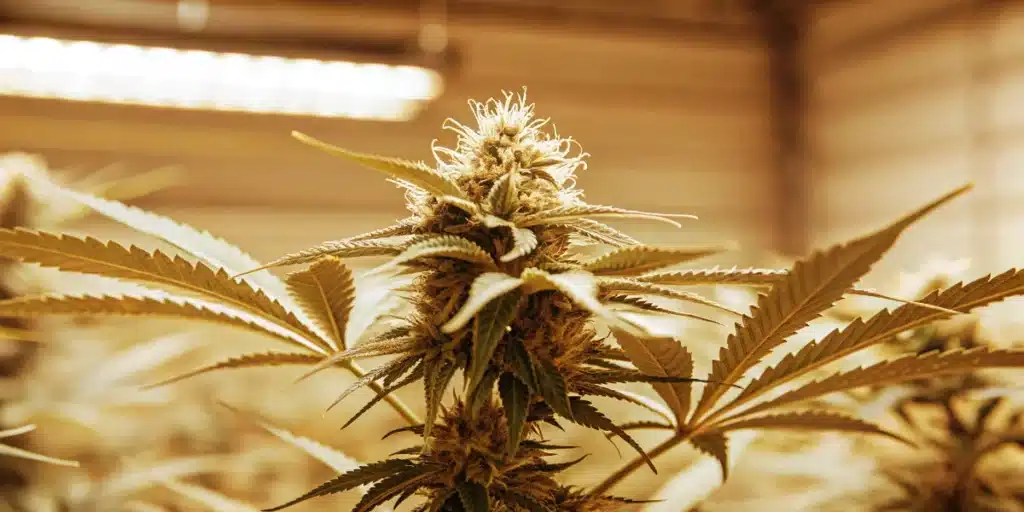
Common cannabis light stress symptoms are visible in the upper leaves, showing bleaching and curling. These cannabis light stress pictures illustrate the typical damage caused by excessive light exposure, helping growers identify the issue early.
Experienced growers report that visual cues, coupled with environmental adjustments, can significantly reduce light stress symptoms. Regularly inspecting plants and adjusting light settings can prevent long-term damage.
Professional Tips for Managing Light Burn
- Maintain 18-24 inches (45-60 cm) between lights and canopy to prevent light burn. Too close can cause bleaching within days.
- Use dimmable LED lights to adjust intensity based on plant growth stages. Overexposure can lead to irreversible damage.
- Monitor temperature: keep grow room at 70-80°F (21-27°C) to avoid heat stress, which can exacerbate light burn symptoms.
- Ensure proper ventilation to dissipate heat and maintain air circulation, reducing the risk of light and heat stress.
- Regularly check light intensity with a PAR meter. Optimal levels prevent both light burn and nutrient deficiencies.
- Adjust light schedules based on strain type; autoflowers thrive on 20/4, while photoperiods need 12/12 for flowering.
Frequently Asked Questions
Can my cannabis plant recover from light burn?
Yes, cannabis plants can recover from light burn if addressed promptly. Increase the distance between the light and canopy to at least 24 inches (60 cm) and reduce light intensity. Recovery signs, such as new healthy growth, can appear within a week.
What does cannabis light burn look like?
Cannabis light burn appears as bleached leaves with upward curling and crispy tips, primarily on the uppermost leaves. These symptoms are distinct from nutrient burn, which affects lower leaves first.
What fertilizer makes buds bigger?
To enhance bud size, use a fertilizer with a higher phosphorus content during flowering. A typical N:P:K ratio of 1:3:2 supports bud development. Ensure balanced nutrient levels to avoid nutrient burn.
What happens if grow light is too bright?
If grow light is too bright, it can cause light burn, resulting in bleached leaves and stunted growth. Excessive brightness can also lead to heat stress, impacting overall plant health and yield.
How can I help my cannabis plant recover from light burn?
To aid recovery from light burn, increase light distance to 24 inches (60 cm), reduce intensity, and ensure adequate watering. Monitor for new growth, which indicates recovery, typically visible within a week.