Cannabis Extracts vs Concentrates: Types, Potency and Differences

Here is the key point most guides get wrong: an extract IS a type of concentrate, not its opposite. “Concentrate” is the umbrella term for any product that concentrates the plant’s trichomes, and it splits into two families: solventless concentrates (kief, hash, rosin) made by physical means, and extracts, which are made using a solvent such as butane, CO2 or ethanol. Both can be very potent, reaching 60-90%+ THC.
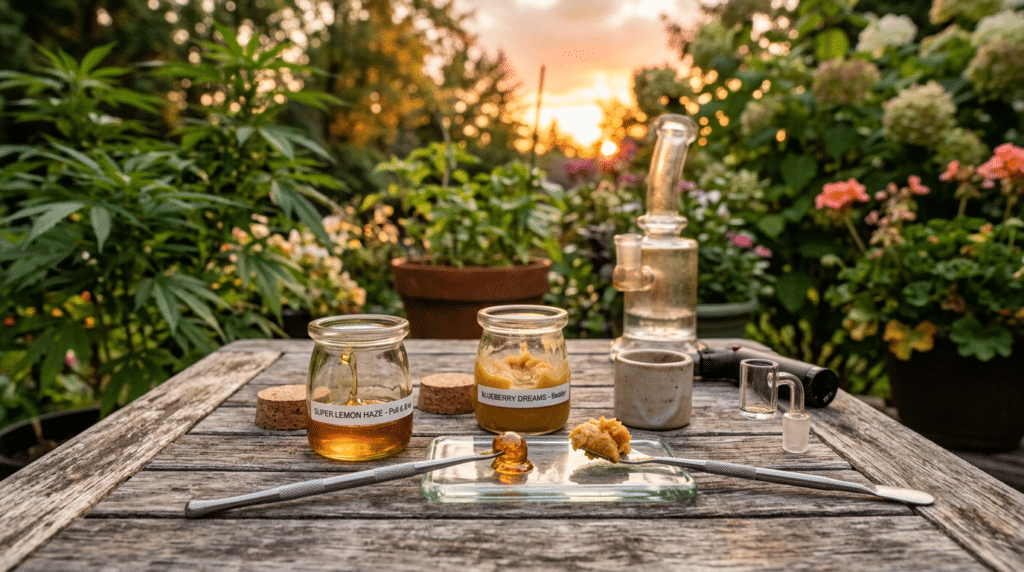
The practical difference is flavor versus raw potency. Solvent extracts like shatter and distillate chase the highest THC, sometimes at the cost of terpenes, while solventless options like rosin and live resin keep more of the aroma. The table below breaks down every common type so you can pick what suits you. One refinement worth knowing is the CRC extraction process, which strips color and impurities out of solvent extracts.
Recommended Strains
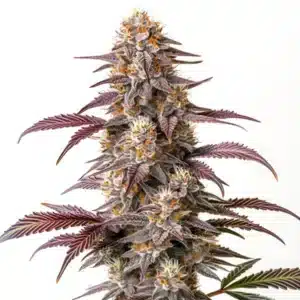
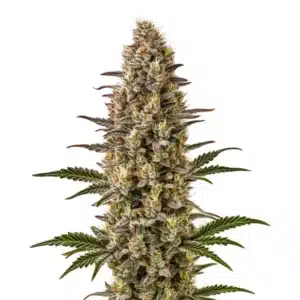
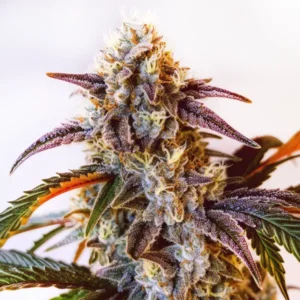
Honey Banana Cannabis Extraction

|
THC | 18% - 22% (Medium) |

|
Type | Cannabis Extraction |

|
Yield | Medium |

|
Phenotype | 60% Indica / 40% Sativa |

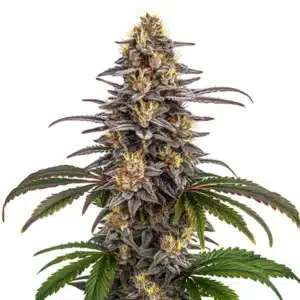
Honey Buns
|
|
THC | 23% - 27% (High) |
|
|
Type | Feminized |
|
|
Yield | High |
|
|
Phenotype | 50% Indica / 50% Sativa |
| Product | Category | How it is made | Typical THC | Texture |
|---|---|---|---|---|
| Kief | Concentrate (solventless) | Sifted trichomes | 20-50% | Powder |
| Hash | Concentrate (solventless) | Pressed kief or hand-rubbed | 20-60% | Solid |
| Bubble hash | Concentrate (solventless) | Ice-water extraction | 30-60% | Crumbly paste |
| Rosin | Concentrate (solventless) | Heat and pressure | 60-80% | Sappy |
| Shatter | Extract (solvent) | Butane (BHO), purged | 80-90% | Glass-like |
| Wax / budder | Extract (solvent) | BHO, whipped | 70-80% | Creamy |
| Live resin | Extract (solvent) | BHO from fresh-frozen buds | 60-80% | Viscous, terpene-rich |
| Distillate | Extract (solvent) | Distilled / refined | 90%+ | Clear oil |
Cannabis Extracts: Solvent Methods
Solvent-Based vs Solventless
The dividing line is whether a solvent is used. Solvent methods dissolve cannabinoids and terpenes with butane, CO2 or ethanol, then purge the solvent away, producing high-purity extracts like shatter and distillate. Solventless methods (sieving, ice water, heat and pressure) separate trichomes physically, which is cleaner but usually lower in raw potency. Both, done well, make excellent products.
Solvent extracts usually test higher in THC, while solventless ones tend to keep more of the terpenes that carry flavor and aroma. That is the real trade-off buyers weigh: chase the number, or chase the taste. Neither is “better,” they simply suit different preferences.
Extraction Safety and Quality
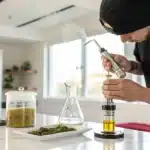
Safety matters most with solvent extraction. CO2 extraction is popular commercially because it leaves no residual solvent and preserves aromatic terpenes, though it needs specialized, pressurized equipment. Butane (BHO) is effective but flammable and genuinely dangerous to attempt at home, which is why finished extracts should come from properly equipped labs.
For a deep dive into the risks and process of solvent extraction, see our guide to BHO extraction and its risks. For most consumers, the practical choice comes down to the product profile you want, not the lab details behind it.
Promos & Deals

Popular Cannabis Concentrates Compared
Shatter, Wax and Live Resin
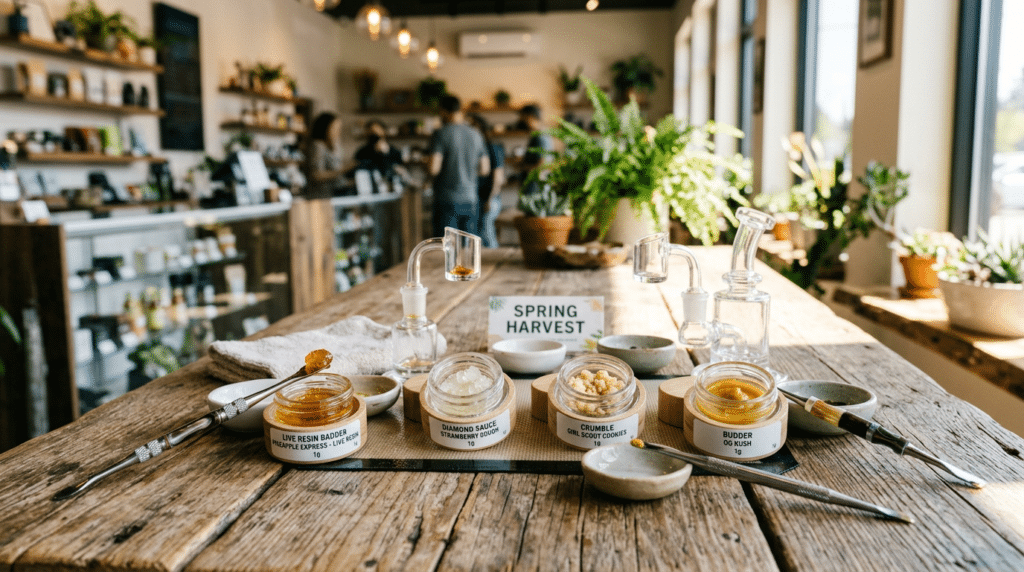
Among solvent extracts, three dominate dispensary shelves. Shatter is glass-like and hits hardest at 80-90% THC. Budder (or wax) is soft and creamy, around 70-80%, and easy to handle for dabbing. Live resin, made from fresh-frozen buds, trades a little potency (60-80%) for the richest terpene flavor of the three.
The difference comes down to the starting material. Live resin uses fresh-frozen buds, locking in volatile terpenes for a punchy, true-to-plant aroma. Shatter and budder start from dried, cured flower, so they lose some of those delicate terpenes along the way, trading a little flavor for shelf stability and potency.
| Feature | Shatter | Wax / budder | Live resin |
|---|---|---|---|
| THC content | 80-90% | 70-80% | 60-80% |
| Consistency | Glass-like | Creamy | Viscous |
| Terpene retention | Lower | Moderate | High |
| Made from | Dried buds (solvent) | Dried buds (solvent) | Fresh-frozen buds (solvent) |
| Best for | Potency seekers | Easy dabbing | Flavor lovers |
How Concentrates Are Used
Because concentrates are so potent, their effects come on fast and strong. Dabbing (vaporizing a small amount on a hot surface) is the most common method and hits within minutes, which is why it suits experienced users. If you are new, start with a tiny, rice-grain-sized amount; a full dab of 80% material is a lot more than a puff of flower.
A quick tip for dabbing: aim for roughly 315-450°F (157-232°C). Lower temps preserve flavor and terpenes; going too hot scorches the concentrate, wasting potency and leaving a harsh taste. A temperature-control setup takes the guesswork out of it.
Tips for Buying and Storing Concentrates
- Store cool and dark: keep concentrates in airtight, non-stick or amber glass containers at 59-70°F (15-21°C), away from light and heat.
- Refrigerate for the long term: for months-long storage, a fridge or freezer in a sealed container best preserves cannabinoids and terpenes.
- Dab low and slow: around 315-450°F (157-232°C) preserves flavor; higher temps scorch terpenes and waste potency.
- Start small: concentrates are far stronger than flower, so a rice-grain-sized dab is plenty for most people.
- Choose solventless for flavor: rosin and bubble hash keep more terpenes; solvent extracts like shatter push maximum THC.
FAQs: Cannabis Extracts and Concentrates
Which is stronger, a concentrate or an extract?
Neither is automatically stronger, because an extract is a type of concentrate. Potency depends on the specific product: solvent extracts like distillate (90%+) and shatter (80-90%) are usually the strongest, while solventless concentrates like kief or hash can be lower (20-60%). Rosin and live resin sit in between at 60-80%.
Is a cannabis concentrate the same as an extract?
Not quite, but they overlap. “Concentrate” is the umbrella term for any product that concentrates cannabinoids. An “extract” is a specific type of concentrate made using a solvent, such as shatter, wax or distillate. So every extract is a concentrate, but concentrates like kief, hash and rosin are made without solvents and are not extracts.
Does cannabis extract get you high?
Yes, if the extract contains THC, and most do, at very high levels (often 60-90%). Because that is several times stronger than flower, the high is more intense and faster to arrive, especially when dabbed. That potency is exactly why beginners should start with a tiny amount and work up slowly.
How strong is cannabis extract?
Most solvent extracts test between 60% and 90%+ THC, compared with roughly 15-30% for flower. Distillate is the strongest at 90%+, shatter around 80-90%, and live resin 60-80%. The exact figure depends on the method and the starting material, but as a rule extracts are several times more potent than bud.
Can I use cannabis extracts in edibles?
Yes. Distillate and some other extracts are popular for edibles because they are potent and relatively flavorless. Note that raw extracts may still need decarboxylation to activate the THC unless they are already activated. Blend into a fat or oil for even dosing, and measure carefully, since a little goes a long way at 60-90% THC.
Curious where all this potency comes from? It starts with the resin glands on the flower itself, which we cover in our guide to marijuana crystals (trichomes).