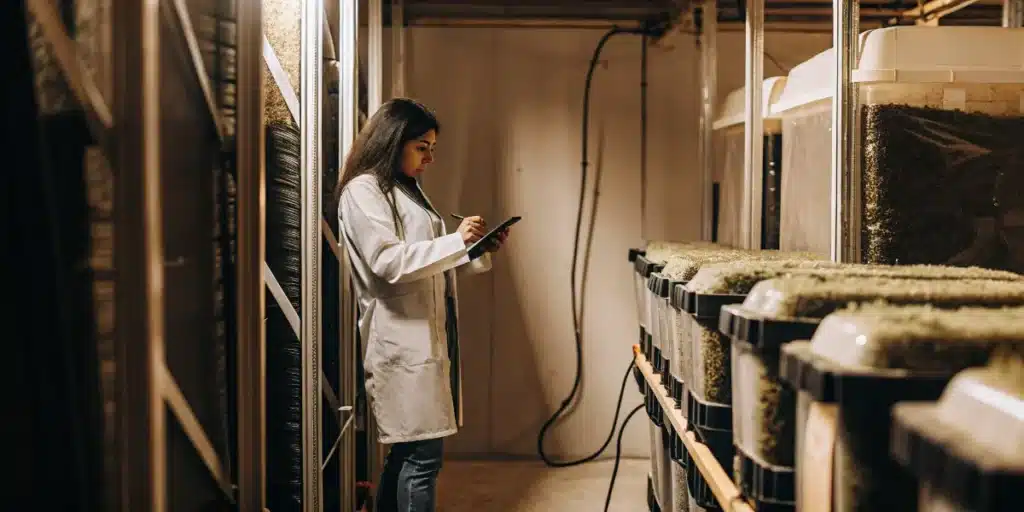
AW Monitoring Plan for Cannabis Storage Facilities

AW Monitoring in Cannabis Storage: An AW monitoring plan for cannabis storage facilities is vital for maintaining product quality and regulatory compliance. By managing water activity (aw) levels, facilities can prevent mold and ensure safety. In states like New Jersey and New York, specific regulations necessitate comprehensive monitoring plans, emphasizing the importance of staying informed and compliant with local laws.
In the cannabis industry, maintaining optimal storage conditions is crucial for preserving the quality and potency of products. Terpenes, which contribute to the aroma and effects of cannabis, are sensitive to environmental changes. Ensuring the right balance of humidity and temperature can prevent terpene degradation and extend shelf life, making aw monitoring essential for any storage facility.
Recommended Strains


AW Monitoring in Cannabis Storage
What is AW Monitoring?
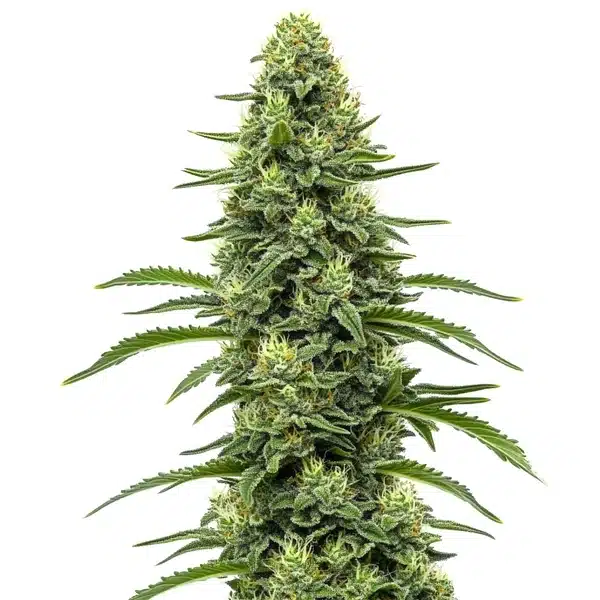
AW monitoring, or water activity monitoring, is a critical process in cannabis storage that measures the free moisture in products. This is different from moisture content, as it indicates the water available for microbial growth. Keeping aw levels between 0.55 and 0.65 is crucial to inhibit mold and bacterial proliferation while maintaining product integrity, including for premium strains such as Future #1.
Experienced growers report that maintaining aw levels within this range prevents mold growth, which can occur rapidly if levels exceed 0.70. This not only safeguards the quality of cannabis but also ensures compliance with health regulations that mandate specific aw thresholds for consumable goods.
Importance of AW Monitoring Plans
Implementing an aw monitoring plan for cannabis storage facilities near New Jersey is crucial due to specific state regulations. These plans help facilities maintain compliance with local laws, which require detailed documentation of aw levels. By integrating advanced monitoring systems, facilities can automate data collection and reporting, ensuring accuracy and efficiency.
New York, NY has its own set of guidelines for aw monitoring plans in cannabis storage facilities. These guidelines emphasize the importance of regular monitoring and documentation to prevent product recalls and legal issues. Facilities must be equipped with reliable sensors and software to track and report aw levels consistently.
Promos & Deals

Implementing an AW Monitoring Plan
Steps to Develop a Plan
Developing an aw monitoring plan involves several key steps. First, assess your facility’s current storage conditions, including temperature and humidity levels. Next, select appropriate monitoring equipment, such as digital hygrometers and data loggers, to track aw levels accurately. Finally, establish a schedule for regular monitoring and maintenance to ensure consistent compliance.
Many cultivators share that integrating automated systems can significantly enhance monitoring accuracy. These systems provide real-time data and alerts, allowing for immediate corrective actions if aw levels deviate from the desired range. This proactive approach minimizes the risk of product spoilage and regulatory violations.
Tools and Technologies
Advanced tools and technologies are essential for effective aw monitoring. Digital hygrometers, capable of measuring humidity with precision, are a staple in any storage facility. Additionally, data loggers that record and transmit aw data to centralized systems enable comprehensive monitoring and reporting, helping maintain the quality of strains such as Skywalker.
Master growers have pointed out that investing in high-quality sensors and software can streamline the monitoring process. These technologies not only enhance accuracy but also facilitate compliance with stringent regulations, ensuring that facilities meet industry standards consistently.
| Feature / Merkmal | New Jersey | New York, NY | California |
|---|---|---|---|
| AW Threshold | 0.55 – 0.65 | 0.55 – 0.65 | 0.55 – 0.65 |
| Monitoring Frequency | Weekly | Bi-weekly | Monthly |
| Reporting Requirements | Mandatory | Mandatory | Optional |
| Equipment Standards | High | Medium | High |
| Penalties for Non-Compliance | Severe | Moderate | Severe |
Professional Tips for AW Monitoring
- Maintain 58-62% RH during storage to prevent mold growth and preserve terpenes. Use a digital hygrometer for accurate readings.
- Calibrate sensors monthly to ensure precise aw measurements. Inaccurate data can lead to regulatory breaches.
- Implement automated alerts for aw deviations. Immediate action can prevent product spoilage and financial loss.
- Document all aw readings and corrective actions. This is crucial for compliance audits and quality assurance.
- Regularly inspect storage areas for leaks or humidity fluctuations. These can compromise product quality and safety.
- Train staff on aw monitoring protocols. Proper training reduces errors and enhances operational efficiency.

FAQs about AW Monitoring in Cannabis Storage
What are the key components of a cannabis storage security plan?
A cannabis storage security plan includes surveillance systems, restricted access controls, and regular audits. Facilities must implement these measures to protect against theft and unauthorized access. Additionally, maintaining a detailed log of all entries and exits is crucial. Compliance with state regulations, such as those in New Jersey, is mandatory.
How does water activity affect the shelf life of cannabis buds?
Water activity directly impacts the shelf life of cannabis buds. Maintaining aw levels between 0.55 and 0.65 prevents mold growth and preserves terpenes, extending shelf life to 6-12 months. Deviations can lead to rapid degradation and loss of potency, especially if aw exceeds 0.70.
Why is tracking water activity important in cannabis storage?
Tracking water activity is essential to prevent microbial growth and ensure product safety. It helps maintain the quality and potency of cannabis, which is crucial for consumer satisfaction. Facilities that fail to monitor aw levels risk non-compliance with regulations, leading to potential fines and product recalls.
What SOPs are essential for aw monitoring in cannabis storage?
Standard Operating Procedures (SOPs) for aw monitoring include regular calibration of sensors, scheduled data logging, and immediate corrective actions for deviations. These procedures ensure consistent compliance with regulations and maintain product quality. Facilities must also train staff on SOPs to minimize errors and enhance operational efficiency.
How long can buds last in Ziploc before potency goes down?
Buds stored in Ziploc bags can lose potency within weeks if not properly sealed and stored. To preserve potency, maintain aw levels between 0.55 and 0.65, and store in airtight containers at 59-70°F (15-21°C). Ziploc bags are not ideal for long-term storage due to their lack of airtight sealing.