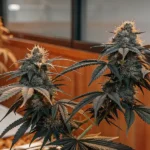
Australian Bastard Cannabis (ABC): The Rare Succulent-Leaf Strain

Quick answer: Australian Bastard Cannabis (ABC) is a rare natural mutation, first found in Australia in the 1970s, whose leaves are small, smooth and rounded like a succulent instead of the classic serrated cannabis leaf. The mutation changes only the foliage, not the plant’s ability to make cannabinoids, and its stealthy, hardy nature is what makes it so sought after.
Australian Bastard Cannabis, almost always shortened to ABC, is one of the genuine oddities of the cannabis world. Discovered in Australia in the 1970s, it is a naturally occurring mutation whose leaves look nothing like normal cannabis: small, smooth and rounded, far closer to a succulent or a houseplant than to the familiar serrated fan leaf.
Recommended Strains

Fat Bastard

|
THC | 30% - 38% (High) |

|
Type | Feminized |

|
Yield | High |

|
Phenotype | 50% Indica / 50% Sativa |

Fat Bastard Auto
|
|
THC | 30% - 38% (High) |
|
|
Type | Autoflowering |
|
|
Yield | High |
|
|
Phenotype | 50% Indica / 50% Sativa |
That unusual look is exactly why it fascinates breeders and growers. ABC keeps the essential genetics of cannabis, so it still produces cannabinoids, while offering a plant that is easy to hide in plain sight and tough enough to shrug off conditions that would stress an ordinary strain.
| ABC at a glance | Detail |
|---|---|
| Full name | Australian Bastard Cannabis (ABC) |
| Origin | A spontaneous mutation found in Australia in the 1970s |
| Leaves | Small, smooth, rounded, succulent-like (no serration) |
| Standout traits | Stealthy look, hardy, drought-resistant |
| Cannabinoids | Still produces THC/CBD; mutation affects leaves, not chemistry |
| Availability | Rare; stable seed is hard to find |
What Makes the ABC Strain Unique?
The defining feature is the leaf. A genetic anomaly changes how ABC’s foliage develops, producing small, smooth leaflets with none of the serration that defines a normal cannabis leaf, so at a glance the plant reads as a succulent rather than weed. Importantly, this is purely a morphological change; the plant still carries cannabis genetics and can produce THC and CBD like any other.
That combination is what makes ABC interesting to breeders. Its succulent-like leaves may also reduce water loss, hinting at useful drought resistance, and because it looks so unlike cannabis it is prized for discreet, stealthy growing. Like most cannabis it is dioecious, with separate male and female plants, so you still need to manage pollination to get seedless, cannabinoid-rich flower.
Promos & Deals

How to Grow the ABC Strain
ABC is forgiving and adaptable, happy in moderate climates both indoors and out, and its stealthy appearance makes it a favorite for low-profile outdoor grows. Indoors, treat it like a standard photoperiod plant: 18/6 light in veg, 12/12 to flower, with good ventilation to keep its foliage dry and mold-free.
For healthy growth, aim for daytime temperatures of 20-25 C (68-77 F) with a cooler night drop, humidity around 60-70% in veg dropping to 40-50% in flower, and a soil pH near 6.5 for good nutrient uptake. Its drought tolerance means it is more forgiving of a missed watering than most strains, but the usual rules of airflow, light and moderate feeding still apply.
Can You Buy ABC Seeds?
This is where expectations need managing: ABC is rare, and genuinely stable ABC seed is hard to come by, because the mutation does not always breed true. A lot of what circulates online as ‘ABC seeds’ or ‘Australian Bastard autoflower’ is unstable or mislabeled, so buy only from breeders who are transparent about their genetics. To be clear, Blimburn Seeds does not sell ABC; it is a collector’s curiosity rather than a commercial strain.
If what draws you to ABC is the stealthy, hardy, low-maintenance side rather than the novelty leaves, you have plenty of reliable options. Compact, resilient autoflowering seeds and stable feminized seeds give you discreet, dependable plants without the uncertainty of hunting down a rare mutation.
Part of the appeal of ABC is simply its story. Since turning up as a spontaneous mutation in Australia in the 1970s, it has passed between enthusiasts and breeders fascinated by a cannabis plant that looks like a houseplant, and a handful of projects have tried to stabilize the trait or cross it into more conventional genetics.
For most growers, ABC is best understood as a collector curiosity and a breeding project rather than a crop. Its succulent-like leaves and stealthy profile are genuinely novel, but the scarcity of stable seed, and the ordinary potency behind the unusual looks, mean it appeals more to hobbyists and breeders than to anyone chasing yield or strength.

FAQs About Australian Bastard Cannabis
What is Australian Bastard Cannabis (ABC)?
ABC is a rare natural cannabis mutation discovered in Australia in the 1970s. Its leaves are small, smooth and rounded like a succulent rather than serrated, which makes the plant look nothing like typical cannabis. The mutation affects only the leaves, so ABC still produces cannabinoids such as THC and CBD.
Why does the ABC strain look like a succulent?
A genetic mutation changes how ABC’s leaves develop, giving small, smooth, rounded leaflets without the usual serrated edges. The result looks more like a houseplant than weed, which is why growers value it for stealth. The succulent-like leaves may also reduce water loss, giving ABC useful drought resistance.
Can you buy Australian Bastard Cannabis seeds?
Rarely and with caution. Stable ABC seed is hard to find because the mutation does not reliably breed true, and much of what is sold online is unstable or mislabeled. Blimburn Seeds does not stock ABC. For a similar stealthy, hardy grow, compact autoflowering or feminized strains are a more reliable choice.
Is the ABC strain potent?
ABC produces cannabinoids like normal cannabis, since the mutation affects only the leaves, but it is not known for standout potency. People grow it for its unusual succulent-like appearance and stealthy, hardy nature rather than for high THC. If strength is your priority, a conventional high-THC strain is a better choice.
Is Australian Bastard Cannabis indica or sativa?
ABC is defined by a leaf mutation rather than a fixed indica or sativa lineage, so its effects depend on whatever genetics it is crossed with. Pure ABC is more a morphological oddity than a distinct effect profile, which is another reason it is treated as a collector and breeding curiosity.
Why is it called Australian Bastard Cannabis?
The name reflects both its origin and its oddity: it was discovered in Australia, and growers labelled the strange, non-standard mutation a bastard because it looks nothing like normal cannabis. The succulent-like, rounded leaves set it so far apart from typical foliage that the blunt nickname stuck.