How to Grow OG Kush Strain

Quick Summary: OG Kush is a legendary 55% Indica-dominant hybrid with THC levels up to 24%. It thrives in temperate 70-80°F climates, requiring a precise 8-10 week flowering time. Expect potent earthy-lemon aromas driven by Myrcene and Limonene terpenes, perfect for deep relaxation and creative euphoria.
OG Kush Strain: Description
The OG Kush strain is more than just a name; it is the genetic backbone of modern cannabis horticulture. Originating from a high-profile cross of Chemdawg, Lemon Thai, and Pakistani Kush, this variety has redefined expectations for potency and flavor. For the modern homegrower, learning to grow Kush OG strain successfully requires a deep understanding of its metabolic needs and environmental sensitivities.
Recommended Strains

OG Kush

|
THC | 20% - 24% (High) |

|
Type | Feminized |

|
Yield | High |

|
Phenotype | 55% Indica / 45% Sativa |

OG Kush Auto
|
|
THC | 17% - 24% (High) |
|
|
Type | Autoflowering |
|
|
Yield | Medium |
|
|
Phenotype | 50% Indica / 50% Sativa |
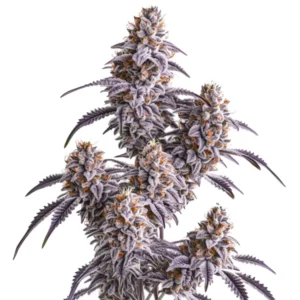
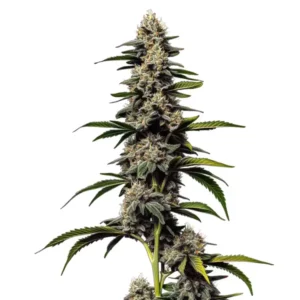
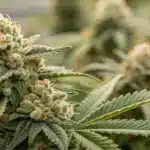
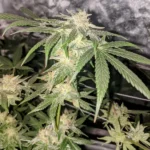
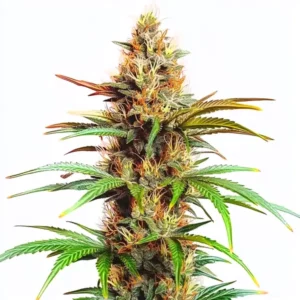
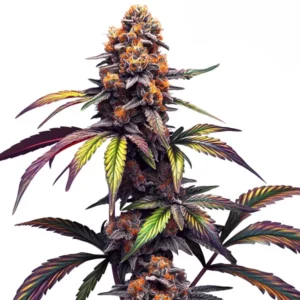
Biologically, OG Kush presents a phenotype characterized by dense, resin-soaked clusters and a high concentration of stalked glandular trichomes. These glands are the chemical factories where THC and essential terpenes like Myrcene (earthy), Limonene (citrus), and Caryophyllene (pepper) are synthesized. This combination creates the “Entourage Effect,” where cannabinoids and terpenes work together to produce a soaring cerebral high followed by an incapacitating “couch-lock” sedation.
Promos & Deals

OG Kush Grow Info: Environmental Optimization
When you cultivate OG Kush cannabis plants, you must act as a climate engineer. This strain is particularly sensitive to fluctuations in the microclimate. Indoors, your goal is to manage the Daily Light Integral (DLI) to ensure the plant receives enough Photosynthetically Active Radiation (PAR) without inducing light stress or bleaching. During the vegetative stage, maintaining a PPFD (Photosynthetic Photon Flux Density) of 400-600 µmol/m²/s is ideal, ramping up to 800-1000 µmol/m²/s during the OG Kush flower time.
Humidity management is the second pillar of success. Because OG Kush produces extremely dense buds, it is highly susceptible to Botrytis (gray mold). During the vegetative phase, keep Relative Humidity (RH) at 60-70% to encourage transpiration. However, once you enter the flowering stage, you must systematically drop RH to 40-50%. This creates a “dry” environment that forces the plant to produce more resin as a protective barrier, simultaneously preventing moisture from being trapped within the thick calyx clusters.
Technical Comparison Table
tr style=”background-color: #1b5e20; color: white; text-align: left;”>
| Technical Feature | OG Kush | Santa Muerte | White Widow |
|---|---|---|---|
| Genotype | Indica Dominant (55/45) | Sativa Dominant | Balanced Hybrid |
| THC Potential | 20% – 24% | 18 – 20% | 18% – 25% |
| Flower Time | 8 – 10 Weeks | 10 – 12 Weeks | 8 – 10 Weeks |
| Primary Terpene | Myrcene / Limonene | Terpinolene | Caryophyllene |
| Nutrient Demand | High (Heavy Feeder) | Moderate | Moderate |
| Yield (Indoor) | 450-500 g/m² | 500-600 g/m² | 400-450 g/m² |
Nutrition and Metabolic Protocol
To maximize the OG Kush strain THC level, you must provide a tailored N-P-K (Nitrogen-Phosphorus-Potassium) regimen. During the vegetative stage, use a ratio of 3-1-2 to support the development of large fan leaves. These leaves act as solar panels and nutrient storage vats. Without a strong canopy, the plant cannot synthesize the sugars needed for heavy flower production later.
As you transition to 12/12 light cycles, shift your focus to a 1-3-2 or 0-3-3 ratio. High Phosphorus and Potassium levels are vital for ATP production and cellular signaling during the og kush flower time. Be careful with Calcium and Magnesium; OG Kush is a heavy consumer of these secondary nutrients. A deficiency often shows up as rusty spots on leaves, which can quickly stunt the plant and reduce your final harvest weight.
Professional Tips for 10-Year Veterans
- Silica Supplementation: Add Potassium Silicate to your reservoir. It strengthens cell walls, helping the heavy OG Kush branches support dense buds without breaking.
- The “Stem Rub” Test: During early vegetative growth, rub the stem. A strong, early citrus/fuel aroma indicates a high-terpene phenotype.
- UVB Supplementation: During the last two weeks of flowering, add small doses of UVB light. This simulates high-altitude stress and can boost THC production by 2-5%.
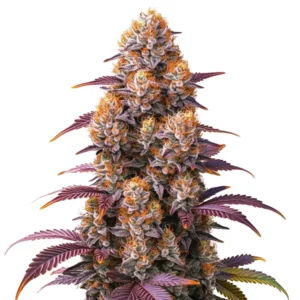
- Temperature Differential: Drop your “lights-off” temperatures by 10-15°F during the final flush. This encourages the expression of anthocyanins, giving the buds a beautiful purple tint.
- Enzyme Flushes: Use cellulase and xylanase enzymes in your final week. They break down dead root material and salt buildup, resulting in a much smoother smoke and cleaner ash.
Is OG Kush Indica or Sativa?
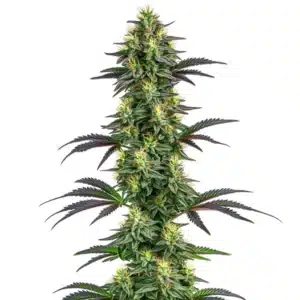
One of the most common questions is: is OG Kush indica or sativa? Genetically, it is a hybrid, but its morphology and effects are overwhelmingly Indica-dominant. Most phenotypes express about 55% to 75% Indica traits. This means you can expect short internodal spacing and broad, dark-green leaves. However, the Sativa ancestry from Lemon Thai prevents the “couch-lock” from being purely sedative, adding a layer of mental clarity and happiness that makes the og kush strain effects truly world-class.

OG Kush FAQ: Everything You Need to Know
What are the primary og kush strain effects?
Users report a powerful dual action: a fast-acting cerebral euphoria that enhances creativity, followed by a heavy body relaxation. Because of its high THC content, it is excellent for treating chronic pain, insomnia, and high levels of stress. The Limonene terpenes also provide a noticeable mood boost.
How long is the og kush flower time?
Indoors, the standard flowering period is between 8 and 10 weeks. If you prefer a more “heady” or energetic high, harvest when most trichomes are milky white. For a heavier sedative effect, wait until roughly 20-30% of the resin glands have turned a deep amber color.
Is og kush strain indica or sativa for beginners?
While it is Indica-dominant, it is considered a moderate-difficulty strain. Beginners can grow it, but they must be careful with nutrient levels. OG Kush is a “heavy feeder” and can show signs of nutrient burn quickly if the EC (Electrical Conductivity) levels are too high in the root zone.
What is the best way to control odor during a Kush grow?
Because of its intense fuel and skunk aroma, a high-quality carbon filter is mandatory for indoor grows. Ensure your exhaust fan matches the CFM (Cubic Feet per Minute) rating of your grow space to create negative pressure, preventing any smell from escaping the tent.