Water Curing Weed: A Complete Guide

Water curing cannabis: This specialized post-harvest technique involves immersing freshly trimmed cannabis buds in water for 3 to 7 days. The process effectively removes harsh impurities like chlorophyll and excess nutrients. While cannabinoids remain unaffected due to their non-water-soluble nature, the buds may lose some of their natural aroma and flavor, enhancing the smoothness of the smoke.
Water curing weed is an innovative method to refine your cannabis post-harvest. Unlike traditional air curing, this technique focuses on submerging buds in water to enhance the smoothness of the smoke. By removing chlorophyll and nutrients, it ensures a cleaner burn. This method is particularly favored for its ability to maintain potency while reducing harshness.
Recommended Strains

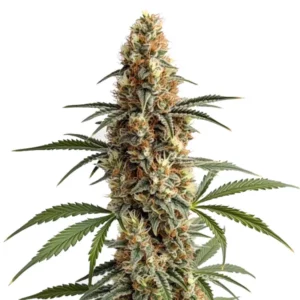
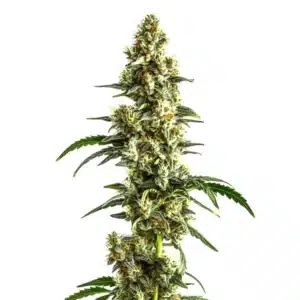
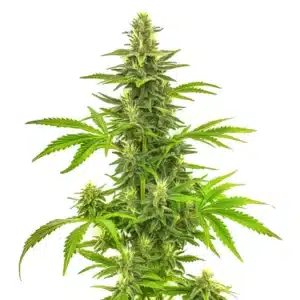
Fat Bastard

|
THC | 30% - 38% (High) |

|
Type | Feminized |

|
Yield | High |

|
Phenotype | 50% Indica / 50% Sativa |

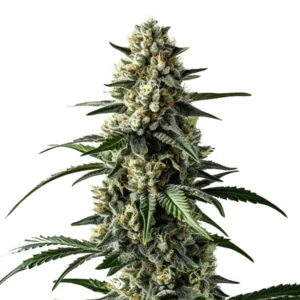
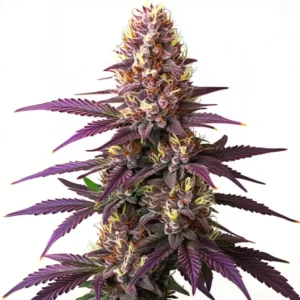
Cafe Racer
|
|
THC | 25% (High) |
|
|
Type | Feminized |
|
|
Yield | Medium |
|
|
Phenotype | 30% Indica / 70% Sativa |
What is Water Curing?
The Science Behind Water Curing
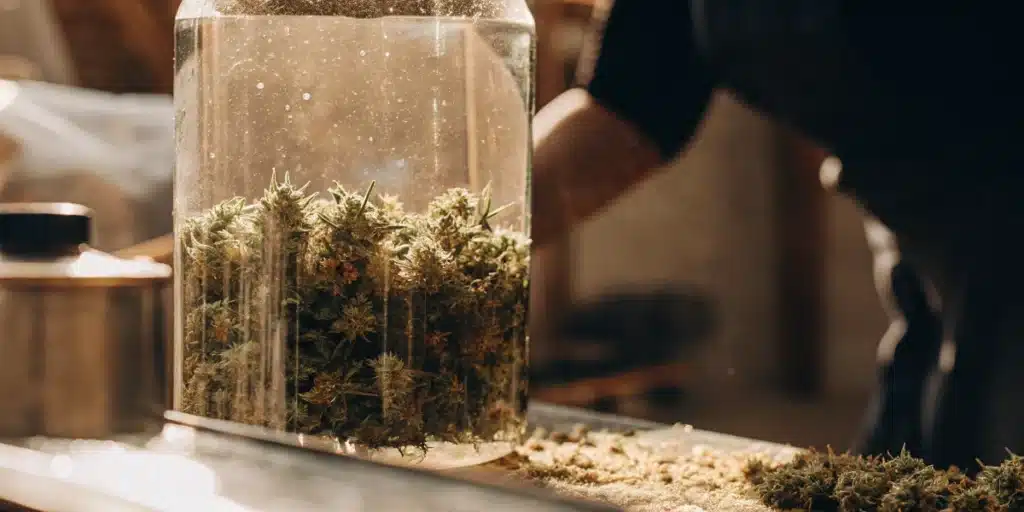
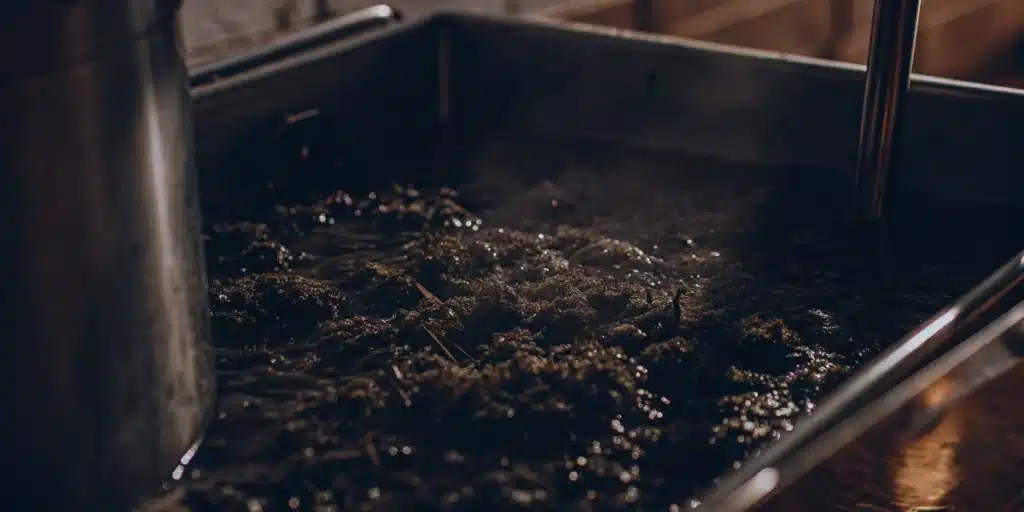
Water curing involves immersing cannabis buds in water, which acts as a solvent to dissolve water-soluble impurities such as chlorophyll and excess nutrients. This process typically spans 3 to 7 days, during which the water is changed daily to ensure effective leaching of unwanted compounds. The cannabinoids, being non-water-soluble, remain intact, preserving the potency of the buds.
Experienced growers report that maintaining a consistent temperature between 68°F and 72°F (20°C – 22°C) during the curing process is crucial. This range prevents microbial growth while optimizing the extraction of impurities. The process results in a smoother smoke with reduced harshness, although it can lead to a loss of terpenes, affecting the aroma and flavor profile.
Step-by-Step Process
Begin by trimming your cannabis buds to remove excess leaves and stems. Submerge the buds in a container filled with clean water, ensuring they are fully covered. Change the water every 24 hours to prevent the buildup of bacteria and mold. This daily change is essential for maintaining the quality of the buds and ensuring the effective removal of impurities.
After 3 to 7 days, remove the buds from the water and dry them thoroughly. Use a fan or dehumidifier to expedite the drying process, aiming for a relative humidity of 58-62%. This step is critical to prevent mold formation and ensure the buds are ready for storage or consumption.
Promos & Deals
Benefits of Water Curing Weed
Impact on Flavor and Aroma
Water curing significantly alters the flavor and aroma of cannabis. By removing chlorophyll and other impurities, the resulting smoke is smoother and less harsh on the throat. However, this process also strips away some terpenes, which are responsible for the plant’s distinctive aroma and flavor. As a result, water-cured cannabis may have a more subdued scent compared to air-cured buds.
Despite the loss of some aromatic compounds, the enhanced smoothness of the smoke is a major benefit. Many cultivators share that water-cured cannabis is ideal for those who prioritize a milder smoking experience over intense flavors. This method is particularly beneficial for consumers who are sensitive to the harshness of traditional cannabis smoke.
Pros and Cons of Each Method
When comparing water curing to air curing, each method has its distinct advantages. Water curing excels in producing a smoother smoke by effectively removing harsh impurities. However, it sacrifices some of the plant’s natural aroma and flavor, which are better preserved through air curing. Air curing, on the other hand, takes longer, typically 10 to 14 days, and requires careful monitoring of humidity and temperature to prevent mold.
Master growers have pointed out that the choice between water and air curing ultimately depends on personal preference. Water curing is ideal for those seeking a cleaner smoking experience, while air curing is preferred by connoisseurs who value the full spectrum of flavors and aromas cannabis has to offer.
| Feature | Water Curing | Air Curing | Dry Ice Curing |
|---|---|---|---|
| Duration | 3-7 days | 10-14 days | 1-2 days |
| Flavor Retention | Low | High | Moderate |
| Smoothness | High | Moderate | High |
| Terpene Loss | High | Low | Moderate |
| Ease of Process | Moderate | Easy | Difficult |
Professional Tips for Water Curing
- Maintain water temperature at 68°F – 72°F (20°C – 22°C) to prevent microbial growth during curing.
- Change water daily to ensure effective removal of impurities and prevent mold.
- Dry buds thoroughly after curing to avoid mold, aiming for 58-62% RH.
- Use a fan to expedite drying post-curing, avoiding direct sunlight exposure.
- Monitor buds for signs of mold during curing, such as discoloration or unusual odors.
- Store cured buds in airtight containers at 59-70°F (15-21°C) to preserve quality.
Frequently Asked Questions about Water Curing
How long does water curing take?
Water curing typically takes between 3 to 7 days. This duration allows for the effective removal of chlorophyll and other impurities, resulting in a smoother smoke. The exact time may vary based on bud size and desired outcome, but changing the water daily is crucial to prevent mold and ensure quality.
Is water curing necessary?
Water curing is not necessary for all cannabis, but it offers significant benefits for those seeking a smoother smoking experience. It effectively removes harsh impurities, though it may reduce the natural aroma and flavor. Many cultivators use it to enhance the quality of their product, especially for sensitive consumers.
Can you smoke uncured buds?
Smoking uncured buds is possible but not recommended. Uncured cannabis often contains chlorophyll and excess nutrients, leading to a harsher smoke and potentially unpleasant flavors. Proper curing, such as water or air curing, enhances the smoking experience by reducing harshness and improving overall quality.
Is water curing better than air curing?
Water curing and air curing each have their advantages. Water curing produces a smoother smoke by removing more impurities, but it can reduce flavor. Air curing preserves the plant’s natural aroma and flavor but requires more time and careful environmental control. The choice depends on personal preference and desired outcomes.
What are the risks of smoking uncured cannabis?
Smoking uncured cannabis can result in a harsh experience due to retained chlorophyll and nutrients. It may also lead to an uneven burn and diminished potency. Proper curing, whether water or air, is essential to enhance flavor, aroma, and overall smoking quality, reducing these risks significantly.
Keep reading
If this topic is useful for your grow, you will probably also want to read What Is Grabba? and Bisabolol in Weed, two closely related guides from our blog that go deeper into the same subject.