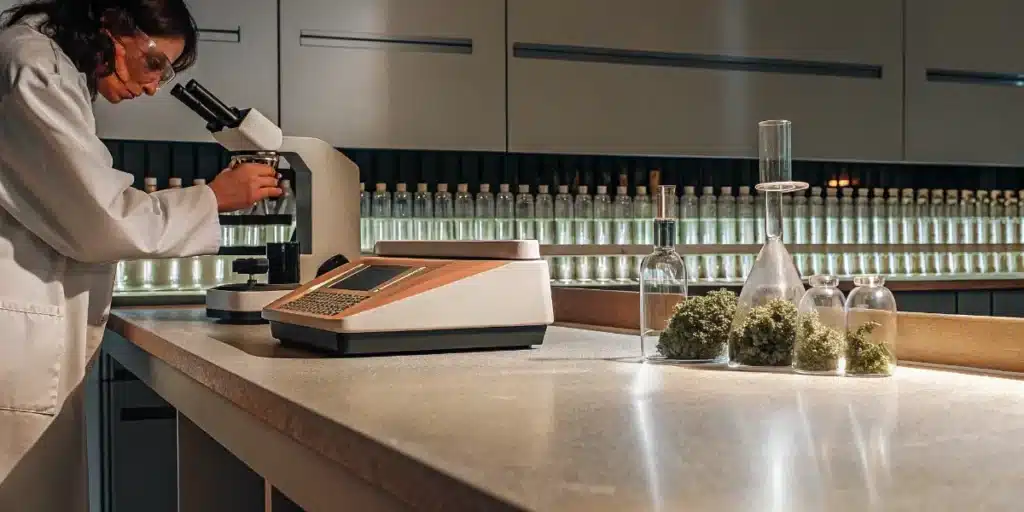
Testing Cannabis for Synthetic Cannabinoids Contamination

Ensuring safety in cannabis: Testing cannabis for synthetic cannabinoids contamination is essential to maintain product integrity and consumer safety. Techniques like gas chromatography-mass spectrometry (GC-MS) are employed to identify synthetic cannabinoids such as K2 and Spice, which pose health risks. These advanced methods ensure compliance with safety standards and regulations, safeguarding consumers from potential harm.
Exploring the world of cannabis involves knowing its chemical makeup, including terpenes and cannabinoids. Terpenes like myrcene, which accounts for 0.8-1.2% in some strains, contribute to aroma and enhance THC absorption. Meanwhile, flowering times vary, with photoperiod strains typically requiring 8-9 weeks. This complexity highlights the importance of testing for synthetic cannabinoids to ensure purity and safety.
Recommended Strains

Purple Lemon

|
THC | 15% - 22% (Medium) |

|
Type | Feminized |

|
Yield | Medium |

|
Phenotype | 50% Indica / 50% Sativa |

Z OG Kush
|
|
THC | 22% - 24% (High) |
|
|
Type | Feminized |
|
|
Yield | Medium |
|
|
Phenotype | 70% Indica / 30% Sativa |
Synthetic Cannabinoids: What You Need to Know
What Are Synthetic Cannabinoids?
Synthetic cannabinoids are lab-created chemicals that mimic the effects of natural cannabinoids found in cannabis. Unlike THC, which binds naturally to CB1 receptors in the brain, synthetic variants can bind more aggressively, leading to unpredictable effects. These compounds, often marketed as K2 or Spice, can be up to 100 times more potent than THC, posing significant health risks.
These compounds are not detected by standard cannabis tests, necessitating specialized methods. Gas chromatography-mass spectrometry (GC-MS) is a preferred technique, capable of identifying specific synthetic compounds at concentrations as low as 1 ng/mL. This precision is crucial for ensuring consumer safety and regulatory compliance.
Methods for Detecting Contaminants
Detecting synthetic cannabinoids requires advanced testing methods. GC-MS and liquid chromatography-tandem mass spectrometry (LC-MS/MS) are the gold standards. These methods can identify a wide range of synthetic cannabinoids, even at trace levels. They provide a comprehensive analysis, ensuring products are free from harmful synthetic additives.
Experienced growers emphasize the importance of regular testing. By maintaining a consistent testing schedule, cultivators can ensure their products remain free from contaminants. This not only protects consumers but also enhances the reputation of the brand, fostering trust and loyalty.
Promos & Deals




Testing Cannabis for Synthetic Cannabinoids Contamination
Methods for Detecting Contaminants
Advanced testing methods such as GC-MS and LC-MS/MS are crucial for detecting synthetic cannabinoids in cannabis. These techniques offer precision, identifying contaminants at levels as low as 1 ng/mL. This ensures that cannabis products are safe for consumption and comply with regulatory standards.
Utilizing these methods, producers can guarantee the purity of their products. This not only protects consumers but also enhances brand credibility. Regular testing is a best practice that cultivators should adopt to maintain high-quality standards and consumer trust.
Factors Affecting Detection Time
The detection time for synthetic cannabinoids in urine tests varies based on several factors. These include the specific compound, frequency of use, and the individual’s metabolism. For instance, synthetic cannabinoids can be detectable for up to 72 hours in occasional users, but chronic users might test positive for longer periods.
Knowing these variables is essential for accurate testing. Laboratories must consider these factors when interpreting results to avoid false positives or negatives. This precision is crucial for ensuring that consumers receive reliable information about their cannabis products.
| Feature | Zkittlez Kush | Purple Lemon | Alien Gorilla Glue |
|---|---|---|---|
| THC Content | 22-24% | 15-22% | 23-24% |
| Dominant Terpene | Myrcene | Limonene | Caryophyllene |
| Aroma | Citrus, Kush, Sweet | Citrus, Earthy, Fruity, Herbal, Sweet | Citrus, Herbal, Pine |
| Effect | Euphoric, Uplifted | Creative, Energetic, Uplifted | Calming, Happy, Relaxed |
| Yield Indoor | 1.15 – 1.47 oz/ft² | 350 – 450 g/m² | 1.15 – 1.47 oz/ft² | 350 – 450 g/m² | 1.31 – 1.97 oz/ft² | 400 – 600 g/m² |
Synthetic Cannabinoids Urine Test Detection Time
Factors Affecting Detection Time
The detection time for synthetic cannabinoids in urine tests can vary significantly. Factors such as the specific synthetic compound, frequency of use, and the individual’s metabolic rate play crucial roles. Typically, these substances can be detected for 48-72 hours in occasional users, but chronic users might test positive for longer periods.
Knowing these variables is essential for accurate test results. Laboratories must consider these factors to avoid false positives or negatives. This precision ensures that consumers receive reliable information about their cannabis products, maintaining trust in the industry.
Interpreting Test Results
Interpreting the results of a K2/Spice drug test requires a nuanced knowing of the testing process. These tests are designed to detect specific synthetic cannabinoids, but cross-reactivity with other substances can occur. This can lead to false positives, which must be carefully evaluated by professionals.
Experienced testers recommend confirming positive results with a secondary method, such as GC-MS. This ensures accuracy and reliability, providing peace of mind for consumers and producers alike. By adopting a thorough testing protocol, the industry can maintain high standards of safety and quality.
K2/Spice Drug Test: Key Insights
Interpreting Test Results
Interpreting K2/Spice drug test results involves knowing the potential for cross-reactivity. Synthetic cannabinoids can sometimes cause false positives, necessitating confirmatory testing. GC-MS is recommended for its precision in identifying specific compounds, ensuring accurate results.
For consumers, knowing whether K2 shows up in a urine test is crucial. On platforms like Reddit, users often discuss detection times and test accuracy. Reliable testing methods provide clarity and assurance, helping consumers make informed decisions about their cannabis use.
FAQs on Cannabis and Synthetic Cannabinoids
How can I test for cannabinoids?
Testing for cannabinoids involves using advanced methods like GC-MS or LC-MS/MS. These techniques can detect cannabinoids at concentrations as low as 1 ng/mL, ensuring accuracy. Regular testing is vital for maintaining product safety and quality, protecting consumers from potential contaminants.
What is JWH on a drug screen?
JWH refers to a series of synthetic cannabinoids detectable on drug screens. These compounds can bind to cannabinoid receptors more aggressively than THC, leading to potent effects. Drug screens using GC-MS can identify JWH compounds, ensuring accurate detection and consumer safety.
How do you test for cannabis?
Testing for cannabis involves analyzing cannabinoids and terpenes using methods like GC-MS. This ensures products are free from contaminants and meet safety standards. Regular testing helps maintain product quality, fostering consumer trust and compliance with regulations.
Can synthetic cannabinoids be detected in hair tests?
Synthetic cannabinoids can be detected in hair tests, which provide a longer detection window than urine tests. Hair tests can identify drug use over several months, offering a comprehensive view of substance use. This method is particularly useful for long-term monitoring.
Are synthetic cannabinoids legal?
The legality of synthetic cannabinoids varies by jurisdiction. In many areas, these substances are classified as controlled substances due to their potential health risks. It’s crucial to stay informed about local laws to ensure compliance and avoid legal issues.