Proven Nutrient Interactions in LED vs HPS Cannabis Grows

Distinct differences in nutrient interactions occur when using LED and HPS lighting systems for cannabis cultivation. While both lighting types have their merits, knowing how they affect nutrient uptake can significantly enhance your growing outcomes. Lighting choice impacts the way cannabis plants absorb and utilize nutrients, ultimately influencing yield and quality. Knowing nutrient interactions in LED vs HPS cannabis grows is essential for fine-tuning your feeding strategy and ensuring your plants perform at their best under each lighting setup.
LED lights are gaining popularity due to their energy efficiency and spectrum control, which can be tailored to specific growth stages. This precise control directly affects nutrient absorption LED vs HPS cannabis systems, as LEDs can be adjusted to provide optimal light for photosynthesis. On the other hand, HPS lights deliver a broad spectrum that closely mimics natural sunlight, impacting how nutrients are processed by the plants.
Recommended Strains
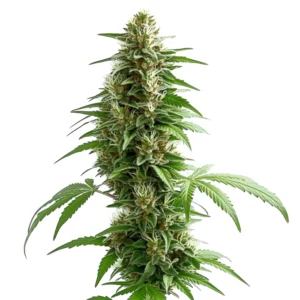
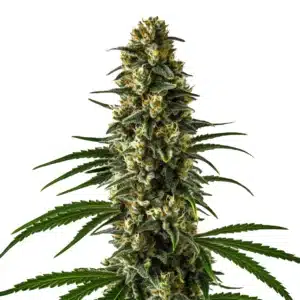
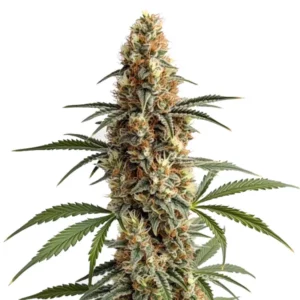
Green Crack Auto

|
THC | 18% - 20% (Medium) |

|
Type | Autoflowering |

|
Yield | High |

|
Phenotype | 50% Indica / 50% Sativa |
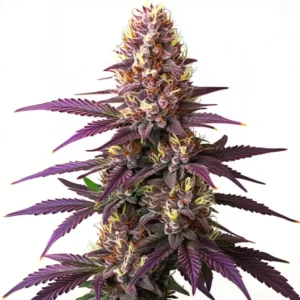
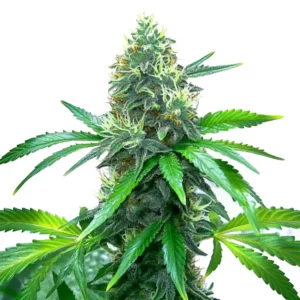
Blueberry
|
|
THC | 15% - 24% (Medium) |
|
|
Type | Feminized |
|
|
Yield | High |
|
|
Phenotype | 80% Indica / 20% Sativa |
Seasoned growers often debate the benefits of each system, yet both LED and HPS lights require a careful balance of nutrients. By examining nutrient interactions in LED vs HPS cannabis grows, cultivators can make informed decisions to optimize their harvests. Different strains also react uniquely to lighting conditions, so choosing the right strain is crucial for success.
LED Lighting Effects on Cannabis Nutrient Uptake
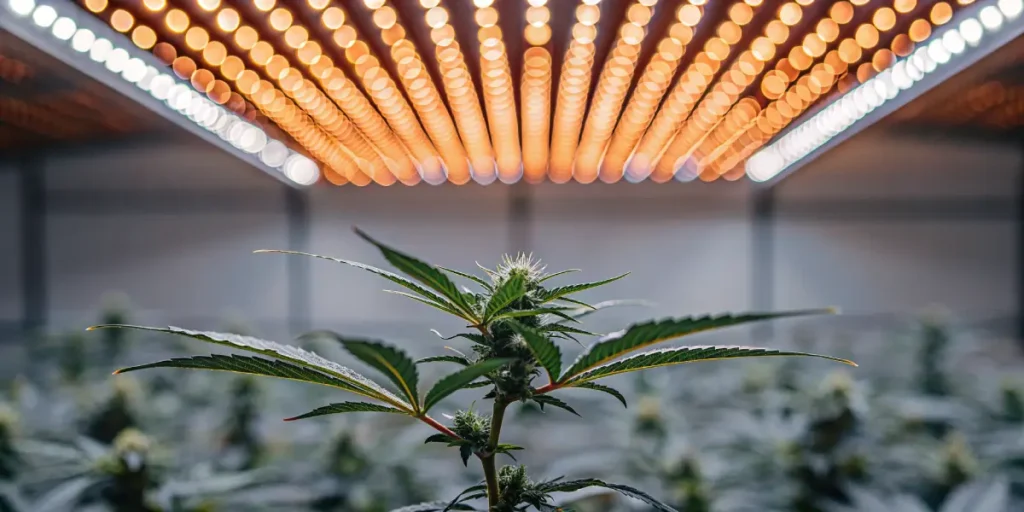
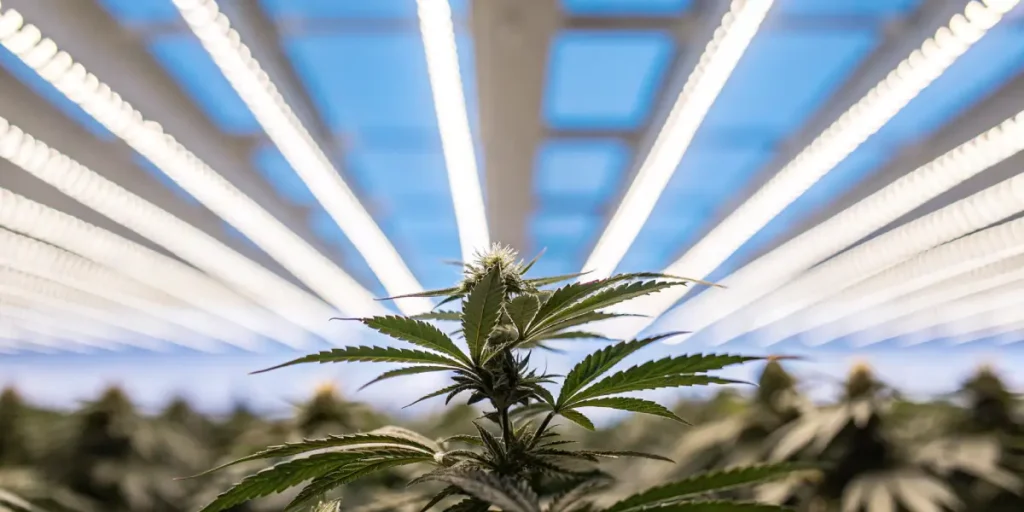
LED lighting systems offer a unique advantage in cannabis cultivation due to their ability to customize light spectra. This customization allows growers to fine-tune the light to specific growth phases, enhancing nutrient uptake. For instance, during the vegetative stage, increased blue light can boost nitrogen uptake, promoting robust leaf and stem development.
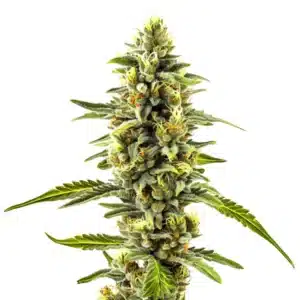
With LED lights, cannabis plants generally exhibit a more efficient photosynthetic process. This efficiency means that nutrients such as phosphorus and potassium, crucial for flowering, are absorbed more effectively. As a result, strains like Green Crack Auto from Blimburn Seeds, known for its vigorous growth and high yields, thrive under LED setups.
The flexibility of LED lighting also allows for dynamic adaptation to the plant’s changing needs, ensuring consistent growth patterns. Growers can precisely manage the light spectrum to support the plant’s metabolic processes, enhancing the overall effectiveness of nutrient interactions in LED vs HPS cannabis grows. This adaptability is particularly beneficial for strains that require specific nutrient profiles during different growth stages.
Moreover, the reduced heat output from LED systems minimizes the risk of environmental stress, promoting a stable growing environment. This stability is crucial for maintaining a balanced nutrient absorption LED vs HPS cannabis scenarios. LED lighting effects on cannabis nutrient uptake demonstrate the potential for increased efficiency and higher quality yields when managed correctly.
HPS Grow Lights and Nutrient Interaction in Cannabis
HPS grow lights provide a full-spectrum light that closely resembles natural sunlight, which can be beneficial for certain cannabis strains. The broad spectrum of HPS lights influences nutrient interactions, especially during the flowering stage. Plants under HPS lighting often show enhanced nutrient absorption, particularly of calcium and magnesium, which are vital for flower development.
However, the intense heat emitted by HPS lights can sometimes lead to nutrient imbalances. Growers must be vigilant about maintaining a proper nutrient balance under LED vs HPS environments. Strains like Girl Scout Cookies from Blimburn Seeds, which are resilient and adaptable, manage well under the intensity of HPS lights.
The warmth generated by HPS lights can accelerate the plant’s metabolism, necessitating an adjusted nutrient regimen to avoid deficiencies or toxicities. This heat also requires careful management of water and nutrient delivery systems to ensure that the plants do not experience stress. Knowing HPS grow lights and nutrient interaction in cannabis is essential for optimizing plant health and productivity.
Real-life experiences from growers highlight the importance of monitoring environmental factors such as humidity and temperature when using HPS lights. These factors can affect nutrient uptake and overall plant health. Many growers find success by combining HPS with LED lights, taking advantage of the strengths of both systems.
Promos & Deals
Optimizing Nutrients for LED Cannabis Cultivation
Optimizing nutrients for LED cannabis cultivation involves knowing how different light spectrums affect nutrient needs. LEDs allow for targeted light delivery, which means specific nutrients can be emphasized at different growth stages. During the flowering stage, adjusting the LED spectrum to include more red light can enhance phosphorus uptake, crucial for bud development.
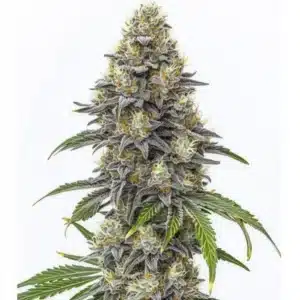
Growers using LED lights often report more compact and resinous buds, a result of efficient nutrient uptake. Strains such as Blueberry from Blimburn Seeds benefit from the precise control offered by LEDs, leading to potent harvests. Additionally, the lower heat output of LEDs reduces the risk of nutrient burn, a common issue in high-intensity light setups.
To effectively optimize nutrients for LED cannabis cultivation, growers should also consider the timing and method of nutrient application. Foliar feeding, for example, can be a valuable technique to boost nutrient absorption during critical growth phases. By fine-tuning the nutrient delivery in conjunction with LED light settings, cultivators can achieve superior plant health and yield.
Furthermore, knowing the interaction between different nutrients under LED setups is vital for maintaining cannabis nutrient balance under LED vs HPS conditions. Balancing elements like nitrogen, phosphorus, and potassium according to the plant’s life stage ensures that each nutrient is utilized effectively, contributing to robust growth and development.
Factors Influencing Nutrient Absorption
Nutrient absorption is influenced by various factors, including light intensity, temperature, and humidity. In LED vs HPS cannabis grows, light intensity plays a significant role in how nutrients are absorbed. LED lights, with their adjustable intensity, allow growers to match light levels to nutrient needs precisely.
Temperature control is another critical factor. LEDs emit less heat compared to HPS lights, allowing for more stable growing conditions and consistent nutrient uptake. Consistent temperatures ensure that processes like photosynthesis and nutrient transport are optimized, leading to healthier plants and higher yields.
Humidity levels also affect nutrient interactions. High humidity can slow down transpiration, impacting nutrient uptake. In contrast, low humidity levels can increase transpiration rates, potentially leading to nutrient deficiencies. Knowing these interactions helps growers maintain an optimal environment for nutrient balance under LED vs HPS setups.
Additionally, the genetic makeup of the cannabis strain can influence how effectively it absorbs nutrients under different lighting conditions. Some strains may have evolved to thrive under specific light spectra, necessitating tailored nutrient regimens to maximize growth potential. Recognizing these genetic predispositions can be key to optimizing nutrient interactions in LED vs HPS cannabis grows.
Choosing the Right Cannabis Strains for Your Grow Lights
Selecting the right strain is crucial when considering nutrient interactions in LED vs HPS cannabis grows. Each strain has unique light and nutrient requirements, and matching these needs to your lighting setup can maximize yield and quality. Blimburn Seeds offers a variety of strains suitable for both LED and HPS systems.
For LED setups, strains like Green Crack Auto thrive due to their adaptability to varied light conditions. These strains often exhibit vigorous growth and robust nutrient uptake under the precise control of LED lights. Conversely, strains like Girl Scout Cookies are well-suited for HPS setups, thanks to their resilience and ability to handle intense light and heat.
Exploring the specific nutrient needs and growth patterns of each strain can further inform your choice of lighting system. Strains that require high levels of specific nutrients at certain growth stages may benefit more from the tailored spectrum of LED lights. Conversely, strains that thrive under more natural sunlight conditions might be better suited to HPS environments.
Additionally, considering the overall growing goals, such as yield size or cannabinoid profile, can guide the decision on which strain and lighting combination to use. For cultivators seeking high THC content, certain strains may respond better under specific lighting conditions, emphasizing the importance of aligning strain characteristics with the optimal light spectrum and intensity.
FAQs about nutrient interactions in LED vs HPS cannabis grows
What are the primary differences in nutrient interactions between LED and HPS cannabis grows?
The main differences in nutrient interactions between LED and HPS cannabis grows lie in light spectrum and intensity. LED lights can be customized to deliver specific spectra that enhance nutrient uptake at various growth stages. This customization allows for more efficient photosynthesis and nutrient absorption.
HPS lights, with their broad spectrum, promote comprehensive nutrient absorption but require careful management of heat and humidity. The intense light and heat from HPS systems can lead to nutrient imbalances if not monitored closely. Thus, each lighting type requires a tailored approach to nutrient management.
How does LED lighting affect cannabis nutrient uptake?
LED lighting affects cannabis nutrient uptake by offering customizable light spectra that match the plants’ needs throughout their growth cycle. This tailored lighting approach enhances the efficiency of photosynthesis, allowing for better nutrient utilization. LEDs, with their low heat emission, reduce the risk of nutrient burn, making them ideal for sensitive strains.
In particular, LEDs can improve the absorption of specific nutrients like nitrogen during the vegetative stage and phosphorus during flowering. This precise control over light conditions leads to healthier plants and potentially higher yields, especially for strains that respond well to LED’s unique light properties.
Are certain cannabis strains better suited for LED or HPS lighting?
Yes, certain cannabis strains are better suited for either LED or HPS lighting, depending on their growth characteristics and nutrient needs. Strains like Green Crack Auto from Blimburn Seeds thrive under LED lights due to their adaptability and efficient nutrient uptake in controlled light environments.
On the other hand, strains that can handle intense light and heat, such as Girl Scout Cookies, perform well under HPS lighting. These strains are resilient and capable of thriving despite the higher temperatures associated with HPS systems, making them ideal candidates for such setups.
Can combining LED and HPS lights improve cannabis growth?
Combining LED and HPS lights can indeed improve cannabis growth by leveraging the strengths of both systems. LED lights provide precise spectrum control, enhancing nutrient uptake and photosynthesis efficiency. When combined with the full-spectrum intensity of HPS lights, plants can achieve optimal growth conditions.
This hybrid lighting approach can result in robust plants with high yields, as growers can adjust the lighting conditions to meet the specific needs of their cannabis strains. However, it requires careful management of environmental factors to prevent issues like nutrient imbalances and heat stress.
What environmental factors should be considered with LED vs HPS grows?
When considering LED vs HPS grows, key environmental factors include temperature, humidity, and light intensity. LED lights, with their low heat output, allow for more stable temperatures, reducing stress on the plants. This stability supports consistent nutrient uptake and healthy growth.
In contrast, HPS lights generate more heat, necessitating careful temperature and humidity management to prevent nutrient imbalances. Maintaining optimal conditions is crucial for maximizing nutrient absorption and ensuring the health and productivity of cannabis plants under either lighting system.