How Often to Fertilize Cannabis: A Feeding Schedule by Stage

Quick answer: Most growers fertilize cannabis roughly every one to two waterings during the vegetative and flowering stages, alternating nutrient feeds with plain water. Seedlings usually need little or no feeding at first, and you stop fertilizing for the final one to two weeks (a flush) before harvest. Always start at half-strength and watch the plants, frequency matters less than avoiding over-feeding.
How often to fertilize cannabis is one of the most common grow questions, and the honest answer is ‘it depends’, on the stage, the medium, the nutrients and the plant. But there are reliable rules of thumb that keep you out of trouble, chiefly feeding in moderation and letting the plant guide you.
Recommended Strains
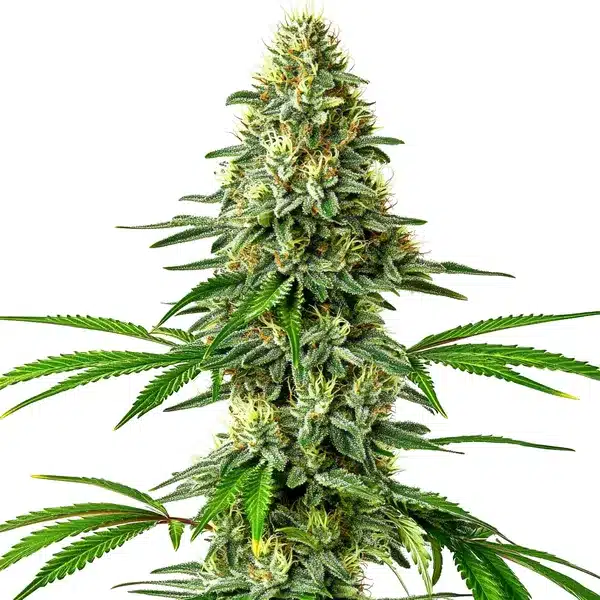
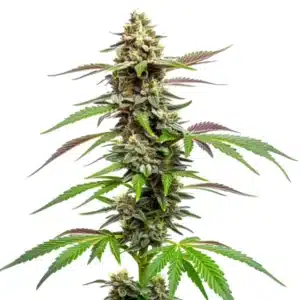
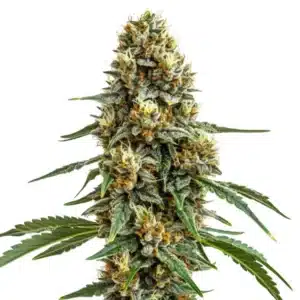
Santa Muerte

|
THC | 18% - 20% (Medium) |

|
Type | Feminized |

|
Yield | High |

|
Phenotype | 20% Indica / 80% Sativa |
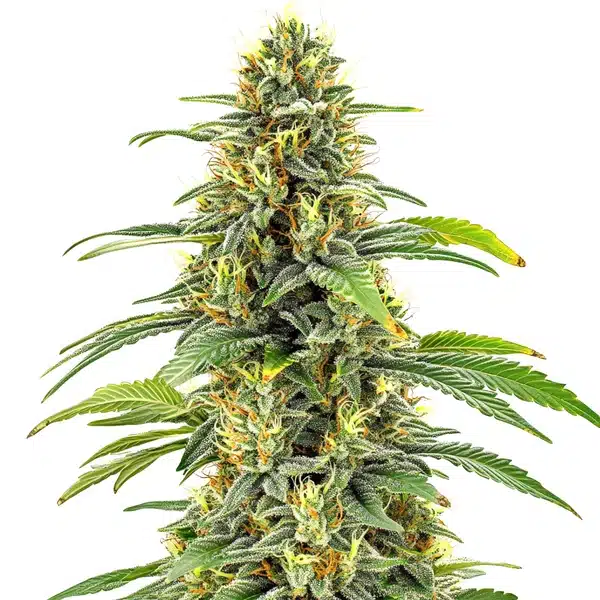
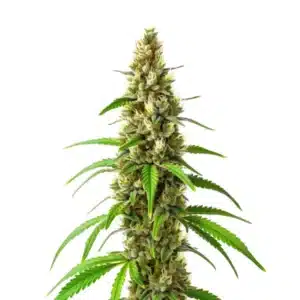
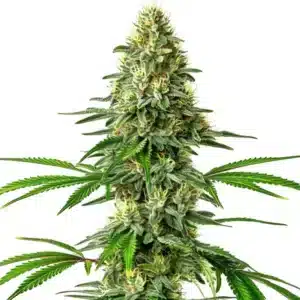
Santa Muerte FBV
|
|
THC | 17% - 20% (Medium) |
|
|
Type | Fast Flowering |
|
|
Yield | Medium |
|
|
Phenotype | 40% Indica / 60% Sativa |
The table below gives a simple schedule by growth stage, and the sections after explain how to read your plant, adjust for soil versus coco or hydro, and avoid the most common mistake: over-fertilizing. Think of frequency and strength together, since feeding often but weak is very different from feeding rarely but strong.
| Stage | How often to feed | Notes |
|---|---|---|
| Seedling | Usually none at first | Seedlings need little; start light once true leaves grow |
| Vegetative | Roughly every 1-2 waterings | Nitrogen-forward feed; alternate feed and plain water |
| Flowering | Roughly every 1-2 waterings | Switch to bloom (more P/K); watch for burn |
| Final 1-2 weeks | Stop (flush) | Plain water before harvest |
Building Your Feeding Schedule
A common approach is to feed every other watering, nutrients, then plain water, then nutrients, so salts do not build up. Many growers in soil feed once or twice a week depending on how fast pots dry out, while coco and hydro are often fed more frequently (sometimes every watering) but at lower strength, because those media hold fewer nutrients themselves.
Start any new nutrient line at about half the recommended dose and increase gradually only if the plant wants more. Match the feed to the stage: nitrogen-forward in veg, and a bloom formula with more phosphorus and potassium in flower. Then taper off and flush with plain water in the last week or two before harvest.
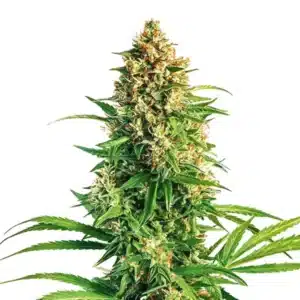
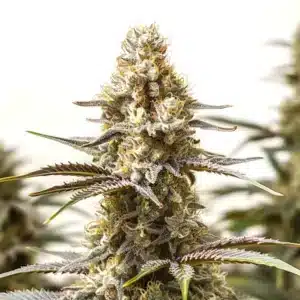
| Feature | Blue Dream | GG Lemon | Bruce Banner X White Russian |
|---|---|---|---|
| THC Content | 17-24% | 18-24% | 20-25% |
| Dominant Terpene | Myrcene | Limonene | Caryophyllene |
| Flavor Profile | Sweet, Berry | Citrus, Pine | Earthy, Diesel |
| Effect | Relaxing, Euphoric | Uplifting, Relaxing | Energizing, Creative |
| Yield | 1.5-2 oz/ft² (450-600 g/m²) | 1.8-2.3 oz/ft² (550-700 g/m²) | 2-2.5 oz/ft² (600-750 g/m²) |
Promos & Deals
How to Avoid Over-Feeding and Nutrient Burn
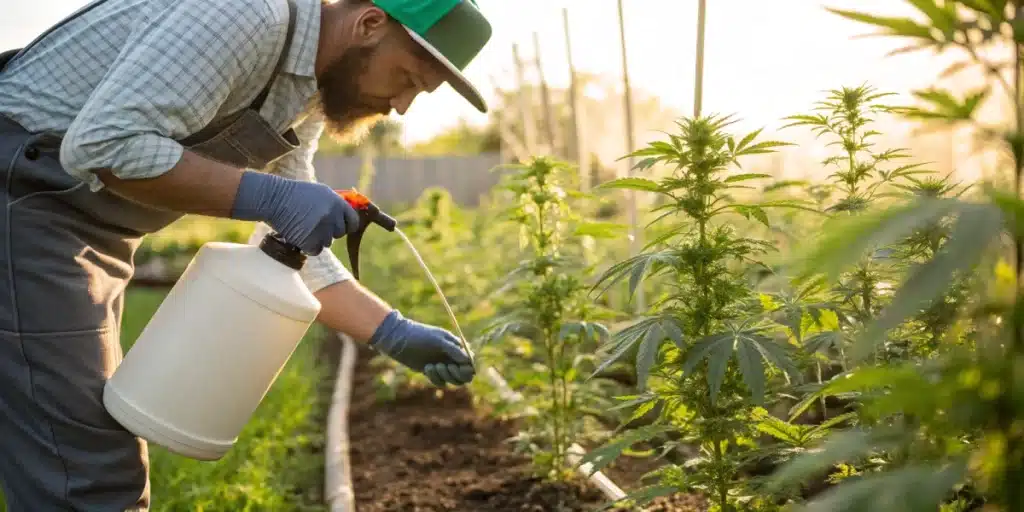
Over-feeding is far more common than under-feeding. The classic sign is nutrient burn: dark green leaves with yellow or brown, ‘burnt’ tips that curl, usually from feeding too strong or too often. If you see it, flush with plain water and cut back the strength and frequency. Pale, yellowing lower leaves, by contrast, can indicate the plant wants a bit more (especially nitrogen in veg).
The safest habit is to feed on the lighter side and read the plant between feeds. Which fertilizer you choose matters too: for what to feed and when, see our guides on fertilizers for cannabis and the best organic cannabis fertilizers. Outdoors, see the best outdoor fertilizer.
Adjusting for Your Medium and Conditions
There is no single frequency that fits every grow, so adjust to your setup. In rich ‘living’ or amended soil, you may barely need to add liquid nutrients, since the soil feeds the plant; in inert media like coco or hydro, you feed more regularly because there is little buffer. Bigger, faster-growing plants and warm, bright conditions use nutrients faster than small plants in cool, dim ones.
Water quality and pH also affect how well nutrients are taken up, so keep your pH in the right range for your medium. The reliable method is the same everywhere: feed moderately, watch the leaves, and let the plant’s response, not a rigid calendar, fine-tune how often you fertilize. For synthetic vs organic choices, see our artificial fertilizers guide.
Signs You’re Feeding Too Much or Too Little
Let the plant tell you whether your frequency is right. Too much feeding shows as nutrient burn: dark, glossy green leaves with yellow or brown, clawed or curling tips, often starting at the leaf edges. If you see it, flush with plain water and reduce both the strength and how often you feed.
Too little shows differently: overall pale, light-green growth and yellowing of the lower, older leaves first (a classic nitrogen-hunger sign in veg), with slow growth. That is a cue to feed a little more often or slightly stronger. Because deficiency and excess can look confusingly similar at a glance, change one thing at a time and give the plant a few days to respond before adjusting again.
Frequently Asked Questions about Fertilizing Cannabis
How often should I fertilize cannabis?
Usually every one to two waterings during veg and flower, alternating nutrient feeds with plain water. Seedlings need little or none at first, and you stop feeding for the last one to two weeks (a flush) before harvest. Start at half-strength and adjust to the plant, over-feeding is the most common mistake.
How often should you fertilize in the flowering stage?
Typically every one to two waterings, using a bloom formula with more phosphorus and potassium, while watching closely for nutrient burn. Keep strength moderate, flowering plants are sensitive. Then stop feeding and flush with plain water for the final one to two weeks before harvest to finish the buds cleanly.
Can you over-fertilize cannabis?
Yes, and it is common. Over-feeding causes nutrient burn, dark leaves with yellow or brown, curling tips, and can stunt the plant. If you see it, flush with plain water and reduce strength and frequency. Feeding on the lighter side and reading the plant between feeds is safer than following a heavy, rigid schedule.
Should I fertilize every watering?
Usually not in soil, feeding every other watering and alternating with plain water helps avoid salt build-up. In coco or hydro, many growers do feed every watering but at lower strength, since those media hold fewer nutrients. Whatever the medium, keep strength moderate and watch for nutrient burn rather than following a fixed rule.
Do autoflowers need feeding as often?
Autoflowers generally want lighter, less frequent feeding than big photoperiod plants, because they are smaller and sensitive to nutrient burn. Start low, feed on the lighter side, and increase only if the plant clearly wants more. As always, read the plant and avoid over-feeding rather than following a heavy fixed schedule.