Growing Weed: How Long Does It Take?

Growing Timeline: Cultivating cannabis can take between 2 to 6 months from seed to harvest. This duration depends heavily on your cultivation setup and the type of seeds you choose. Indoor growing often accelerates the timeline, while outdoor setups may extend it. Choosing the right strain, like GG4, can also influence the overall growth period, impacting both yield and potency.
When cultivating cannabis, the timeline from seed to harvest can vary significantly. Factors such as the strain’s genetics, like the 8-9 week flowering period of GG4, and environmental conditions play crucial roles. For growers wondering Growing Weed How Long Does It Take, knowing the intricate stages of growth, including terpene development and optimal lighting conditions, ensures a successful and efficient cultivation journey, according to master growers. Pest outbreaks can stretch that timeline too, which is why staying on top of spider mite control protects both your schedule and your final yield.
Recommended Strains
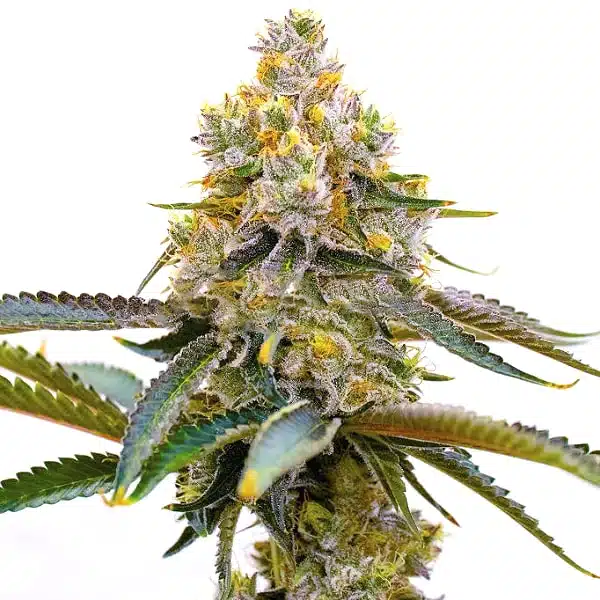
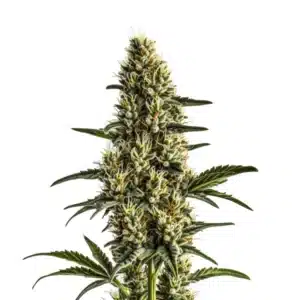
Amnesia Purple

|
THC | 18% - 21% (Medium) |

|
Type | Feminized |

|
Yield | High |

|
Phenotype | 30% Indica / 70% Sativa |

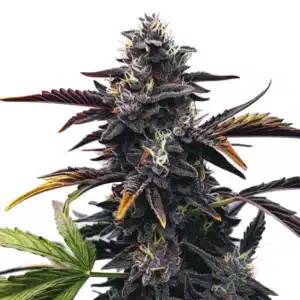
Blueberry Autoflower
|
|
THC | 17% - 23% (Medium) |
|
|
Type | Autoflowering |
|
|
Yield | Low |
|
|
Phenotype | 80% Indica / 20% Sativa |
Cannabis Growth Stages
Germination Phase
The germination phase is the initial step in cannabis cultivation, typically lasting 3 to 10 days. During this phase, seeds absorb water and oxygen, triggering the growth of the taproot. Optimal conditions include maintaining a temperature of 70°F – 77°F (21°C – 25°C) and humidity levels around 70%. Using a damp paper towel method is popular among growers to ensure proper moisture levels.
Once the taproot emerges, the seed is ready to be planted. This stage is critical as it sets the foundation for the plant’s overall health. Many growers emphasize the importance of using high-quality seeds from reputable sources like Blimburn Seeds to ensure genetic stability and vigor.
Vegetative Stage
Following germination, the vegetative stage begins, lasting 3 to 16 weeks. During this period, cannabis plants focus on developing strong roots and foliage. Light cycles of 18/6 (18 hours of light, 6 hours of darkness) are recommended to maximize growth. Nutrient ratios of N:P:K 3:1:2 support robust vegetative development.
Maintaining a temperature range of 68°F – 77°F (20°C – 25°C) and humidity between 60% and 70% is essential. The vegetative stage is where plants establish their structure, and any stress during this period can affect final yields. Regular monitoring and adjustments to environmental conditions are crucial for optimal growth.
Flowering Period
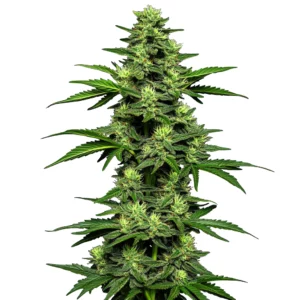
The flowering period is the final stage of cannabis growth, typically lasting 6 to 10 weeks, depending on the strain. This phase is triggered by changing the light cycle to 12/12 (12 hours of light, 12 hours of darkness). During flowering, plants develop buds, and trichome production increases, enhancing potency and aroma. For growers wondering about Growing Weed How Long Does It Take, the flowering stage represents a significant portion of the overall cultivation timeline.
For strains like GG4, flowering lasts around 8 to 9 weeks. Maintaining temperatures of 65°F – 80°F (18°C – 27°C) and humidity levels below 50% helps prevent mold and promote resin production. Monitoring trichome color is a reliable method to determine the optimal harvest time, with cloudy trichomes indicating peak potency.
Promos & Deals
Factors Affecting Cannabis Growth Time
Indoor vs. Outdoor Growing
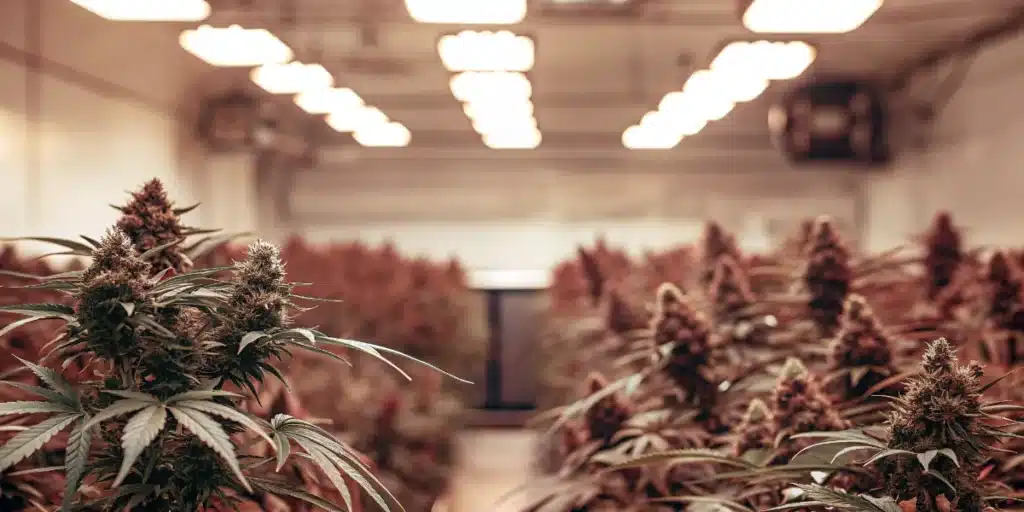
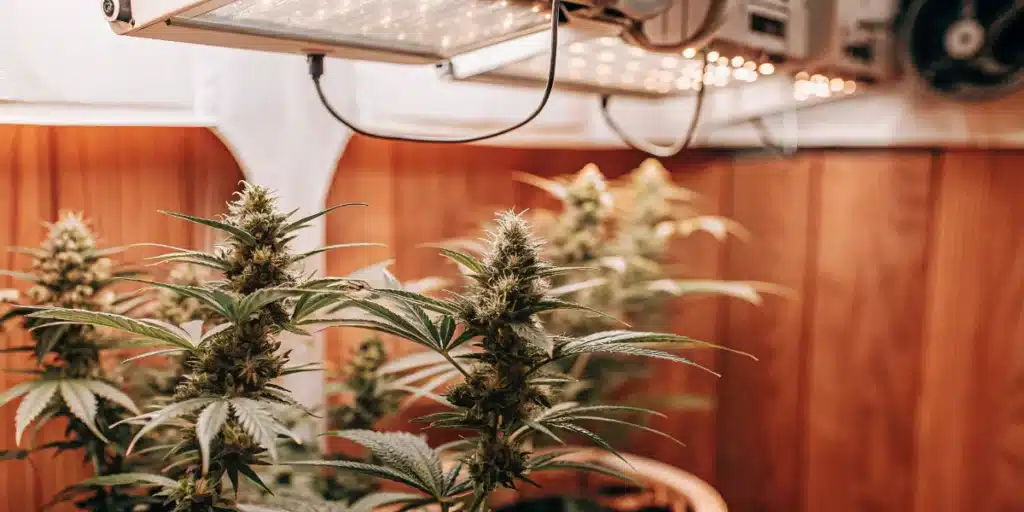
Indoor growing allows for precise control over environmental conditions, often resulting in shorter growth cycles. Indoor setups can complete a full cycle in as little as 3 months, thanks to controlled lighting, temperature, and humidity. In contrast, outdoor growing relies on natural cycles, potentially extending the timeline to 6 months or more.
Outdoor cultivation benefits from natural sunlight, which can enhance terpene profiles and yield. However, it is subject to weather variations and seasonal changes. Indoor growers often use LED lights, maintaining 800-1000 µmol/m²/s during peak flowering to optimize growth.
Strain Variations: How GG4 Compares
Different cannabis strains have unique growth timelines. GG4, known for its potency and resin production, typically flowers in 8–9 weeks. In comparison, strains like Amnesia Purple or Blueberry Auto may have different flowering times, affecting overall cultivation duration. Knowing these differences is essential when researching growing weed how long does it Take and planning a successful cultivation cycle.
Choosing the right strain impacts not only the growth timeline but also the final product’s quality. High-THC strains like GG4 require careful monitoring to maximize trichome development and terpene profiles, such as myrcene and caryophyllene, which contribute to its earthy, pungent aroma.
| Feature | GG4 | Amnesia Purple | Blueberry Auto |
|---|---|---|---|
| Flowering Time | 8-10 weeks | 8-10 weeks | 8-10 weeks |
| THC Content | 27% | 18-21% | 17-23% |
| Dominant Terpene | Humulene | Caryophyllene | Myrcene |
| Yield (Indoor) | 1.64 – 1.97 oz/ft² | 500 – 600 g/m² | 1.31 – 1.64 oz/ft² | 400 – 500 g/m² | 1.15 oz/ft² | 350 g/m² |
| Effect | Happy, Relaxed, Talkative | Calming, Happy, Relaxed | Happy, Relaxed, Talkative |
Tips to Optimize Your Growing Timeline
Efficient Use of Light and Nutrients
Maximizing light efficiency is crucial for reducing growth time. Use LED lights with a spectrum tailored for cannabis, maintaining 800-1000 µmol/m²/s during flowering. This promotes faster bud development and higher yields. Nutrient management is also key; follow a strict N:P:K ratio of 1:3:2 during flowering to enhance bud formation. These factors are especially important when considering growing weed how long does it take, as optimizing light and nutrient availability can significantly shorten the cultivation cycle and improve overall plant performance.
Over-fertilization can lead to nutrient burn, stunting growth and delaying harvest. Regularly check pH levels, keeping them between 6.5 for soil and 5.5 to 6.5 for hydroponics. Adjust nutrient solutions accordingly to prevent lockout and ensure optimal absorption.
Recognizing Harvest Time
Harvest timing is critical for maximizing potency and flavor. Trichome color is a reliable indicator; harvest when most trichomes are milky with some amber. This stage indicates peak THC levels and balanced effects. Using a jeweler’s loupe or digital microscope helps accurately assess trichome maturity.
Harvesting too early results in lower potency, while waiting too long can degrade THC into CBN, leading to a sedative effect. Proper drying and curing post-harvest are essential to preserve terpenes and cannabinoids, maintaining quality and enhancing the final product’s aroma and taste.
Professional Tips for Growing Weed
- Maintain 58-62% RH during curing to prevent mold and preserve terpenes. Use a digital hygrometer for accurate readings.
- Ensure light intensity of 800-1000 µmol/m²/s during flowering to maximize yield and potency.
- Keep pH levels at 6.5 for soil and 5.5-6.5 for hydroponics to avoid nutrient lockout.
- Monitor trichome color with a loupe; harvest when cloudy for peak THC levels.
- Use a 12/12 light schedule to trigger flowering and optimize bud development.
- Choose strains like GG4 for shorter flowering times and high THC content.
FAQs About Growing Weed How Long Does It Take
How long does weed start to grow?
Cannabis seeds typically germinate within 3 to 10 days. This initial phase involves the seed absorbing moisture and oxygen, leading to the emergence of the taproot. Proper conditions, such as a temperature of 70°F – 77°F (21°C – 25°C) and high humidity, are crucial for successful germination.
How long will you get for growing weed?
The legal implications of growing cannabis vary by region. In some areas, unauthorized cultivation can result in fines or imprisonment. It’s essential to understand local laws, which may allow personal cultivation under specific conditions, such as limited plant counts and secure growing environments.
How do I know when my buds are done growing?
Determining when cannabis buds are ready for harvest involves observing trichome color. Harvest when trichomes are mostly cloudy with some amber, indicating peak THC levels. This stage ensures optimal potency and flavor, preventing degradation into less psychoactive compounds like CBN.
What are the best conditions for indoor cannabis growth?
Indoor cannabis growth thrives under controlled conditions: maintain temperatures between 68°F – 77°F (20°C – 25°C) and humidity levels of 40% to 70%. Use LED lights with 800-1000 µmol/m²/s intensity and follow a nutrient schedule with N:P:K ratios of 3:1:2 during vegetative and 1:3:2 during flowering stages.
How can I speed up the cannabis growing process?
To accelerate cannabis growth, optimize environmental conditions and use fast-flowering strains. Maintain consistent light cycles, nutrient levels, and temperatures. Strains like GG4, which have shorter flowering times, can reduce the overall growth period while still producing high-quality yields.