Essential Guide: How to Store Autoflower Seeds Properly & Easily

Storing autoflower seeds properly can make all the difference between a thriving cannabis garden and a disappointing experience. Whether you’re a first-time buyer or an experienced grower, knowing the ins and outs of seed storage is crucial. Let’s dive into how to store autoflower seeds properly and ensure they stay viable for your next planting.
Autoflower seeds are a popular choice for both new and seasoned growers due to their resilience and quick growth cycle. However, improper storage can lead to reduced germination rates and even seed spoilage. By following a few easy tips, you can store your seeds in optimal conditions, ensuring they remain healthy and ready for planting.
Recommended Strains
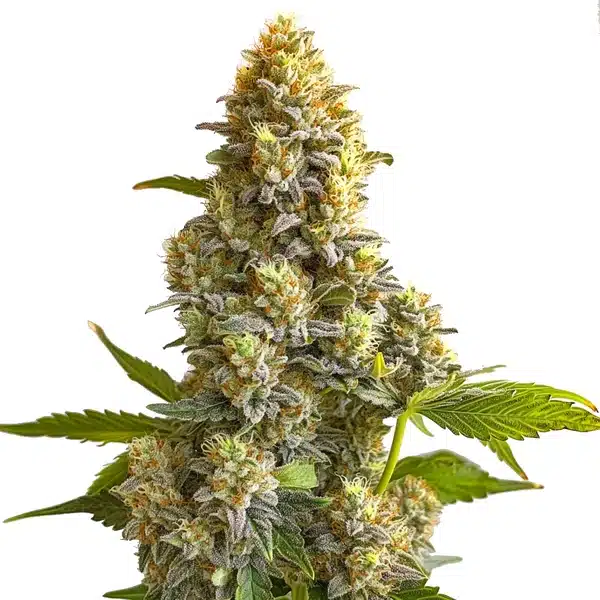
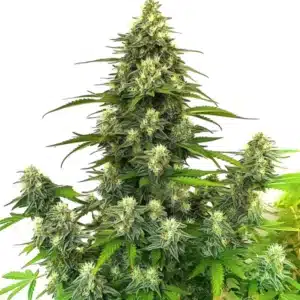
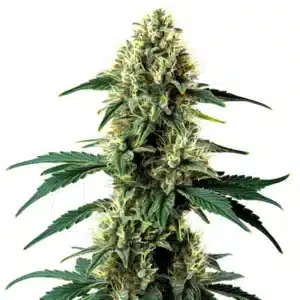
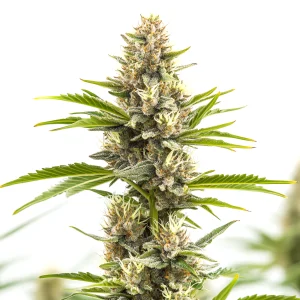
Bruce Banner Autoflower

|
THC | 21% - 26% (High) |

|
Type | Autoflowering |

|
Yield | High |

|
Phenotype | 30% Indica / 70% Sativa |

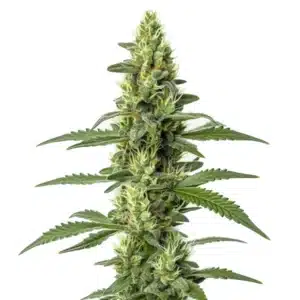
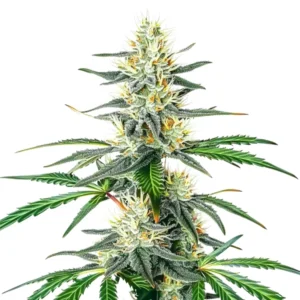
Girl Scout Cookies Autoflower
|
|
THC | 20% - 22% (Medium) |
|
|
Type | Autoflowering |
|
|
Yield | High |
|
|
Phenotype | 60% Indica / 40% Sativa |
One key factor in storing autoflower seeds properly is knowing the elements that can affect their longevity. Light, temperature, and humidity are the main culprits that can damage seeds over time. Protecting seeds from these elements can help maintain their viability.
Choosing the Best Containers for Storing Autoflower Seeds
Finding the right container is essential when learning how to store autoflower seeds properly. The best containers for storing autoflower seeds are airtight, light-proof, and moisture-resistant. This helps maintain the seeds’ integrity by preventing exposure to damaging environmental factors.
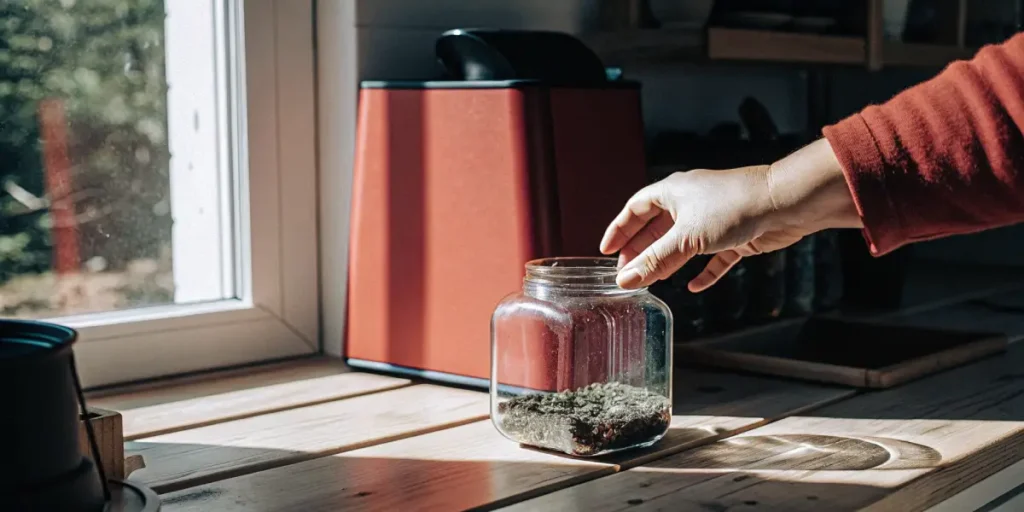
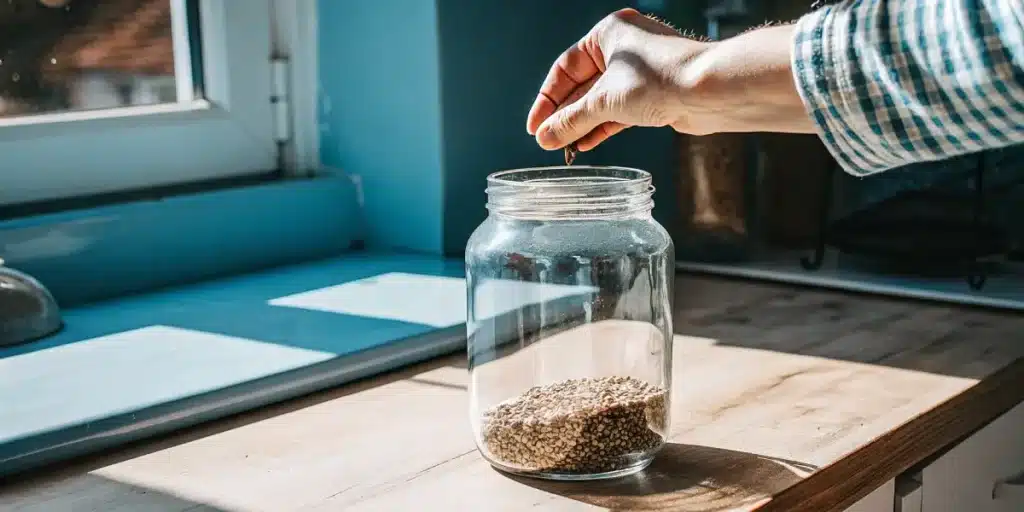
Mason jars are a popular choice among growers. They are readily available, cost-effective, and provide an airtight seal. For added protection, consider adding a silica gel packet to absorb any excess moisture. Alternatively, vacuum-sealed bags can also be used, offering a compact and efficient storage solution.
Another effective option is using dark glass containers with rubber seals. These containers protect seeds from light and air exposure, which are critical factors in maintaining seed viability. Additionally, labeling your containers with the date and strain type can help you manage your seed inventory efficiently, ensuring you use older seeds first.
For those looking to store seeds long-term, investing in specialized seed storage containers can be worthwhile. These are designed to provide optimal conditions for seed preservation and often include features like UV protection and humidity control, making them some of the best containers for storing autoflower seeds over extended periods.
Promos & Deals
Ideal Temperature for Storing Autoflower Seeds
Temperature plays a significant role in seed storage. The ideal temperature for storing autoflower seeds is between 39°F and 41°F (4°C and 5°C), which is typically the temperature range of most refrigerators. This cool environment slows down the metabolic processes of the seeds, helping them remain dormant and viable.
It’s important to avoid frequent temperature fluctuations, as this can cause stress and lead to reduced germination rates. Keep your seed containers in a consistent temperature zone and avoid opening the fridge door frequently, especially during warm weather.
To further ensure the ideal temperature for storing autoflower seeds, consider using a temperature-controlled storage space or a dedicated mini fridge. This approach provides a stable environment specifically for your seeds, reducing the risks associated with frequent temperature changes.
Remember that maintaining a stable temperature is just as crucial as the specific range. Consistency helps in preventing any unwanted activation of the seeds’ metabolic processes, thereby preserving their viability. This adherence to proper temperature management is key to knowing how to store autoflower seeds long-term successfully.
How to Prevent Mold in Stored Autoflower Seeds
Mold is a common enemy of seed storage. To prevent mold in stored autoflower seeds, ensure that your seeds are completely dry before storing them. Any moisture trapped in the container can lead to mold growth, ruining your seeds.
Using desiccants, like silica gel packets, can effectively manage humidity levels within your storage containers. Additionally, regularly checking your stored seeds for any signs of mold can help you catch any issues early and prevent further damage.
Another strategy to prevent mold is to store seeds in a controlled environment where humidity levels are kept low. This can be achieved by using dehumidifiers in the storage area, which helps in maintaining an optimal environment for seed longevity.
Knowing how to store autoflower seeds properly involves not only choosing the right containers but also managing the micro-environment within them. Ensuring that seeds remain dry and free from mold will significantly enhance their longevity and potential for successful germination.
Storing Autoflower Seeds for Maximum Germination Rate
When storing autoflower seeds for maximum germination rate, it’s crucial to maintain an environment that mimics natural conditions. This means keeping them dark, cool, and dry. By following the best practices mentioned, your seeds can stay viable for years.
Another tip for maintaining high germination rates is to label your containers with the date of storage and the strain type. This helps you keep track of how long the seeds have been stored and which strains you have, like the popular Bruce Banner Autoflower from Blimburn Seeds.
Consistent monitoring and occasional testing of a few seeds can also be beneficial. This practice allows you to assess the viability of your stored seeds and make necessary adjustments if germination rates begin to decline.
For growers aiming to maximize their yield, knowing how to store autoflower seeds for maximum germination rate is essential. This involves not only the initial storage conditions but also a commitment to regular evaluation and rotation of your seed stock to ensure optimal freshness and viability.
Real-Life Examples of Storing Autoflower Seeds
Imagine a seasoned grower who has stored his seeds for over a year. By using a simple mason jar and a refrigerator, he has successfully preserved strains like the Girl Scout Cookies Autoflower from Blimburn Seeds. This method has kept his seeds viable and ready for the next growing season.
Another grower, new to the scene, decided to invest in vacuum-sealed bags with a small investment. She stored her GG4 Autoflower seeds from Blimburn Seeds in a cool, dark cupboard. This method provided her with fresh seeds that germinated at impressive rates.
These examples highlight the importance of choosing the right storage method based on your specific needs and resources. Both methods demonstrate that knowing how to store autoflower seeds properly can lead to successful germination and healthy plants.
Whether using high-tech solutions or simple household items, the key is maintaining the right environment and being vigilant about monitoring seed health. These real-life scenarios underscore that with attention to detail, anyone can master how to store autoflower seeds long-term, ensuring a robust crop each season.
FAQs about how to store autoflower seeds properly
How do light and temperature affect stored autoflower seeds?
Light and temperature play crucial roles in the longevity of stored autoflower seeds. Light exposure can trigger premature germination, leading to failed crops. Seeds need complete darkness to stay dormant until you’re ready to plant them. Temperature fluctuations can also stress the seeds, reducing their viability over time.
Maintaining a consistent, cool environment is essential. This ensures that the seeds remain in a dormant state, preserving their potential until you’re ready to grow. By carefully managing these factors, you can extend the life and health of your seeds, ensuring successful germination when the time comes.
Knowing how to store autoflower seeds properly involves protecting them from both light and temperature extremes. Even brief exposures can be detrimental, making it vital to store your seeds in a completely dark and temperature-controlled environment.
Some growers use specialized storage solutions that provide UV protection and temperature regulation, further enhancing the longevity and viability of their seeds. By investing in such solutions, you can improve your seed bank’s resilience against environmental challenges.
What are the signs of mold in stored autoflower seeds?
Mold in stored autoflower seeds typically appears as a fuzzy, white, or grayish growth on the surface of the seeds. You might notice a musty smell as well. Mold thrives in damp, warm conditions, so keeping your seeds dry and cool is key to prevention.
Regularly inspect your seeds for any signs of mold. If you spot any, it’s essential to remove the affected seeds immediately to prevent the spread of mold to healthy seeds. Using desiccants in your storage containers can help absorb excess moisture and reduce the risk of mold.
Besides to visual and olfactory checks, consider using moisture indicators in your storage containers. These can provide a quick reference for determining whether the humidity levels are within an acceptable range, helping to prevent mold before it starts.
By knowing how to prevent mold in stored autoflower seeds, you can take proactive steps to ensure your seed collection remains healthy. This includes both preventive measures and regular maintenance checks, which are key to successful long-term storage.
Can I store seeds in the freezer for long-term storage?
While some growers choose to store seeds in the freezer for long-term storage, it’s not typically recommended for autoflower seeds. Freezing can cause the seeds’ cells to rupture due to ice crystal formation, potentially damaging them and reducing their germination rates.
If you opt for freezing, ensure the seeds are thoroughly dried and use airtight, moisture-proof containers. This method carries risks, and for most growers, storing seeds in a refrigerator at the ideal temperature for storing autoflower seeds is a safer bet.
For those who do choose freezing, it’s vital to invest in high-quality, freezer-safe containers to minimize the risk of moisture ingress. Using vacuum sealing in conjunction with freezing can also help preserve seed integrity.
However, for most situations, focusing on how to store autoflower seeds properly in a refrigerator provides a balance of convenience and safety, offering reliable results without the complications associated with freezing.
How long can autoflower seeds be stored while maintaining viability?
When stored correctly, autoflower seeds can remain viable for several years. However, the germination rate may decline over time. For best results, aim to use your seeds within two to three years after purchase, especially if stored under optimal conditions.
Factors like temperature, humidity, and light exposure significantly affect how long seeds remain viable. By following the guidelines on how to store autoflower seeds properly, you can maximize their shelf life and ensure a successful grow.
To extend the viability of your seeds, consider using a rotation system where older seeds are prioritized for planting. This approach helps ensure that your seed bank remains fresh and robust over time.
Regular testing of your seeds can also provide insights into their germination potential, allowing you to adjust your storage practices as needed to maintain the highest viability possible.
What are the most common mistakes in storing autoflower seeds?
Common mistakes in storing autoflower seeds include exposing them to light, fluctuating temperatures, and high humidity. These conditions can lead to premature germination, mold, and reduced seed viability, impacting your future crops.
To avoid these pitfalls, use airtight, light-proof containers and store your seeds in a stable, cool environment. Regularly check your seeds for any signs of degradation or mold, and take corrective action promptly to ensure your seeds remain healthy and viable.
Failure to label seed containers with dates and strain types is another common oversight. Proper labeling helps manage your seed inventory and ensures that older seeds are used first, minimizing waste and maximizing germination rates.
Knowing how to store autoflower seeds properly involves being proactive in your approach, regularly reviewing and refining your storage methods to suit your particular circumstances and needs.