Best Feed for Weed Plants: Top Nutrients for Every Growth Stage

Top nutrient lines for cannabis: Selecting the best feed for weed plants hinges on the growth stage and medium. For robust growth, a balanced N-P-K ratio is crucial, with increased phosphorus during flowering. Leading nutrient lines include General Hydroponics for hydroponics and Fox Farm for soil cultivation, ensuring optimal plant health and yield.
To maximize cannabis yield, understanding nutrient needs is key. Tailor feeding strategies to each growth stage, focusing on terpenes like myrcene and caryophyllene for enhanced aroma and effect. During flowering, a precise nutrient balance boosts THC levels, optimizing potency and flavor. This approach ensures a bountiful harvest.
Recommended Strains
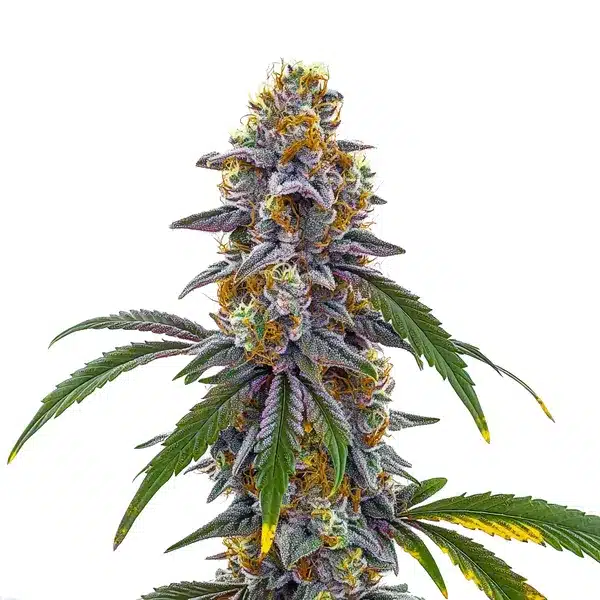
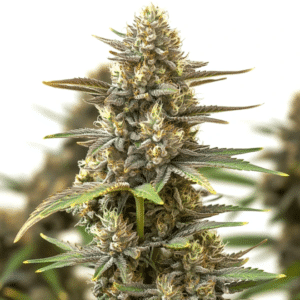
Candyland

|
THC | 18% - 20% (Medium) |

|
Type | Feminized |

|
Yield | High |

|
Phenotype | 30% Indica / 70% Sativa |

CBD Candyland

|
CBD | 5% – 7% (Low) |
|
|
Type | CBD Feminized |
|
|
Yield | Medium |
|
|
Phenotype | 20% Indica / 80% Sativa |
Cannabis Nutritional Needs
Key Nutrients for Growth
Cannabis plants thrive on a diet of macronutrients: nitrogen, phosphorus, and potassium (N-P-K). Nitrogen is vital for leaf growth, phosphorus aids root and flower development, and potassium enhances water regulation. During vegetative growth, a 3:1:2 N-P-K ratio supports vigorous plant energy. In flowering, shift to a 1:3:2 ratio to boost bud production.
Secondary nutrients like calcium, magnesium, and sulfur also play crucial roles. Calcium strengthens cell walls, magnesium is essential for photosynthesis, and sulfur aids in protein synthesis. Micronutrients such as iron and zinc prevent deficiencies, ensuring robust growth. Maintaining a balanced nutrient mix is essential for healthy cannabis plants.
Environmental Factors and Feeding
The growing environment significantly impacts nutrient uptake. Light intensity, temperature, and humidity levels dictate feeding schedules. High light intensity increases nutrient demand, while lower light reduces uptake. Ideal temperatures range from 68°F to 77°F (20°C to 25°C), with 50-60% humidity for optimal growth.
Adjust feeding based on the medium: soil, hydroponics, or coco coir. Hydroponics requires more frequent feeding due to rapid nutrient uptake. Soil retains nutrients longer, allowing for less frequent applications. Tailoring your approach to these factors ensures that your cannabis plants receive the best feed for weed plants.
Promos & Deals
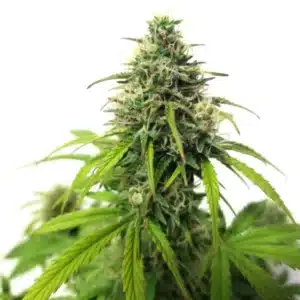
Best Nutrient Lines for Cannabis
Organic vs. Synthetic Nutrients
Organic nutrients, derived from natural sources like compost and bone meal, enhance soil health and microbial life. They improve flavor and aroma, appealing to many growers. Synthetic nutrients offer precise control over nutrient ratios, delivering quick results. However, concerns about chemical residues persist among some cultivators.
Choosing between organic and synthetic options depends on your cultivation goals. Organic feeds improve soil texture and plant health, while synthetic options allow for rapid growth adjustments. Experimentation helps determine the best nutrient line for cannabis, balancing flavor and yield.
Liquid vs. Solid Feeds
Liquid feeds dissolve in water for rapid nutrient uptake, ideal for quick fixes during critical growth stages. They offer uniform distribution to roots. Solid feeds, like granular fertilizers, release nutrients slowly, providing a steady flow over time. This suits long-term feeding strategies.
Combining liquid and solid feeds can meet varying plant demands. Liquid solutions offer immediate nutrient availability, while solid feeds ensure sustained release. This hybrid approach maximizes plant health and yield, identifying the best food for weed plants.
| Feature | Chocolope Kush Regular | GG Regular | Mango |
|---|---|---|---|
| THC Content | 22-26% | 25-28% | 18-22% |
| Dominant Terpene | Myrcene | Caryophyllene | Limonene |
| Flavor Profile | Chocolate, Coffee | Pine, Earthy | Sweet, Fruity |
| Effect | Euphoric, Relaxing | Relaxing, Sedative | Uplifting, Energizing |
| Growth Time | 8-9 weeks | 8-9 weeks | 9-10 weeks |
Professional Tips for Cannabis Feeding
- Maintain a pH of 6.0 in water and 6-7 in soil. This range ensures nutrient absorption and prevents deficiencies.
- Use a 3:1:2 N-P-K ratio during vegetative growth for optimal leaf development and energy.
- Shift to a 1:3:2 N-P-K ratio in flowering to enhance bud growth and potency.
- Apply liquid fertilizers 2-3 times a week for immediate nutrient availability and adjust based on plant response.
- Monitor for nutrient burn by observing leaf tips; reduce feed concentration if browning occurs.
- Ensure even distribution of nutrients by watering thoroughly, avoiding dry spots in the medium.
Advanced Cannabis Feeding Techniques
CO2 Enrichment
Enhancing CO2 levels in your grow space can significantly boost plant growth. Cannabis plants utilize CO2 during photosynthesis to create carbohydrates, essential for energy and growth. Increasing CO2 concentrations to 800-1200 ppm during the flowering stage can enhance growth rates and yield. Ensure adequate ventilation to prevent CO2 buildup, which can be harmful.
Using Mycorrhizal Fungi
Integrating mycorrhizal fungi into your cannabis cultivation can improve nutrient uptake and plant health. These beneficial fungi form symbiotic relationships with plant roots, extending their reach and increasing access to nutrients and water. This natural enhancement can lead to stronger, more resilient plants, ultimately boosting yield and quality.
Foliar Feeding
Foliar feeding involves applying nutrients directly to the leaves, allowing for rapid absorption. This method can be particularly effective during vegetative growth when plants require a quick nutrient boost. Use a fine mist spray to apply a diluted nutrient solution, ensuring even coverage. This technique can supplement root feeding, enhancing overall nutrient intake.
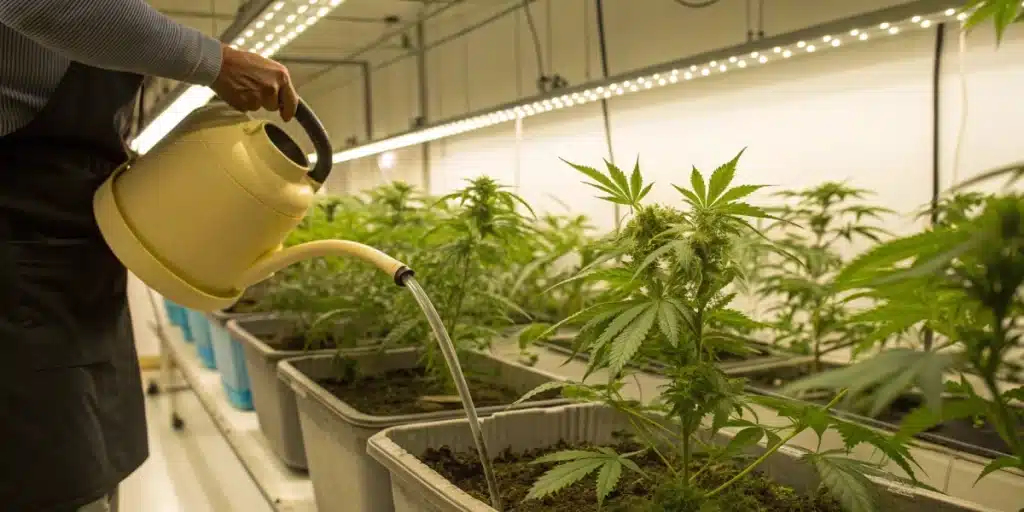
FAQs on Cannabis Feeding
What fertilizer makes bigger buds?
To achieve larger buds, use a fertilizer with a high phosphorus content, such as a 1:3:2 N-P-K ratio during flowering. This supports bud development and increases yield. Phosphorus enhances energy transfer and flower formation, crucial for dense buds.
What makes weed plants grow better?
Weed plants thrive with a balanced N-P-K ratio, adequate light, and proper humidity. Maintain temperatures between 68°F and 77°F (20°C to 25°C) and humidity at 50-60%. These conditions optimize nutrient uptake and growth.
How to get rock hard buds?
To achieve dense buds, increase light intensity to 800-1000 µmol/m²/s during flowering and use a high-phosphorus nutrient mix. Ensure proper airflow and humidity control to prevent mold. This combination promotes bud density and quality.
What nutrients make buds bigger?
Phosphorus and potassium are key nutrients for bigger buds. Use a 1:3:2 N-P-K ratio during flowering to enhance bud size. These nutrients support energy transfer and water regulation, crucial for bud development.
How to prevent nutrient burn in cannabis plants?
Prevent nutrient burn by starting with lower feed concentrations and gradually increasing. Monitor leaf tips for browning, a sign of excess nutrients. Regularly flush the medium with plain water to remove salt buildup and maintain balance.