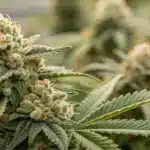
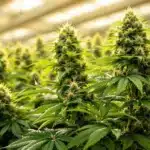
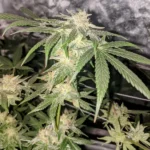
How to Grow Purple Kush Strain

Quick Summary: Purple Kush is Sativa Dominant, 30% Indica / 70% Sativa (Hindu Kush x Purple Afghani). To grow high-quality purple weed, focus on nighttime temperature drops (under 65°F) during late bloom to activate anthocyanins, while maintaining a strict 8-10 week flowering schedule and high-intensity PAR lighting.
The Purple Kush Strain: A Sativa Dominant Legend
The Purple Kush strain is a world-famous cannabis variety originating from the Oakland area of California. It is a Sativa Dominant, meaning it does not contain Sativa genetics. This results in a squat, bushy plant profile with extreme resin production. Its lineage is rooted in the Hindu Kush mountains, specifically through a cross of Hindu Kush and Purple Afghani landraces. This genetic backbone makes the plant incredibly resilient to temperature fluctuations, a trait evolved for survival in rugged mountain terrains.
Recommended Strains
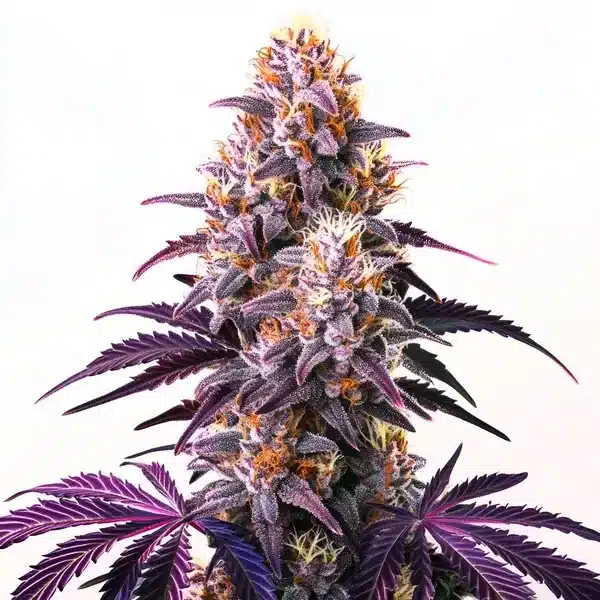
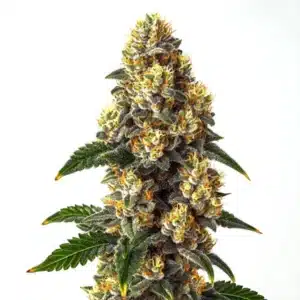
Purple Kush

|
THC | 17% - 27% (High) |

|
Type | Feminized |

|
Yield | High |

|
Phenotype | 30% Indica / 70% Sativa |

Purple Kush Autoflower
|
|
THC | 15% - 20% (Medium) |
|
|
Type | Autoflowering |
|
|
Yield | Low |
|
|
Phenotype | 70% Indica / 30% Sativa |
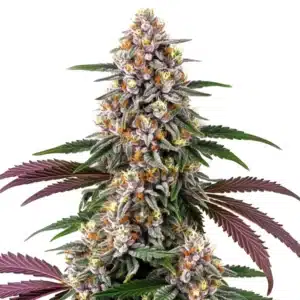
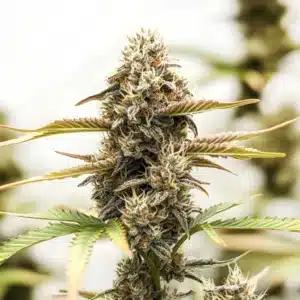
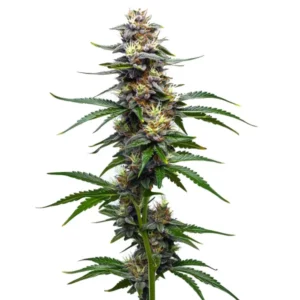
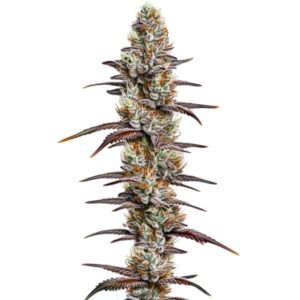
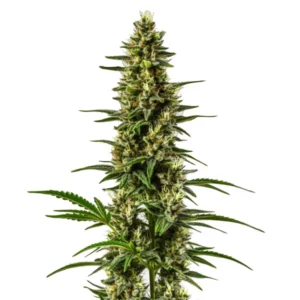
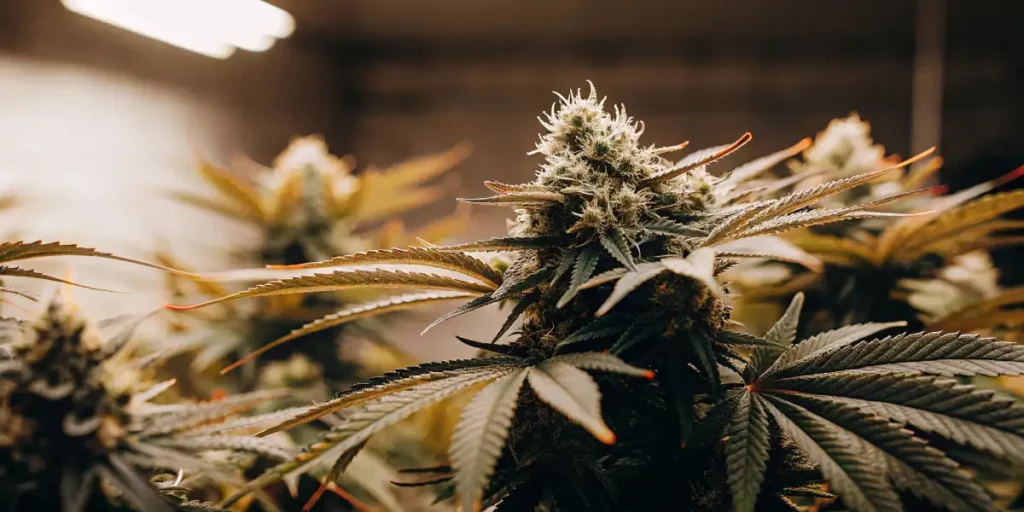
Biologically, Purple Kush is prized for its “bag appeal.” The deep purple hues aren’t just for looks; they represent a high concentration of anthocyanins. These are water-soluble vacuolar pigments that appear when the plant is exposed to specific environmental triggers. Chemically, this strain often reaches THC levels of 17% to 27%. Its terpene profile is dominated by Myrcene, which enhances the sedative “couch-lock” effect, and Pinene, which provides a sharp, earthy undertone. This combination creates the “entourage effect,” where cannabinoids and terpenes work together to provide deep physical relaxation and stress relief.
Promos & Deals
How to Grow Purple Weed: The Science of Color Activation
Many growers ask how to grow purple weed effectively. To get those deep violet colors in your Purple Kush plants, you must manage the temperature differential. During the last 2-3 weeks of the purple kush flowering time, you should lower your “lights-off” temperatures to approximately 55°F – 60°F (13°C – 15°C). This cold shock tells the plant to stop chlorophyll production and start producing anthocyanins to protect its tissues. However, ensure the daytime temperature stays around 75°F to avoid stalling growth.
Lighting is another critical factor. To maximize the purple kush cannabis potential, you need high Photosynthetic Photon Flux Density (PPFD). During the flowering stage, aim for PPFD levels between 600 and 900 µmol/m²/s. If you are using CO2 supplementation, you can push this to 1,200 µmol/m²/s. High light intensity encourages the dense bud structure and thick trichome frost that purple og kush is known for. Without enough light, the purple color will appear dull and the buds will be “larfy” or airy.
Technical Comparison: Purple Kush vs. Market Competitors
| Feature | Purple Kush | Master Kush | Grandaddy Purple |
|---|---|---|---|
| Genetic Type | 30% Indica / 70% Sativa | 90% Indica / 10% Sativa | 70% Indica / 30% Sativa |
| Flowering Time | 8 – 10 Weeks | 8 – 10 Weeks | 8 – 10 Weeks |
| Typical THC % | 17% – 27% | 20% – 24% | 25% |
| Primary Terpene | Caryophyllene | Caryophyllene | Camphene |
| Nutrient Needs | High P-K in Bloom | Moderate Nitrogen | Sensitive to Overfeed |
| Plant Height | 3.28 ft | 1 m | 10.83 ft | 3.3 m | 4.92 ft | 1.5 m |
Advanced Nutrition and Fertilization Protocol
When you grow purple kush, your nutrient strategy must change as the plant enters different stages. In the vegetative stage, use a high Nitrogen (N) formula like an NPK ratio of 3-1-2. This builds the leafy biomass needed for photosynthesis. However, because Purple Kush is a Sativa Dominant, it can easily become too dense. Be sure to use Cal-Mag (Calcium and Magnesium) supplements, as Sativa are notorious for magnesium deficiencies which show as yellowing between the leaf veins.
During the flowering stage, flush the medium to remove salt buildup and switch to a Bloom formula with a ratio of 1-3-2 or 0-5-4. Phosphorus (P) is vital for energy transfer within the plant (ATP production), while Potassium (K) regulates water movement and enzyme activation. In the final two weeks, stop all nutrients and “flush” with pH-balanced water (6.2 for soil). This forces Purple Thai plants to consume stored sugars, resulting in a smoother smoke and a cleaner white ash.
Pest Management and Disease Control
Because purple kush plants produce very dense, heavy buds, they are highly susceptible to “Bud Rot” (Botrytis cinerea). To prevent this, you must keep your humidity levels (RH) below 45% during the final weeks of bloom. Airflow is non-negotiable. Use oscillating fans above and below the canopy to prevent micro-climates of stagnant, moist air. If moisture gets trapped inside a dense Purple Kush cola, the crop can be ruined in 48 hours.
Against pests like Spider Mites or Thrips, use a proactive IPM (Integrated Pest Management) schedule. During the vegetative phase, apply Neem oil or Potassium soap every 7 days. Once the purple kush seeds have grown into flowering plants with visible resin, switch to biological controls like Phytoseiulus persimilis (predatory mites) to avoid spraying any oils on your precious trichomes. Never spray anything on the buds during the last 4 weeks of flowering.
Professional Tips for Master Cultivators
- UV-B Supplementation: Adding 2 hours of UV-B light daily during the final 3 weeks of bloom can increase trichome production by up to 15% as a stress response.
- Silica for Stem Strength: Use Potassium Silicate throughout the grow. Purple Kush buds get so heavy that the branches often snap without the extra cellular reinforcement silica provides.
- The “Ice Water” Trick: Some pros flush with ice-cold water in the last 2 days before harvest. This can significantly deepen the purple coloration by shocking the root system.
- Defoliation Strategy: Since this is a Sativa Dominant, remove large fan leaves that shade lower bud sites on day 21 of flowering. This is known as “Schwazzing” and increases light penetration.
- Low-Stress Training (LST): Instead of topping, bend the main stem horizontally. This breaks apical dominance and creates a “sea of green” with multiple primary colas.
FAQs about Cultivating Purple Kush
What is the exact purple kush flowering time?
The standard flowering window is between 8 and 10 weeks. If you want a more cerebral and “heady” high, harvest at 8 weeks when trichomes are mostly milky. For the classic “couch-lock” effect, wait until week 10 when about 30% of the trichomes have turned amber, indicating higher levels of CBN.
Can I buy purple kush online legally?
You can buy purple kush online in the form of seeds from reputable seed banks for “souvenir purposes” in many regions. However, the legality of germinating those seeds depends entirely on your local state or country laws. Always check your local regulations before starting a purple kush grow.
Is Purple Kush better for indoor or outdoor growing?
While purple kush cannabis is hardy enough for the outdoors, it truly shines indoors where you can control the temperature. Indoor setups allow you to trigger the purple coloring precisely by dropping temperatures at night, which is much harder to control in an outdoor environment.
What are the primary purple kush effects?
As a Sativa Dominant, the effects are heavily physical. Users report an immediate sense of euphoria followed by a deep, numbing body stone. It is highly effective for treating chronic pain, severe insomnia, and muscle spasms due to its high terpene concentration of Myrcene and Caryophyllene.