Sativa vs Indica: The Real Differences

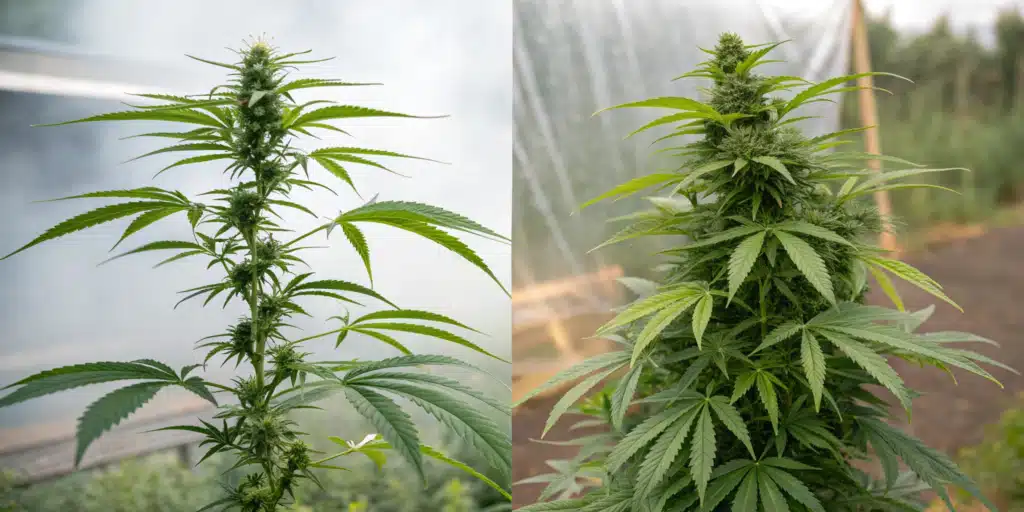
The main difference between sativa and indica is the plant and its effect. Indica plants are short and bushy with broad, dark-green leaves and shorter flowering, and tend to feel relaxing. Sativa plants are tall with narrow, lighter leaves and longer flowering, and tend to feel energetic. Most strains today are hybrids of the two.
| Trait | Indica | Sativa |
|---|---|---|
| Plant height | Short and bushy | Tall and stretchy |
| Leaves | Broad, wide fingers, darker green | Narrow, thin fingers, lighter green |
| Internodes | Short and tight | Long and spaced out |
| Flowering time | Shorter (7-9 weeks) | Longer (10-16 weeks) |
| Origin | Afghanistan, Pakistan, India (mountains) | Colombia, Thailand, Mexico (equatorial) |
| Typical effect | Relaxing, body-heavy, evening | Energetic, cerebral, daytime |
A bit of cannabis history
People talk about indica and sativa constantly, but the classification confuses a lot of beginners. Experienced growers can tell them apart at a glance, yet newcomers often struggle to know which is which, and therefore what to expect from each. This guide clears that up.
Recommended Strains

Skunk #1

|
THC | 18% - 22% (Medium) |

|
Type | Feminized |

|
Yield | High |

|
Phenotype | 65% Indica / 35% Sativa |

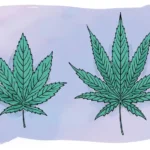
The split comes from botany. In the 18th century, Swedish botanist Carl Linnaeus described psychoactive cannabis as Cannabis sativa. Decades later, French biologist Jean-Baptiste Lamarck identified Cannabis indica as separate after observing Indian plants with darker, wider leaves, versus the narrower leaves of sativa. That leaf difference is still the quickest way to tell them apart today.
There is also a third subspecies: ruderalis, identified by Russian botanist Dmitrij Janischewsky in the 1930s. He noticed ruderalis plants flower automatically about 30-40 days after sprouting, rather than waiting for a light-cycle change like indica and sativa. That trait is what makes today’s autoflowers possible.
In the 1970s, American scientists Loran Anderson and Richard E. Schultes argued for three species, sativa, indica and ruderalis, partly based on cannabinoid content: sativa high in THC and low in CBD, indica higher in both, and ruderalis high in CBD but low in THC. The cannabis ruderalis effects are tied to that high CBD and minimal high.
Since then, other classification models have appeared, and scientists still debate a definitive system, with terpenes now recognized as a key piece of the puzzle. For everyday purposes, though, the practical split between indica, sativa and ruderalis is still the most useful, so that is what we will focus on.
Promos & Deals
What Are Indica Cannabis Plants?
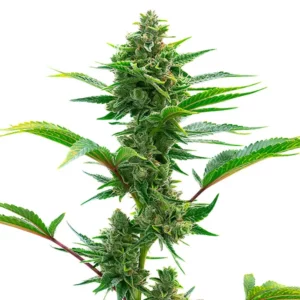
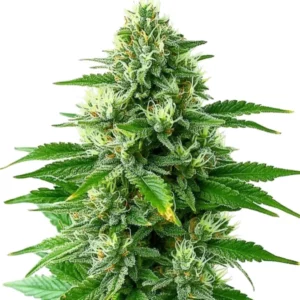
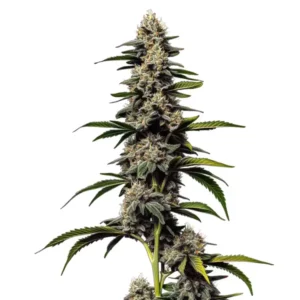
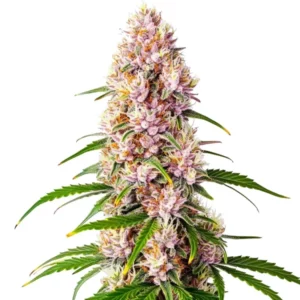
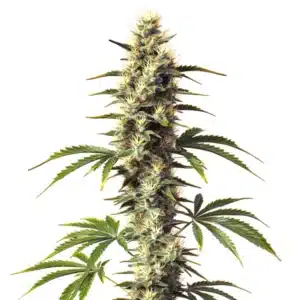
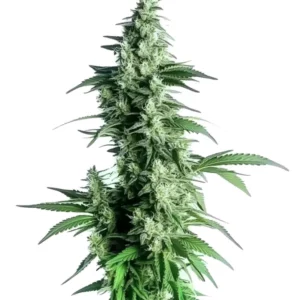
Indica plants are easy to spot: compact and bushy, with short internodes and wide, fan-like leaves in a darker green. They tend to grow outward rather than up, which is why growers often call them “cabbage-shaped.”
Their buds are typically compact, dense and very resinous, one of the clearest differences when you compare a sativa plant vs an indica. Indica genetics come from India and mountainous regions like Afghanistan and Pakistan, which is why many classic indicas are named after places in those areas.
A good example is our Original Clon, a mostly indica variety from a Skunk #1 x Afghani cross, right out of the classic Afghan genetic tree.
Its Skunk #1 parent also carries Afghan genetics, since the Skunk lineage is generally Afghani x Colombia x Mexico. Grown out, Original Clon shows the classic indica look: compact, short internodes, and wide, sticky buds covered in trichomes.
What Are Sativa Cannabis Plants?
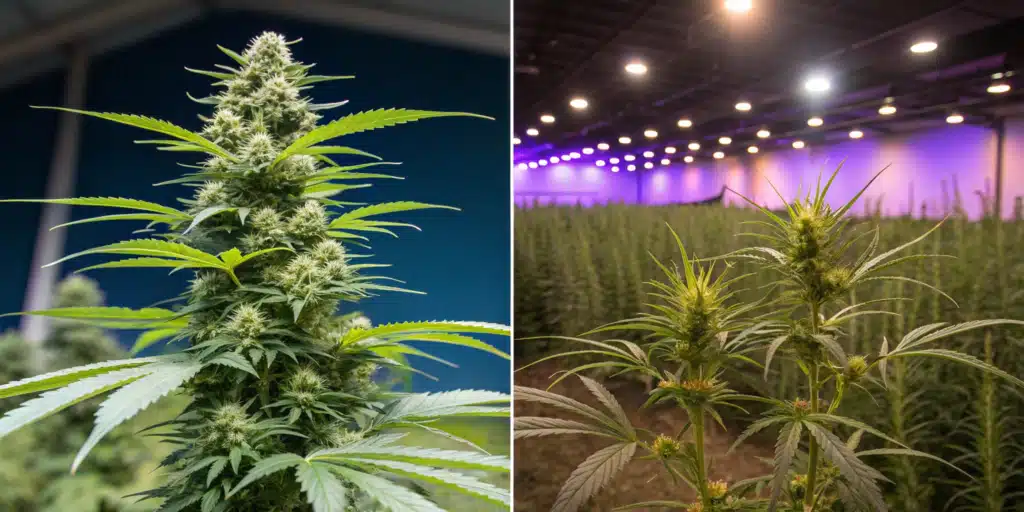
Sativa plants have longer flowering cycles than indicas and an elongated structure that grows tall, so controlling apical dominance helps. Their leaves are narrower and more finger-like, in a lighter green, with more widely spaced internodes and longer branches. Those slim leaves are the classic way to tell indica vs sativa leaves apart.
Sativas evolved in tropical, equatorial climates. Colombia and Panama produce strongly sativa-leaning genetics, and so do Thailand, Laos and Cambodia, whose landrace sativas are world-famous and have become the backbone of countless modern hybrids.
Most market varieties today are sativa-leaning hybrids, which let breeders keep that sativa character but finish faster than a pure sativa and yield more. At Blimburn Seeds we carry plenty of sativa strains as feminized seeds, and a favorite is Cindy’s 99.
Cindy’s 99 is a mostly sativa variety with the tropical ancestry described above. It descends from the classic Jack Herer, whose own parent is a Haze built from landraces out of Colombia, Thailand, India and Mexico, all hot, humid, tropical climates.
What Is the Difference in Effects: Sativa vs Indica?
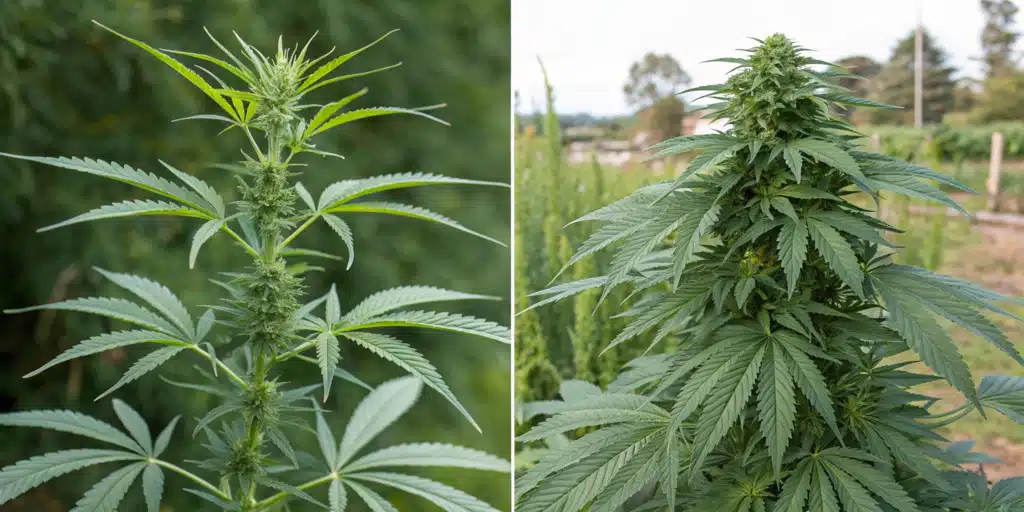
As mentioned, the sativa vs indica split is not a perfect science, so assigning fixed effects to each can be misleading. In reality, the effect depends heavily on the specific lineage and terpene profile of the plant, not just the indica or sativa label.
That said, some general tendencies hold. Indica varieties tend to feel more relaxing and sedating, which is why many people reach for them in the evening or to wind down. Some also enjoy them for meditation and quiet, introspective sessions. Effects vary by person, and this is not medical advice.
Sativa genetics, by contrast, tend to feel energetic and uplifting, which is why many people enjoy them during the day or for social, creative activities. Some deliver that classic soaring, heady high, while others lean introspective or bring on fits of laughter. As always, the exact effect depends on the strain and the person.
Keep in mind that most modern genetics are hybrids, blends of indica and sativa where one side leads. Because of that, and because everyone’s body responds differently, a strain’s advertised effect will not always match your experience. The same variety can affect you and a friend quite differently, so treat descriptions as a guide, not a guarantee.
Cindy’s 99 is a good example: a mostly sativa hybrid that adapts to any setup, including scrog. It brings an intense, activating mental high from its sativa side, then its indica side shows up toward the end with gentle body relaxation, heavy eyes and a happy, elevated calm. It captures why hybrids are so popular.
What Effects Can You Feel Between Indica and Sativa?
Psychoactive Effects
Everyone feels the psychoactive effects a little differently, even though the underlying chemistry is the same. A big part of it is how cannabis interacts with neurotransmitters like dopamine and norepinephrine.
Those shifts in neurotransmitters are why both indica and sativa can bring on euphoria, heightened libido, introspection, sensuality or relaxation, depending on the strain and the person.
Subjective effects
Beyond the common psychoactive effects, there are subjective ones too. Many users notice food tasting more intense and a strong urge to snack, the classic “munchies.”
Some users also report time seeming to slow down. Sativa-type cannabis in particular can heighten creativity, and at higher doses some people experience mild perceptual distortions.
Physical effects
Physical effects also depend on the person and the strain’s lineage. Many indica genetics produce familiar sensations like dry mouth, body fatigue and a heavy feeling, often with heavy eyes, and sometimes a relaxed, lazy kind of laughter.
Mostly sativa varieties can share some of those effects, but generally leave the body feeling activated and ready to move. That energetic quality is why many people enjoy sativas during the day, when they want to feel motivated and upbeat.
How to Buy the Best Indica or Sativa Cannabis Seeds
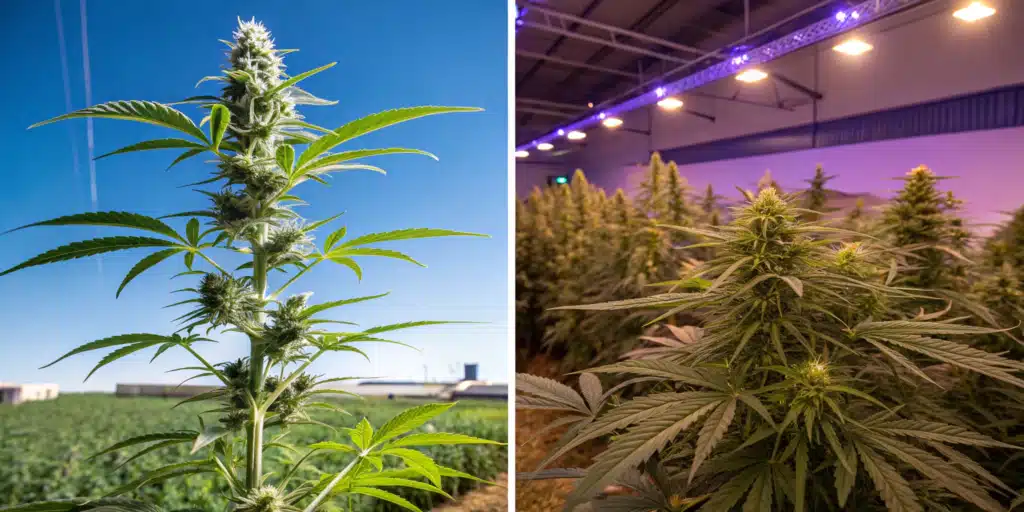
To choose the right seeds, start with what you actually want. On the Blimburn Seeds site you can filter genetics by genotype (indica or sativa), then narrow by effect (energetic, relaxing), yield, flavor and THC level, and by seed type: feminized, autoflowering or fast flowering.
For example, if you want a balanced, creative strain with a citrusy, herbal flavor, an indica-leaning hybrid like Steve’s Alien OG fits the bill. Match the genotype and the flavor profile to the experience you are after.
Turn down the temperature of Green Crack in the flowering stage to bring out magic colors.
If you prefer a mostly sativa with an energizing effect, fruity-earthy flavors and an uplifting, creative buzz, Green Crack is a great pick. Tip: drop the temperature a little in late flowering to bring out its colors.
If you have questions, drop a comment and our team will help. We hope you now have a clear picture of indica vs sativa genetics and how to choose between them. Happy growing.
FAQs About Sativa vs Indica
What do sativa and indica leaves look like?
Indica leaves are broad with wide, overlapping fingers and a darker green color, on short, bushy plants. Sativa leaves are narrow and thin-fingered in a lighter green, on tall, stretchy plants. So yes, indica is usually darker than sativa, and the leaf shape is the fastest way to tell the two apart.
What is the main difference between sativa and indica cannabis plants?
The main difference is structure and effect. Sativa plants are tall with narrow, elongated, lighter-green leaves, longer flowering, and uplifting, energetic effects. Indica plants are short and bushy with broad, darker leaves, compact buds and shorter flowering, and tend to feel relaxing and sedative.
Where do sativa and indica cannabis strains originate from?
Sativa strains come from tropical, equatorial regions like Colombia, Thailand and Mexico, which suits their tall, long-flowering habit. Indica strains come from mountainous regions like Afghanistan, Pakistan and India, where their compact structure and broad leaves help them cope with harsher, shorter seasons.
Are cannabis strains today pure sativa or indica?
Almost none are truly pure anymore. The vast majority of modern strains are hybrids carrying both sativa and indica genetics, usually leaning one way while keeping traits of the other. That is why effects and plant structure are so varied, and why the strict indica/sativa labels are only a rough guide today.