Proven Methods to Prevent Microbial Contamination During Drying and Curing

Ensuring your cannabis remains free from microbial contamination during drying and curing is vital. Knowing how to prevent microbial contamination during drying and curing is essential, as mold and bacteria can quickly ruin your harvest and months of hard work. Let’s dive into the best practices for preventing microbial contamination during the drying process.
Controlling the environment is critical. This means managing temperature, humidity, and airflow. These factors play a significant role in how to prevent microbial contamination during drying and curing.
Recommended Strains


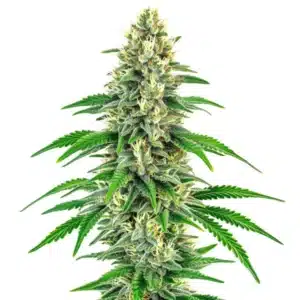
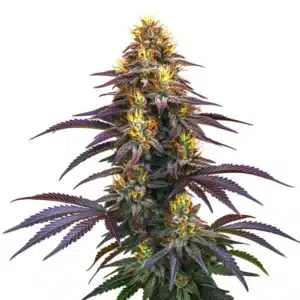
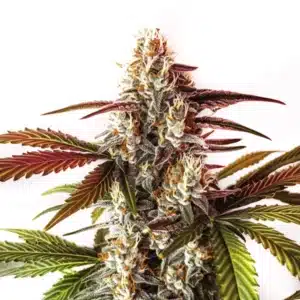
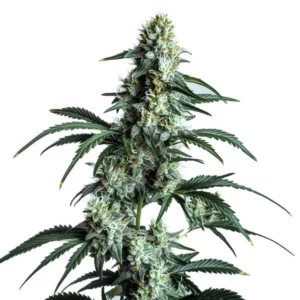
Using quality seeds, like those from Blimburn Seeds, is a great start. Strains like GG4 are resilient but still need proper care during drying and curing. This ensures the end product is both potent and safe.
Environmental Control
Temperature and humidity are your first line of defense. High humidity levels can lead to mold, while low levels can dry out your cannabis too quickly. Aim for a temperature of 60-70°F and humidity around 45-55%.
Proper airflow is essential. It helps to prevent stagnant air, which can be a breeding ground for mold and bacteria. Use fans to maintain gentle air circulation. However, avoid direct airflow onto your cannabis to prevent uneven drying.
Knowing how to control microbial growth during the curing process involves maintaining a stable environment throughout both drying and curing stages. Consistent conditions help prevent fluctuations that could encourage mold and bacteria.
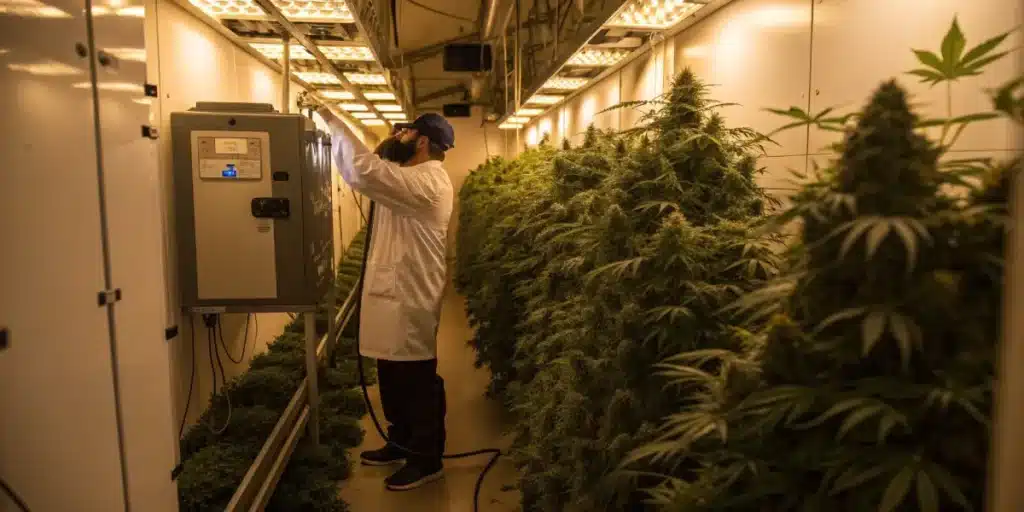
Investing in automation systems can provide peace of mind. Automated systems can help maintain ideal environmental settings, ensuring you stick to the best practices for preventing microbial contamination in drying and curing.
Monitoring and Adjusting Conditions
Regularly monitoring your drying room is crucial. Use hygrometers and thermometers to keep an eye on conditions. This helps you adjust settings promptly to maintain the perfect environment.
Consider investing in a dehumidifier. This can be a game-changer in controlling humidity levels, especially in areas with naturally high humidity. It’s a practical way to ensure safe drying and curing procedures.
Utilizing data loggers can provide valuable insights into the environmental trends of your drying room. By analyzing this data, you can refine your methods to avoid contamination in drying and curing.
Regular adjustments based on real-time feedback are key. This proactive approach ensures that any deviations are addressed swiftly, preventing mold and bacteria during drying and curing.
Promos & Deals

Handling and Hygiene
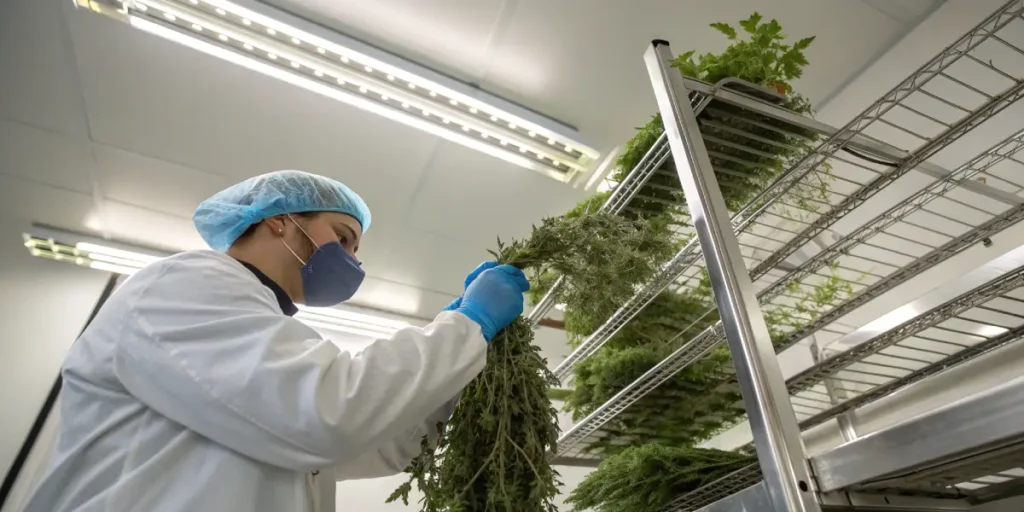
Always handle your cannabis with clean hands or gloves. This reduces the risk of introducing contaminants. Simple steps like this go a long way in how to prevent microbial contamination during drying and curing.
Regularly sanitize your drying and curing spaces. Clean surfaces and tools with alcohol-based sanitizers. This helps to eliminate any potential microbial threats.
Incorporating a routine cleaning schedule ensures that all equipment and surfaces remain free of contaminants. This is an essential part of the techniques to ensure safe drying and curing procedures.
Educating your team on hygiene standards is equally important. A well-informed team can uphold the high standards necessary to maintain a contamination-free environment.
Proper Equipment Maintenance
Ensure all your equipment, such as scissors and trimmers, are clean and in good condition. Dull tools can damage your buds, increasing the risk of contamination.
Keep drying racks and containers clean. Regular cleaning prevents build-up of mold and bacteria. This is one of the key methods to avoid contamination in drying and curing.
Regular inspections of equipment for wear and tear can prevent issues before they arise. This proactive maintenance is a cornerstone of how to prevent microbial contamination during drying and curing.
Replacing worn-out equipment promptly ensures that your drying and curing processes remain efficient and effective, further safeguarding against contamination.
Choosing the Right Strains
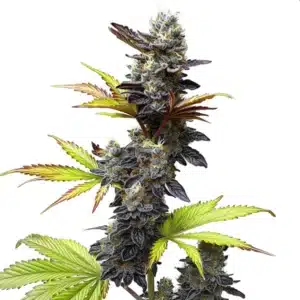
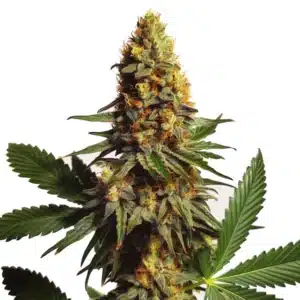
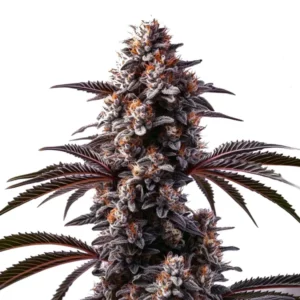
Some strains are more resistant to mold and bacteria. Strains like Blue Dream from Blimburn Seeds offer robust genetics. This makes them an excellent choice for growers concerned about microbial contamination.
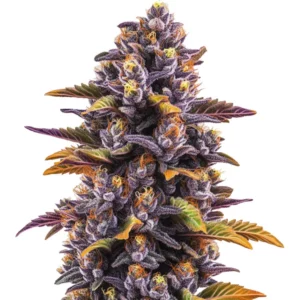
Experiment with different strains to find what works best for you. OG Kush is another resilient option. Each strain has unique needs during drying and curing, so it’s important to tailor your approach.
Knowing the genetic tendencies of your chosen strains can guide your cultivation techniques. Choosing strains known for their resilience is part of the methods to avoid contamination in drying and curing.
Blimburn Seeds provides detailed strain information, helping you select varieties that align with your environmental conditions and contamination prevention goals.
Knowing Strain Requirements
Each cannabis strain has its own drying and curing requirements. Knowing these can help you refine your techniques to prevent contamination.
Consider the density of your buds. Denser strains may take longer to dry, increasing the risk of mold if not monitored closely.
Being aware of the specific needs of each strain allows for more precise control of the drying environment, enhancing your ability to prevent microbial contamination during drying and curing.
Taking detailed notes on the drying and curing performance of different strains can help you improve future harvests, ensuring consistent quality and safety.
FAQ about how to prevent microbial contamination during drying and curing
What are the best practices for preventing microbial contamination in drying?
The best practices include controlling environmental factors like temperature and humidity, ensuring proper airflow, and maintaining high hygiene standards. Regular monitoring and adjustments based on conditions will help you achieve this.
It’s also important to choose resilient strains and use quality equipment. These steps combined create a comprehensive approach to maintaining a contamination-free environment.
Implementing a robust cleaning protocol is a crucial element of the best practices for preventing microbial contamination in drying. It ensures that surfaces and tools do not harbor any unwanted organisms.
Adopting these practices across your entire cultivation process can significantly reduce the risk of contamination, resulting in a safer, higher-quality product.
How can I control microbial growth during the curing process?
Control microbial growth by maintaining a consistent environment. Use airtight containers to regulate humidity and prevent exposure to external contaminants.
Regularly check your buds during the curing phase. This helps you detect any signs of mold early, allowing you to take swift action.
Implementing techniques to ensure safe drying and curing procedures includes using containers that offer UV protection, further minimizing the risk of microbial growth.
The inclusion of humidity packs in your curing containers can help maintain stable conditions, a critical factor in how to control microbial growth during the curing process.
What methods can I use to avoid contamination in drying and curing?
Implement methods like using a dehumidifier or humidifier, ensuring proper airflow, and maintaining cleanliness. These are effective ways to avoid contamination.
Additionally, choosing strains known for their resistance to mold can give you an added layer of protection.
Integrating an air purification system can enhance the quality of your drying environment, supporting your efforts to avoid contamination in drying and curing.
Routine evaluations and updates to your contamination prevention strategies ensure continued success and adaptability to any environmental changes.
How do I prevent mold and bacteria during drying and curing?
Prevent mold and bacteria by keeping the environment stable. Use clean tools and handle your buds carefully to minimize the risk of contamination.
Regularly monitoring conditions and making necessary adjustments is a proactive approach to keeping your cannabis safe.
Utilizing predictive analytics can help foresee potential contamination risks, allowing you to take preventive measures against mold and bacteria during drying and curing.
Collaborating with experts or joining industry groups can provide valuable insights and support in refining your contamination prevention techniques.
What techniques ensure safe drying and curing procedures?
Techniques such as keeping conditions stable, using quality equipment, and maintaining hygiene are crucial. These help ensure that your drying and curing procedures are safe and effective.
By following these techniques, you can enjoy high-quality cannabis that is free from microbial contamination.
Investing in training for yourself and your team can elevate your knowing of how to prevent microbial contamination during drying and curing.
Continuous learning and adaptation to new technologies and methods can bolster your efforts in maintaining safe drying and curing practices.