Essential Guide: How to Use a Refractometer on Cannabis Plants

Using a refractometer on cannabis plants can be an invaluable tool for growers. It’s a simple device that measures the amount of sugar in plant sap, known as Brix levels. Knowing how to use a refractometer on cannabis plants helps you accurately assess plant health and optimize growth. The higher the Brix level, the healthier your cannabis plant is likely to be.
For those unfamiliar with how to use a refractometer on cannabis plants, don’t worry. It’s easier than it sounds. You’ll be collecting small samples of plant sap and using the refractometer to evaluate sugar content. This process doesn’t just help with knowing plant health; it guides your nutrient management as well.
Recommended Strains

Blue Dream

|
THC | 17% - 24% (Medium) |

|
Type | Feminized |

|
Yield | High |

|
Phenotype | 50% Indica / 50% Sativa |
Critical Kush
|
|
THC | 19% - 25% (Medium) |
|
|
Type | Feminized |
|
|
Yield | High |
|
|
Phenotype | 65% Indica / 35% Sativa |
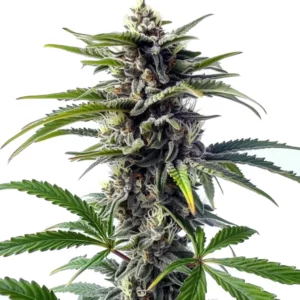
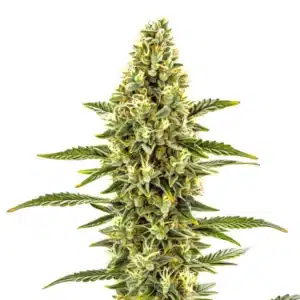
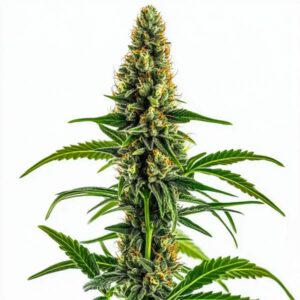
Choosing the right cannabis strains can also play a part in your success. Strains like Blue Dream, Girl Scout Cookies, and OG Kush from Blimburn Seeds are known for their robustness and can benefit significantly from refractometer readings.
How to Measure Cannabis Sugar Levels with a Refractometer
Measuring sugar levels in cannabis plants with a refractometer starts with obtaining a small sample of plant sap. This might sound technical, but it’s straightforward. You can extract sap by gently squeezing the leaves or stems, especially in the morning when the plant is most hydrated.
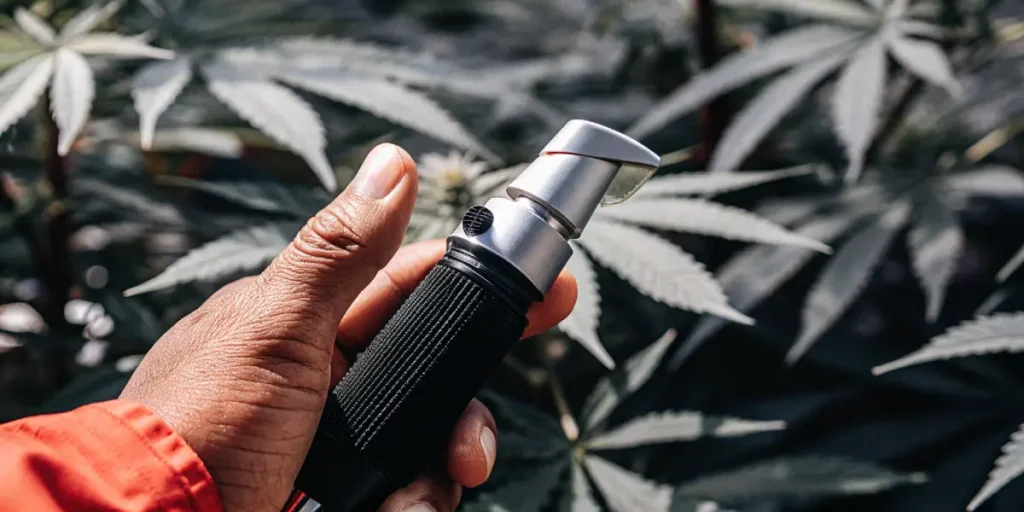
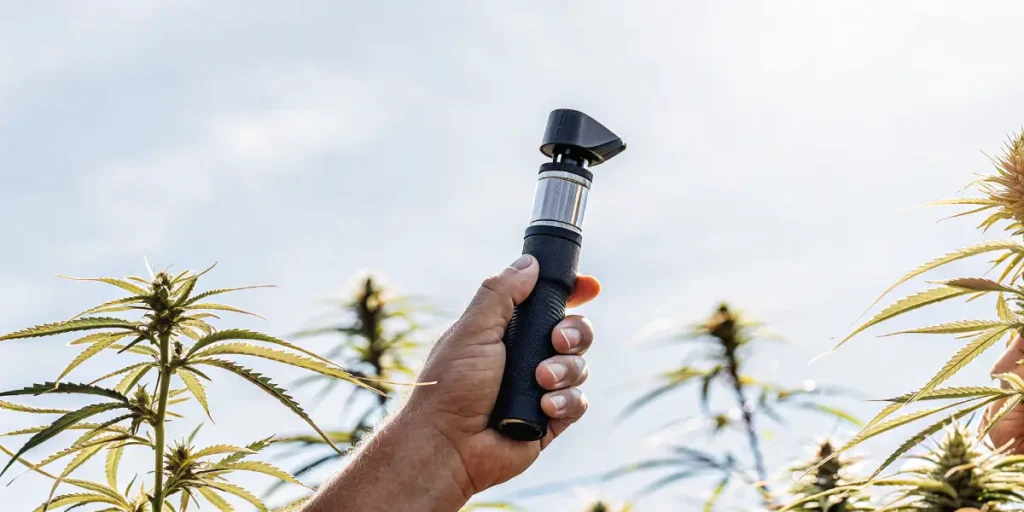
Once you have your sap, place a drop or two on the refractometer’s glass plate. Close the cover and look through the eyepiece. You’ll see a scale with numbers. The point where the light and dark fields meet is your Brix level. Regularly checking cannabis plant Brix levels with a refractometer can provide insights into your plant’s sugar production, crucial for healthy growth.
When learning how to measure cannabis sugar levels with a refractometer, it’s important to ensure your refractometer is well-calibrated. Calibration ensures accurate readings and can be done using distilled water to set the baseline. This practice helps you to consistently monitor the nuances of your plants’ health, offering a reliable metric to track their vitality.
Furthermore, knowing seasonal variations in Brix levels can aid in planning your cultivation cycles better. Different growing conditions such as humidity and temperature can influence these readings. By integrating this knowledge into your cultivation strategy, you can tailor your care to the specific needs of your plants throughout the year.
Promos & Deals

Using a Refractometer for Cannabis Plant Health
Using a refractometer for cannabis plant health is a proactive step every grower can take. Healthy plants usually have higher Brix levels. If readings are low, it could indicate stress, nutrient deficiencies, or pest problems. In such cases, inspect your plants for other symptoms and adjust care accordingly.
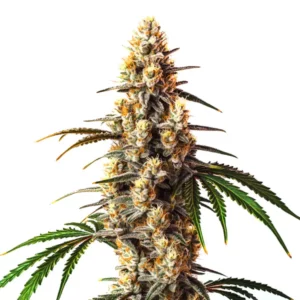
Consider strains like Critical Kush from Blimburn Seeds, which thrive under optimal conditions. By keeping an eye on their Brix levels, you ensure they receive the right nutrients and are less susceptible to diseases and pests.
Another advantage of using a refractometer for cannabis plant health is the early detection of potential issues. By identifying low Brix readings at an early stage, you can prevent problems from escalating, thus maintaining the overall health of your crop. This foresight allows for timely interventions, reducing the risk of losing plants to preventable conditions.
Additionally, Brix levels can offer insights into the efficiency of photosynthesis in your plants. When plants effectively convert light into energy, it reflects in higher sugar levels. Therefore, monitoring these levels can also be an indirect measure of how well your lighting setup is functioning and whether adjustments are needed.
Checking Cannabis Plant Brix Levels with Refractometer
Checking cannabis plant Brix levels with a refractometer is a routine that can be integrated into your gardening schedule. Aim to take readings at the same time each day or week for consistency. This habit allows you to track changes and respond promptly to your plant’s needs.
Brix levels can fluctuate due to various factors, including water intake, nutrient absorption, and environmental conditions. When you notice changes in Brix levels, it can prompt you to investigate further and make necessary adjustments to your growing techniques or nutrient formulas.
Consistency is key when checking cannabis plant Brix levels with a refractometer. Establishing a regular schedule helps in drawing reliable comparisons over time. This systematic approach not only aids in recognizing patterns but also in making informed decisions when adjusting your cultivation practices.
Moreover, documenting each reading allows you to create a comprehensive record of your plants’ progress. Such records are invaluable in assessing the effectiveness of different growing strategies and can guide future cultivation efforts. Over time, this data can also reveal trends specific to certain strains or environmental conditions.
Cannabis Refractometer Usage for Nutrient Monitoring
Cannabis refractometer usage for nutrient monitoring is a smart strategy. Nutrient imbalances often manifest in Brix readings. For instance, low Brix levels may suggest a lack of essential nutrients such as nitrogen or potassium. By adjusting your nutrient mix, you can improve Brix levels and plant health.
Regular monitoring helps prevent over-fertilization, which can be as harmful as nutrient deficiencies. With a refractometer, you can strike the right balance, ensuring your cannabis plants receive what they need to thrive.
Using a refractometer for nutrient monitoring allows growers to fine-tune their feeding schedules. By correlating Brix readings with nutrient adjustments, growers can optimize the application of fertilizers, ensuring the plants are neither overfed nor undernourished, which significantly boosts plant vitality and yield.
Additionally, cannabis refractometer usage for nutrient monitoring can facilitate the knowing of how different nutrient brands and formulations interact with your plants. This knowledge enables growers to select the most effective products and strategies, maximizing the genetic potential of strains like those from Blimburn Seeds.
Refractometer Techniques for Cannabis Resin Analysis
Refractometer techniques for cannabis resin analysis can enhance your knowing of plant potency. Resin, rich in cannabinoids, can affect Brix levels. A higher Brix reading often correlates with richer resin production, indicating a more potent plant.
To analyze resin production, focus on the flowering phase. During this stage, cannabis plants produce more resin. Regular Brix checks allow you to gauge the effectiveness of your cultivation techniques and make any necessary adjustments for maximum potency.
Incorporating refractometer techniques for cannabis resin analysis during the flowering stage provides crucial insights into the plant’s developing potency. As resin levels increase, so do the concentrations of cannabinoids, which are responsible for the plant’s therapeutic and psychoactive properties. Monitoring these changes can lead to a better quality harvest.
By knowing the relationship between Brix levels and resin production, growers can also experiment with different conditions to enhance potency. For instance, adjusting light exposure or experimenting with nutrient boosts during critical growth phases can lead to significant improvements in resin quality and quantity.
FAQs about how to use a refractometer on cannabis plants
What is a refractometer, and how does it work?
A refractometer is a tool used to measure the sugar content in plant sap. It works by analyzing how light bends, or refracts, as it passes through the sap. The degree of bending is related to the sugar concentration, which is displayed as a Brix value.
Using a refractometer on cannabis plants helps growers monitor plant health and sugar levels. This information is crucial for identifying potential issues with nutrient uptake and overall plant vitality.
Knowing how to use a refractometer on cannabis plants can significantly enhance a grower’s ability to maintain optimal plant health. By regularly measuring Brix levels, growers gain valuable data that can inform adjustments in watering, lighting, and nutrient application, resulting in healthier and more productive plants.
Moreover, refractometers are versatile tools that can be used across a variety of plant types, making them a valuable addition to any grower’s toolkit. Whether you’re cultivating cannabis or other crops, mastering the use of a refractometer opens up new avenues for knowing and improving plant health.
Why are Brix levels important for cannabis plants?
Brix levels indicate the sugar content in plants, reflecting their health and vigor. High Brix levels suggest strong photosynthesis and nutrient uptake, leading to robust growth and resistance to pests and diseases.
Low Brix readings can alert growers to problems such as nutrient deficiencies, stress, or pest infestations. By monitoring Brix levels, you can make informed decisions about plant care and nutrient management.
Recognizing the importance of Brix levels in cannabis cultivation underscores the need for regular monitoring. These readings not only highlight the immediate health of the plant but also provide predictive insights into potential future issues, allowing for preemptive interventions to maintain plant vitality.
Furthermore, consistent Brix monitoring helps in fine-tuning the growing environment. By knowing how factors like light intensity, humidity, and soil composition affect Brix readings, growers can optimize conditions to sustain high sugar levels, thereby promoting the overall success of strains like those offered by Blimburn Seeds.
How often should I check Brix levels in my cannabis plants?
It’s advisable to check Brix levels regularly, ideally once a week or at key growth stages. Consistent monitoring helps track plant health and catch potential issues early. Aim to take readings at the same time each day for accuracy.
Frequent checks allow you to adjust your growing practices as needed. For instance, if Brix levels drop unexpectedly, you can investigate and address the underlying cause promptly.
Regularly checking cannabis plant Brix levels with a refractometer helps you establish a reliable baseline for your plants’ health. This baseline serves as a reference point for any deviations, allowing for timely interventions and adjustments to maintain optimal conditions.
Moreover, monitoring Brix levels at different growth stages can provide insights into how plants allocate energy and resources. This knowledge can guide growers in applying specific care techniques that align with the plants’ developmental needs, ensuring robust growth and high yields.
Can I use a refractometer on all cannabis strains?
Yes, a refractometer can be used on all cannabis strains. However, each strain may have different optimal Brix levels based on its genetics and growing conditions. It’s important to understand your specific strain’s requirements.
For example, strains like Girl Scout Cookies and Critical Kush may have varying Brix benchmarks. Tailoring your approach to each strain ensures they receive the care they need to thrive.
While the fundamental process of using a refractometer remains consistent across strains, the interpretation of results may vary. Knowing each strain’s unique characteristics, such as its natural Brix range and growth patterns, is crucial for effective monitoring and management.
By leveraging insights from Brix readings, growers can optimize their strategies for diverse strains, ensuring that each plant receives the precise care it requires. This tailored approach enhances the overall health and productivity of the crop, ultimately leading to a more successful harvest.
What should I do if my cannabis plants have low Brix levels?
If your cannabis plants show low Brix levels, first check for signs of stress, pests, or nutrient deficiencies. Addressing these issues can help improve Brix readings. Adjust your nutrient mix to ensure plants receive adequate essential elements.
Consider environmental factors too, such as light, temperature, and humidity, as they can impact Brix levels. Making necessary adjustments in these areas can enhance plant health and increase Brix values over time.
When faced with low Brix levels, using a refractometer for cannabis plant health becomes even more critical. Begin by conducting a thorough assessment of your growing environment and practices, looking for any changes that might have affected the plants’ sugar production.
Implementing targeted interventions based on refractometer readings can lead to a swift recovery. Whether it’s modifying the nutrient regimen, enhancing light exposure, or improving pest control measures, these adjustments can help restore Brix levels and promote resilient plant growth.