Bad Joint: Why It Happens and How to Fix a Badly Rolled Joint

Few things are as annoying as lighting up and realizing you’ve got a bad joint. A badly rolled joint turns an easy, relaxed moment into a fight: it burns unevenly, won’t pull, or falls apart in your fingers. The good news is that almost every bad joint is either fixable on the spot or avoidable next time, and this guide covers both. The same logic applies to blunts, where you can learn how to fix a badly rolled blunt with a few quick adjustments.
The good news is that almost every bad joint is either rescuable on the spot or easy to prevent next time, so a ruined roll does not have to mean a ruined session. Below we cover what counts as a bad joint, the handful of reasons they go wrong, and the quick fixes for each, with a troubleshooting table to find your problem fast.
Recommended Strains
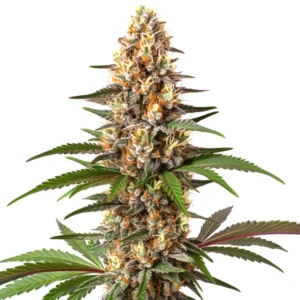
Yumboldt

|
THC | 18% - 20% (Medium) |

|
Type | Feminized |

|
Yield | Medium |

|
Phenotype | 70% Indica / 30% Sativa |

Yumbolt Auto
|
|
THC | 12% - 24% (High) |
|
|
Type | Autoflowering |
|
|
Yield | Medium |
|
|
Phenotype | 80% Indica / 20% Sativa |
What Is a Bad Joint?
A bad joint is simply one that fails to deliver a smooth, even smoke. It might look lumpy or lopsided, feel awkward to hold, refuse to draw, or burn down one side only. A joint is just a vehicle for enjoying cannabis, so when it does not work well, the whole session suffers, no matter how good the flower is.
In practice that shows up as a few familiar frustrations: a joint that will not draw no matter how hard you pull, one that burns down one side (canoeing), one that runs or falls apart, or one so loose it is gone in two puffs. Each wastes flower and interrupts the moment, which is exactly why they are worth learning to avoid.
Promos & Deals

What a Well-Rolled Joint Needs
To see why joints go wrong, it helps to know what a good one needs:
- Even distribution: cannabis spread uniformly for consistent airflow and burn.
- A proper tuck and roll: paper wrapped tight and even, with no loose spots or bulges.
- A secure seal: the adhesive strip properly moistened and pressed.
- A functional filter or tip: for structure, airflow and to stop cannabis spilling out.
When one of these is missing, you get a bad joint: clumped cannabis, uneven pressure or a loose seal, each causing poor airflow or an uneven burn.
Why Joints Roll Badly
A joint usually turns out badly for one of three reasons. Uneven distribution, often from rushing or poorly ground cannabis, creates lumps that burn inconsistently. Poor technique, especially an uneven tuck-and-roll, leaves the joint too tight or too loose. And low-quality papers tear easily and fight you the whole way. Grinding evenly is the simplest fix; see our guide on how to grind weed for a consistent, even fill.
For beginners, the fixes are mostly habits: grind the flower evenly so there are no stems or clumps, use a tip or crutch for structure, and aim for a snug but not crushed pack. A little practice with the tuck-and-roll motion does more than any gadget, and the table below maps the common problems to their quick fixes.
| Problem | Likely cause | Fix |
|---|---|---|
| Will not draw / too tight | Packed too tight or unevenly | Roll it between your fingers; open a channel with a pin |
| Burns too fast / loose | Under-packed | Pack down from the open end, or re-roll |
| Canoeing (one-sided burn) | Uneven pack or seal | Dab the fast-burning side; rotate as you smoke |
| Falls apart | Poor tuck or weak seal | Re-roll; moisten only the glue strip |
| Torn paper | Fragile or over-wet wrap | Patch it with a second paper |
How to Fix a Bad Joint
Se conserva todo el bloque de soluciones ya publicado (fixing a tight joint, loose joint, uneven burn/canoeing, torn paper, etc.) TAL CUAL, por su extension y utilidad. Unico ajuste: donde aparezca ‘badly rolled joint’ de forma repetida, alternar con ‘bad joint’ para reforzar el termino que mas impresiones recibe.
One more cause people miss: weed that is too dry or too moist. Over-dry flower crumbles and burns too fast, while damp flower won’t stay lit. Keeping buds at the right humidity makes rolling and burning far easier, which is where a good cure and storage routine pays off.
Fixing a Joint That Is Too Tight
A too-tight joint is the most common complaint. Gently roll it back and forth between your fingers to loosen the packed cannabis and create small air pockets. If that is not enough, slide a thin pin, toothpick or dab tool straight down the center to open an airway. Draw gently to test, and next time pack a little looser.
To avoid it next time, pack a little looser and grind evenly, since a tight joint almost always comes from cramming in too much or pressing too hard. A tip or crutch also helps keep the airway open from the start, so you get a smooth draw without any mid-session surgery.
Fixing a Loose Joint
A loose joint burns too fast and can spill. If it has not been lit, gently pack the cannabis down from the open end with a pen or packing tool to add density. If it is already lit, tamp the burning end lightly against an ashtray to compress it. For a badly under-filled joint, it is often easier to unroll and re-roll. P
revention is mostly about an even, firm roll: distribute the cannabis along the paper before rolling and tuck it snugly rather than loosely. A loose joint usually means too little flower or a rushed tuck, so slowing down for the roll saves you from a fast, wasteful burn later.
Fixing an Uneven Burn (Canoeing)
Canoeing is when one side races ahead of the other. Wet a fingertip and lightly dab saliva or water on the faster-burning side to slow it down, then rotate the joint as you smoke so it burns evenly. The root cause is uneven packing or an uneven seal, so an even roll prevents it next time.
The lasting fix is an even pack and a clean seal, because canoeing is almost always a symptom of one side holding more cannabis or a loosely stuck seam. Rolling on a flat surface and moistening only the glue strip, not the whole paper, keeps both sides burning at the same pace.
Fixing a Torn or Ripped Paper
A torn paper does not mean starting over. Take a fresh rolling paper, moisten the adhesive strip, and wrap it carefully around the damaged section like a patch. Press gently to seal. This salvages the joint and keeps airflow intact, so a small rip never has to waste your cannabis.
To stop tears happening in the first place, handle papers gently and avoid over-licking the seam, which weakens the wrap. Cheap, flimsy papers tear far more easily too, so a slightly better rolling paper is a small upgrade that prevents a lot of mid-roll frustration.
How to Roll a Better Joint Next Time
- Grind evenly: a consistent grind is the single biggest factor in an even burn.
- Use a tip or filter: it adds structure and keeps airflow open.
- Distribute evenly: spread cannabis along the paper before rolling, slightly less at the mouth end.
- Tuck and roll firmly: aim for snug, not crushed.
- Seal cleanly: moisten just the adhesive strip and press along its length.

FAQs About Badly Rolled Joints
Why is my joint or blunt not pulling?
A joint that won’t pull is almost always rolled too tight or packed unevenly, so there is no airflow. Gently roll it between your fingers to loosen the cannabis, or run a thin pin or toothpick down the center to open an air channel. Rolling a touch looser next time prevents it.
Can you fix a bad joint after rolling it?
Often, yes. A too-tight joint can be loosened by rolling it between your fingers or poking a thin channel through it. A loose one can be gently packed from the lit end. A torn paper can be patched by wrapping a second paper around the damaged section. Prevention, though, beats repair.
Why does my joint burn down one side (canoeing)?
Canoeing usually means uneven packing or an uneven seal, so one side burns faster. Lick a fingertip and dab the fast-burning side to slow it, and rotate the joint as you smoke. Fixing it for good comes down to even distribution and a tight, even roll from the start.
Are loose joints bad?
A slightly loose joint can actually smoke smoothly, but a very loose one burns too fast, wastes cannabis and may spill or run. The sweet spot is snug but not packed tight. If a joint is clearly under-filled, gently pack it down from the open end or re-roll it for a better, more even burn.
What is the easiest way to roll a joint for beginners?
Beginners often find a rolling machine or pre-rolled cones easiest, since both remove the tricky tuck-and-roll step. If rolling by hand, use a tip for structure, grind the cannabis evenly, and distribute it in a thin, even line. Keep the first few loose rather than over-tight, and it gets easier fast with practice.