Cannabis in Orbit: A Comprehensive Analysis of Aerospace Botany

Defining the High: The Kármán Line and Beyond
To discuss whether Cannabis Has Been to Space, we must first establish the scientific boundary of our atmosphere. In the context of Aerospace Botany, this distinction is especially relevant, as it defines the environment where plant life begins to experience extraterrestrial conditions. Space officially begins at the Kármán line, situated 100 kilometers (62 miles) above Earth. Beyond this threshold, atmospheric pressure becomes negligible, and biological life is subjected to the profound effects of microgravity.
While fully grown, flowering cannabis plants have not yet been documented in large-scale orbital gardens due to legal and logistical hurdles, the plant’s biological precursors seeds, tissue cultures, and hemp-derived materials, have frequently crossed this line. These missions aim to answer a fundamental question: How does one of Earth’s most chemically complex plants adapt to the void?
Recommended Strains
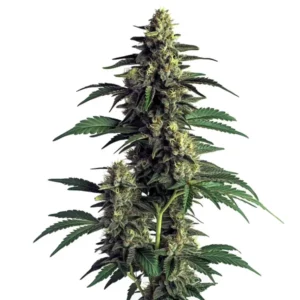
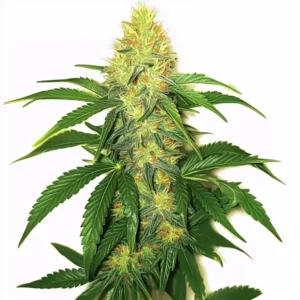
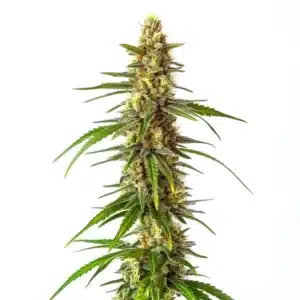
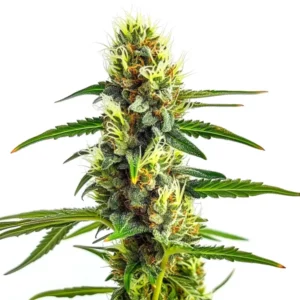
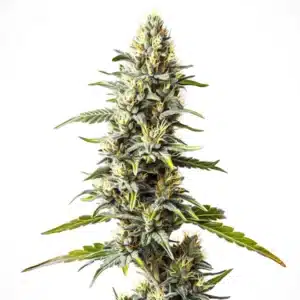
Northern Lights

|
THC | 17% (Medium) |

|
Type | Feminized |

|
Yield | Medium |

|
Phenotype | 90% Indica / 10% Sativa |
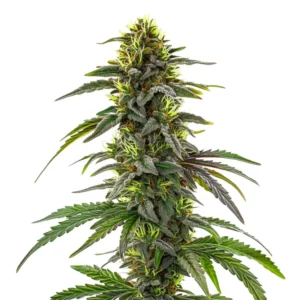
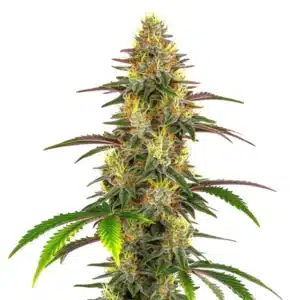
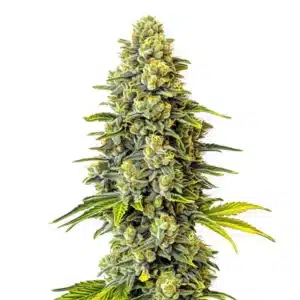
CBD Strawberry 1:30

|
CBD | 20% – 30% (High) |
|
|
Type | CBD Feminized |
|
|
Yield | High |
|
|
Phenotype | 60% Indica / 40% Sativa |
Promos & Deals
The Physics of Growth: Gravitropism and Auxins
On Earth, cannabis follows a predictable growth pattern dictated by gravity. This is known as gravitropism.
- The Hormonal Shift: Specialized cells in the plant sense gravity and pull auxins (growth hormones) downward. This concentration of auxins inhibits cell elongation on the lower side of the root, causing it to curve down, while doing the opposite for the stem.
- The Space Dilemma: In microgravity, this internal “compass” breaks. Auxins distribute irregularly, leading to chaotic root systems that grow in random directions. To compensate, plants must rely entirely on phototropism (growing toward light) and internal signaling to maintain structural integrity.
This research is vital for Earth-based cultivation. By understanding how cannabis behaves without gravity, breeders can identify which strains possess the highest phenotypic plasticity the ability to remain stable under extreme environmental stress.
The Hydroponic Challenge: Fluid Dynamics in Microgravity
The Document 2 “optimization” missed a crucial physical reality: Water behaves differently in space. For a plant as sensitive to moisture as cannabis, this is a matter of life and death.
- Surface Tension vs. Drainage: In space, water does not drain through a medium. Instead, it forms floating spheres or clings to surfaces via surface tension. This often leads to “pockets” of water that surround the root zone, causing oxygen deprivation.
- The Aeroponic Solution: This is why space research heavily mirrors high-end Earth cultivation. Techniques such as aeroponics and advanced hydroponics, used to grow strains like White Widow or Critical Mass on Earth, are the exact blueprints being tested for extraterrestrial life support systems.
Radiation and Chemical Expression
Outside the Earth’s protective magnetosphere, plants are bombarded by cosmic radiation. This exposure is a double-edged sword:
- DNA Mutation: High-energy particles can alter DNA sequences, potentially leading to mutations. While some fear this could degrade the plant, researchers are curious if it could spark the development of novel cannabinoid profiles.
- Secondary Metabolites: Cannabinoids and terpenes are secondary metabolites produced by the plant, often as a defense mechanism against UV light and stress. Scientists are actively studying whether the extreme stress of space could “supercharge” the production of compounds like THC, CBD, or rare terpenes.
Coffee vs. Cannabis: The ISS Regulation
A popular topic of debate is why astronauts can enjoy coffee but not cannabis aboard the International Space Station (ISS).
- The Coffee Standard: Coffee is a known quantity; it is a stable stimulant that enhances cognitive alertness with predictable effects.
- The Cannabis Barrier: Beyond the legal status, cannabis introduces variables incompatible with mission safety. Psychoactive effects could impair judgment in emergencies, and the risk of combustion or vaporization in a closed-loop air system poses a fire and filtration hazard.
- The CBD Future: However, interest in non-psychoactive CBD is rising. Astronauts face disrupted circadian rhythms (experiencing 16 sunrises a day), muscle atrophy, and immense psychological pressure. CBD-based pharmaceuticals are being considered as a non-intoxicating way to manage sleep and inflammation during multi-year missions to Mars.
Practical Implications for Modern Breeders
The bridge between space science and your grow room is shorter than it seems. The same principles of precision environmental control used by NASA are applied by those growing resilient strains such as:
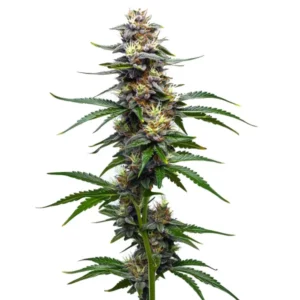
- Northern Lights & AK-47: Known for their compact structure and predictable growth, making them ideal models for limited-volume space habitats.
- CBD Strawberry: A benchmark for consistency in cannabinoid ratios, essential for scientific reproducibility.
FAQs about Aerospace Botany
Has a person ever been high in space?
No documented cases exist. Astronauts must maintain peak physical and mental condition at all times.
Do seeds change in space?
Yes, studies on other crops show that seeds exposed to the vacuum and radiation of space often show altered germination rates and growth patterns upon return to Earth.
Why does this research matter?
If humans are to become a multi-planetary species, we must be able to grow our own medicine and materials. Cannabis, with its high agricultural and pharmaceutical value, is a leading candidate for these future “space farms.”