Cannabis in Low Earth Orbit: The “Martian Grow” Experiment and the Future of Off-World Agriculture

The mission to send cannabis seeds into space represents a pivotal shift from curiosity-driven science to strategic aerospace botany, aligning closely with the Future of Off-World Agriculture. What was once a speculative concept is now a cornerstone of the Martian Grow initiative, a project designed to determine whether cannabis can serve as a “foundational crop” for the first human colonies on Mars.
The MayaSat-1 Mission: A Laboratory in the Void
Launched from the Vandenberg Air Force Base, the MayaSat-1 experimental capsule carried a biological payload that could redefine life-support systems.
Recommended Strains
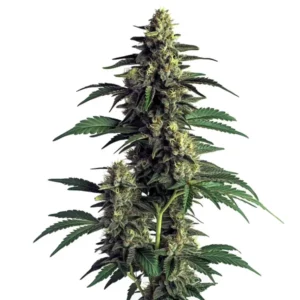
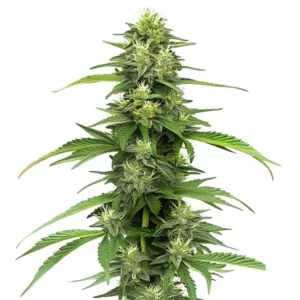
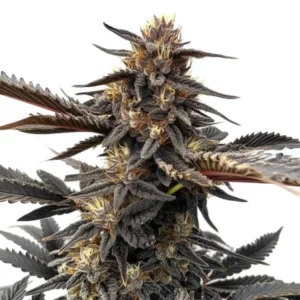
Northern Lights

|
THC | 17% (Medium) |

|
Type | Feminized |

|
Yield | Medium |

|
Phenotype | 90% Indica / 10% Sativa |
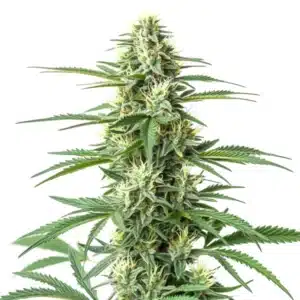
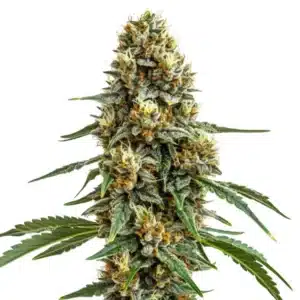
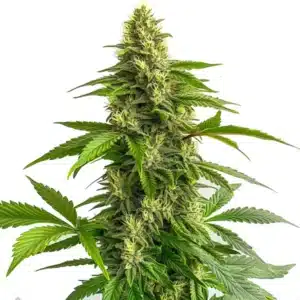
CBD Critical Mass (1:1)

|
CBD | 5% (Low) |
|
|
Type | CBD Feminized |
|
|
Yield | Medium |
|
|
Phenotype | 60% Indica / 40% Sativa |
- The Payload: Over 150 cannabis seeds, alongside symbiotic organisms like algae and fungi. This “mini-ecosystem” approach aimed to study inter-species interaction in a closed-loop environment.
- The Exposure: For six hours, the seeds were subjected to unfiltered solar radiation and microgravity—conditions that are physically impossible to replicate on Earth due to our magnetosphere and atmospheric shield.
- The Setback: During reentry, a critical parachute failure led to the loss of the capsule in the Pacific Ocean. While the physical seeds were not recovered for genomic sequencing, the mission confirmed the viability of the launch protocols and the resilience of the hardware.
Promos & Deals
Orbitropic Growth: Botany Without a Compass
One of the most profound scientific contributions of this research is the study of orbitropic growth, a key concept shaping the Future of Off-World Agriculture. On Earth, plants rely on gravitropism (using the pull of gravity to send roots down and stems up). In orbit, this “biological compass” is disabled.
The Microgravity Adaptation:
- Biochemical Reorientation: Without gravity, cannabis relies on phototropism (light-tracking) and internal auxin redistribution to orient itself.
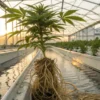
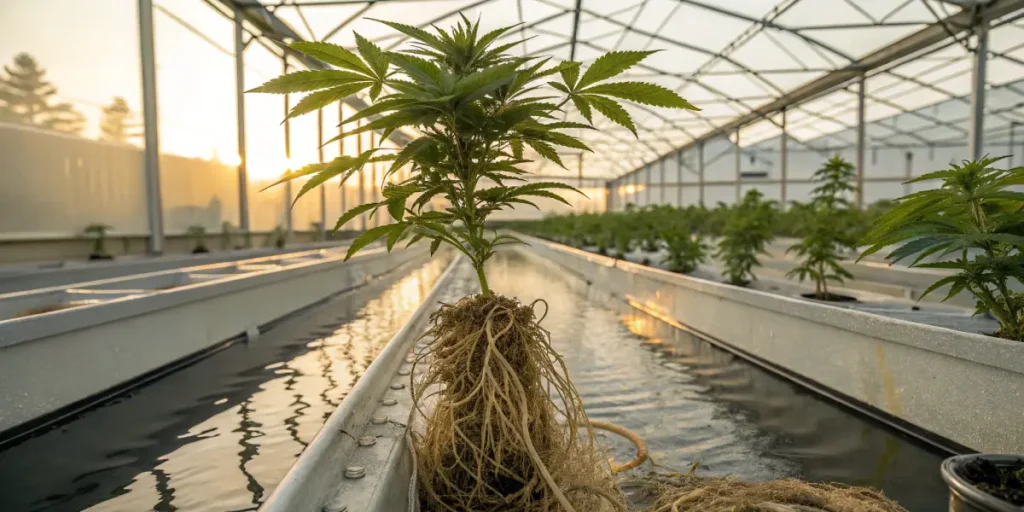
- Structural Plasticity: Roots in space tend to grow in “multi-directional fans” rather than deep anchors. This requires specialized “root zones” in space-harvesters to ensure the plant doesn’t drown in floating water pockets.
- Genetic Resilience: Strains with compact morphology and high stability, such as Northern Lights or Critical Mass, are the primary candidates for these environments, as they maintain structural integrity even without the “weight” of Earth’s atmosphere.
Cosmic Radiation as a Genetic Catalyst
The vacuum of space acts as a high-speed laboratory for Mutagenesis. Outside Earth’s protection, cosmic rays strike the DNA of the seeds, potentially causing:
- Enhanced Resilience: Mutations that allow the plant to better withstand extreme UV exposure.
- Chemical Shifts: Changes in the production of secondary metabolites (cannabinoids and terpenes).
- Adaptive Breeding: Identifying these mutations allows scientists to “back-breed” space-hardy varieties specifically designed for the high-radiation environment of the Martian surface.
Why Cannabis for Mars? The Swiss Army Knife of Crops
In space exploration, every kilogram of cargo is precious. A crop must provide more than just nutrition to be viable. Cannabis is a “Strategic Asset” because of its multifunctionality, positioning it as a key element in the Future of Off-World Agriculture:
| Application | Benefit for Mars Colonies |
| Atmospheric Scrubbing | High-efficiency CO₂ to O₂ conversion via rapid photosynthesis. |
| Phytoremediation | Ability to detoxify Martian regolith by absorbing perchlorates and heavy metals. |
| Industrial Raw Materials | Source of fast-growing fibers for textiles, bioplastics, and construction. |
| Pharmacological Support | On-site production of CBD and THC to manage astronaut stress, pain, and sleep cycles. |
| Psychological Wellbeing | Interaction with greenery and natural scents is proven to reduce “confinement stress.” |
From Orbit to Earth: The “Spin-off” Benefits
Space research is never just about space. The techniques developed for the Martian Grow project have immediate applications on Earth:
- Climate Change Adaptation: Creating crops that thrive with minimal water and extreme UV levels helps stabilize food security in desertifying regions.
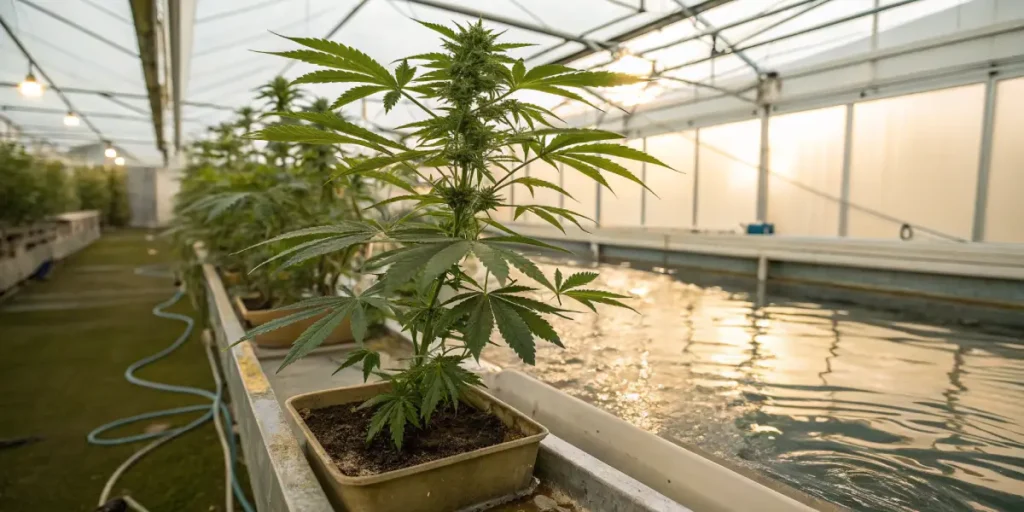
- Indoor Agriculture 2.0: Understanding orbitropic growth (light-guided growth) improves the efficiency of vertical farms and high-tech indoor facilities.
- Hyper-Resilient Strains: Genetic insights from radiation exposure help breeders create plants that are naturally more resistant to pests and pathogens.
FAQs about Future of Off-World Agriculture
Did the mission fail completely?
Scientifically, no. The mission validated the launch and orbital phase. In space exploration, “failed” recoveries are iterative steps. Plans for a second mission with improved “splashdown” protocols are already in development.
Can you grow cannabis in Martian soil today?
Not directly. Martian soil (regolith) is toxic and lacks organic nutrients. However, cannabis’s role in phytoremediation makes it a primary candidate for “cleaning” the soil before food crops (like lettuce or potatoes) can be planted.
What is the “Martian Grow” timeline?
Current research focuses on unmanned orbital tests. The goal is to have a verified “Space-Seed Catalog” by the time the first manned missions to Mars are scheduled, ensuring that the first colonists have a renewable source of medicine and materials.
Are these seeds different from regular ones?
Genetically, they start the same. The experiment is designed to see how the environment of space rewrites their biological expression. Strains like CBD Strawberry are often used in these tests because their stable chemical ratios provide a clear “baseline” for measuring changes.