How to Grow Cindy 99 Regular Strain

Quick Summary: To grow Cindy 99 Regular strain successfully, provide a warm environment with 45-55% humidity. This sativa-dominant legend flowers in just 7-9 weeks. Since these are regular seeds, identify and remove males early to ensure a heavy harvest of potent, pineapple-scented sinsemilla buds.
Mastering the Legend: Grow Cindy 99 Regular Strain
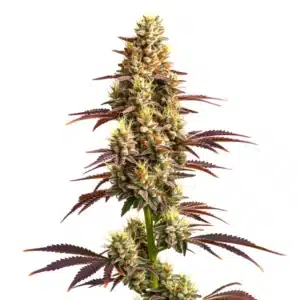
The Cinderella 99 Regular strain, affectionately known as C99, is often called the “Holy Grail” of cannabis. This reputation comes from its ability to deliver a soaring, euphoric sativa high while growing with the speed and structure of an indica. To grow Cindy 99 Regular strain effectively, you must understand its unique biological needs. Originating from Jack Herer genetics, C99 is a vigorous feeder that thrives when its metabolic processes are pushed to the limit under optimized light and CO2 levels.
Recommended Strains
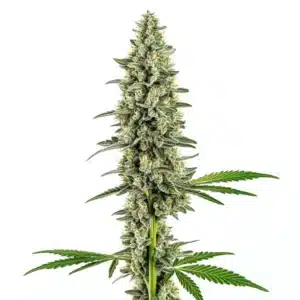
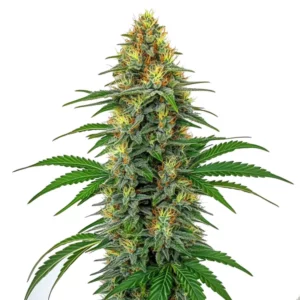
Cindy 99 Regular

|
THC | 20% - 22% (Medium) |

|
Type | Regular |

|
Yield | High |

|
Phenotype | 30% Indica / 70% Sativa |
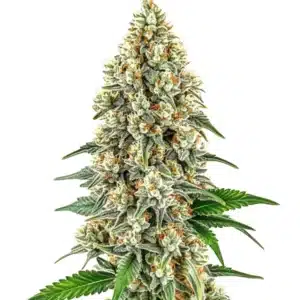
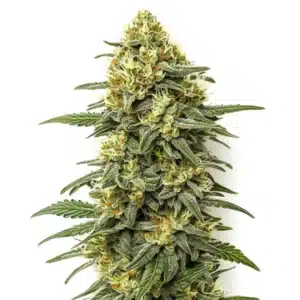
Cinderella 99
|
|
THC | 13% - 17% (Medium) |
|
|
Type | Feminized |
|
|
Yield | High |
|
|
Phenotype | 20% Indica / 80% Sativa |
Biologically, C99 is a high-transpiration plant. This means it moves water and nutrients quickly through its vascular system. During the vegetative stage, it requires a robust Nitrogen-rich (N) diet to build the “solar panels” (fan leaves) needed for energy production. Because it is a sativa-dominant variety, it possesses an extensive sprawling root system. Providing at least a 3-gallon (11L) container is essential to prevent the plant from becoming rootbound, which can stunt growth and cause the internodes to stretch thin.
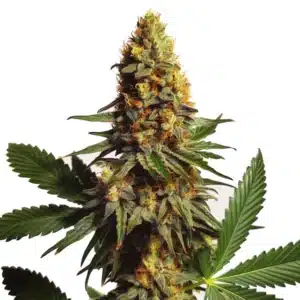
When you cultivate the Cindy 99 Regular weed strain, you are working with nature in its purest form. Regular seeds produce both males and females in roughly a 50/50 ratio. For most growers, the goal is “sinsemilla”, seedless flower. You must monitor the nodes between the stipule and emerging branches around the fourth week of growth. Male pre-flowers appear as small, spade-shaped nubs, while females produce a light green calyx with two fuzzy white hairs called pistils. Removing males early prevents pollination, allowing the females to focus 100% of their energy on THC and terpene production.
Promos & Deals
Advanced Care and Environmental Control
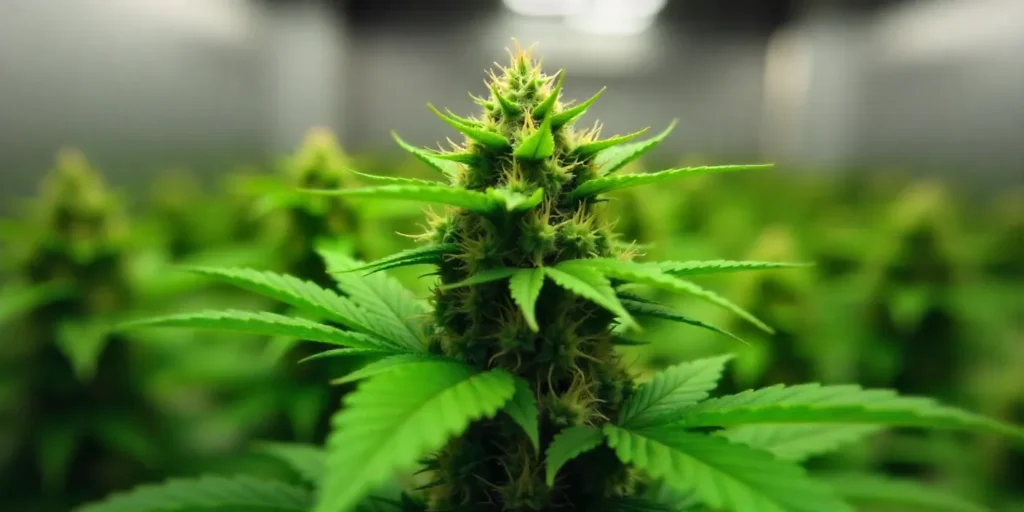
Success with the Cinderella 99 Regular strain depends on strict environmental parameters. This strain is particularly sensitive to light intensity and spectrum. During vegetation, a “Blue” heavy light spectrum (around 5000K-6500K) keeps the plant squat and bushy. As you transition to flowering with a 12/12 photoperiod, shifting to a “Red” heavy spectrum (2000K-3000K) triggers a massive hormonal shift. This encourages the development of dense clusters of calyxes, also known as colas.
Nutrient management is critical during the “stretch” phase, the first two weeks of flowering. Switch to a “Super Bloom” fertilizer with a high Phosphorus (P) and Potassium (K) ratio (such as NPK 10-30-20). This supports the rapid cell division occurring in the floral sites. Be careful not to overwater; soggy soil cuts off oxygen to the roots, which can lead to Pythium (root rot). C99 prefers an aerated medium with a pH between 6.0 and 6.5 for soil, or 5.5 to 6.0 for hydroponic setups.
| Technical Feature | Cindy 99 Regular | Jack Herer | Power Plant |
|---|---|---|---|
| Flowering Time | 50-65 Days (Fast) | 70-80 Days (Average) | 55-65 Days (Fast) |
| Primary Terpenes | Limonene, Pinene | Terpinolene, Myrcene | Myrcene, Caryophyllene |
| Growth Profile | Compact/Bushy | Tall/Spindly | Tall/Large Colas |
| Humidity Tolerance | Low (Mold Risk) | Moderate | Moderate |
| High Intensity PAR | Very Responsive | Moderate | High Demand |
| Cannabinoid Profile | High THC / Low CBD | High THC / Med CBD | High THC / Low CBD |
Professional Pest and Disease Protocol
To grow Cindy 99 Regular weed strain successfully, you must have a strict defensive protocol. Because C99 produces extremely dense buds, it is susceptible to Botrytis (gray mold) if the air is stagnant. Ensure your grow room has a high-quality circulation fan. Air should be moving at all times to prevent moisture from settling between the tight calyxes. If humidity exceeds 60% during late flower, the risk of losing your crop to bud rot increases exponentially.
Against pests like Spider Mites or Whiteflies, use organic preventatives early. Applications of Neem oil or pyrethrum-based sprays should be done only during the vegetative stage. Never spray anything on the buds, as this will degrade the resin glands and affect the flavor. If you spot an infestation during flowering, your best bet is introducing predatory insects like Phytoseiulus persimilis mites, which will hunt the pests without damaging your flowers.
Expert Cultivation Tips
- The “FIM” Technique: For Cindy 99, use FIM pruning (removing 90% of the top growth tip) to create multiple main colas and increase yield by 20%.
- Stem Scraping: When taking clones, lightly scrape the outer cambium layer of the stem. This exposes the cells that initiate root growth, cutting rooting time by 3-5 days.
- Ice Water Flush: During the final 48 hours before harvest, use ice-cold water for the final flush. This stress can trigger the plant to produce a “last stand” layer of protective resin.
- Bending for PAR: Use Low-Stress Training (LST) to bend the main stem horizontally. This exposes the lower nodes to higher PAR values, turning popcorn buds into premium tops.
- Dark Room Trick: Give your C99 plants 24-48 hours of total darkness right before the chop. Many experts believe this increases terpene accumulation.

Cindy 99 Regular Strain FAQs
What is the best light cycle for Cindy 99 Regular?
For the vegetative stage, use an 18/6 light cycle to promote rapid foliage and root development. To grow Cindy 99 Regular strain into its flowering phase, you must switch to a strict 12/12 cycle. Total darkness is required during the “off” hours; even a small light leak can stress the plant and increase the risk of hermaphrodism.
How do I identify male Cindy 99 plants?
Check the branch internodes after about four weeks of growth. Males develop small, ball-like pollen sacks. Females will show a “V” shaped pair of white fuzzy pistils. Since the cindy 99 Regular weed strain is a regular seed, separating these early is the key to producing high-quality sinsemilla buds with maximum potency.
Why does my Cindy 99 smell like pineapple?
The tropical aroma is due to high concentrations of the terpene Limonene and Myrcene. These chemicals interact with THC through the “Entourage Effect,” focusing the high into a more energetic and creative experience. Proper curing for 4 weeks is necessary to allow these complex aromas to fully develop after the chlorophyll breaks down.
Is the Cindy 99 Regular weed strain difficult to manicure?
No, C99 is known for a very high calyx-to-leaf ratio. This means the buds are thick with resin and have very few “fan leaves” growing inside them. Manicuring a pound by hand usually takes 4-6 hours. It is easiest to trim immediately after harvest while the leaves are still supple and soft.
Can I rejuvenate a Cindy 99 plant after harvest?
Yes. By leaving a few lower branches and some foliage on the plant after harvest, you can put it back under an 18/6 light cycle. Give it high-nitrogen fertilizer, and within 4-6 weeks, the plant will revert to vegetative growth, allowing you to take a second round of clones from a proven winner.