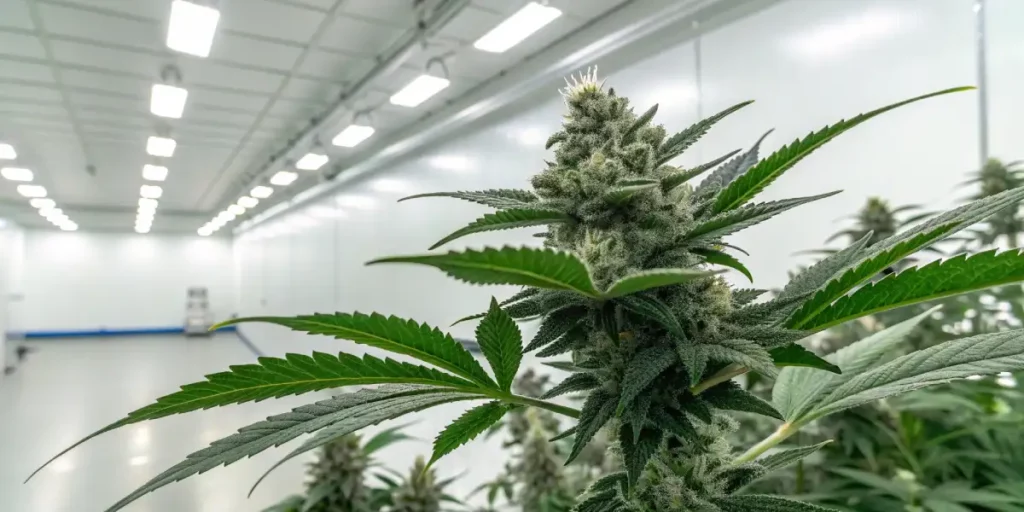
What are Cloudy Trichomes on Cannabis?

Quick Summary: Cloudy trichomes signal the biological peak of THC production. When these resin glands turn from clear to milky white, the plant has reached its maximum psychoactive potency. Harvesting at this stage ensures a heady, cerebral effect before the THC begins degrading into sedative CBN.
The Science of Cloudy Trichomes
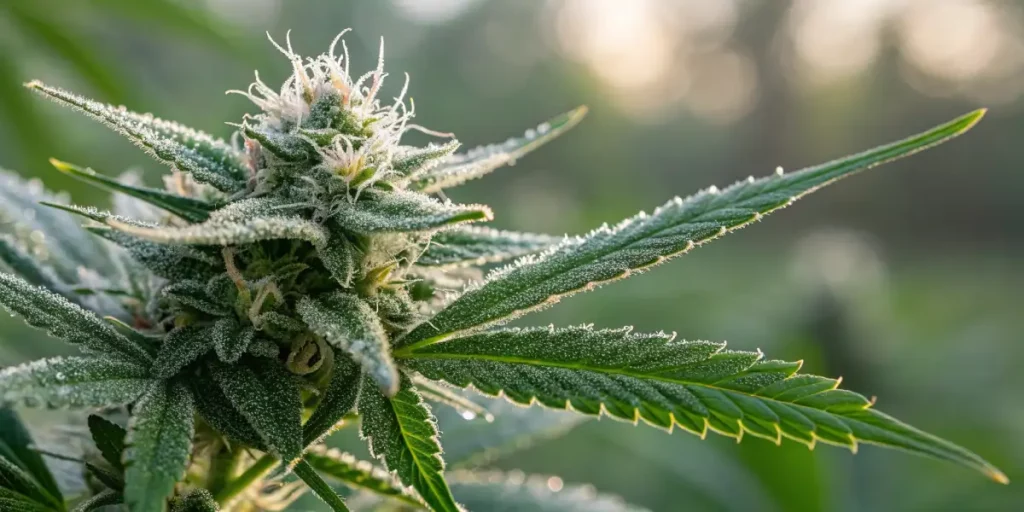
Cloudy trichomes represent the “gold standard” for cannabis potency. These tiny, mushroom-shaped glands, known as capitate-stalked trichomes, act as the plant’s chemical laboratories. Inside the spherical head, the plant synthesizes precursors like CBGA into THCA and various terpenes. When the head becomes milky or “cloudy,” it indicates that the resin is at its densest concentration of THC, providing the most intense psychoactive experience.
Recommended Strains
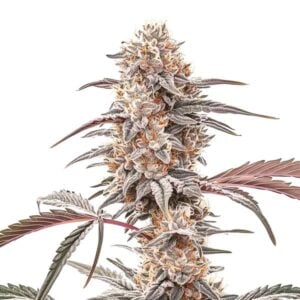


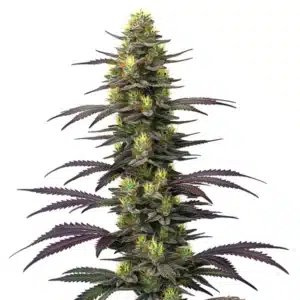
Biologically, the transition to a cloudy state occurs as the secretory cells within the trichome head reach full maturity. This fogginess is actually a physical change in the resin’s opacity as it becomes saturated with secondary metabolites. At this moment, the terpenes, aromatic compounds like Myrcene, Limonene, and Caryophyllene are also at their most volatile and fragrant, creating the complex “entourage effect” that defines high-quality flower.
Promos & Deals

Cloudy Trichomes vs Clear: Identifying the Shift
Differentiating between cloudy trichomes vs clear is the most important skill for a grower. Clear trichomes are immature and contain very little THCA. They look like glass or water droplets. If you harvest now, the high will be weak and may cause headaches. As the plant enters the final weeks of flowering, you will notice a transition where the “glassy” look turns into a “plastic” or “milky” appearance.
This fogginess is the signal that the plant is redirecting its energy from floral development to resin preservation. To see this, you must use at least 30x magnification. A 60x jeweler’s loupe or a digital microscope is better. Always check the trichomes on the actual bracts (the small leaves that form the bud) rather than the “sugar leaves,” as leaf trichomes often turn cloudy weeks before the actual buds are ready.
Technical Comparison of Cannabis Trichome Stages
| Feature | Clear Stage | Cloudy Stage | Amber Stage |
|---|---|---|---|
| THC Concentration | Low / Immature | Maximum Peak | Declining |
| CBN Content | None | Trace Amounts | High (Sedative) |
| Terpene Profile | Developing | Full & Vibrant | Oxidizing / Pungent |
| Psychoactive Effect | Weak / Racey | Energetic / Cerebral | Sedative / Couch-lock |
| Visual Appearance | Transparent Glass | Milky / Foggy | Golden / Brown |
| Harvest Status | Too Early | Ideal for High THC | Ideal for Sleep |
How to Achieve Ready Cloudy Trichomes
Getting your plants to the “ready” stage requires strict environmental control. During the final weeks of flowering, reducing the relative humidity (RH) to 40% can stimulate the plant to produce more resin as a defense mechanism against dehydration. High-intensity light with a full PAR spectrum ensures that the energy needed for THC synthesis is available. However, avoid excessive heat (above 80°F), as heat can volatize terpenes and degrade THC before it even reaches the cloudy stage.
Flashy “bloom boosters” high in Phosphorus (P) and Potassium (K) help the buds swell, but the actual maturation of trichomes is often a waiting game. Monitoring the “harvest window”, usually a 5 to 7-day period, is essential. Once about 90% of the trichomes are cloudy and the first few amber heads appear, you have hit the peak window for a potent, heady harvest.
Professional Tips for Resin Preservation
- Handle with Care: Trichome heads are attached by a fragile stalk. Touching buds with bare hands can rupture these glands, causing the oils to oxidize and lose potency.
- Morning Harvest: Harvest your plants just before the lights turn on. THC levels are at their highest after a period of darkness, as the plant has had time to synthesize compounds without light-induced degradation.
- Darkness Pre-Harvest: Some pros leave plants in total darkness for 24-48 hours before cutting to encourage a final “resin dump” and terpene accumulation.
- The 30% Rule: If you want a balanced high, wait until 70% are cloudy and 30% are amber. This provides the “couch-lock” body effect alongside the THC punch.
- Temperature Control: Keep your drying room at 60°F and 60% humidity. Fast drying at high temps will ruin the perfect cloudy trichomes you worked so hard to grow.
FAQs about Cannabis Trichomes Stages
What are the main cannabis trichomes stages?
Cannabis trichomes go through three primary stages: clear (immature), cloudy (peak potency), and amber (degraded/sedative). Some growers also recognize a “bulbous” stage where the head is still forming. Monitoring these stages is the only 100% accurate way to determine when a plant is ready to be cut down for harvest.
Why do my trichomes look cloudy but my pistils are still white?
This is a common issue with some Sativa-dominant hybrids. Pistil color is a rough indicator, but trichome color is the biological reality. If the resin is cloudy, the THC is there. However, if the pistils are still mostly white, the buds may still be gaining weight. Most growers wait for at least 60-70% of pistils to darken before trusting the trichome count.
Can environment affect the cloudy trichomes vs clear transition?
Yes, stress can stall maturation. Low light levels (low PPFD) will keep trichomes clear for longer because the plant lacks the energy to produce resin. Conversely, UV-B supplementation can speed up the process and increase resin density, as the plant produces trichomes to protect itself from “sunburn” or radiation damage.
Does a 12/12 light cycle affect autoflowers’ trichomes?
You should never run autoflowers on a 12/12 cycle. Autoflowers do not rely on light changes to flower. Keeping them on an 18/6 or 20/4 schedule provides more energy for the plant to push those trichomes from clear to cloudy. Reducing light to 12/12 on an autoflower will only result in smaller buds and less resin production.