
Durban Poison

|
THC | 15% - 25% (High) |

|
Lineage | Durban x Unknown Indica |

|
Type | Feminized |

|
Climate | Tropical |

|
Harvest Month | October |

|
Height | 6.56 ft | 2 m |

|
Yield | High |

|
Yield Indoor | 1.47 - 1.64 oz/ft² | 450 - 500 g/m² |

|
Yield Outdoor | 21.16 oz/plant | 600 g/plant |

|
Flowering Time | 8 - 10 weeks |

|
Phenotype | 10% Indica / 90% Sativa |

|
For Beginners | Yes |

|
Medical | Anxiety, Depression, Migraines |

|
Effects | Creative, Energetic, Euphoric |

|
Flavors | Earthy, Pine, Sweet |

|
Terpenes | Humulene, Alpha-Pinene, Caryophyllene, Myrcene, Linalool, Terpinolene |
Choose seed quantity
Learn more
Lineage Durban Poison Strain
Durban Poison is a near-pure sativa known for its rapid flowering time of 8 to 10 weeks. With a THC of 15% to 25%, it delivers an energetic, uplifting high, and it thrives in warm climates both indoors and outdoors, a classic sativa with robust genetics.
Durban Poison is a legendary sativa-dominant landrace (90% Sativa / 10% Indica) originating from the South African port city of Durban. This world-renowned strain is celebrated for its oversized resin glands and an aromatic profile of earth, pine and a sweet, anise-like finish.
Origin
Durban Poison, a classic sativa, was found in the 1970s by an American grower intrigued by its short flowering period. Durban Poison seeds result from the cross between a Durban and an unknown indica. Its fast finish made it highly desirable, and the grower worked it into feminized seeds. The genetics were later refined by some of Amsterdam’s first seed banks to shorten the flowering times of sativas, alongside strains like CBD Supreme Durban.
The Durban Poison seeds developed in America keep the strain’s robust genetics while ensuring a shorter, more manageable flowering period, much like Carmen x Durban Poison and Animal Cookies. Optimized for both indoor and outdoor cultivation, they are a favorite among American growers, and the strain’s resilience and potent effects keep it popular and successful in competitions.
Durban Poison Strain Sativa or Indica?
When exploring the Durban Poison strain, one often wonders about its classification as Sativa or Indica. Originating from South Africa, Durban Poison is sativa-dominant (90% Sativa / 10% Indica), renowned for its energetic, uplifting effects. Its landrace genetics make for a clear-headed high that sparks creativity, and its sativa dominance shows in its tall stature and narrow leaves, a favorite for daytime motivation and focus.
For growers, Durban Poison seeds offer a stable genetic profile. Feminization improves yield predictability and keeps the strain’s sativa attributes, an ideal choice for anyone after its uplifting essence.
Durban Poison Effects
Durban Poison delivers a dynamic experience coveted by sativa lovers. With a THC of 15% to 25%, it is celebrated for its euphoric, uplifting effects. Users often report a surge of energy and heightened creativity, a popular choice for daytime use.
Many turn to its mood-boosting character to help with anxiety, low mood and migraines, with a mental clarity that supports productivity. Its sativa lineage brings a cerebral high that encourages social interaction and creative work, a spirited, focused experience. Effects vary from person to person.
Germinating Durban Poison Cannabis Seeds
It is important to germinate your Durban Poison Seed carefully if you want to have a healthy harvest from day one. Although there are several methods to germinate our Feminized cannabis seeds, at Blimburn Seeds, we recommend our customers to follow our easy and simple technique.
Before removing our Durban Poison seeds from their packaging, remember that cannabis seeds are alive and delicate. Bacteria can easily infect seeds and ruin the germination process, so be sure to wear gloves.
Set Up Your Germination Station: Begin by moistening two paper towels with room temperature water. Lay one paper towel on a plate and spread the seeds on it, spacing them about 2 cm apart. Place the second paper towel on top of the seeds, and make sure to remove any excess water from the plate. Cover the setup with another opaque plate and store it in a warm, dark location.
Monitoring: Make sure paper towels are still moist by checking every 4-6 hours and spraying room temperature water. Typically, germination should occur within 24 to 120 hours. Once the seeds have sprouted tap roots, plant them with the roots facing down and cover with about 2 cm of soil. Remember to water the soil regularly by spraying to keep it moist. It may take up to two weeks for the plants to start growing.
Ideal Conditions: Maintain a consistent temperature between 70 and 80 ℉ (21 to 26 ℃) in the germination area to ensure seed viability. Use purified, room-temperature water with a pH between 6.0 and 6.5. Keep the seeds in complete darkness, with light exposure of less than 1 minute only during essential checks. Once the seeds have become seedlings, handle them with care to protect the delicate taproot.
Record Keeping: To qualify for the three month germination guarantee, it is necessary to follow all the steps outlined in our germination guidelines. Please do not use alternative germination methods, such as using a water bottle or planting directly into soil. Document the germination process through photography or video, as it will be requested when assessing claims for replacement products.
Durban Poison Flowering Time
Durban Poison is one of the fastest-flowering sativas, with an indoor flowering period of 8 to 10 weeks. Outdoors it thrives in warm, sunny climates, with harvest typically between late September and early October. This rapid maturation is rare for a sativa-dominant variety, letting growers in shorter-summer regions harvest before the first frosts.
How to Grow Durban Poison?
For optimal indoor cultivation, provide ample vertical space, as this strain tends to stretch. The ScrOG (Screen of Green) method is highly recommended to manage height and ensure a uniform canopy. Keep daytime temperatures between 68 and 80 ℉ (20 to 27 ℃), with night temperatures 7 to 9 ℉ cooler than the day.
Humidity management is crucial: keep relative humidity (RH) at 55 to 60% during the vegetative phase, reduce it to 40% during flowering and 30% by harvest to prevent moisture issues in the dense buds.
Outdoors, healthy plants produce approximately 21.16 oz (600 g) per plant by harvest in October.
Indoors, the variety completes flowering in 8 to 10 weeks, yielding 1.47 to 1.64 oz/ft² (450 to 500 g/m²).
Optimal Climate for Cultivating
This sun-loving variety thrives in warm, tropical and subtropical climates with hot summers. For optimal growth, keep temperatures between 70 and 80 ℉ (21 to 27 ℃). It is hardy, but prefers moderate to low humidity during flowering to protect its resinous buds.
In the United States, states like California, Arizona and Nevada offer suitable conditions, though controlled indoor environments are often preferred in extremely arid or humid regions to preserve the terpene profile. Proper ventilation and well-draining soil are essential to maximize Durban Poison’s potential.
What does the Durban Poison Smell Like?
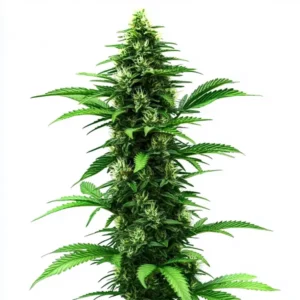
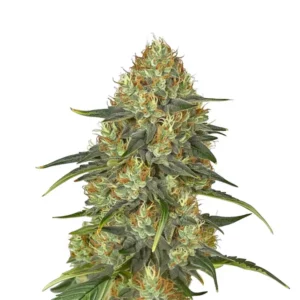
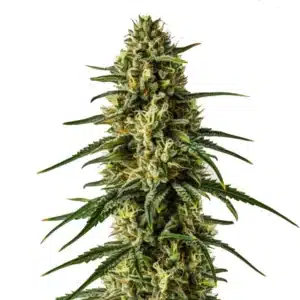
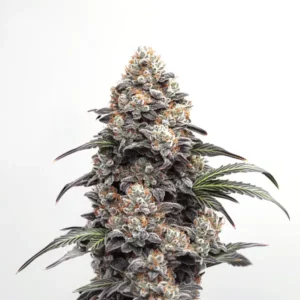
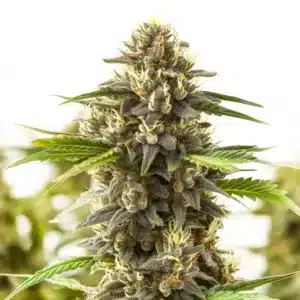
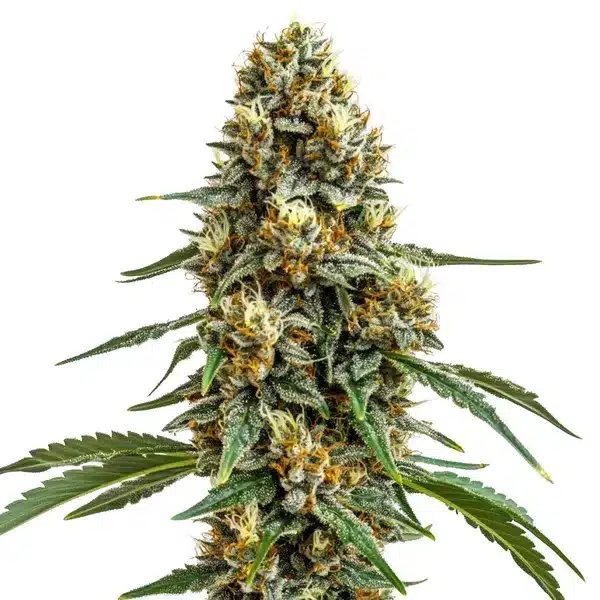
The buds are generously coated in resinous trichomes with a brilliant crystalline sheen. The aroma is a sharp, sophisticated blend of pungent pine and earthy notes with a signature sweet finish.
It produces a smooth smoke that delivers an immediate sense of energy, and thanks to its heavy resin production, it is a world-class candidate for high-quality concentrates and extracts that preserve its invigorating essence.
Experiencing the Durban Poison Strain
Durban Poison is widely regarded as one of the most energetic varieties in cannabis. With its medium-to-high THC, it brings a state of happiness and mental clarity. Unlike most hybrids, it is perfect for daytime use, providing the motivation and focus for social interaction or creative projects.
The plant develops a classic sativa structure, with a sturdy main stem and long satellite branches. It is best enjoyed when you need a surge of energy to start the day or a creative spark in the afternoon, a stable, productive harvest of this legendary South African landrace.
If you like this strain, you might want to try Durban Poison Auto.
Durban Poison Terpenes
Durban Poison pairs an earthy, pine and sweet aroma with a creative, energetic and euphoric effect, built on a profile of six terpenes. Here is what each one brings.
Alpha-Pinene brings the crisp, pungent pine note at the front of the aroma and is tied to alertness and mental clarity, the terpene behind the strain’s clear-headed, focused energy.
Terpinolene adds a fresh, herbal brightness associated with an uplifting, clear feel, reinforcing the creative, energizing side and helping lift low mood.
Caryophyllene contributes a warm, peppery spice and is the only terpene known to bind the body’s CB2 receptors. Widely associated with easing tension, it supports emotional balance and the strain’s use with migraines.
Humulene adds an earthy, woody warmth that deepens the aroma and is traditionally tied to soothing physical tension and inflammation, a fit for its use with headaches.
Myrcene forms a light, musky-earthy base that keeps the energetic high grounded rather than racy.
Linalool rounds out the profile with a soft floral note tied to calm, which takes the edge off the stimulation and helps keep an active mind composed. Together, these six give Durban Poison an earthy, piney, sweet aroma with a creative, energetic and euphoric effect.
Remember you can choose feminized seeds, autoflower seeds, fast flowering seeds, cbd seeds or regular seeds, we send them in their original packaging directly to your home. Fast and discreet shipping with germination guarantee.
Flavors

Earthy

Pine

Sweet
Effects

Creative

Energetic

Euphoric
Medical

Anxiety

Depression

Migraines
Reviews
Hippo High and Ghost Train Power all popped. Durbin has been hard to find. Might take a chance on BB

Perfect for beginners, everything you need in one box.
Great quality and clear instructions. My plants look perfect.
The yield was massive, and the quality of the buds was outstanding!
Write a review
No diaries found.
How To Grow Durban Poison
Read NowManaging its height is the key to a successful indoor harvest. Topping the plant early and multiple times during the vegetative stage is the first and most crucial step to break its strong apical dominance and encourage a bushier structure. From there, using a ScrOG (Screen of Green) net is the best method to tame its long, flexible branches, creating a flat canopy that maximizes your light efficiency and leads to massive yields.
The main differences are control and potential yield. This photoperiod version gives you complete control over the vegetative stage, allowing you to grow a much larger plant for significantly higher yields. It can also be cloned to preserve a favorite plant. The Auto version, on the other hand, is faster from seed to harvest and flowers automatically, making it a simpler choice for beginners, small spaces, or for achieving multiple outdoor harvests in a single season.
Customer Grows
You may also like