Why Are My Cannabis Leaves Turning Yellow?

Cannabis leaves turning yellow is most often caused by a nitrogen deficiency, overwatering or underwatering, or a pH imbalance that locks out nutrients, though pests, light stress and natural late-flower fading also play a role. The clue is where it starts: yellowing on the lower, older leaves usually points to a mobile-nutrient issue like nitrogen, while yellowing on new top growth or between veins points to pH lockout or other deficiencies. Diagnose by the pattern, check your watering and root-zone pH first, and most yellowing is fixable once the cause is found.
Common Causes of Yellow Leaves (and How to Tell)
Use this to match the pattern to the cause:
Recommended Strains

Acapulco Gold

|
THC | 15% - 19% (Medium) |

|
Type | Feminized |

|
Yield | High |

|
Phenotype | 30% Indica / 70% Sativa |

Acapulco Gold Autoflower
|
|
THC | 20% - 24% (High) |
|
|
Type | Autoflowering |
|
|
Yield | Medium |
|
|
Phenotype | 30% Indica / 70% Sativa |
| Cause | What you see | Fix |
|---|---|---|
| Nitrogen deficiency | Older/lower leaves yellow first, whole leaf | Feed nitrogen; check it is not natural late-flower fade |
| Overwatering | Droopy, yellowing, damp soil | Let soil dry; improve drainage |
| Underwatering | Dry, crispy, yellowing | Water consistently |
| pH lockout | Yellowing despite feeding | Correct root-zone pH (soil ~6.0-6.5) |
| Magnesium/iron deficiency | Interveinal yellowing (green veins) | Cal-mag / correct pH |
Promos & Deals
Nutrient Deficiencies Behind Yellowing
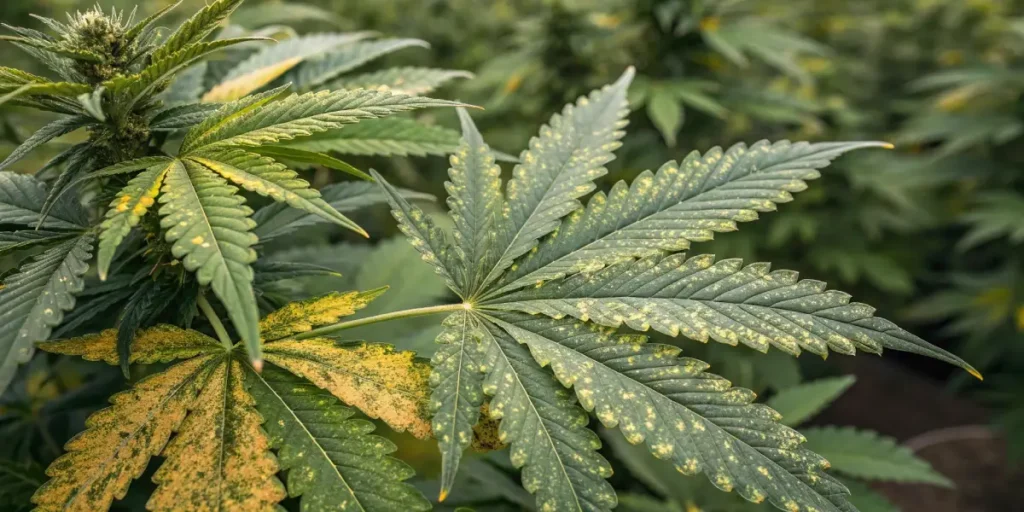
Nutrients are the most common culprit. A nitrogen deficiency is classic: because nitrogen is mobile, the plant pulls it from old growth to feed new shoots, so the lower, older leaves yellow and fade first. Magnesium and iron deficiencies look different, showing interveinal yellowing where the leaf goes yellow but the veins stay green, often on different parts of the plant depending on mobility.
The key is not to simply dump more nutrients in: many ‘deficiencies’ are actually lockout caused by wrong pH, so the plant cannot absorb what is already there. Confirm the pattern, check pH, then correct feeding.
Watering Problems
Watering is the other big cause, and it cuts both ways. Overwatering is the more common mistake: soggy, airless soil suffocates roots so they cannot take up nutrients, and the leaves respond by drooping and yellowing, confusingly mimicking a nutrient deficiency. The fix is to let the medium dry out between waterings and improve drainage, not to add more nutrients. Underwatering does the opposite, leaving leaves dry, crispy and yellowing as the plant is starved of moisture.
The simple test is the soil: lift the pot or feel a few inches down, and water only when it is appropriately dry. Consistent, correct watering prevents a surprising amount of yellowing.
pH Lockout: The Hidden Cause
If your leaves keep yellowing even though you are feeding well, pH is the prime suspect. Cannabis can only absorb nutrients within a specific root-zone pH range (roughly 6.0 to 6.5 in soil, a bit lower in hydro), and when pH drifts out of range, certain nutrients become ‘locked out’ and unavailable no matter how much you add. The result looks exactly like a deficiency, which leads growers to overfeed and make things worse.
Always check and correct pH before adding more nutrients. A cheap pH pen for your water and runoff is one of the most valuable tools for preventing yellow leaves. See our guide on the role of nutrients.
Pests, Disease and Natural Yellowing
Not all yellowing is nutrients or water. Pests like spider mites cause stippled, speckled yellowing, while diseases such as leaf septoria produce yellow patches with spots, which is sometimes mistaken for calcium deficiency. And some yellowing is completely normal: in late flowering, plants naturally pull nutrients from fading fan leaves, so yellowing in the final weeks is expected, not a problem. The skill is telling normal late fade from a real issue.
If it is early in the grow, or spreading fast, investigate; if it is the last couple of weeks before harvest, it is usually fine. To tell disease from deficiency, see leaf septoria vs calcium deficiency.
How to Fix Yellowing Leaves: Step by Step
Work through it in order rather than guessing. First, check watering, let soggy soil dry or rehydrate dry soil, since watering issues are the most common and easiest to fix. Second, test and correct root-zone pH, because lockout mimics deficiency. Third, only then adjust feeding: add nitrogen for lower-leaf yellowing or cal-mag for interveinal yellowing.
Rule out pests and disease by inspecting the leaves closely. And remember to discount natural late-flower fade. Make one change at a time and give the plant several days to respond, new growth recovering is the sign you fixed the real cause.
The Bottom Line on Yellow Cannabis Leaves
Yellowing leaves are the plant asking for attention, and the pattern tells you why: lower-leaf yellowing usually means nitrogen or a watering issue, interveinal yellowing points to magnesium or iron, and persistent yellowing despite feeding means pH lockout. Rule out pests, disease and normal late-flower fade too.
Check watering and pH before reaching for more nutrients, fix one thing at a time, and watch the new growth. Caught early and diagnosed correctly, most cannabis leaf yellowing is straightforward to reverse.
FAQs
Why are the lower leaves turning yellow first?
Lower, older leaves yellowing first usually means a nitrogen deficiency: nitrogen is mobile, so the plant moves it from old growth to new shoots. Overwatering can look similar. Check watering and pH, then add nitrogen if needed. Note that in late flowering, lower-leaf yellowing is normal as the plant finishes.
Can overwatering turn cannabis leaves yellow?
Yes, it is one of the most common causes. Soggy soil suffocates the roots so they cannot absorb nutrients, and the leaves droop and yellow, mimicking a deficiency. The fix is to let the medium dry between waterings and improve drainage, not to add nutrients. Check soil moisture before watering again.
How do I fix yellowing leaves?
Work in order: check and correct watering first, then test and fix root-zone pH (soil ~6.0-6.5), then adjust feeding, nitrogen for lower-leaf yellowing, cal-mag for interveinal. Rule out pests and disease, and discount normal late-flower fade. Change one thing at a time and watch new growth recover.
Why are my seedlings turning yellow?
Young seedlings yellow most often from overwatering, too-strong nutrients (they need very little early on), or a pH problem, rather than lack of feeding. Ease off water and nutrients, ensure gentle light and correct pH, and let them establish. Seedlings are delicate, so a light touch usually resolves early yellowing.