When to Increase Light Intensity in Indoor Flowering

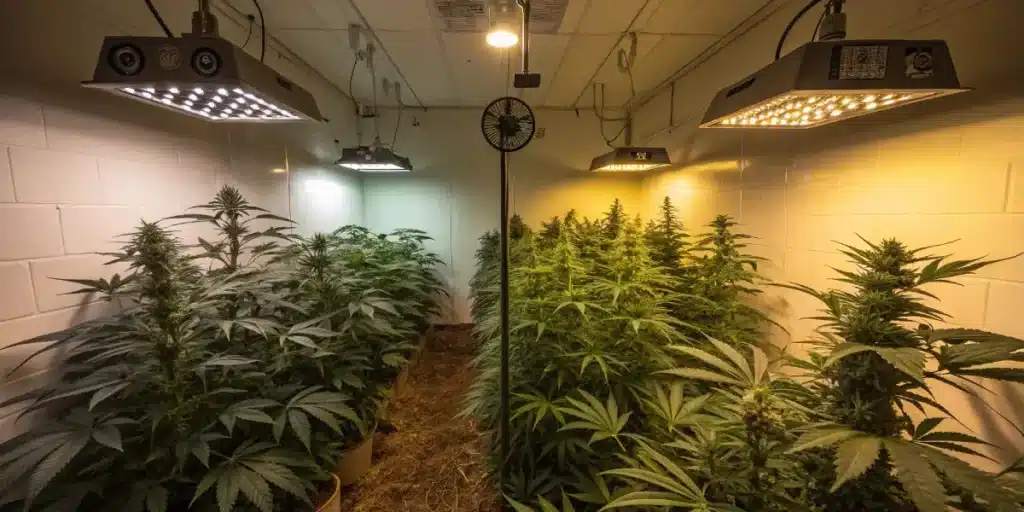
Optimal Light Adjustment: Gradually increasing light intensity during indoor flowering is crucial, beginning around the third week. This period marks the transition from the initial stretch phase to the main bulking stage. By carefully adjusting light levels, you can prevent plant stress and promote robust bud development, ensuring your cannabis plants reach their full potential.
Terpenes like Myrcene and Limonene not only influence aroma but also impact plant resilience. With a flowering time of 8 to 9 weeks, optimizing environmental conditions ensures maximum terpene retention and robust plant health. Proper light management is crucial, as it directly affects terpene synthesis and overall plant metabolism.
Recommended Strains

Fat Bastard

|
THC | 30% - 38% (High) |

|
Type | Feminized |

|
Yield | High |

|
Phenotype | 50% Indica / 50% Sativa |

Fat Bastard Auto
|
|
THC | 30% - 38% (High) |
|
|
Type | Autoflowering |
|
|
Yield | High |
|
|
Phenotype | 50% Indica / 50% Sativa |
Factors Influencing Light Intensity Needs
Strain Genetics
Strain genetics play a pivotal role in determining the light intensity requirements during the flowering stage. Indica-dominant strains often thrive under slightly lower light intensities compared to Sativa-dominant strains, which can handle more intense lighting. Indica strains typically require 600-800 µmol/m²/s, while Sativas can handle up to 1000 µmol/m²/s. This difference is due to their evolutionary adaptations; Sativas originate from equatorial regions with intense sunlight, while Indicas are from mountainous areas with less light intensity.
Monitoring your plants for signs of light stress, such as leaf curling or bleaching, is essential. Adjust the height of your lights to maintain optimal intensity without causing damage. Understanding these genetic requirements helps in fine-tuning the light setup to match the plant’s natural habitat, promoting healthier growth and better yield.
Growth Environment
The growth environment, including temperature, humidity, and CO₂ levels, significantly affects how cannabis plants utilize light. Maintaining temperatures between 68°F and 77°F (20°C – 25°C) and humidity levels of 40-50% during flowering ensures optimal photosynthesis and nutrient uptake. CO₂ enrichment can further enhance light utilization. By increasing CO₂ levels to 1200-1500 ppm, you can boost photosynthetic rates, allowing plants to thrive under higher light intensities.
However, be cautious not to exceed these environmental parameters, as excessive heat or humidity can lead to mold or nutrient lockout. Regularly check environmental conditions using digital monitors to ensure stability. The interplay between light and environmental factors is crucial for maximizing photosynthetic efficiency and plant growth.
Promos & Deals




How to Increase Light Intensity During Flowering
Progressive Lighting Adjustments
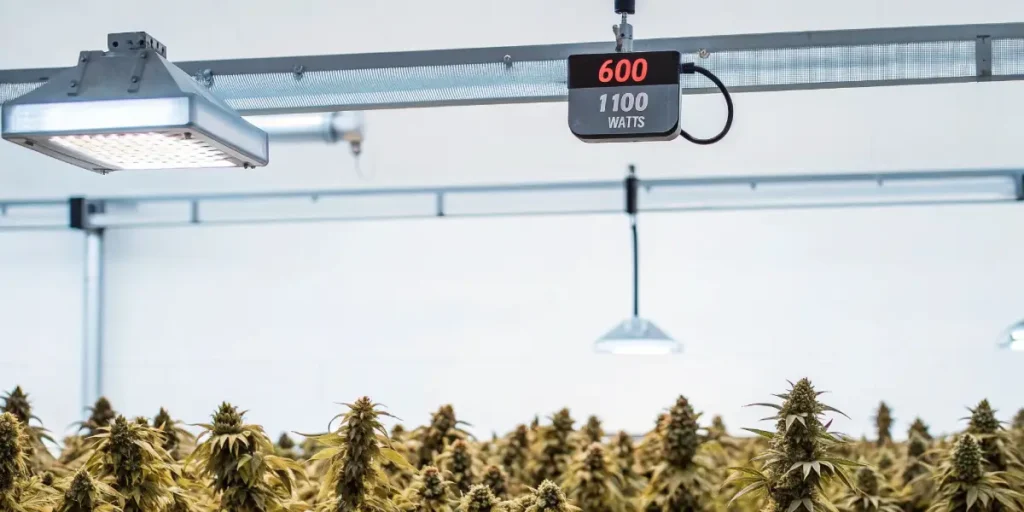
Gradually increasing light intensity is essential to prevent plant shock. Start with a baseline of 600 watts during the first two weeks of flowering, then increase to 800 watts by week three. During the peak flowering phase, typically between weeks 4 and 6, aim for light intensities of 900-1100 watts. This range supports maximum bud development and density, crucial for achieving high yields.
Avoid abrupt changes in light intensity, as this can lead to stunted growth or reduced bud quality. Use a PAR meter to measure light levels accurately and make informed adjustments. This methodical approach ensures that plants can adjust their photosynthetic machinery gradually, optimizing energy absorption and utilization.
Avoiding Plant Stress
Minimizing plant stress during light intensity adjustments is critical for healthy growth. Sudden increases in light can cause photoinhibition, where photosynthesis rates drop due to excess light energy. To avoid stress, increase light intensity in 10-15% increments weekly. This gradual approach allows plants to adjust their photosynthetic machinery, optimizing energy absorption and utilization.
Monitor plant responses closely, looking for signs of stress such as wilting or leaf discoloration. Adjust light levels accordingly to maintain plant health and maximize productivity. By understanding the plant’s biological responses, growers can ensure a stable environment conducive to growth.
| Feature | Kyles Skywalker Og | Jack Herer X Super Skunk | Mimosa Cake Auto |
|---|---|---|---|
| THC Content | 24-28% | 20-24% | 22-26% |
| Flowering Time | 8-9 weeks | 9-10 weeks | 7-8 weeks |
| Yield | 1.8-2.2 oz/ft² (550-670 g/m²) | 1.5-1.9 oz/ft² (450-580 g/m²) | 1.7-2.1 oz/ft² (520-640 g/m²) |
| Terpene Profile | Myrcene: 0.6-1.0% | Limonene: 0.5-0.9% | Caryophyllene: 0.4-0.8% |
| Resistance | High | Medium | High |
Optimal Light Intensity in Late Flowering
Dimming and Lowering Light Intensity
As flowering progresses into the final weeks, reducing light intensity mimics natural seasonal changes. Lowering intensity by 10-20% during weeks 7 to 9 helps enhance terpene production and resin development, crucial for aroma and potency. This reduction should be gradual to avoid shocking the plants. Aim for light levels around 700-800 µmol/m²/s, which supports the final maturation of buds without compromising quality.
Monitor environmental conditions closely, as reduced light can affect temperature and humidity. Adjust ventilation and dehumidification systems to maintain optimal conditions for the finishing phase. This careful management ensures that the plant’s metabolic processes are not disrupted, maintaining quality and yield.
Best Practices for Indoor Flowering Environment
Maintaining an optimal indoor environment is key to maximizing flowering success. Keep temperatures between 68°F and 77°F (20°C – 25°C) and humidity levels at 40-50% to support healthy bud development. Proper airflow is crucial for preventing mold and mildew. Use oscillating fans to ensure even air distribution and prevent stagnant air pockets, which can harbor pathogens.
Regularly check and adjust environmental parameters using digital monitors. This proactive approach helps maintain stable conditions, ensuring your plants reach their full potential. Understanding the interaction between environmental factors and plant biology is essential for successful cultivation.
Professional Tips for Increasing Light Intensity
- Maintain 800-1000 µmol/m²/s during peak flowering. Exceeding this can cause photoinhibition, reducing photosynthesis efficiency. Use a PAR meter for accurate measurements.
- Gradually increase CO₂ levels to 1200-1500 ppm. This boosts photosynthetic rates, allowing plants to utilize higher light intensities effectively. Avoid exceeding 1500 ppm to prevent toxicity.
- Adjust light height to maintain optimal intensity. Keep lights 18-24 inches above the canopy to prevent leaf burn and ensure even light distribution.
- Monitor leaf temperature, keeping it below 86°F (30°C). High leaf temperatures can lead to heat stress, impacting photosynthesis and growth.
- Use full-spectrum LED lights for balanced growth. These provide the necessary wavelengths for all growth stages, optimizing photosynthesis and cannabinoid production.
- Reduce light intensity by 10-20% in the final weeks. This enhances terpene and resin production, crucial for aroma and potency. Gradual reduction prevents plant shock.
FAQs on Increasing Light Intensity in Flowering
How to increase yield during flowering indoors?
To increase yield during indoor flowering, gradually raise light intensity to 900-1100 watts by week 4. Maintain optimal temperatures of 68°F to 77°F and CO₂ levels at 1200-1500 ppm. This combination supports robust bud development and maximizes yield potential.
What week do buds swell the most?
Buds typically swell the most during weeks 4 to 6 of flowering. During this period, light intensity should be at its peak, around 900-1100 watts, to support maximum bud growth and density.
How do you tell if grow lights are too strong?
Signs of excessive light intensity include leaf curling, bleaching, and stunted growth. Use a PAR meter to measure light levels, ensuring they stay within 800-1000 µmol/m²/s. Adjust light height and intensity to prevent damage.
What is the secret to big buds?
The secret to big buds lies in maintaining optimal light intensity, CO₂ levels, and environmental conditions. Gradually increase light to 900-1100 watts during peak flowering and ensure temperatures remain between 68°F and 77°F.
Can I use LED lights for flowering?
Yes, LED lights are effective for flowering. Use full-spectrum LEDs with adjustable settings to optimize light intensity and spectrum for each growth stage. This enhances photosynthesis and cannabinoid production.