How to Find Weed Strains with Specific Terpenes

To find weed strains with specific terpenes, learn what the main terpenes smell like and do, then choose strains whose profiles feature them, using lab reports (COAs), detailed strain descriptions and a strain’s aroma as your guides. The key terpenes to know are myrcene (earthy, relaxing), limonene (citrus, uplifting), caryophyllene (peppery), pinene (pine) and linalool (floral, lavender). ‘High-terpene’ strains simply mean aromatic, terpene-rich genetics, often fresh, well-grown and well-cured flower. Because actual terpene levels vary by plant, grow and batch, treat profiles as a guide rather than a guarantee, and verify with a lab report when you can. Below: what each terpene does and how to match strains to the experience you want.
Main Cannabis Terpenes and Their Profiles
Know these to pick strains by terpene:
Recommended Strains


| Terpene | Aroma | Associated character |
|---|---|---|
| Myrcene | Earthy, musky, mango | Relaxing, common in indicas |
| Limonene | Citrus, lemon | Uplifting, bright |
| Caryophyllene | Peppery, spicy | Pungent; acts on CB2 receptors |
| Pinene | Pine | Fresh, alert character |
| Linalool | Floral, lavender | Calming |
Promos & Deals
Why Terpenes Matter When Choosing a Strain
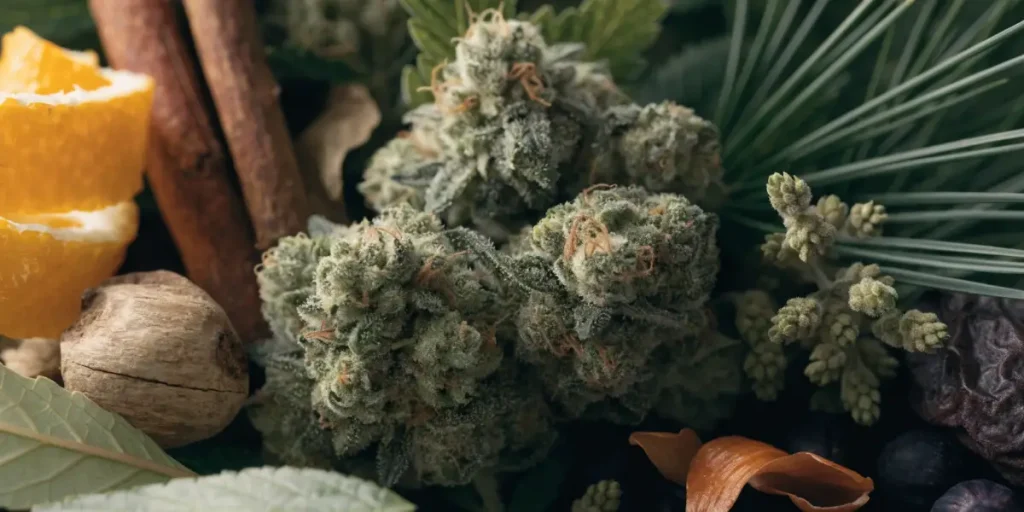
Terpenes are the aromatic compounds that give each cannabis strain its distinctive smell and flavor, from citrus and pine to diesel, berry and lavender. Beyond scent, they’re increasingly seen as a key part of what makes strains feel different, working alongside cannabinoids in what’s often called the ‘entourage effect’. That’s why experienced users increasingly choose strains by terpene profile rather than by THC number alone: two strains with similar THC can smell, taste and feel quite different because of their terpenes.
So if you want a particular experience, uplifting and citrusy, or earthy and relaxing, matching the terpenes is often more useful than chasing the highest THC. Learning the main terpenes and their characters turns strain shopping from guesswork into something you can actually steer toward your preferences.
How to Find Strains by Terpene
There are a few practical ways to track down the terpenes you want. First, read strain descriptions and lab reports: reputable seed banks and dispensaries often list dominant terpenes or at least describe the aroma (citrus, pine, gas, floral), and a Certificate of Analysis (COA) can show measured terpene content for a specific batch. Second, use aroma as a clue, the smell is literally the terpenes, so a lemony strain is limonene-forward, a peppery one caryophyllene-rich, and so on. Third, follow lineage: terpene profiles are largely genetic, so descendants of known aromatic strains often share those notes.
Keep in mind that actual levels vary by plant, grow and cure, so a profile is a strong guide, not a fixed guarantee, and we avoid quoting exact percentages for that reason. Combining description, lab data, aroma and genetics is the reliable way to find strain-specific terpenes.
Matching Terpenes to the Experience You Want
Once you know the main terpenes, you can aim for a vibe. Want something relaxing and earthy? Look for myrcene-dominant strains (common in indicas). After an uplifting, bright, citrusy feel? Seek limonene-forward genetics. Love a sharp, peppery, gassy character? That points to caryophyllene, which is also the one terpene that interacts with CB2 receptors.
Prefer fresh, piney clarity? Pinene strains. Calming, floral lavender notes? Linalool. These associations are general tendencies, not guarantees, since the whole chemical profile (and your own body) shapes the effect, but they’re a genuinely useful starting point. For specific families, see our guides to gas terpenes and mint terpenes, and for wellness context, terpenes studied for pain.
Preserving Terpenes in Your Flower
Finding a terpene-rich strain is only half the job, you also have to preserve those terpenes, because they’re volatile and fade with poor handling. A proper slow cure after harvest is what develops and locks in aroma, and from there, storage matters: keep flower in an airtight container, cool, dark and at the right humidity, since heat, light and air drive terpenes off over time.
This is also why fresh, well-cured, well-stored flower smells so much louder than old or badly kept weed, the terpenes are still intact. If you grow your own, careful drying and curing is the single biggest factor in keeping the terpene profile you selected for. In short, choose terpene-rich genetics, then treat the flower gently to keep that profile alive from jar to session.
The Bottom Line on Finding Strains by Terpene
Choosing cannabis by terpene, rather than by THC alone, is one of the best ways to match a strain to the experience you want. Learn the main terpenes and their characters, myrcene (earthy, relaxing), limonene (citrus, uplifting), caryophyllene (peppery), pinene (pine) and linalool (floral), then find strains via descriptions, lab reports, aroma and lineage, treating profiles as a strong guide rather than a guarantee.
Favor fresh, well-cured, aromatic ‘high-terpene’ flower, and store it airtight, cool and dark to keep those terpenes intact. Do that, and you can reliably steer toward the flavors and effects you actually enjoy.
Frequently Asked Questions (FAQs)
How can I find strains by terpene?
Read strain descriptions and lab reports (COAs) that list dominant terpenes, use aroma as a clue (the smell is the terpenes), and follow lineage, since profiles are largely genetic. Match the terpene to the experience you want (e.g. limonene for uplifting, myrcene for relaxing). Treat profiles as a guide, since levels vary by plant and batch.
What do the main terpenes do?
Myrcene (earthy, relaxing), limonene (citrus, uplifting), caryophyllene (peppery, acts on CB2 receptors), pinene (pine, fresh) and linalool (floral, calming) are the big ones. These are general tendencies that work alongside cannabinoids, not guarantees, since the whole profile and your own body shape the effect. They’re a useful starting point for choosing strains.
What is a high-terpene strain?
One that’s especially aromatic and rich in terpenes, delivering bold flavor and smell. In practice it usually means well-bred, well-grown and, crucially, well-cured and well-stored flower, since terpenes fade with poor handling. Exact levels vary, so judge by aroma and, where available, a lab report rather than a single number.
How do I keep terpenes from fading?
Cure flower slowly after harvest to develop and lock in aroma, then store it airtight, cool, dark and at the right humidity, since heat, light and air drive volatile terpenes off over time. Fresh, well-cured, well-stored flower keeps its profile; old or poorly kept weed loses its smell and flavor. Gentle handling preserves terpenes.