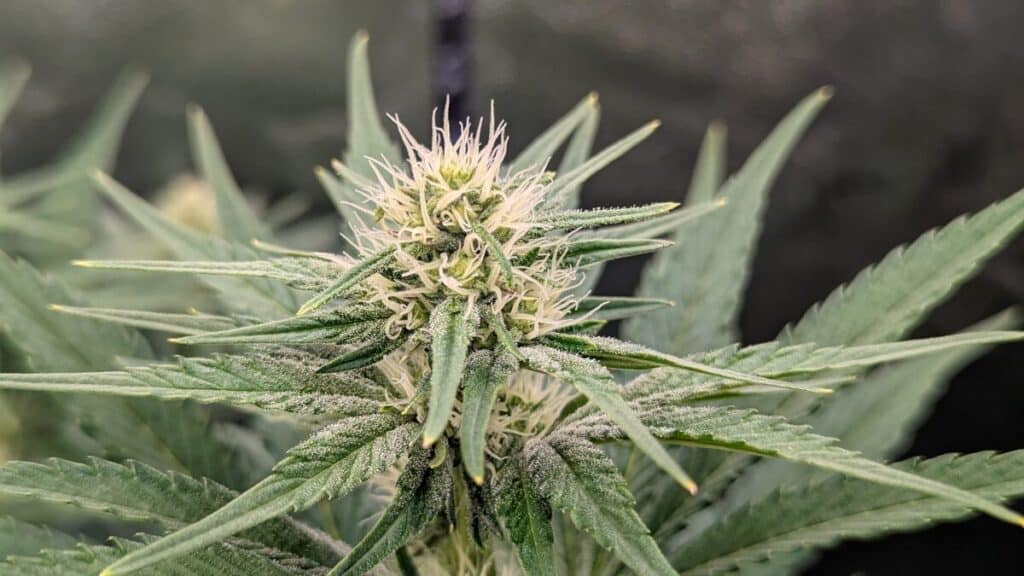
How to Grow Permanent Marker Strain

Quick Summary: Growing the Permanent Marker strain requires a precise balance of high-intensity lighting (PPFD 600-900) and strict humidity control (VPD 1.2-1.5 kPa) during its 8-10 week flowering period. This heavy-yielding hybrid thrives with LST and high-phosphorus nutrition to maximize its complex terpene profile.
Comprehensive Guide to Growing Permanent Marker Strain
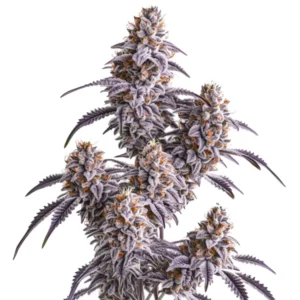
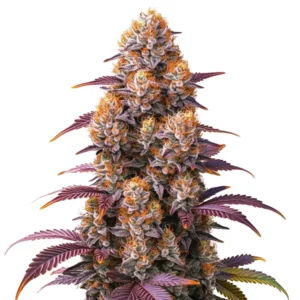
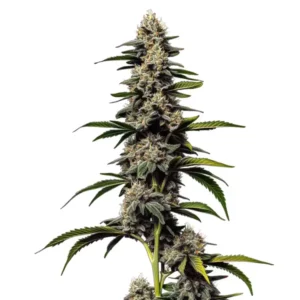
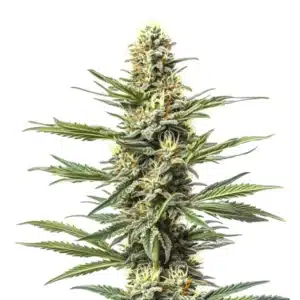
The Permanent Marker strain has quickly established itself as a modern legend in the cannabis community, winning “Strain of the Year” accolades for its pungent, chemical-heavy aroma and devastatingly potent effects. Derived from a complex lineage of (Biscotti x Jealousy) x (Sherb Bx), this cultivar is not just another hybrid; it is a genetic masterpiece that demands respect and technical precision from the grower. To secure the best permanent marker seeds, one must understand that this plant’s vigorous growth is matched only by its high metabolic demands.
Recommended Strains

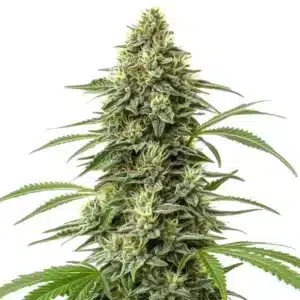
Permanent Marker

|
THC | 32% - 34% (High) |

|
Type | Feminized |

|
Yield | High |

|
Phenotype | 50% Indica / 50% Sativa |

Permanent Marker Auto
|
|
THC | 32% - 34% (High) |
|
|
Type | Autoflowering |
|
|
Yield | Medium |
|
|
Phenotype | 50% Indica / 50% Sativa |
Biologically, Permanent Marker exhibits a phenomenal “hybrid vigor” (heterosis), allowing for a rapid expansion of the vascular system during the vegetative stage. This translates to thick, hollow stems capable of transporting massive amounts of nutrient-rich fluids. However, this vigor means that grow permanent marker strain requires proactive canopy management. Without apical dominance redirection (via topping or FIMing), the plant tends to stretch significantly, potentially outgrowing indoor tents if the flip to a 12/12 photoperiod is delayed.
Promos & Deals
Environmental Requirements and Optimal PAR/PPFD Levels
Success starts with the light spectrum. During the vegetative phase, Permanent Marker requires a “blue-heavy” spectrum (around 5000K-6500K) to encourage short internodal spacing and thick leaf cuticles. For those utilizing permanent marker cannabis seeds in a professional indoor setting, aiming for a PPFD (Photosynthetic Photon Flux Density) of 400-600 µmol/m²/s is ideal. This ensures the plant builds enough “starch reserves” to support the heavy floral clusters that appear later.
In the flowering stage, the permanent marker flower time of 56 to 70 days necessitates an increase in light intensity and a shift to the “red-heavy” spectrum (2700K-3000K). At this stage, the plant can handle PPFD levels of up to 900-1000 µmol/m²/s, provided that CO2 supplementation is maintained at 1200-1500 ppm. Without CO2, intensities above 800 µmol/m²/s may cause light bleaching or stomatal closure, which effectively halts the permanent marker strain flower time progression and degrades the terpene quality.
| Technical Feature | Permanent Marker | Jealousy | Biscotti |
|---|---|---|---|
| Flowering Window | 8 – 10 Weeks | 9 Weeks | 7 – 9 Weeks |
| Average Yield | High (550g/m²) | Medium-High | Medium |
| Dominant Terpenes | Caryophyllene, Limonene | Caryophyllene, Myrcene | Limonene, Caryophyllene |
| Nutrient Demand | Heavy P/K Loading | Moderate | Moderate-Heavy |
| Best Training | FIM & Scrog | Topping | LST |
| Potency (THC%) | 28% – 34% | 25% – 30% | 22% – 25% |
Permanent Marker Strain Terpenes and the Entourage Effect
When you Grow Permanent Marker, understanding its terpene profile is key to appreciating its full potential. The permanent marker strain terpenes are the engine behind its unique psychoactive profile. This cultivar is exceptionally high in beta-Caryophyllene, Limonene, and Myrcene. Caryophyllene is unique because it also acts as a cannabinoid, binding directly to CB2 receptors, which contributes to the strain’s potent analgesic (pain-relieving) properties. When paired with Limonene’s cerebral uplifting effects, the “Entourage Effect” creates a multi-layered experience of euphoria combined with deep physical sedation.
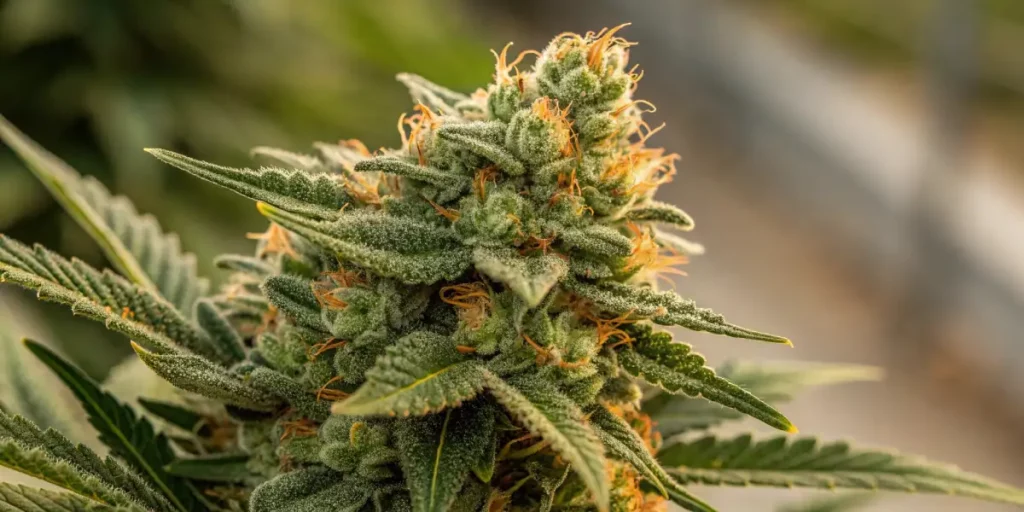
For cultivators, preserving these terpenes is a matter of temperature management during the final three weeks of the permanent marker flower time. Essential oils begin to volatize at temperatures above 70°F (21°C). To ensure the most aromatic permanent marker seed outcomes, growers should drop night-time temperatures to 60-65°F (15-18°C) in late bloom. This “thermal stress” not only preserves the volatile aromatic compounds but also triggers the production of anthocyanins, resulting in the deep purple hues the strain is known for.
Advanced Pest and Disease Management Protocol
While the permanent marker weed seeds produce resilient plants, their dense bud structure makes them a target for Botrytis (Gray Mold) and Pythium (Root Rot). A strict preventative protocol is mandatory:
- VPD Management: Maintain a Vapor Pressure Deficit of 1.2 to 1.5 kPa during flowering to ensure the plant continues to transpire correctly, preventing internal moisture buildup in the dense colas.
- Microbial Defense: Inoculate the root zone with Trichoderma harzianum and Bacillus amyloliquefaciens from day one. These beneficial fungi and bacteria create a biological shield against soil-borne pathogens.
- Airflow Requirements: Standard oscillating fans are insufficient. You must ensure air “scouring” beneath the canopy and through the middle sections of the plant to prevent stagnant air pockets where spider mites (Tetranychus urticae) thrive.
- Silica Supplementation: Use potassium silicate during the vegetative phase to strengthen cell walls. This creates a mechanical barrier that makes it significantly harder for piercing-sucking insects like thrips or aphids to colonize the foliage.
Professional Cultivation Tips for 10-Year Veterans
- Stem Splitting: In the final week before harvest, some experts utilize stem splitting to induce a final massive resin “dump.” The controlled trauma signals the plant to maximize defense mechanisms (trichomes).
- Late-Bloom P-K Spike: Around week 6 of flowering, the permanent marker strain yield can be boosted by a specific nutrient ratio of 0-20-20. This “bulking” phase is where the calyxes swell and the “permanent marker” scent intensifies.
- The “Dark Room” Finish: 48 hours of total darkness before harvest can increase terpene concentration by preventing the morning-time degradation caused by light-triggered metabolic processes.
- Dry-Trim vs. Wet-Trim: Given the density of this strain, a slow dry-trim is essential. Drying the whole plant upside down over 10-14 days allows chlorophyll to break down gradually, preventing the “hay” smell and preserving the chemical/gas nose.
FAQs about Grow Permanent Marker
What is the average permanent marker strain yield for indoor growers?
Indoor cultivators who want to Grow Permanent Marker successfully can expect a high Permanent Marker strain yield of approximately 500 to 600 grams per square meter. These results are typically achieved by using the Screen of Green (ScroG) method, which maximizes light exposure to secondary nodes and promotes even canopy development. Proper phosphorus loading during weeks 5–7 of flowering is critical for reaching these high-yield benchmarks and ensuring dense, resin-rich buds.
How long is the permanent marker strain flower time?
The permanent marker strain flower time typically lasts between 8 and 10 weeks (56-70 days). Phenotypes that lean toward the Sherb Bx lineage may finish closer to day 60, while the more resin-heavy Biscotti-dominant plants often benefit from the full 70 days to allow trichomes to reach a 20% amber state.
What are the dominant permanent marker strain terpenes?
The permanent marker strain terpenes are dominated by Caryophyllene (spicy/gas), Limonene (citrus/solvents), and Myrcene (earthy/musk). This specific combination creates the “industrial” or “marker” scent that characterizes the strain and contributes to its deep, sedative, and long-lasting effects on the consumer.
Is the Permanent Marker strain difficult for beginners?
While growing permanent marker strain is rewarding, it requires an intermediate understanding of nutrient “burn” and canopy management. Beginners using permanent marker seeds must be cautious with Nitrogen in late veg, as the strain is prone to “clawing” if overfed, which can stunt the transition into the flowering phase.
What are the best environmental conditions for permanent marker cannabis seeds?
The permanent marker cannabis seeds perform best in a temperature range of 72-78°F during the day and 65°F at night. Relative humidity should start at 65% for seedlings and be tapered down to 40% by harvest to prevent bud rot in the extremely dense colas produced by this specific genetic line.