How to Clone Marijuana Plants for Beginners

Cloning marijuana means taking a cutting from a healthy ‘mother’ plant and rooting it into a new, genetically identical plant, a free way to copy a strain you love. The basic steps: take a healthy cutting (a 10-15 cm branch tip with a few nodes) from a plant in vegetative growth, trim it and cut the stem at 45 degrees, dip the cut end in rooting hormone, and place it in a moist rooting medium (rockwool cube, root plug, or even water). Keep it under a humidity dome with gentle light on an 18/6 schedule, warm and humid, and in about 1-2 weeks roots appear. Once rooted, transplant the clone and grow it like any vegetative plant. Clones let you preserve exact genetics, skip germination, and keep a perpetual harvest going.
Note: you generally can’t usefully clone autoflowers (the clone inherits the mother’s age and flowers almost immediately), so cloning is for photoperiod plants. Below: what clones are, the step-by-step method, clone care, and common questions.
Recommended Strains
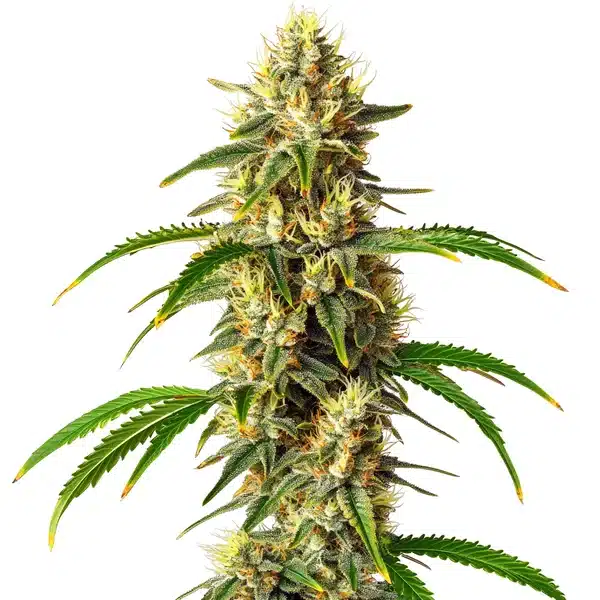
Critical Auto

|
THC | 10% - 14% (Low) |

|
Type | Autoflowering |

|
Yield | Medium |

|
Phenotype | 70% Indica / 30% Sativa |
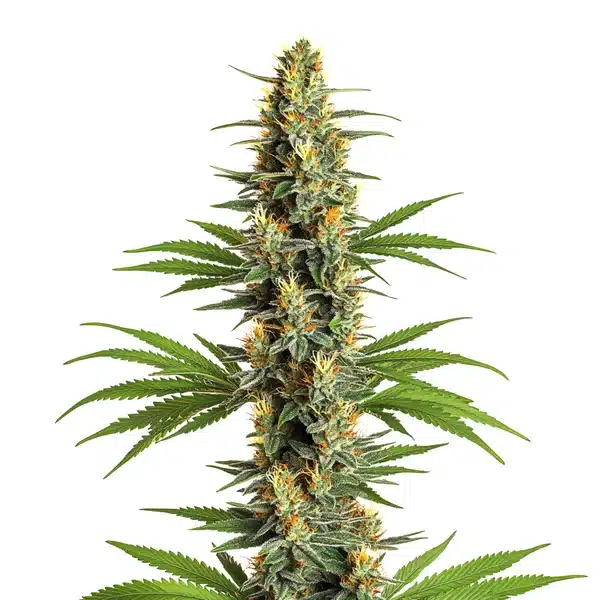
Critical 2.0
|
|
THC | 18% - 22% (Medium) |
|
|
Type | Feminized |
|
|
Yield | High |
|
|
Phenotype | 60% Indica / 40% Sativa |
Cloning Steps at a Glance
The process from cutting to rooted clone:
| Step | What to do |
|---|---|
| 1. Pick a mother | Healthy plant in vegetative growth |
| 2. Take the cutting | 10-15 cm tip with a few nodes; cut at 45 degrees |
| 3. Apply rooting hormone | Dip the cut end (gel or powder) |
| 4. Place in medium | Rockwool cube, plug or water |
| 5. Dome + gentle light | High humidity, 18/6, warm, low intensity |
| 6. Wait & transplant | Roots in ~1-2 weeks, then transplant |
Promos & Deals

What Clones Are and Why Clone
A clone is a cutting taken from a living cannabis plant that you root to create a new plant, and because it’s genetically identical to the plant it came from (the ‘mother’), it’s an exact copy: same genetics, same traits, same sex. That’s the whole appeal. Cloning lets you preserve a strain you love (a particularly potent, flavorful or high-yielding phenotype) and reproduce it reliably, it skips germination and the uncertainty of seeds, it’s free (no buying new seeds each time), and clones are always female if the mother was, so no wasted males. Many growers keep a healthy mother plant specifically to take clones from, enabling a perpetual harvest (always having plants at different stages).
The main trade-offs versus seeds: clones don’t develop the sturdy taproot a seed does, they can carry any pests/disease from the mother, and they need a bit of technique to root. But for copying known genetics quickly and cheaply, cloning is a core grower skill, and it’s very doable at home with simple equipment.
Taking and Rooting a Cutting
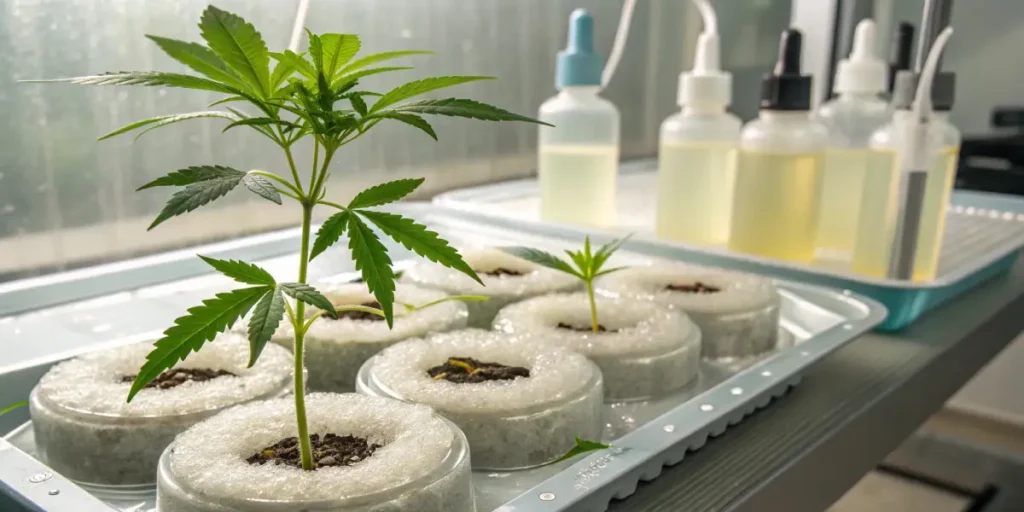
Here’s the method in detail. Choose a healthy mother in vegetative growth (not flowering) and a vigorous branch; sterilise a sharp blade/scissors. Take the cutting: snip a 10-15 cm tip with at least a couple of nodes, then immediately cut the stem end at a 45-degree angle (more surface area for roots) and remove the lower leaves, leaving a few at the top. Apply rooting hormone (gel or powder) to the cut end to stimulate roots, pairing it with a root booster helps (see our root booster guide). Place it in a rooting medium: a pre-soaked rockwool cube or root plug is ideal (see starting in rockwool), or use water or an aeroponic cloner.
Create the right environment: cover with a humidity dome to keep humidity high, give gentle light on 18/6 (low intensity, clones have no roots to handle strong light), and keep it warm (~21-26 C). Keep the medium moist, mist if needed, and in roughly 1-2 weeks you’ll see roots. Then harden off and transplant. For the most reliable results, an aero-cloner works well.
Clone Care, Autoflowers and Troubleshooting
Fresh clones are delicate, so care matters. Keep humidity high and light gentle until roots establish, and avoid nutrients at first (a rooted clone needs almost none early). Watch for wilting (normal slightly at first; severe means too little humidity or the cutting is struggling) and avoid transplant shock by moving the whole rooted cube/plug without disturbing roots. A common question: can you clone autoflowers? Technically you can take a cutting, but it’s not practical, because autoflowers flower based on age, the clone is the same ‘age’ as the mother and will start flowering almost immediately with little growth, giving a tiny yield.
So cloning is really for photoperiod plants; for autos, grow from seed instead. If clones fail to root, usual causes are too little humidity, too much/too-intense light, a non-sterile cut, or letting the medium dry out, fix those and success rates climb. Once your clone is rooted and growing, treat it like any vegetative plant: increase light, begin light feeding, and train it (for example with gentle LST) as it grows.
FAQs About How to Clone Marijuana Plants
What’s the cloning process?
Take a 10-15 cm cutting (with a few nodes) from a healthy mother in vegetative growth, cut the stem at 45 degrees, dip it in rooting hormone, and place it in a moist rockwool cube, plug or water. Keep it under a humidity dome with gentle 18/6 light, warm and humid. Roots appear in about 1-2 weeks, then transplant.
When will my clone have roots?
Usually about 1-2 weeks under the right conditions, high humidity (a dome), gentle 18/6 light, warmth and a moist medium. Some root faster, some slower. You’ll know it’s ready to transplant when roots emerge from the cube or plug. Using rooting hormone and keeping humidity high while light stays gentle are what speed up and improve rooting.
Is cloning autoflowers worth it?
Technically you can take a cutting, but it’s not practical. Autoflowers flower based on age, so a clone is effectively the same age as the mother and will start flowering almost immediately with little growth, giving a tiny yield. Cloning is really for photoperiod plants; for autoflowers, grow from seed each time instead.
What makes clones fail?
Usually too little humidity (use a dome), light that’s too strong (keep it gentle), a non-sterile or crushed cut, letting the medium dry out, or skipping rooting hormone. Clones have no roots yet, so they rely on humidity and gentle conditions to survive while rooting. Fix those factors, clean cut, dome, soft 18/6 light, moist medium, and success rates rise sharply.