How Big Should Cannabis Plants Be After 4 Weeks Indoors?

Quick answer: Most indoor cannabis plants reach 12-24 inches tall by week 4, though genetics matter a lot. Indicas stay more compact, sativas stretch taller, and autoflowers usually stay under 16 inches, often already flowering. Height is only part of the picture, so also check leaf sets, branching and stem thickness.
Autoflowers stay smaller, usually under 16 inches by week 4, and by then are often already starting to flower on their fixed internal clock. A handy rule of thumb: a plant grows up only as far as its roots grow down, so loose, well-aerated soil and the right pot size directly support stronger vertical growth. For autoflowers specifically, see when autoflowers start flowering.
Recommended Strains

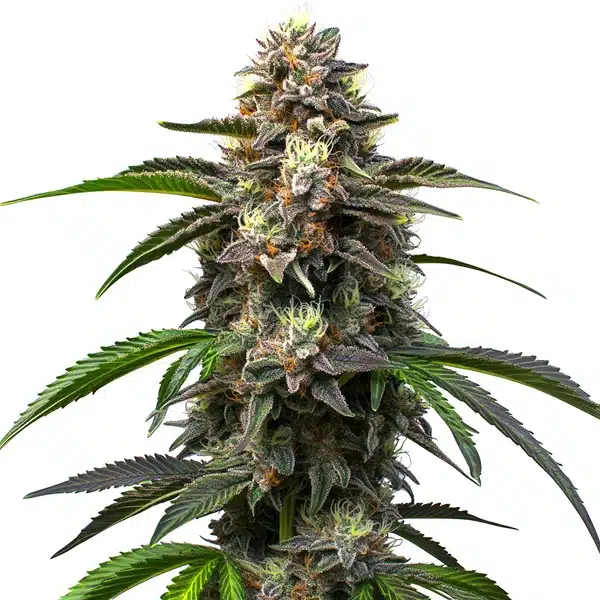
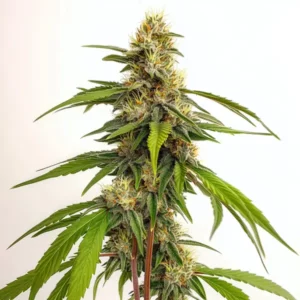
Godfather OG

|
THC | 26% - 30% (High) |

|
Type | Feminized |

|
Yield | High |

|
Phenotype | 60% Indica / 40% Sativa |
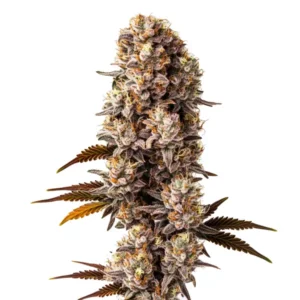
Godfather OG Auto
|
|
THC | 25% - 26% (High) |
|
|
Type | Autoflowering |
|
|
Yield | Medium |
|
|
Phenotype | 70% Indica / 30% Sativa |
Cannabis Size by Age: Week-by-Week Guide
Here is a rough size guide for healthy indoor plants from seedling through two months. Treat it as a range, not a rule, since genetics, light and medium all shift the numbers:
| Age | Typical height (indoor) | What to expect |
|---|---|---|
| 2 weeks | 2-6 inches | First few true-leaf sets; seedling stage |
| 4 weeks (1 month) | 12-24 inches | 4-6 leaf sets, branching, early veg |
| 8 weeks (2 months) | 24-48 inches | Full veg or stretch; photoperiods may be flipping to flower |
| Autoflowers, week 4 | Under 16 inches | Often already starting to flower |
By two months, photoperiod plants are often large and either deep in veg or being flipped to flower, while autoflowers are usually well into flowering. If yours are well below these ranges, work through the troubleshooting below.
Promos & Deals

How Grow Method Affects Early Size
Your medium strongly shapes early size. Soil tends to start a little slower, often landing at the lower end of the 12-24 inch range by week 4. Hydroponics accelerates early growth thanks to direct access to oxygenated nutrients, often pushing plants past 20 inches in the same time. Coco coir sits in between, with fast root expansion and strong veg when pH and feeding are dialed in.
The important thing is not to chase early height for its own sake: a soil plant that starts slower often catches and overtakes a fast hydro start once its root system is established. Early on, strong, healthy roots matter far more than a tall top, so judge progress by vigor and structure rather than by which medium shot up fastest.
Growth Benchmarks at Week 4
By week 4, healthy indoor plants usually sit between 12 and 24 inches, with sativas toward the top and indicas stockier. But height is not the only health marker, leaf density, node development and branching matter just as much. The plant should show multiple nodes by now. If yours are a bit smaller, do not panic; variation is normal and often fixable.
When you measure, go from the soil line to the top of the canopy, and read the number against the plant type, since an indica, a sativa and an autoflower of the same age will legitimately differ. Above all, weigh height alongside leaf count, node spacing and stem thickness, because a compact, sturdy plant is healthier than a tall, stretched one.
Key Signs of a Healthy Week-4 Plant
By week 4 a healthy plant should show:
- 4-6 sets of true leaves and clear node development.
- Strong secondary branches forming at the nodes.
- Thick, upright stems (thin, stretchy stems suggest weak light).
- Vibrant green, upward-facing leaves.
Pale or yellowing leaves often point to a nitrogen issue or light that is too far away; see our guide on yellowing leaves with brown spots to diagnose it.
Is My Plant Falling Behind?
If your plant looks underdeveloped against these benchmarks, act promptly. Stretching stems, pale leaves, or only 2-3 leaf sets by week 4 can point to a deeper issue: too little light, poor root health, overwatering, or a pH imbalance. Fix the most likely cause first (usually light distance or watering), change one thing at a time, and give the plant a week to respond.
The reassuring part is that most week-4 setbacks are fixable. Run through the usual suspects, light distance, watering, pot size and pH, correct the most likely one, and change only a single variable at a time so you can see what worked. Young plants are resilient, and a slow start often disappears once the conditions are dialed in.
Common Reasons Plants Are Small at Week 4
If your plant is behind at week 4, it is usually one of these:
- Light too far or too weak: causes stretchy, thin growth; move lights closer or add intensity.
- Overwatering: the most common cause of slow, droopy seedlings; let the top inch dry out.
- Small or compacted pot: roots cannot expand, so the top cannot either.
- pH out of range: locks out nutrients; keep soil at 6.0-7.0.
- Cold temperatures: slow metabolism and growth; aim for a warm, stable room.
Fix the most likely cause first and change only one thing at a time, then give the plant a week to respond. Healthy young plants are resilient and often catch up quickly once light, water, pot size and pH are dialed in, so a slow start at week 4 rarely means a lost grow.

FAQs
How big should my plants be after 1 month?
One month is roughly week 4, so expect about 12-24 inches for most indoor photoperiod plants, with 4-6 leaf sets and visible branching. Autoflowers are usually smaller, under 16 inches, and may already be flowering. Genetics, light and medium all shift these numbers, so treat them as a healthy range.
How big should my plants be after 2 months?
By two months (around week 8), healthy photoperiod plants are often 24-48 inches and either in late veg or being flipped to flower, where they will stretch further. Autoflowers are usually well into flowering by now. Size varies widely with strain, pot size and training, so focus on healthy structure, not just height.
My plant is small at 4 weeks, is that bad?
Not necessarily. Slower early growth is common and often fixable. Check light distance (too far causes stretch, too close stunts), watering (overwatering is the usual culprit), pot size and pH. If leaf sets, color and stem thickness look healthy, a slightly short plant will often catch up once conditions improve.
How tall is a 4-week-old autoflower?
Autoflowers are usually under 16 inches at four weeks and are often already starting to flower, since they switch based on age rather than light. Because their life cycle is short, do not expect them to match photoperiod plants in size, and avoid heavy training or stress at this stage.
Does a bigger plant at week 4 mean a bigger harvest?
Not always. Early height is only one indicator; healthy structure, strong roots, good node spacing and thick stems matter more than raw size. A compact, bushy plant with dense growth can out-yield a tall, stretchy one. Focus on overall health and training rather than chasing height.
How many leaves should a 4-week plant have?
A healthy indoor plant at week 4 typically shows four to six sets of true leaves, plus visible side branching at the nodes. Fewer than that, with pale color or stretchy stems, suggests a light, water or pH issue worth checking. Count node development alongside height to judge real progress.