Top Short Height Strains for Indoor Growing

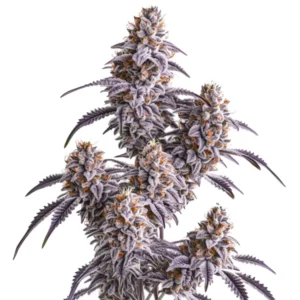
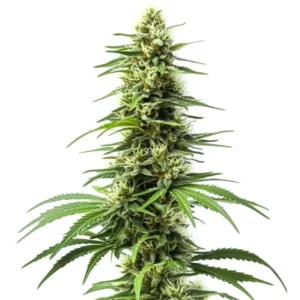
Compact cannabis strains: For those with limited growing space, short height strains are a perfect choice. These compact varieties typically stay under 2-3 feet (60-90 cm) when grown indoors. Ideal for discreet cultivation, strains like Big Bud and Blackberry Pie offer robust yields and rich flavors. Autoflowering types complete their life cycle rapidly, enhancing efficiency and stealth.
hen cultivating cannabis in confined spaces, choosing the right strain is crucial. Short height strains not only fit limited areas but also offer unique terpene profiles and flowering times. Varieties like GG4 and Blueberry X Big Bud Auto stand out for their distinct aromas and rapid growth cycles, making them excellent choices for indoor growers.
Recommended Strains
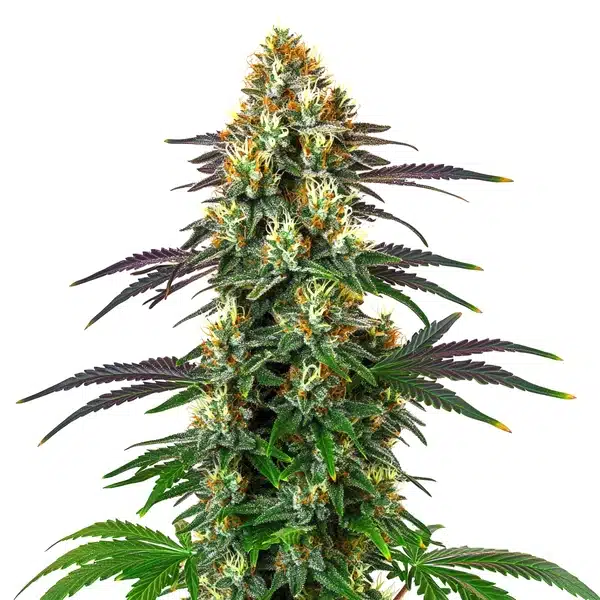
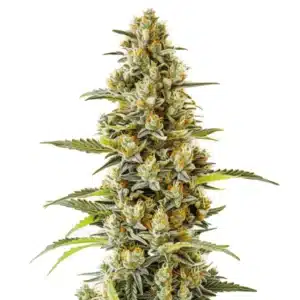
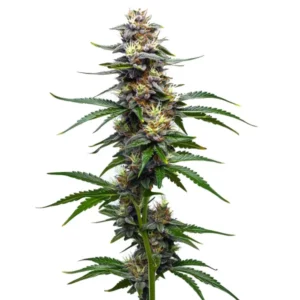
Gelato x Kosher Kush

|
THC | 22% - 24% (High) |

|
Type | Feminized |

|
Yield | High |

|
Phenotype | 65% Indica / 35% Sativa |

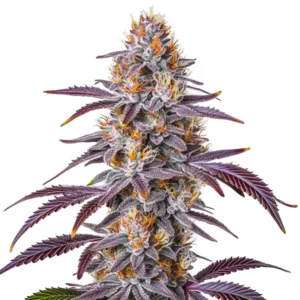
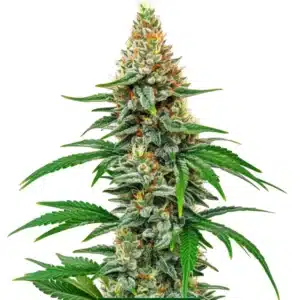
Kosher Kush
|
|
THC | 18% - 22% (Medium) |
|
|
Type | Feminized |
|
|
Yield | Medium |
|
|
Phenotype | 70% Indica / 30% Sativa |
Best Short Height Cannabis Strains
Autoflowering Varieties
Autoflowering strains like Blueberry X Big Bud Auto are perfect for indoor cultivation due to their rapid life cycle and compact size. These strains transition from seed to harvest in approximately 70-80 days, making them ideal for quick turnarounds. They typically remain under 30 inches (76 cm), allowing for discreet growth in small spaces.
Autoflowers thrive with a consistent 20/4 light schedule, optimizing photosynthesis while minimizing energy costs. Their genetic makeup allows them to flower based on age rather than light cycles, ensuring a reliable harvest. Common mistakes include overfeeding; stick to a balanced N:P:K ratio of 1:3:2 during flowering to prevent nutrient burn.
Indica-Dominant Strains
Indica-dominant strains like Critical Kush are renowned for their bushy growth and dense bud formation. These plants typically reach a height of 2-3 feet (60-90 cm) indoors, making them suitable for limited spaces. Their broad leaves and short stature enable efficient light absorption, enhancing bud development.
Critical Kush benefits from low-stress training (LST) to maximize yield. By gently bending branches, you can increase light penetration and airflow, reducing the risk of mold. Aim for a relative humidity (RH) of 40-50% during flowering to maintain terpene integrity and prevent mildew.
Promos & Deals

Growing Techniques for Short Cannabis Plants
Low-Stress Training (LST)
Low-Stress Training (LST) involves gently bending and securing branches to encourage a bushy growth pattern. This technique optimizes light exposure and airflow, crucial for short cannabis plants. By using soft ties and stakes, you can manipulate plant structure without causing significant stress, promoting healthier growth and higher yields.
Implement LST during the vegetative stage to maximize its benefits. Aim for a light intensity of 800-1000 µmol/m²/s to support robust photosynthesis. Avoid over-tightening ties, which can damage stems. Monitor plant response, adjusting ties as needed to prevent breakage and ensure even canopy development.
| Feature | Blueberry X Big Bud Auto | Critical Kush | GG4 |
|---|---|---|---|
| Height | Up to 30 inches (76 cm) | 2-3 feet (60-90 cm) | 2-3 feet (60-90 cm) |
| Flowering Time | 70-80 days | 8-9 weeks | 8-9 weeks |
| Dominant Terpene | Myrcene | Caryophyllene | Limonene |
| Yield | 1.5-1.8 oz/ft² (450-550 g/m²) | 1.5-2 oz/ft² (450-600 g/m²) | 1.5-2 oz/ft² (450-600 g/m²) |
| THC Content | 22-26% | 20-25% | 24-28% |
Topping and Fimming
Topping and Fimming are pruning techniques that break the apical dominance of cannabis plants, redirecting growth hormones to secondary shoots. Topping involves cutting the main stem tip, while Fimming requires pinching off part of the stem. Both methods encourage bushier growth, ideal for managing short cannabis plants in confined spaces.
Apply these techniques during the vegetative stage for optimal results. Allow 3-7 days for recovery, then combine with LST for a more controlled canopy. Use clean, sharp tools to prevent infection. Avoid topping or Fimming during flowering to prevent stress and potential yield reduction.
Choosing the Right Grow Medium
Soil vs. Soilless Options
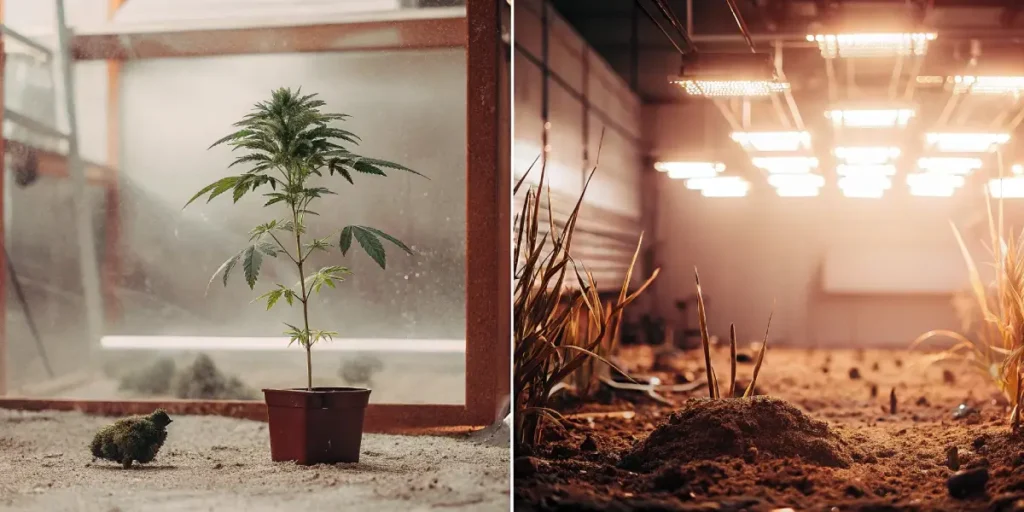
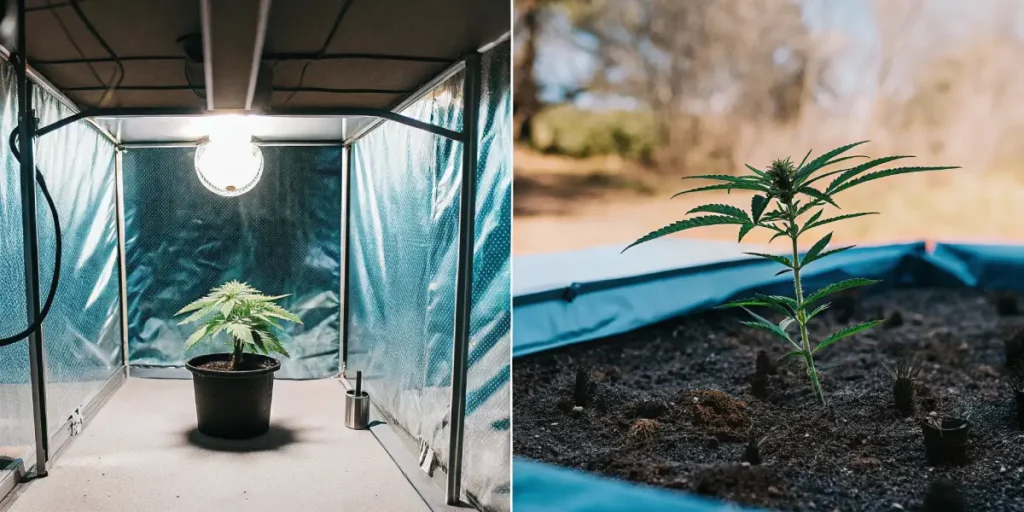
Choosing between soil and soilless mediums is crucial for short cannabis plants. Soil is the most common medium, offering a natural environment rich in nutrients. Opt for organic, well-composted soil with perlite for drainage. It provides a forgiving buffer against nutrient imbalances, making it ideal for beginners.
Soilless options like coco coir and vermiculite offer benefits such as reduced risk of pests and diseases. These mediums require precise nutrient management, as they lack inherent nutrients. Maintain a pH of 5.8-6.2 to ensure nutrient availability. Monitor EC levels closely to prevent overfeeding, which can stunt growth.
Hydroponic Systems
Hydroponic systems offer a high-yielding alternative for growing short cannabis plants. By cultivating plants in water, you can achieve faster growth and larger yields. This method requires a steep learning curve and precise control over nutrient delivery, making it suitable for experienced growers.
Maintain a nutrient solution temperature of 68-72°F (20-22°C) and a pH of 5.5-6.0 for optimal nutrient uptake. Regularly check and adjust EC levels to prevent nutrient deficiencies or toxicities. Ensure adequate oxygenation of the root zone to promote healthy root development and prevent root rot.
Professional Tips for Growing Short Cannabis Plants
- Maintain 58-62% RH during the curing process. This range preserves terpene profiles and prevents mold growth. Use a digital hygrometer for accurate readings, avoiding analog models.
- Use a 20/4 light schedule for autoflowers to maximize growth. This provides ample light for photosynthesis while allowing rest. Avoid 24/0 schedules, which can stress plants.
- Keep nutrient EC levels between 1.2-1.6 mS/cm during vegetative growth. This ensures adequate nutrient availability without overfeeding. Regularly calibrate your EC meter for accuracy.
- Switch to a 12/12 light cycle for photoperiod strains to induce flowering. This mimics natural daylight changes, triggering bud development. Avoid light leaks, which can revert plants to vegetative growth.
- Ensure a pH range of 6.0-6.5 in soil mediums for optimal nutrient uptake. Regularly test and adjust pH to prevent nutrient lockout. Use pH-adjusting solutions, not household products.
- Use LST to manage plant height and improve light penetration. This technique prevents tall, lanky growth and maximizes yield. Avoid excessive bending, which can snap branches.
FAQs About Short Cannabis Strains
What strain gets you the least high?
CBD-dominant strains like CBD Candida offer minimal psychoactive effects due to low THC content, often below 1%. These strains are ideal for users seeking therapeutic benefits without the high. They provide relief from anxiety and inflammation, making them suitable for daytime use.
Which is taller sativa or indica?
Sativa strains generally grow taller, reaching heights of 10-12 feet (3-3.6 meters) outdoors, compared to indica strains, which typically stay under 6 feet (1.8 meters). Sativas have longer flowering times, around 10-16 weeks, while indicas flower in 8-10 weeks. Choose indicas for limited spaces or stealthy grows.
What is the most difficult strain to grow?
Strains like Haze Auto are challenging due to their long flowering periods and sensitivity to environmental changes. They require precise control over temperature and humidity. Flowering can take 12-16 weeks, demanding patience and expertise. Ensure stable conditions to prevent stress and optimize yield.
What is the shortest autoflower?
Autoflower strains like Cheesecake X Gelato Auto are among the shortest, typically reaching 20-24 inches (50-60 cm). Their compact size makes them ideal for stealthy indoor grows. These strains complete their life cycle in 8-10 weeks, offering quick harvests without compromising quality.
What makes a strain suitable for indoor growing?
Strains suitable for indoor growing often have compact growth, short flowering times, and resilience to environmental fluctuations. Varieties like Bruce Banner 3 thrive indoors due to their manageable height and high yields. They require controlled light and nutrient schedules to maximize potential.