Enriched Pastas: Why You Should Add Cannabis Flour to Your Tagliatelle Dough

Fresh pasta is, for many, the ultimate expression of culinary alchemy: water, flour, and eggs transformed into an elastic and comforting structure. However, in the constant search to elevate nutritional density and flavor complexity, cannabis seed flour has emerged as the “secret” ingredient capable of breaking the monotony of wheat. Adding cannabis to your tagliatelle dough is not merely an aesthetic choice; it is a technical intervention that alters the carbohydrate’s architecture to offer a dish that feels lighter, satisfies faster, and boasts an emerald green color that looks like it was extracted directly from the living plant.
Mastering cannabis-enriched pasta requires knowing that we are not simply adding a colorant, but an ingredient with a radical chemical composition compared to wheat. Cannabis flour, obtained after pressing the seeds to extract the oil, is a massive concentration of proteins and fiber, but it lacks the protein that makes pasta possible: gluten. At Blimburn Seeds, we value genetic precision and technical excellence, and in the kitchen of tagliatelle, that precision translates into finding the exact balance so the dough maintains its characteristic elasticity while absorbing all the botanical power of the seed.
Recommended Strains

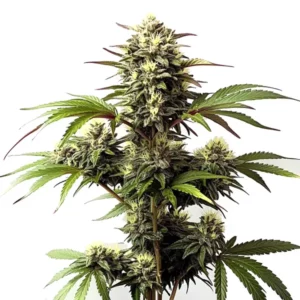
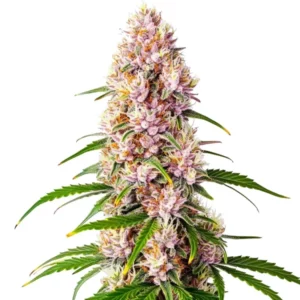
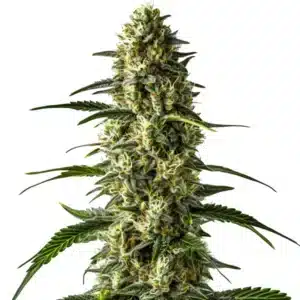
Future #1

|
THC | 30% - 37% (High) |

|
Type | Feminized |

|
Yield | High |

|
Phenotype | 50% Indica / 50% Sativa |
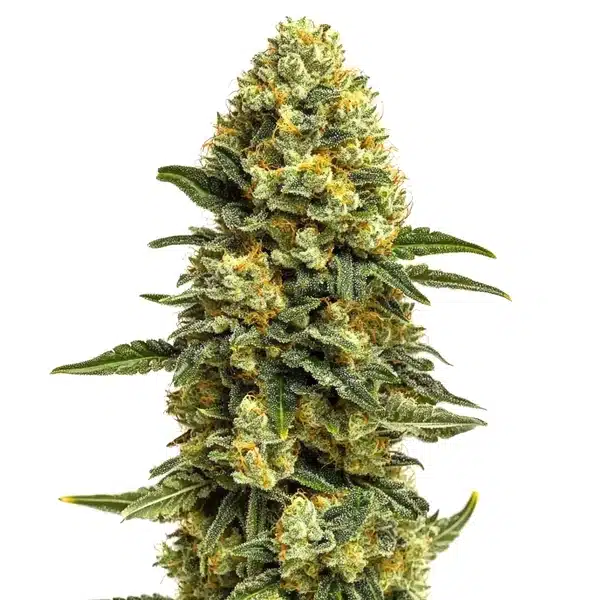
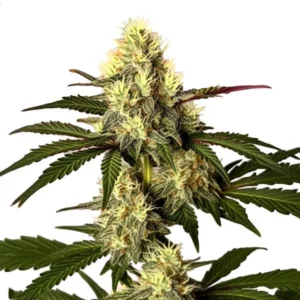
Hash Burger
|
|
THC | 22% - 27% (High) |
|
|
Type | Feminized |
|
|
Yield | Medium |
|
|
Phenotype | 50% Indica / 50% Sativa |
Cannabis Flour: The “Dark Gold” of Kneading
The flour we use for these tagliatelle is not the result of grinding the flower, but of processing the “cake” resulting from the cold-pressing of cannabis seeds. This byproduct is a nutritional treasure that retains a huge amount of globular proteins (edestin and albumin) and a fibrous structure that provides an intense toasted nut flavor. Being a defatted flour, it has a moisture absorption capacity very different from durum wheat semolina, which forces the cook to treat it with superior technical respect to prevent the dough from becoming brittle or dry.
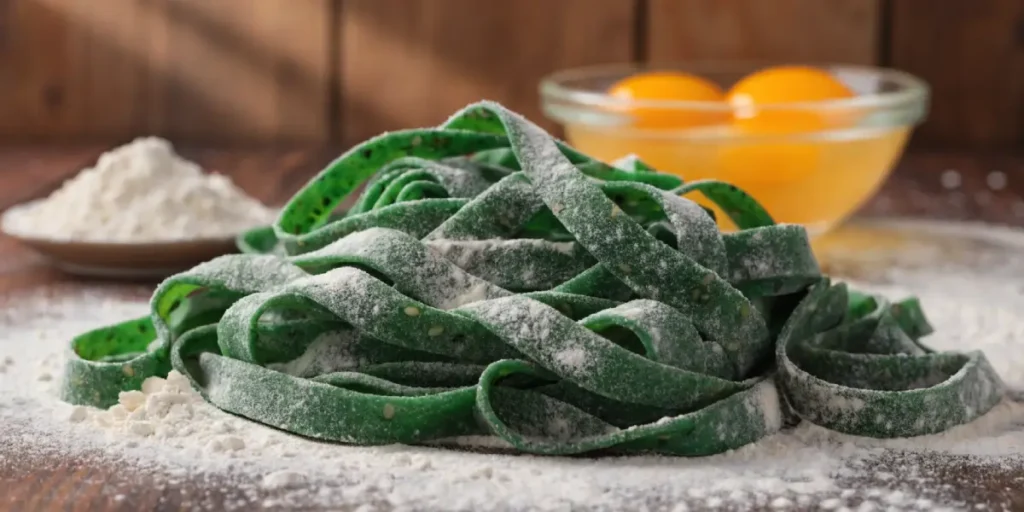
From a visual standpoint, this flour is responsible for that deep, rustic green tone that defines designer cannabis pasta. Unlike spinach pastas, which often lose chromatic intensity during cooking, cannabis maintains its pigmentation more stably, offering a spectacular contrast on the plate. It is an ingredient that communicates health and origin at first glance, turning a simple bowl of tagliatelle into a statement of principles about the importance of integrating functional plants into our basic daily diet.
Promos & Deals

The Gluten Challenge: The Science of Elasticity
The great challenge you face when you decide to enrich your tagliatelle is the absence of gluten in cannabis flour. Gluten is the elastic “net” that traps air and allows the pasta to stretch without breaking; without it, the dough would simply crumble under the machine’s roller. For this reason, cannabis flour should never be used alone in making long pasta, but as a strategic complement to durum wheat semolina or bread flour, which provide the structural scaffolding necessary for the tagliatelle to maintain their al dente shape.
To compensate for this lack of elasticity, the hydration of the dough becomes critical. Cannabis proteins are greedy for moisture, so it is common for the recipe to require an extra egg or a small amount of water to maintain malleability. The goal is to achieve a dough that feels firm but yields when stretched, allowing the fine particles of the cannabis seed to remain suspended within the wheat’s gluten net. It is a molecular balancing act that separates a hobbyist from a connoisseur of cannabis raw material.
The Master Ratio: 80/20 for the Perfect Pasta
After multiple tests in experimental kitchens, it has been determined that the “sweet spot” for enriched pasta is a ratio of 80% wheat flour (or semolina) and 20% cannabis flour. This 80/20 ratio ensures that the tagliatelle retain enough strength to be finely laminated without tearing, while allowing the nutty flavor and emerald color to be the absolute stars. If you increase it to 30%, the dough begins to become too grainy; if you drop it to 10%, the nutritional and aesthetic benefit is diluted.
For a professional result, the mixture must be sifted together several times to ensure that the cannabis particles, which tend to be slightly coarser, are distributed homogeneously. In this proportion, the pasta not only retains its structure during boiling, but acquires a slightly rough texture that is the dream of any sauce lover, as it allows the condiment to adhere much more effectively to the tagliatelle’s surface. It is flavor engineering applied to pasta geometry.
Sensory Profile: Nutty Flavor and Emerald Color
The flavor of cannabis tagliatelle is an earthy, deep, and surprisingly elegant experience. Unlike conventional wheat pasta, which is a neutral canvas, this enriched pasta has its own personality: it evokes notes of pine nuts, damp wood, and a subtle bitter touch reminiscent of dark chocolate or coffee. This organoleptic profile pairs exceptionally well with fatty ingredients like high-quality butter, aged pecorino cheese, or sauces based on wild mushrooms, where the terpenes of the earth meet and enhance each other.
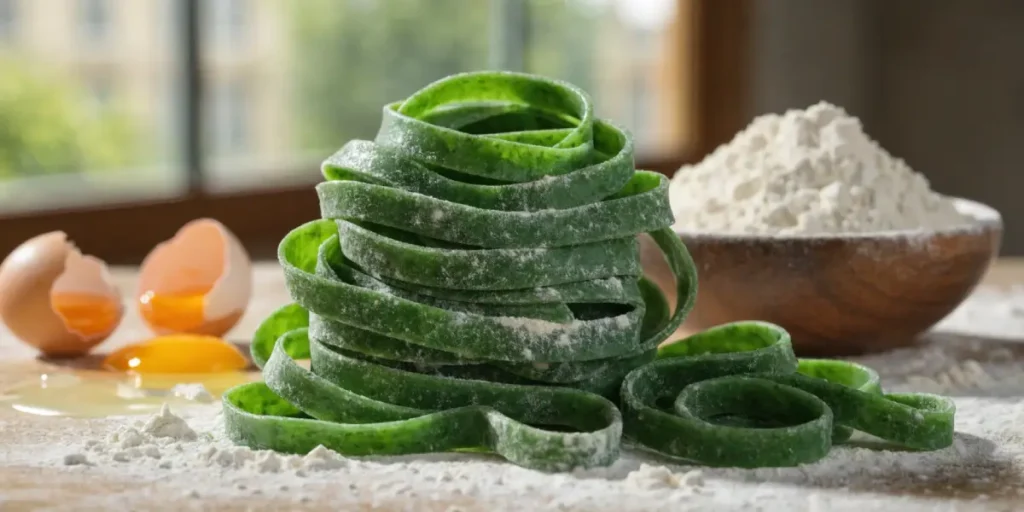
Regarding color, the impact is immediate. The dark emerald green the dough acquires is a visual sign of the presence of chlorophyll and phytonutrients that have not been degraded by aggressive industrial processes. When serving the dish, the contrast of this green with the white of a grated cheese or the red of some confit cherry tomatoes creates a Mediterranean chromatic palette that celebrates the plant’s biodiversity. It is a way of literally “eating the garden,” enjoying an aesthetic that only high-quality cannabis can provide.
Technical Guide: How to Knead and Laminate with Cannabis
The kneading process requires patience: when adding cannabis flour, the dough needs a longer resting time (at least 40 minutes at room temperature, wrapped in film) so the semolina can fully hydrate and the cannabis fibers can settle. During manual kneading, you will notice that the dough is a bit “heavier” than traditional dough; this is normal due to the high protein content. Do not give in to the temptation to add extra wheat flour if it feels wet at first; let time do its work and you will see how the texture stabilizes.
When passing the dough through the pasta machine, start with the widest thickness and fold the sheet over itself several times (lamination technique). This will help align the gluten chains that have been weakened by the cannabis flour, strengthening the final tagliatelle. When you reach the cut, make sure the sheet is well floured with a bit of extra semolina so the strips don’t stick together. The result will be a pasta with a heavy, professional drop, ready to be cooked in plenty of salted water for just 2 or 3 minutes to reach al dente perfection.
The Blimburn Connection: From Genetics to the Table
At Blimburn Seeds, we understand that excellence is born from the base, and in the case of pasta, that base is the quality of the seed. Promoting the use of cannabis flour in the daily diet is a natural extension of our commitment to the plant; if we select the best genetics for cultivation, we must be equally demanding with what we put on our plate. These tagliatelle are the testimony that cannabis is a versatile ingredient that needs no artifice to shine, but simply correct technique and a deep respect for its biological properties.
We invite you to transform your kitchen into a space for botanical experimentation, where Italian tradition meets the unlimited potential of cannabis. Creating your own enriched pasta is a way to connect with the plant at a visceral level, knowing its structure and celebrating its capacity to nourish us holistically. With every emerald tagliatelle you serve, you will be sharing a piece of Blimburn’s history: a story of quality, science, and passion for a plant that never ceases to surprise us, eones after beginning its journey alongside humanity.
FAQs: Enriched Cannabis Tagliatelle whit cannabis flour
Why can’t I make fresh pasta using 100% cannabis flour?
Structural integrity is the main reason. Cannabis flour lacks gluten, the elastic protein network that allows pasta dough to stretch and hold its shape. Without wheat flour or semolina to provide this “structural scaffolding,” a 100% cannabis dough would simply crumble under the roller. To maintain the characteristic al dente bite, you must blend it with high-gluten flours.
What is the “80/20 rule” and why is it considered the technical “sweet spot”?
Through culinary testing, an 80% wheat to 20% cannabis flour ratio has been identified as ideal. This proportion allows the dough to retain enough elasticity for fine lamination while maximizing the nutritional benefits and the intense emerald color. Exceeding 25-30% often results in a grainy texture that makes the tagliatelle too fragile to survive the boiling process.
Why does cannabis dough require extra hydration and longer resting times?
Cannabis flour is highly absorbent due to its high concentration of fiber and globular proteins. These components are “moisture-greedy,” often requiring an extra egg or a splash of water to keep the dough malleable. Furthermore, a longer resting time (at least 40 minutes) is essential to allow the wheat’s gluten to fully relax and the cannabis fibers to hydrate, ensuring a smooth, professional finish.
Does the emerald green color of the pasta fade during boiling?
Unlike spinach-based pastas, which often turn a dull olive-grey when cooked, cannabis-enriched pasta is remarkably stable. The chlorophyll and phytonutrients found in high-quality cannabis seed flour are more resistant to heat degradation. This ensures that your tagliatelle will maintain their vibrant, dark emerald tone from the kneading board to the final plate.