

Grow Diaries
Stardawg Grow Diary Growing Stardawg
Jun 26, 2025
HAR
15
Week
Week 15: Harvest Stardawg
Photos & videos (4)
Grow details

Harvest weight
226 g

Plants harvested
1
Grower notes
Week #15 (Harvest Week – Stardawg)
This week marked the end of Stardawg’s grow cycle at 110 days post-emergence and 82 days in flower. While I could have harvested slightly earlier, I chose to extend the run to allow for increased density and fuller maturity of the lower bud sites.
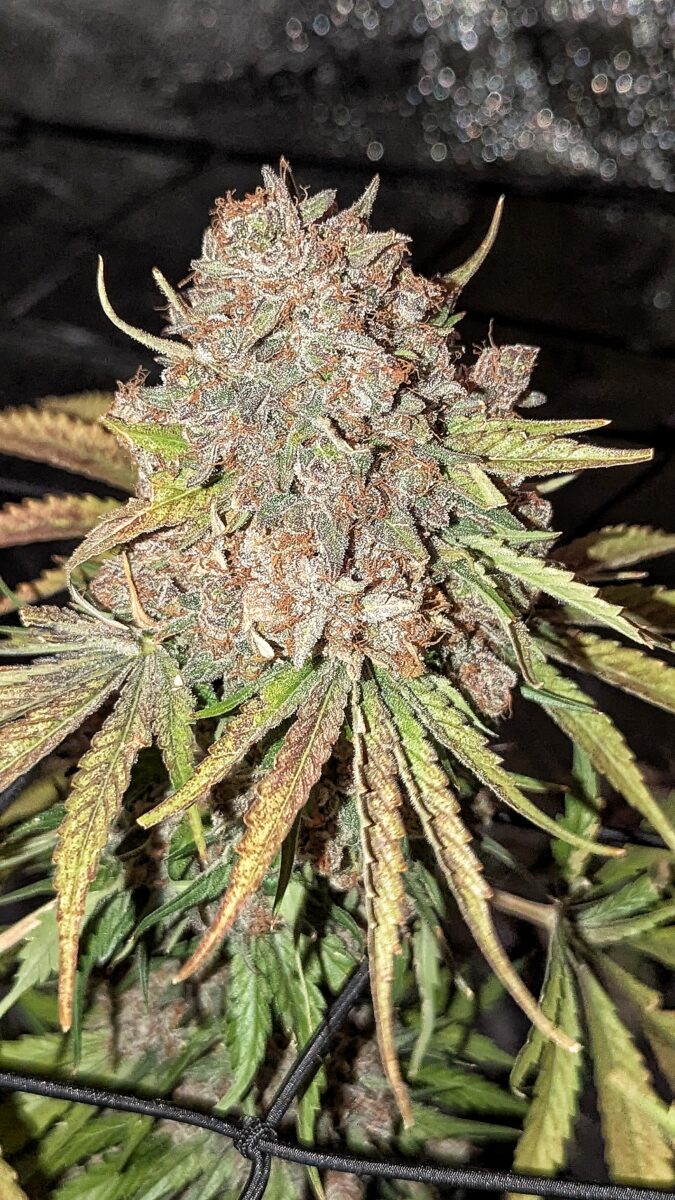
Light intensity at harvest remained steady at 570 PPFD with a DLI of 24. Environmental conditions were stable. Trichome analysis at harvest showed the following distribution:
Clear: 15%
Cloudy: 67%
Amber: 18%
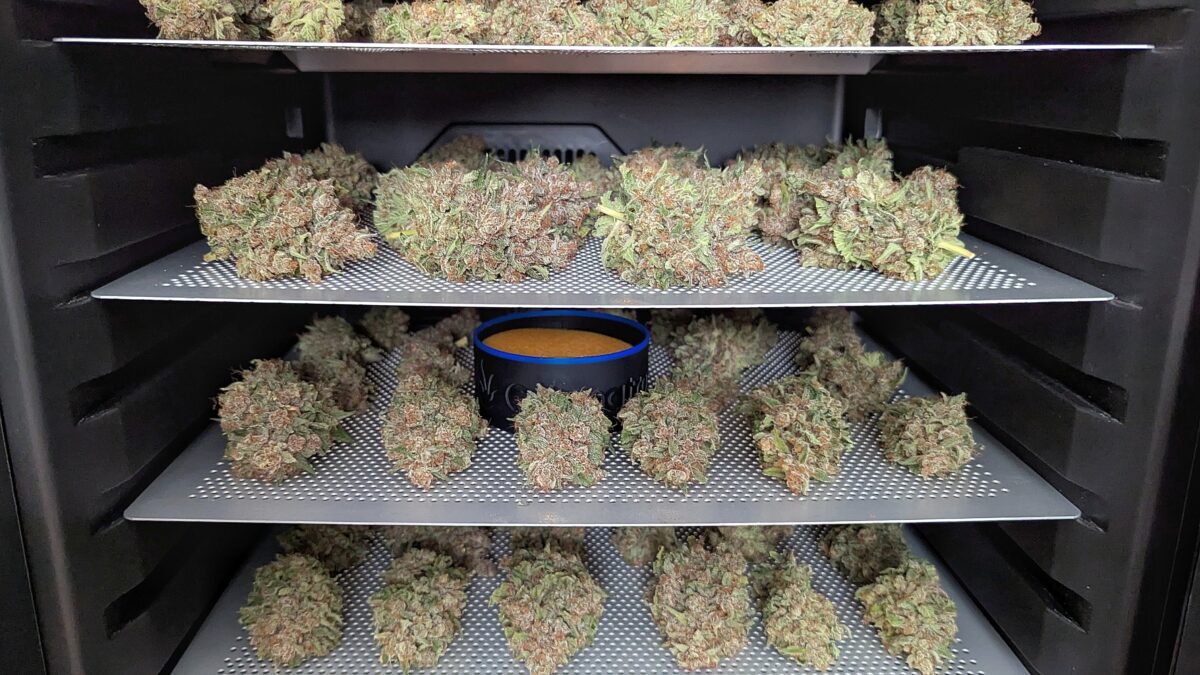
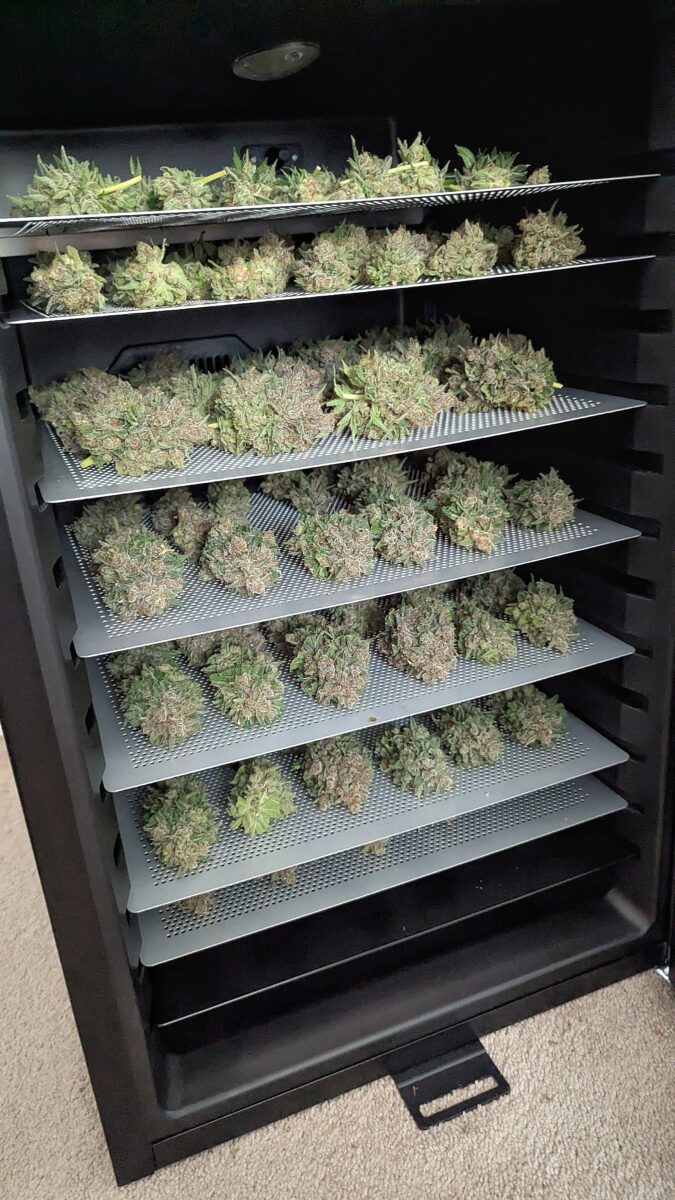
Harvest was performed from the bottom up to prevent the plant from collapsing under its own weight. I worked on one set of branches at a time, performing a rough trim and cutting buds down to roughly golf ball size. Buds were placed on trays and loaded into the Cannatrol.
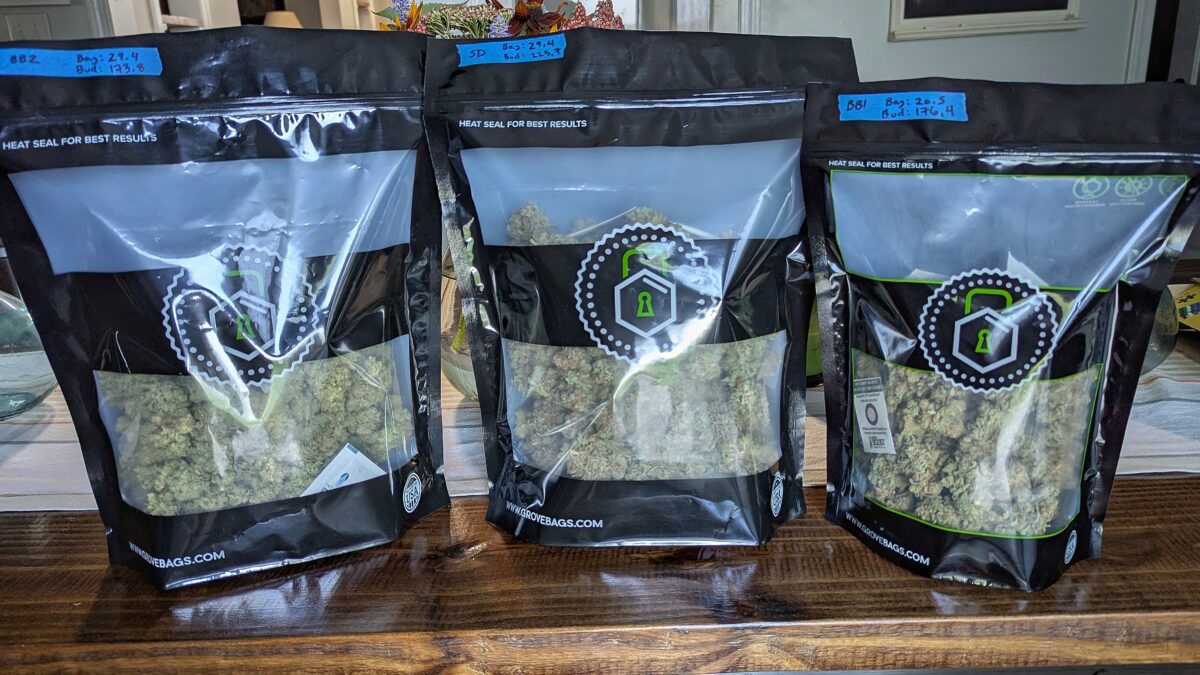
I followed the standard Cannatrol protocol: 4 days of dry followed by a 4 days of cure. I allowed for one additional week in the hold cycle (68°F / 60% RH) to stabilize moisture. Afterward, I completed a dry trim and placed the buds into a large Grove bag. They will remain there for 3–4 weeks before being transferred to mason jars for long-term storage.
Final Dry Weight: 226 grams (8.0 oz) from a single Stardawg plant.
Lifecycle Summary – Stardawg
Seedling Stage: 8 days
Vegetative Stage: 15 days
Topped on Day 10 above the 4th node; 1st node removed, leaving 3 sets of branches
4 days of recovery after topping
Flip to Flower: Day 23 post-emergence
Transition: 6 days post-flip until pistil emergence
Flowering Stage: 82 days
Total Time (Seed to Harvest): 110 days
FLO
13
Week
Week 13: Flowering Stardawg
Photos & videos (3)
Grow details

Plant height
36 in

Air humidity
50 %

Smell intensity
High

Day air temperature
78 °F

Night air temperature
70 °F

Lamp to plant distance
15 in

Pot size
3 gal

Solution pH
6

Nutrient strength (mS/cm)
0.76 mS/cm

Daily water per plant
3 L

Light schedule
12 h
Grower notes
Week #13 (Late Flower to Ripening Transition)
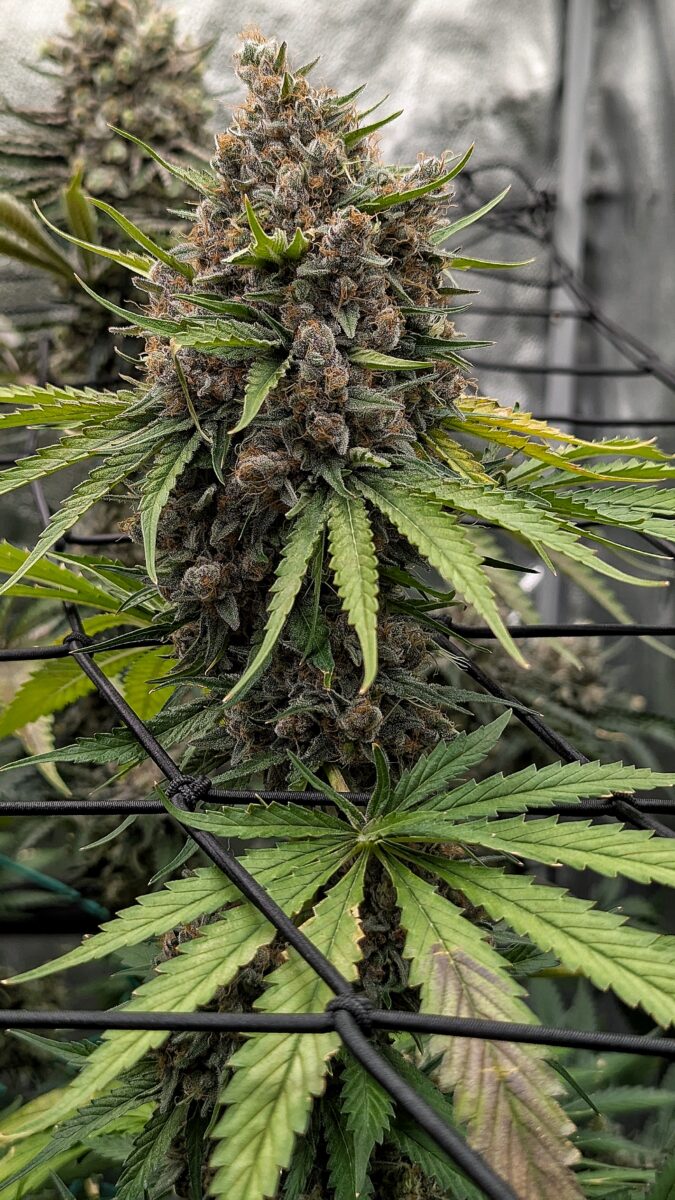
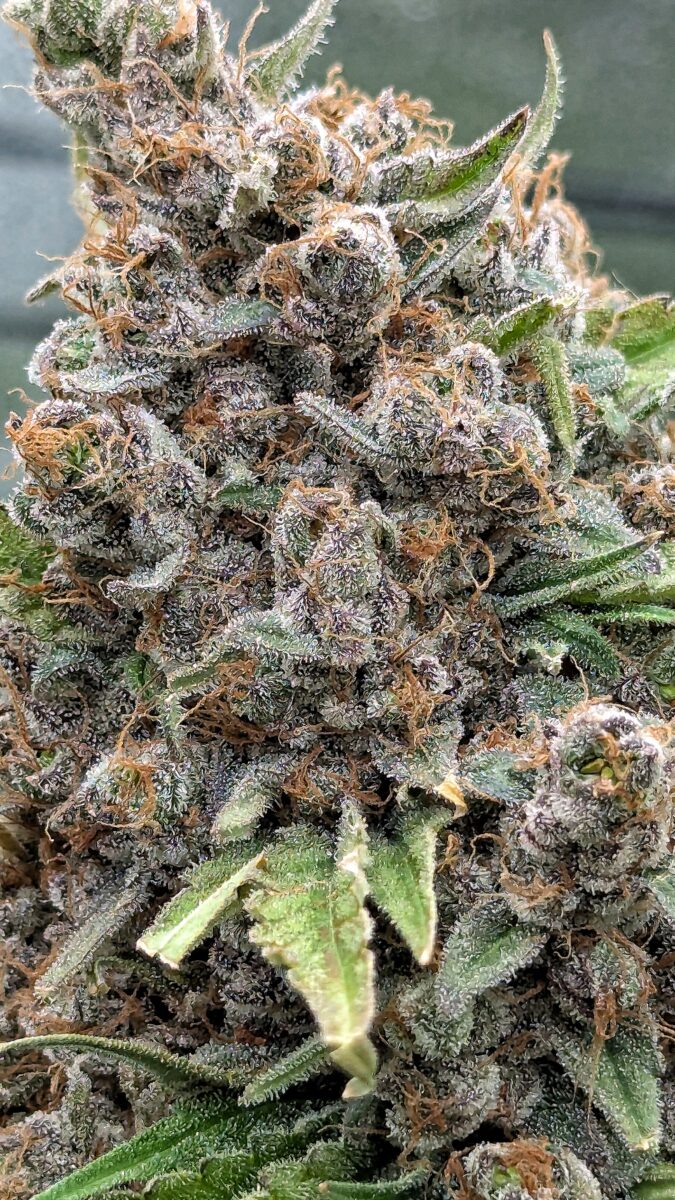
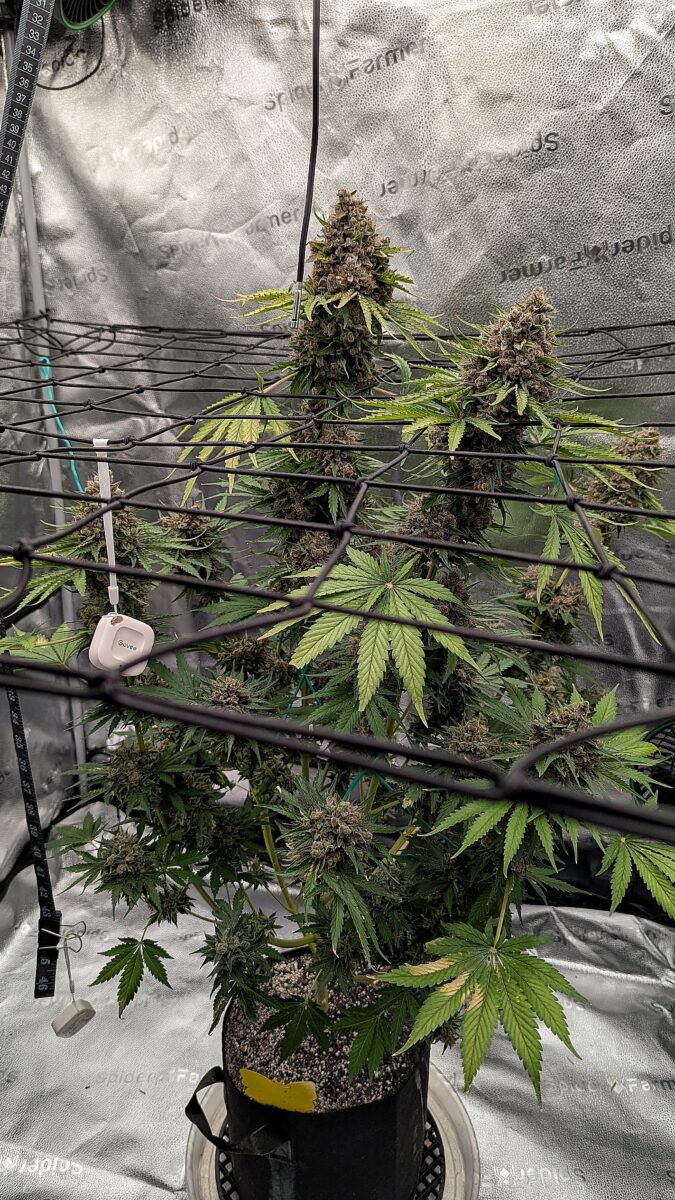
Week 13 was a transitional phase, bridging the end of late flower and the onset of ripening. Light intensity was gradually reduced to 570 PPFD, delivering a DLI of 24. Daytime temperatures averaged 78°F, with night lows around 70°F. Soil temperatures remained steady in the mid-70s, and relative humidity held at 50%.
I pushed ripening nutrients once early in the week, then allowed the plant to coast on plain, pH-adjusted water. Runoff ranged between 600–800 ppm, with runoff pH consistently reading 6.4. Input pH was also set at 6.4 to maintain equilibrium. Water volume was slightly reduced to 3 liters per day to match the plant’s slower uptake in this final stretch.
Mid-week, I discovered 5–6 nanners on Stardawg, primarily located around the mid and upper bud sites. They were removed immediately. This is a relatively common occurrence in certain cultivars nearing the end of flower, often associated with a natural self-preservation mechanism called rodelization - where the plant forms male pollen sacs in an attempt to self-pollinate after prolonged flowering. No open sacs were found, and there was no visible pollen spread - not that it would have mattered this close to harvest anyway.
Aromatic intensity remained high throughout the week. Buds continued to swell, becoming dense and heavy, requiring additional branch support as weight increased heading into the final days.
FLO
11
Week
Week 11: Flowering Stardawg
Photos & videos (4)
Grow details
Plant height
36 in
Air humidity
50 %
Smell intensity
High
Day air temperature
83 °F
Night air temperature
69 °F
Lamp to plant distance
15 in
Pot size
3 gal
Solution pH
6
Nutrient strength (mS/cm)
1.18 mS/cm
Daily water per plant
4 L
Light schedule
12 h
Grower notes
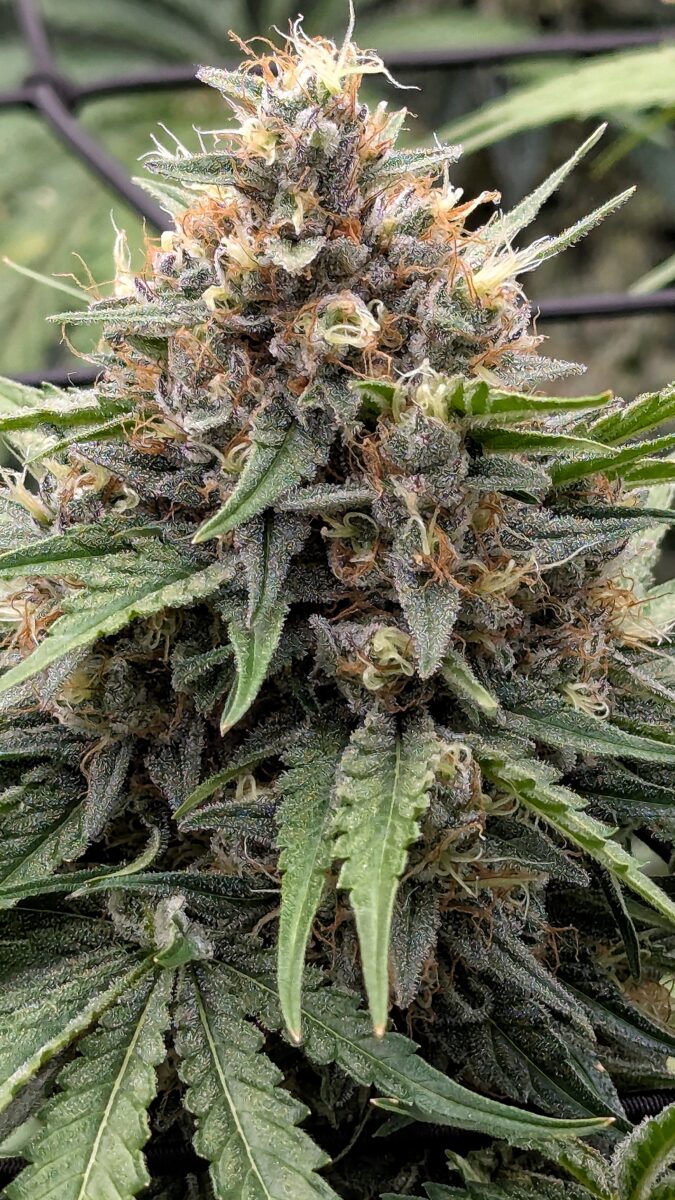
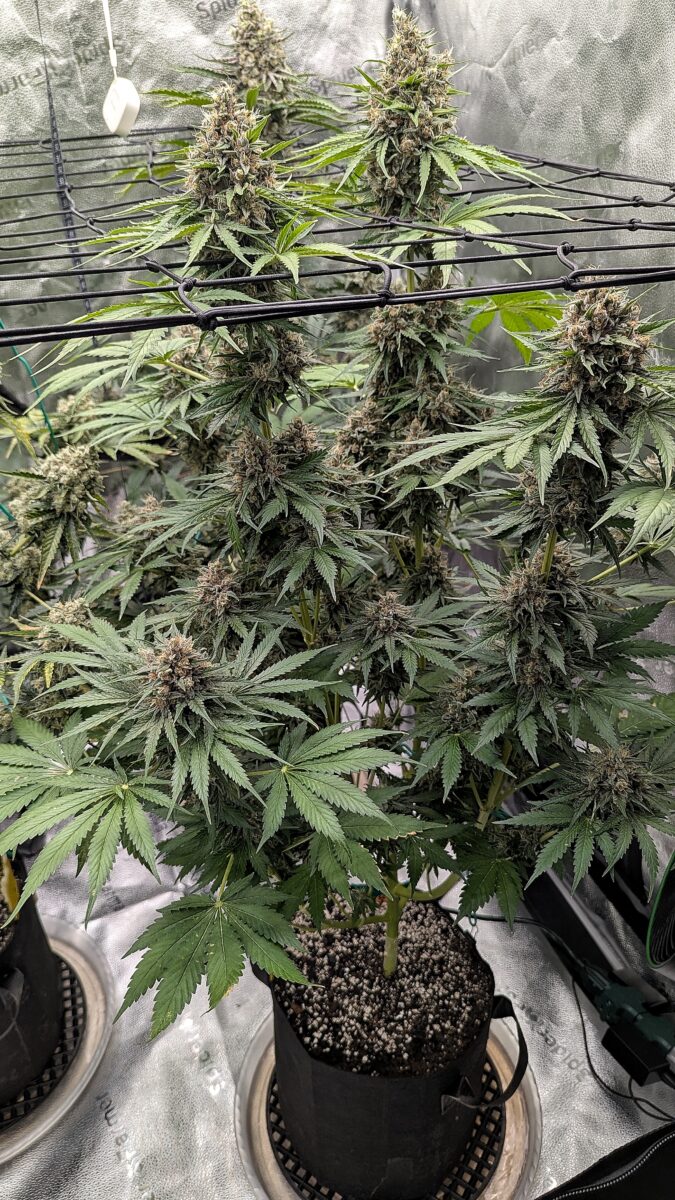
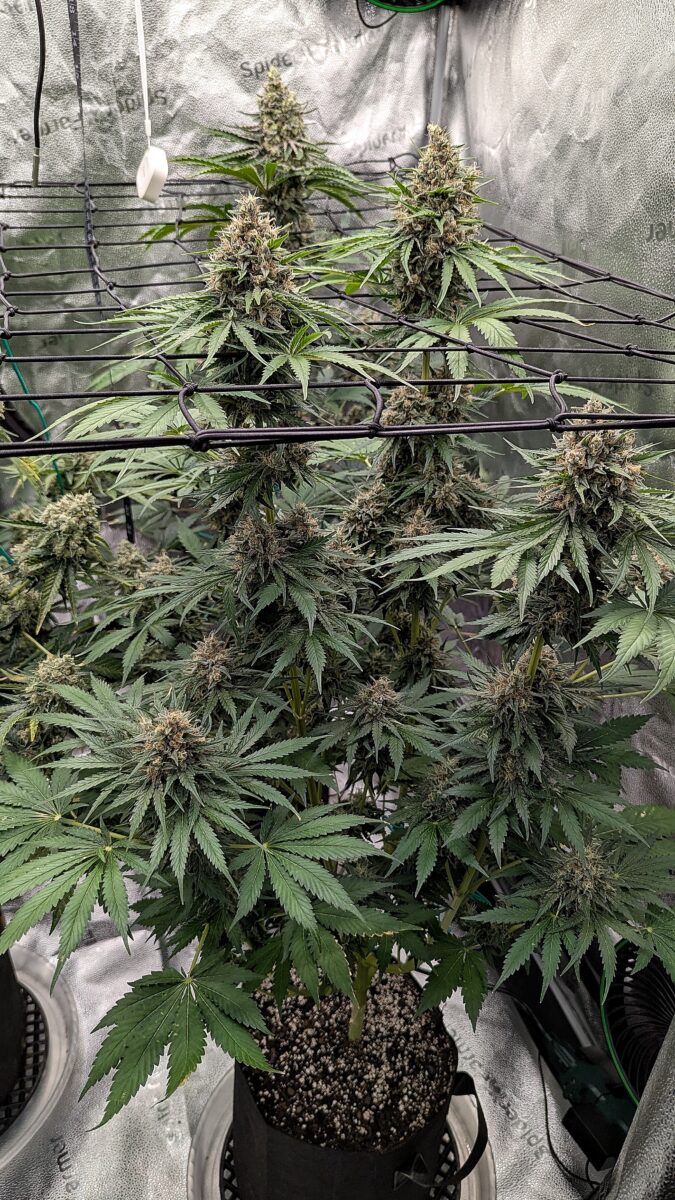
Week #11 (Late Flower – Week 1)
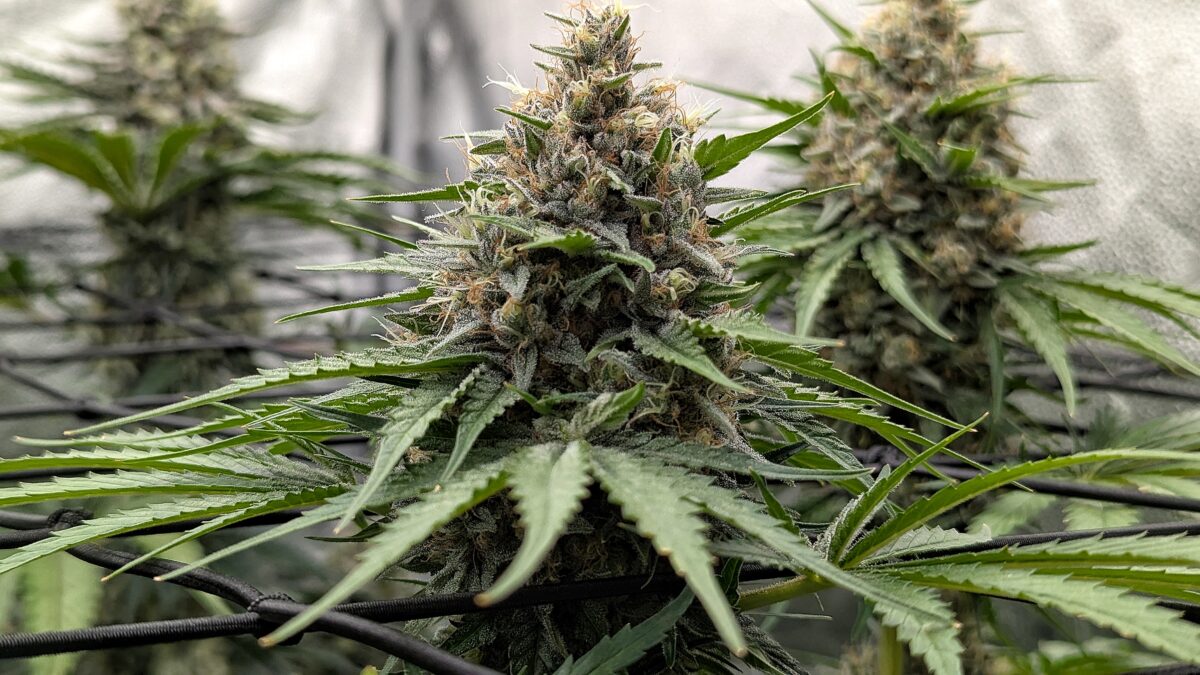
This week marked the beginning of late flower for Stardawg. The focus shifted to monitoring trichome development, maintaining environmental consistency, and gradually easing nutrient levels as ripening begins. Light intensity remained steady between 820–850 PPFD, with a DLI of 36–37. The light was held 15" above the canopy, and UV-A exposure began tapering down from its mid-flower peak.
Environmental conditions were well dialed in - daytime temperatures averaged 83°F, with night lows around 69°F. Relative humidity held at 50%, and substrate temperature stayed stable in the mid-70s.
Nutrient input was reduced this week in line with the plant’s decreasing demand. I fed twice using late flower nutrients, targeting around 590 ppm to maintain runoff levels between 800–1,000 ppm. Runoff pH averaged 6.2, while input pH was delivered at 6.7 to gently steer values within optimal range. Watering continued at 4 liters per day with Cal-Mag support.
Mid-week, I performed a detailed trichome check to gauge ripeness:
Top nodes: 20% clear / 70% cloudy / 10% amber
Mid nodes: 15% clear / 75% cloudy / 10% amber
Bottom nodes: 25% clear / 65% cloudy / 10% amber
Overall average: 20% clear / 70% cloudy / 10% amber
Aromatic intensity remains very high, with the scent continuing to deepen as the plant enters its final stages of development.
FLO
9
Week
Week 9: Flowering Stardawg
Photos & videos (2)
Grow details
Plant height
36 in
Air humidity
50 %
Smell intensity
High
Day air temperature
82 °F
Night air temperature
72 °F
Lamp to plant distance
15 in
Pot size
3 gal
Solution pH
6
Nutrient strength (mS/cm)
2.16 mS/cm
Daily water per plant
4 L
Light schedule
12 h
Grower notes
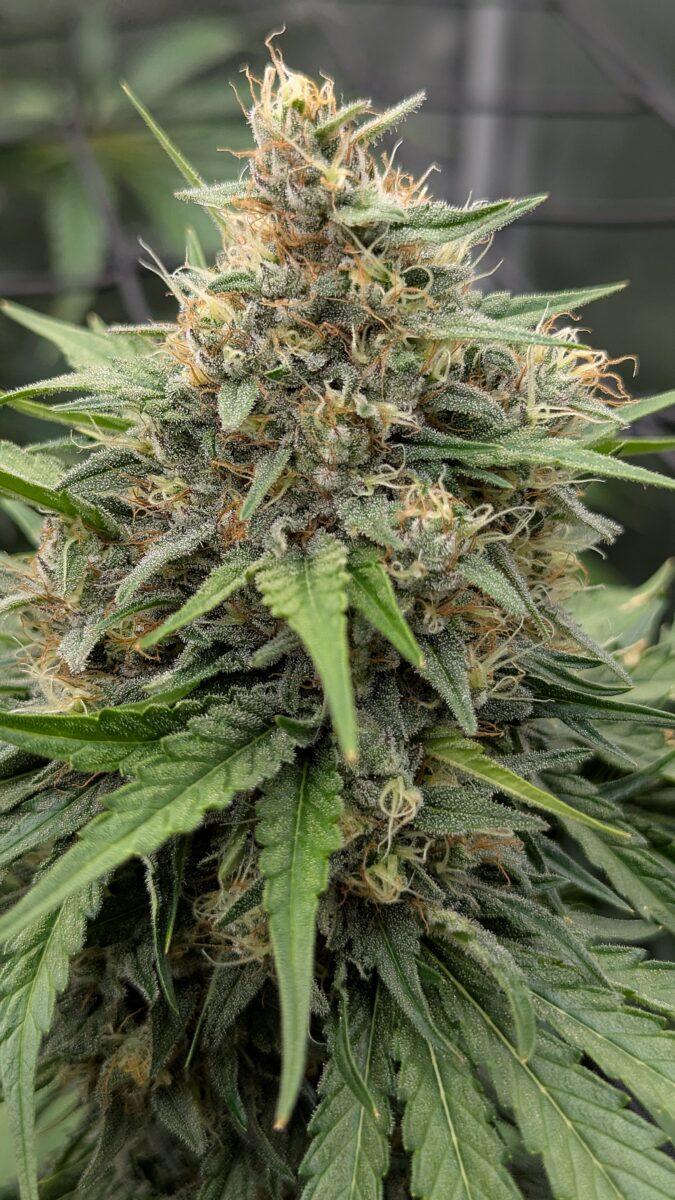
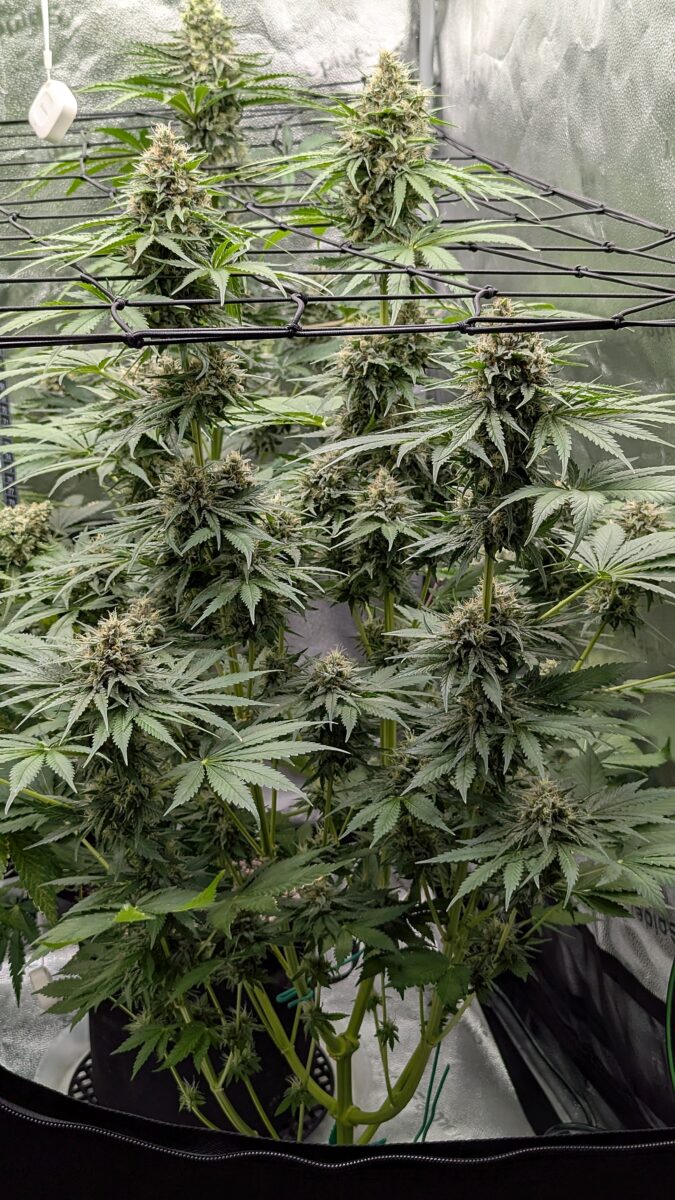
Week #9 (Mid-Flower – Week #4)
Light intensity was held steady at 820–850 PPFD with a DLI of 36–37. The light remained 15" above the canopy, and UV-A exposure continued at 2 hours per day. Environmental conditions were stable throughout the week: daytime temperatures averaged 82°F, with nights around 72°F, and relative humidity hovering at 50%. Soil temperature remained consistent in the mid-70s.
Nutrient demand began to taper compared to the previous few weeks. I only needed to feed twice in Week 9, using an input strength between 1,000–1,100 ppm. Runoff stayed right in the target range at 1,200–1,400 ppm, with pH holding steady at 6.2. To prevent pH from drifting too low, I adjusted the input solution to 6.8. Daily watering continued at 4 liters per day with Cal-Mag support. Silica was still being added once per week but was discontinued at the end of this week in preparation for the transition to late flower.
I installed trellis netting in Week 9, primarily to support the untopped Blueberry plants, which had started leaning under the weight of their forming buds. In my experience, untopped plants are more challenging to manage structurally - especially in late flower and ripening. While topped plants also benefit from support, they tend to maintain a more stable architecture and form a more even canopy. That’s a debated topic, but it’s been consistently true in my own grows.
Aromatics saw a notable jump this week. Stardawg’s scent profile deepened and became far more pronounced, contributing to a strong and complex presence in the tent as mid-flower peaked.
FLO
7
Week
Week 7: Flowering Stardawg
Photos & videos (3)
Grow details
Plant height
36 in
Air humidity
50 %
Smell intensity
Medium
Day air temperature
82 °F
Night air temperature
72 °F
Lamp to plant distance
15 in
Pot size
3 gal
Solution pH
6
Nutrient strength (mS/cm)
2.16 mS/cm
Daily water per plant
4 L
Light schedule
12 h
Grower notes
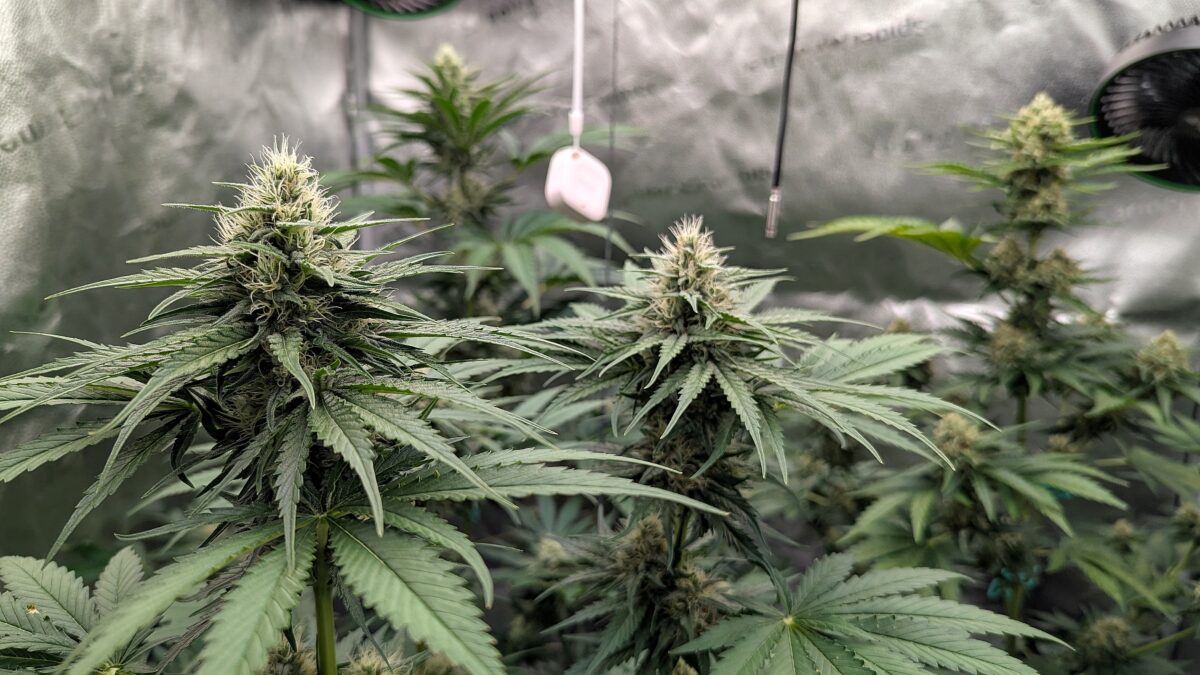
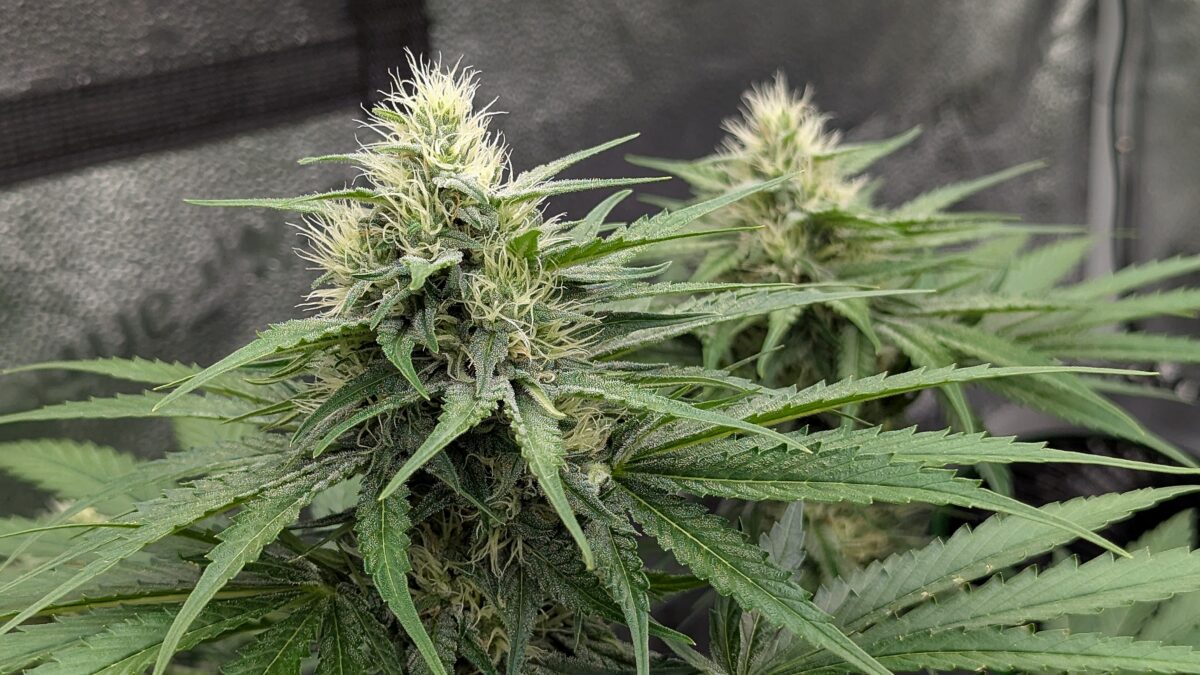
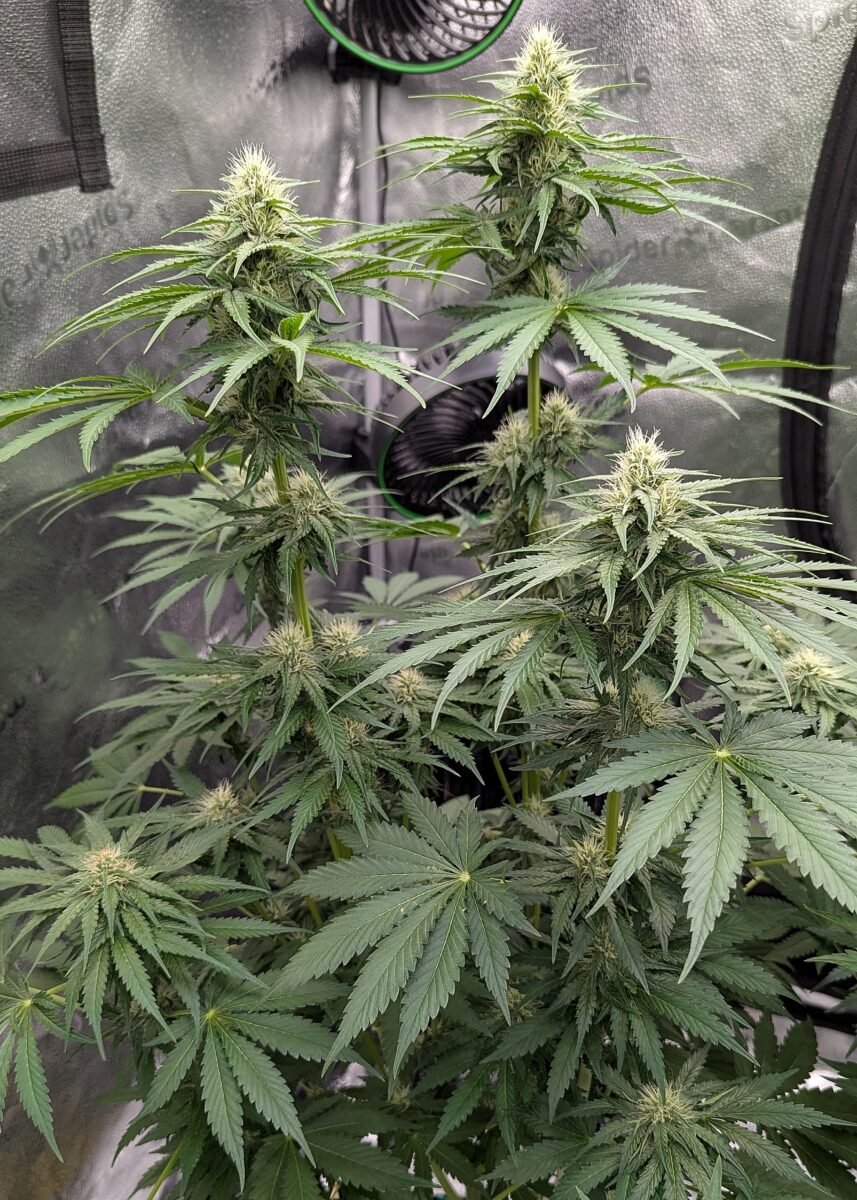
Week #7 (Mid-Flower – Week 2)
This week marked the second week of mid-flower but also brought a major shift in the grow. Up until this point, I had two Stardawg plants; however, at the end of Week 6, one went full herm - showing pollen sacs and male flowers throughout the lower and mid nodes. The other plants showed no signs of stress or hermaphroditism at this stage. I made the difficult but necessary decision to remove the affected plant. As a result, I entered Week 7 with three plants remaining: two Blueberry and one Stardawg.
Stardawg finished her stretch within two weeks of pistil emergence, reaching a final height of 36". For those interested in stretch behavior: on the day I flipped the light schedule from 18/6 to 12/12, Stardawg stood at 11" tall. This gives a height multiplier of approximately 3.27x from flip to peak height - under intense light and after topping four days prior to the light change.
Nutrient demands increased significantly during mid-flower. I fed mid-flower nutrients at 1,000–1,100 ppm three times throughout the week to keep pace with the plant’s needs. Runoff was monitored closely and remained in the target range of 1,200–1,400 ppm, with a consistent runoff pH of 6.2 and input pH around 6.6. Daily watering continued at 4 liters per day with Cal-Mag support.
Environmental conditions remained stable: daytime temps held at 82°F, nights at 72°F, RH averaged 50%, and soil temperature hovered around 75°F. The light was held steady at 15" above the canopy, delivering an average PPFD of 850 and a DLI of 37. Mid-week, UV-A exposure reached its peak for the cycle - 2 hours per day - where it will stay until late flower.
Since I avoid defoliation past Week 3 of flower, all structural pruning was completed by the start of mid-flower. In Week 7, aroma began to intensify, and while still developing, Stardawg was producing a rich, complex scent - sweet, spicy, earthy, and reminiscent of walking into a coffee house filled with the smell of freshly brewed drinks.
FLO
5
Week
Week 5: Flowering Stardawg
Photos & videos (6)
Grow details
Plant height
35.3 in
Air humidity
50 %
Smell intensity
Low
Day air temperature
80 °F
Night air temperature
70 °F
Lamp to plant distance
13 in
Pot size
3 gal
Solution pH
6
Nutrient strength (mS/cm)
2.16 mS/cm
Daily water per plant
4 L
Light schedule
12 h
Grower notes
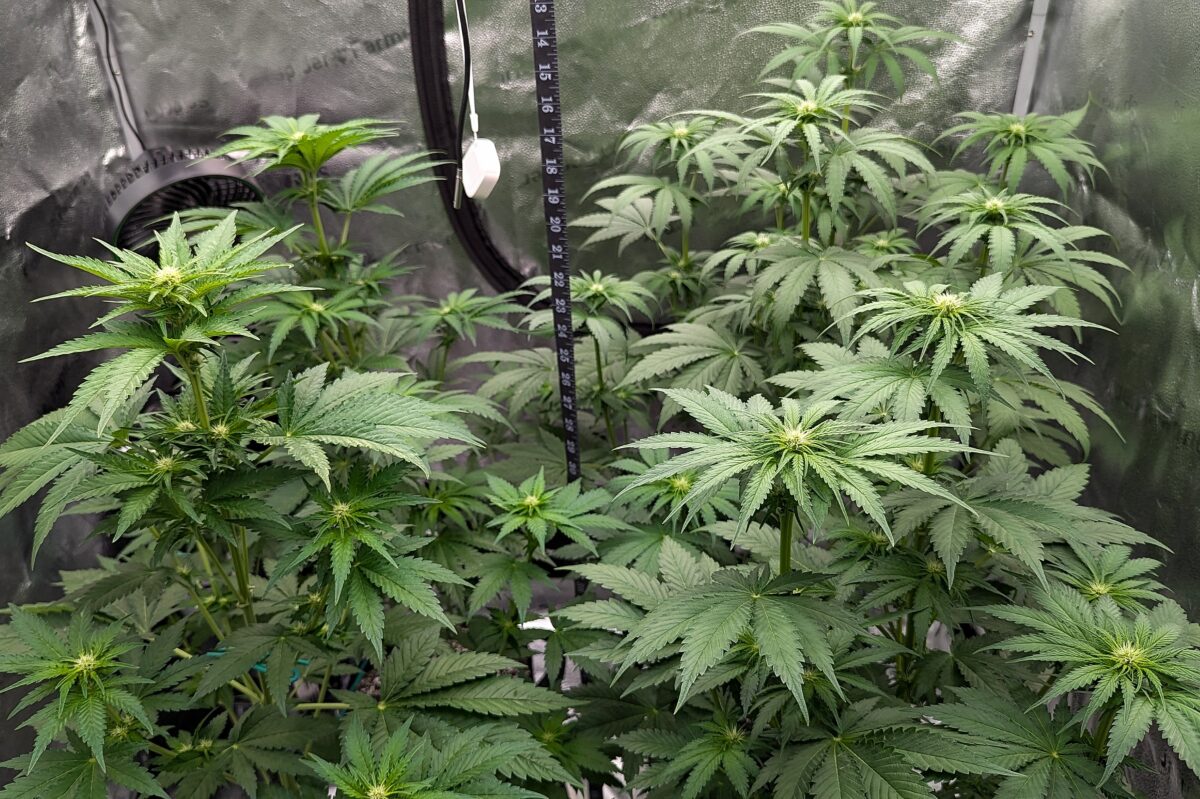
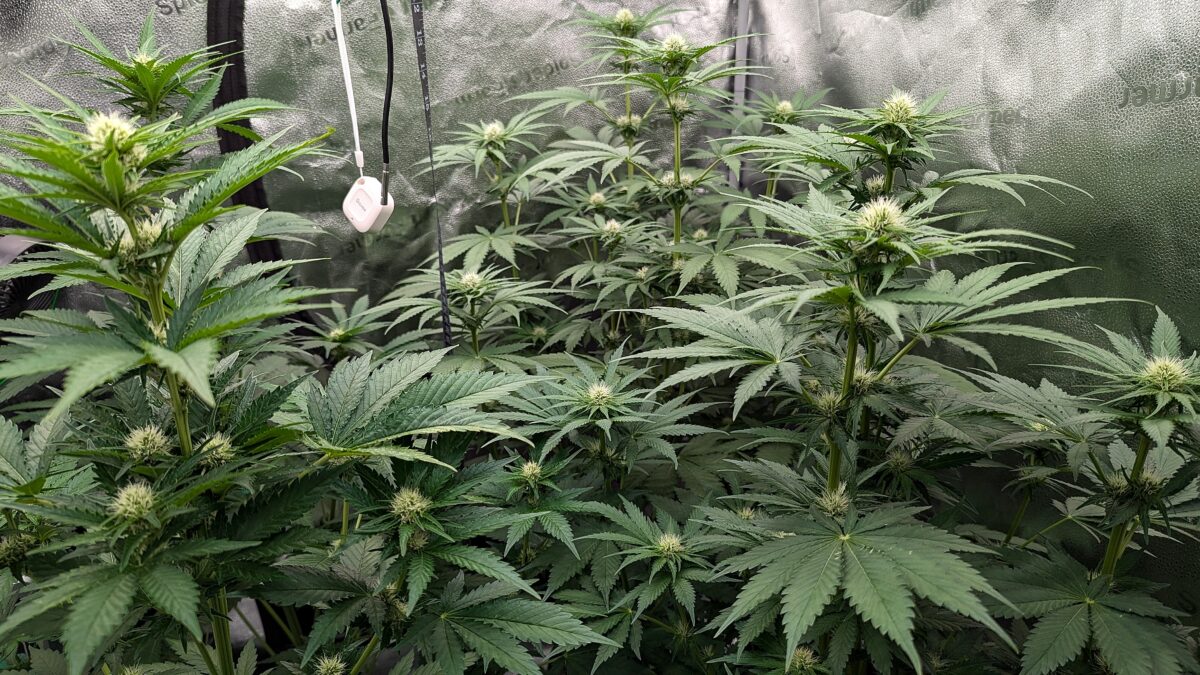
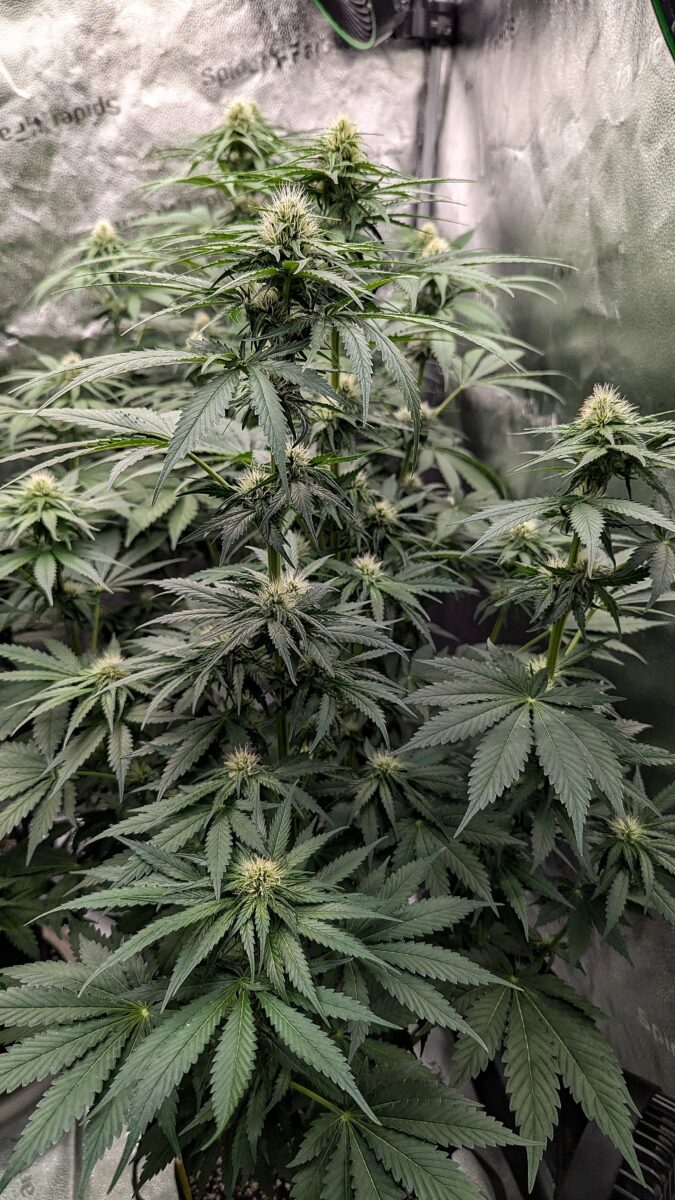
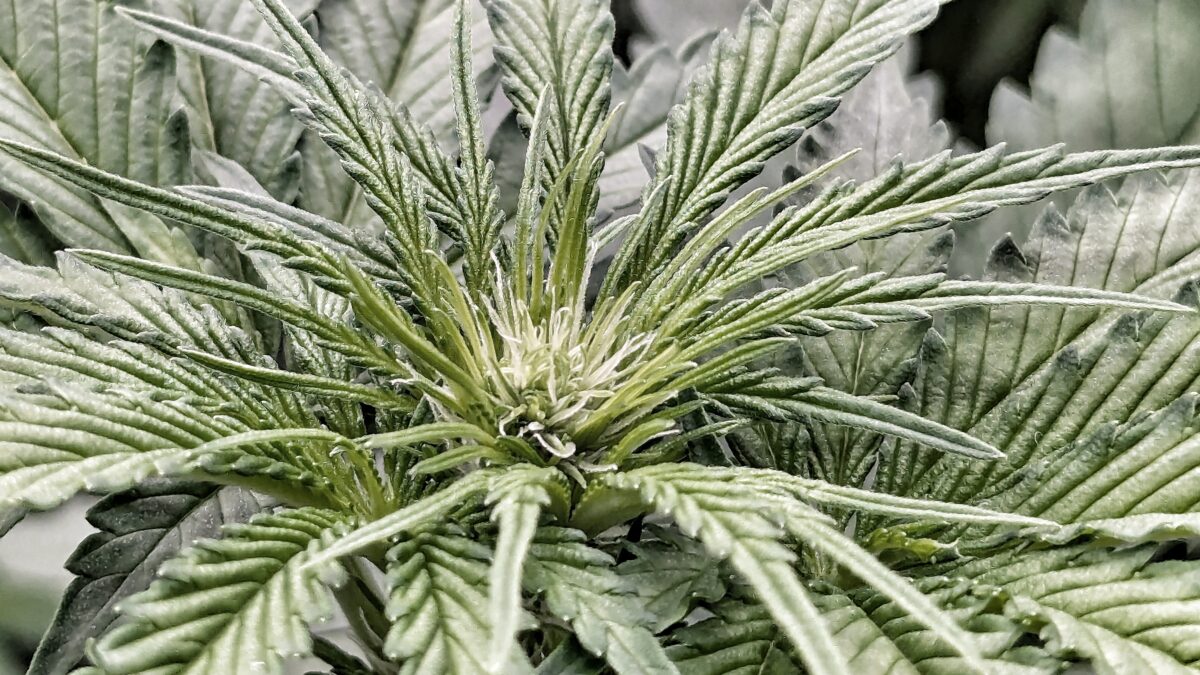
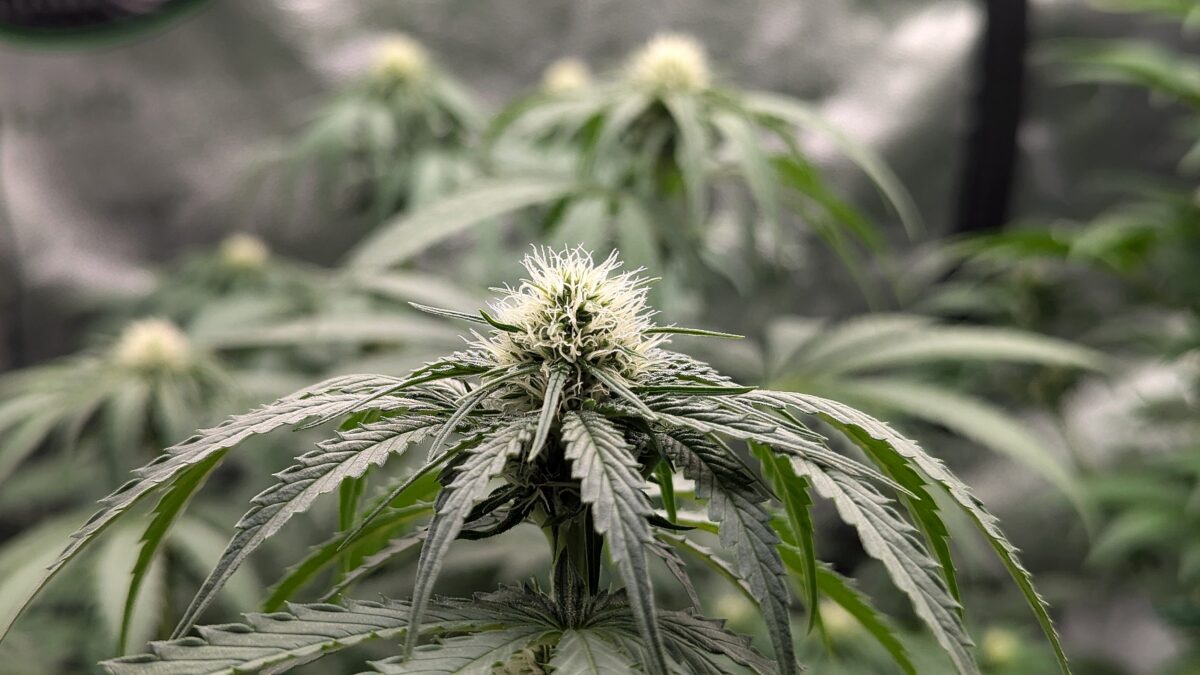
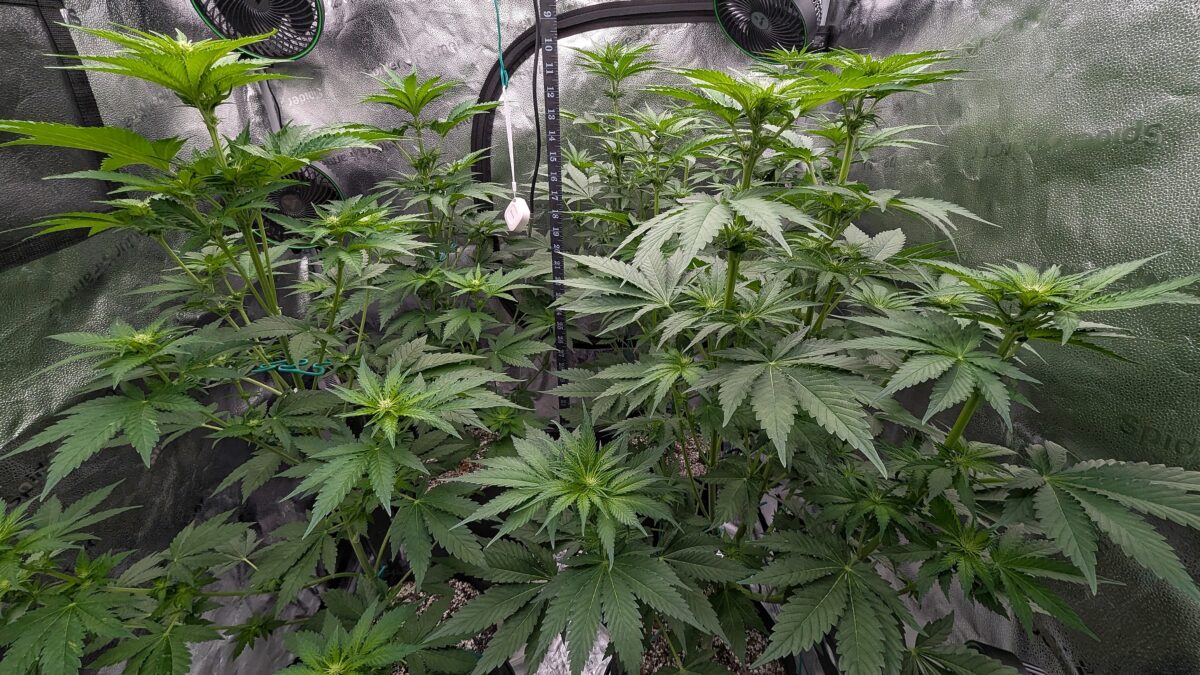
In Week #5 (Early Flower - Week #2), Stardawg measured just over 35" in height. Vertical growth was slowing down but space in the tent was becoming limited, making it clear I’d need to manage structure and airflow more aggressively moving forward. I performed a round of targeted defoliation to open up the plant’s lower sections and improve light penetration and airflow.
Light intensity was set at an average of 850 PPFD, delivering a DLI of 35. The light source remained 13" from the canopy, and I continued adjusting every few days to maintain that distance. Temperatures remained stable throughout the week - 80°F during the day and 70°F at night - with a consistent soil temperature in the mid-70s and relative humidity averaging 50%.
Nutrient strategy remained conservative this week. Runoff was closely monitored and maintained in the target range of 1,000–1,200 ppm. I only fed once this week and otherwise provided 4 liters of plain, pH-adjusted water per day + CAL-MAG (pH ~6.4). One watering was missed mid-week, and some minor signs of stress became visible, but the plant bounced back quickly once watered.
Gypsum was top-dressed to support calcium and sulfur availability heading into mid-flower. Aromatic development was still low this week but expected to ramp up soon as the plant transitions into late flower.
VEG
3
Week
Week 3: Vegetation Stardawg
Photos & videos (2)
Grow details
Plant height
11 in
Air humidity
60 %
Smell intensity
None
Day air temperature
80 °F
Night air temperature
122 °F
Lamp to plant distance
16 in
Pot size
3 gal
Solution pH
6
Nutrient strength (mS/cm)
0.52 mS/cm
Light schedule
18 h
Grower notes
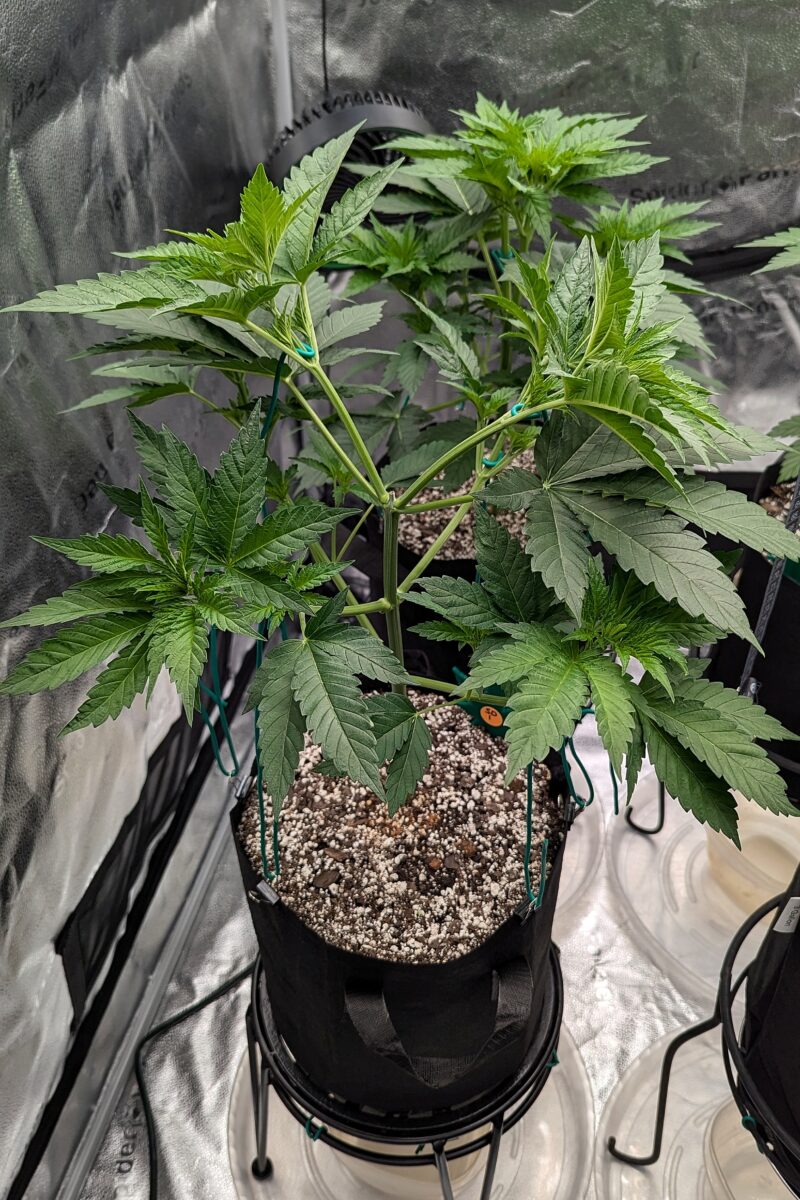
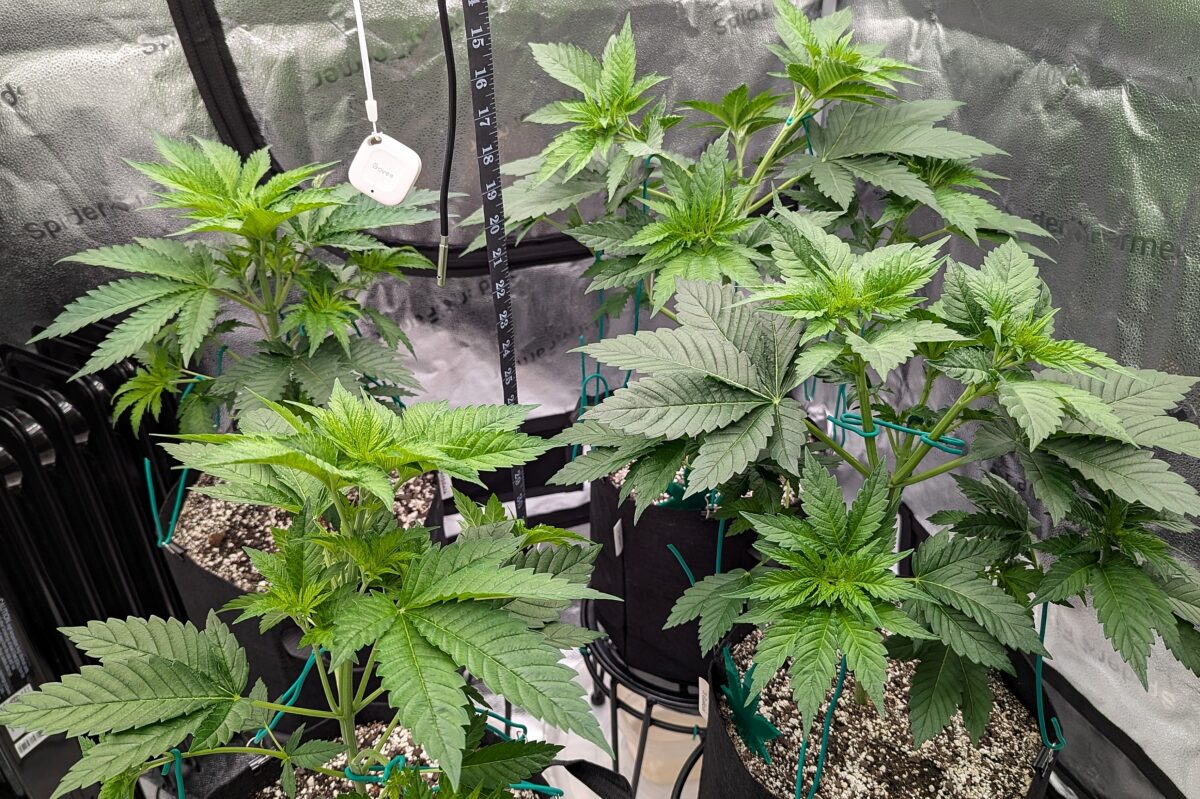
In my grows, I almost always run two strains together - typically one indica and one sativa variety. In the first image, my indica (Blueberry) is on the left, and my sativa (Stardawg) is on the right. In the second image, you can see that I have started low-stress training (LST) on Stardawg.
I begin counting “days in veg” when I observe the first set of true leaves, and I also start tracking node development at that point. I typically top my plants above the fifth node and remove the first node, leaving four sets of branches that can be low-stress trained to manage height, increase stability, and improve light distribution. This has been my standard process over the last three grows (back when I was growing autoflowers), and it worked well.
Ten days into veg, I topped Stardawg above the fourth node and removed the first, leaving three sets of strong branches. I would have preferred to top above the fifth node, but I could tell that plant height would become an issue during flower if I didn’t act soon. After topping Stardawg, I gave her four full days to recover before flipping to 12/12. The second image was taken one week after topping - at that point, I was three days into the 'transition' phase.
I switched from 18/6 to 12/12 on Day 15 of veg, or 23 days post-emergence.
VEG
2
Week
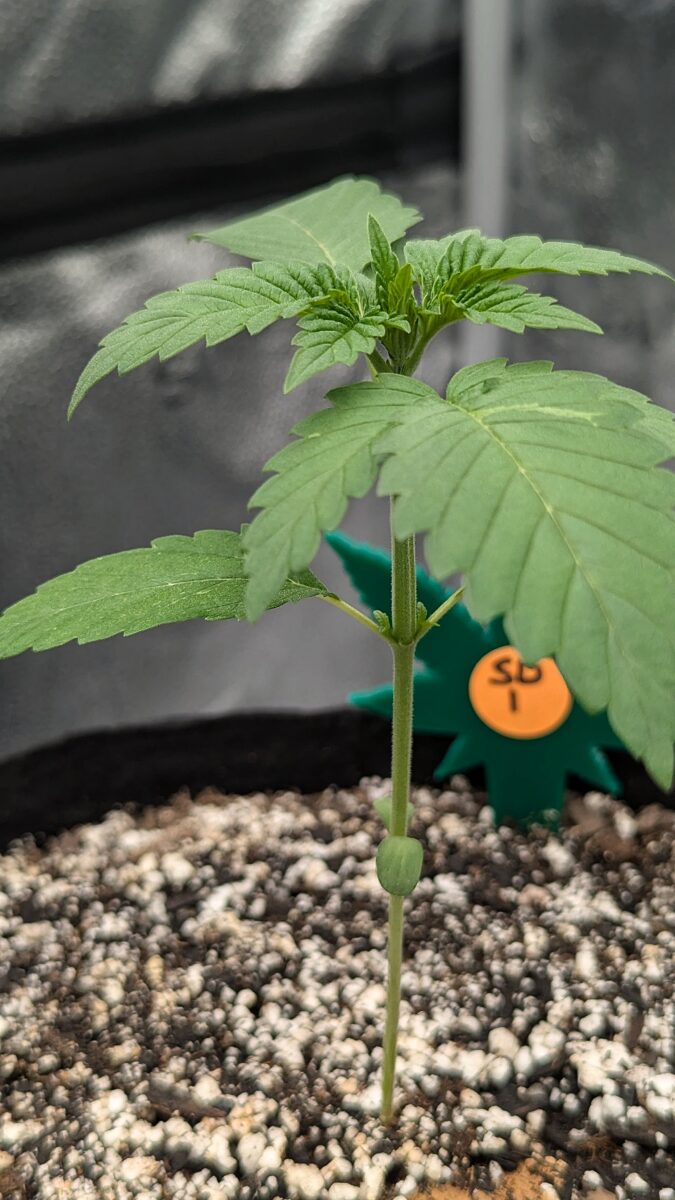
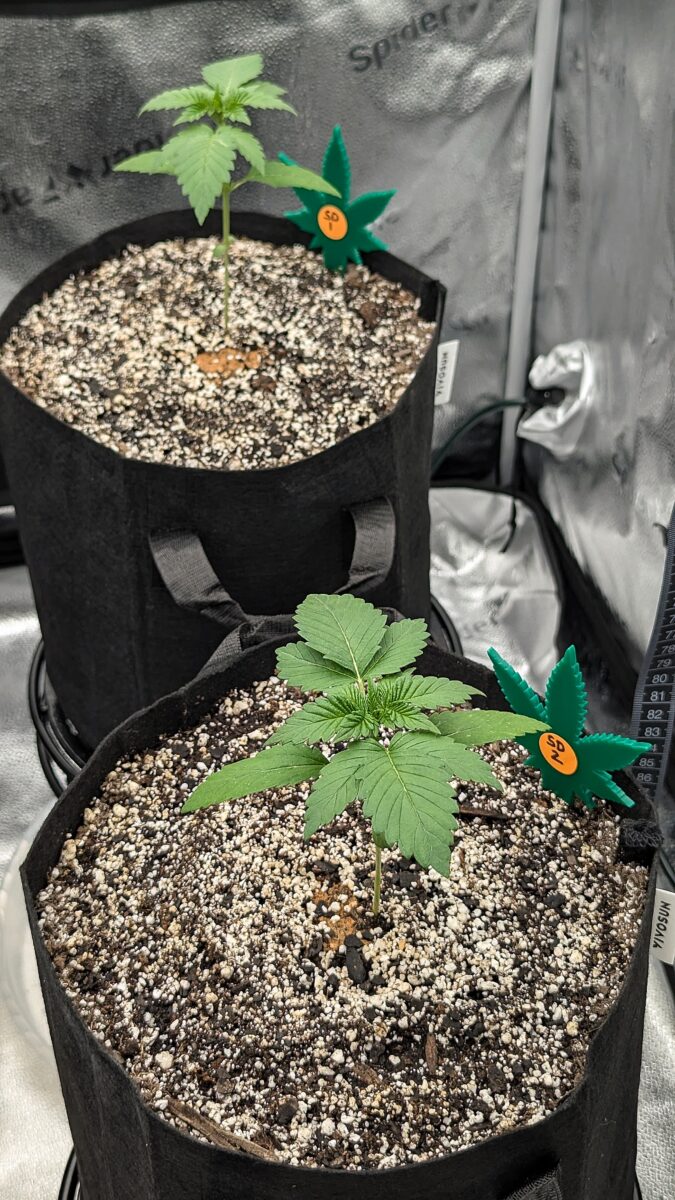
Week 2: Vegetation Stardawg
Photos & videos (2)
Grow details
Plant height
5 in
Air humidity
60 %
Smell intensity
None
Day air temperature
80 °F
Night air temperature
75 °F
Lamp to plant distance
25 in
Pot size
3 gal
Solution pH
6
Nutrient strength (mS/cm)
0.24 mS/cm
Light schedule
18 h
Grower notes
Introduced UV-A in Week #1 of veg, increasing duration by 5 minutes per day. At the start of the week #1, I was giving 0.25 L of ph-adjusted water to each plant per day. By the end of Week #1, I was giving 0.75 L to each plant. Cal-Mag and Silica introduced towards the end of the week.
315-385 PPFD.
20-25 DLI.