

Grow Diary God’s Gift
Growing God's Gift

Michael the Barred Owl
Weeks
Week Info

Week Number
11

Plant Height
47 inch

Day Air Temperature
78 ºF

Night Air Temperature
70 ºF

Light Schedule
12 hrs

Solution pH
6

Solution TDS
440 ppm

Air Humidity
45 %

Smell
High

Solution Temperature
64 ºF

Pot Size
3 gal

Lamp to Plant Distance
14 inch

Watering Volume
4 L
Gallery
Comment
God’s Gift – Week #7 of Flower (Late Flower Transition to Ripening)
Week seven marked a decisive shift for God’s Gift, with both plants moving fully out of mid-flower and into ripening. Early in the week, feeding consisted of a 50/50 blend of mid-flower and late-flower nutrients at moderate strength, coming in around 800 ppm. After a few feedings at this ratio, the transition was completed and the plants were moved entirely onto late-flower nutrients. At that point, nutrient strength was reduced to approximately 640 ppm, Cal-Mag was tapered back, and silica supplementation was discontinued entirely. By the end of the week, ripening nutrients provided a PPM of 440.
Lighting was also adjusted to better match the plant’s stage of development. Canopy intensity was gradually reduced, settling around 870 PPFD by the end of the week for a DLI near 38. UVA exposure was tapered from two and a half hours per day down to two hours, with the goal of preserving resin quality while reducing late-stage stress as maturation progresses.
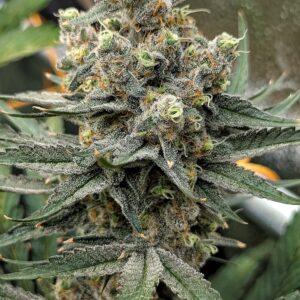
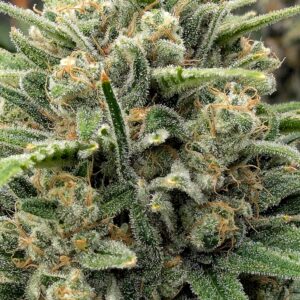
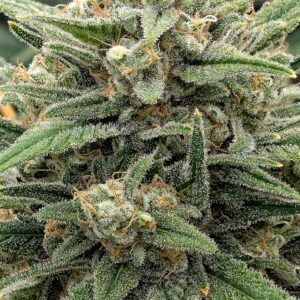
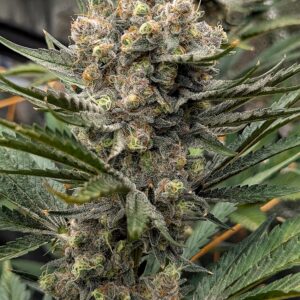
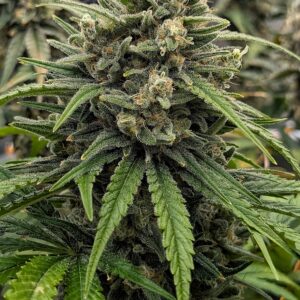
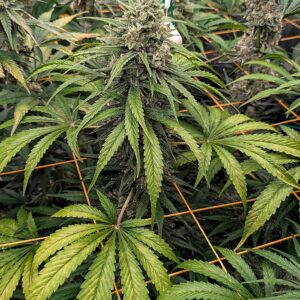
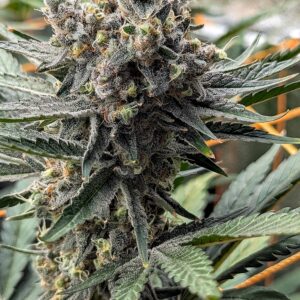
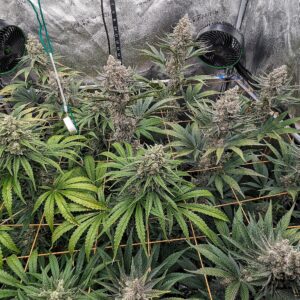
All photos from this update were taken on day 52 of flower, which represents the official entry into the ripening phase for God’s Gift. Trichome analysis across both tops and lower bud sites shows an overall distribution of approximately 25% clear, 70% cloudy, and 5% amber, confirming that the plants have exited late flower and are now focused on final resin development rather than additional bud expansion.
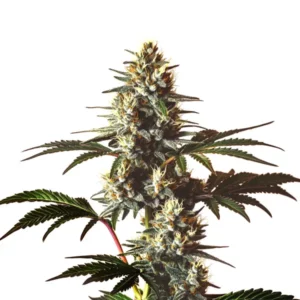
One of the most interesting developments this week has been the clear phenotype divergence between the two God’s Gift plants, despite identical environmental conditions. One plant expresses a strong Kush/Afghan-leaning structure, producing thicker buds with heavier leaf presence and no foxtailing. The second plant shows a distinctly different expression, forming denser but more elongated, foxtail-like buds with minimal leaf mass. This genetic variation explains the visual differences seen in the canopy and bud structure and does not appear to be stress-related, as both plants remain healthy and stable.
Resin production has intensified significantly across both phenotypes, with heavy trichome coverage extending well beyond the calyxes and onto surrounding sugar leaves.
Aromas are becoming increasingly pronounced, dominated by a sharp skunk backbone layered with strong grape notes and subtle sweetness. The resin itself is exceptionally sticky and persistent, signaling that terpene and cannabinoid production is nearing its peak.
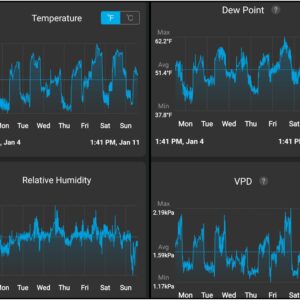
Environmental management remained a priority throughout the week due to intermittent humid weather. While conditions were not always ideal, relative humidity was kept largely below 50% through active control, and airflow remained strong and consistent across the canopy. Overall plant health remains excellent, with early senescence beginning to show in select fan leaves—an expected development at this stage.
God’s Gift is now firmly in ripening, with the focus shifting toward resin maturation, terpene preservation, and a controlled finish over the coming weeks.