

Grow Diaries
Blueberry Grow Diary Growing Blueberry
Jun 13, 2025
HAR
14
Week
Week 14: Harvest Blueberry
Photos & videos (3)
Grow details

Harvest weight
350 g

Plants harvested
2
Grower notes
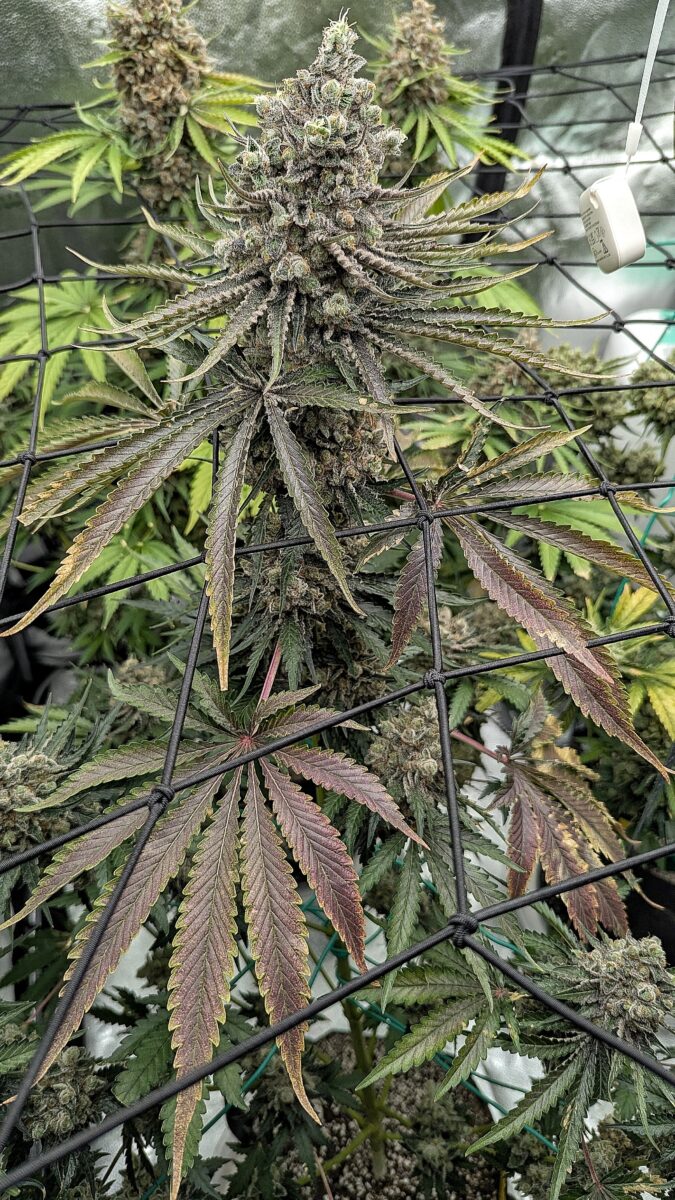
In Week 14, both Blueberry plants received only plain, pH-adjusted water at 1–2 liters per day (115 PPM). Light intensity was lowered to 550–600 PPFD, delivering a DLI of 24–26 as the final signal to finish ripening.
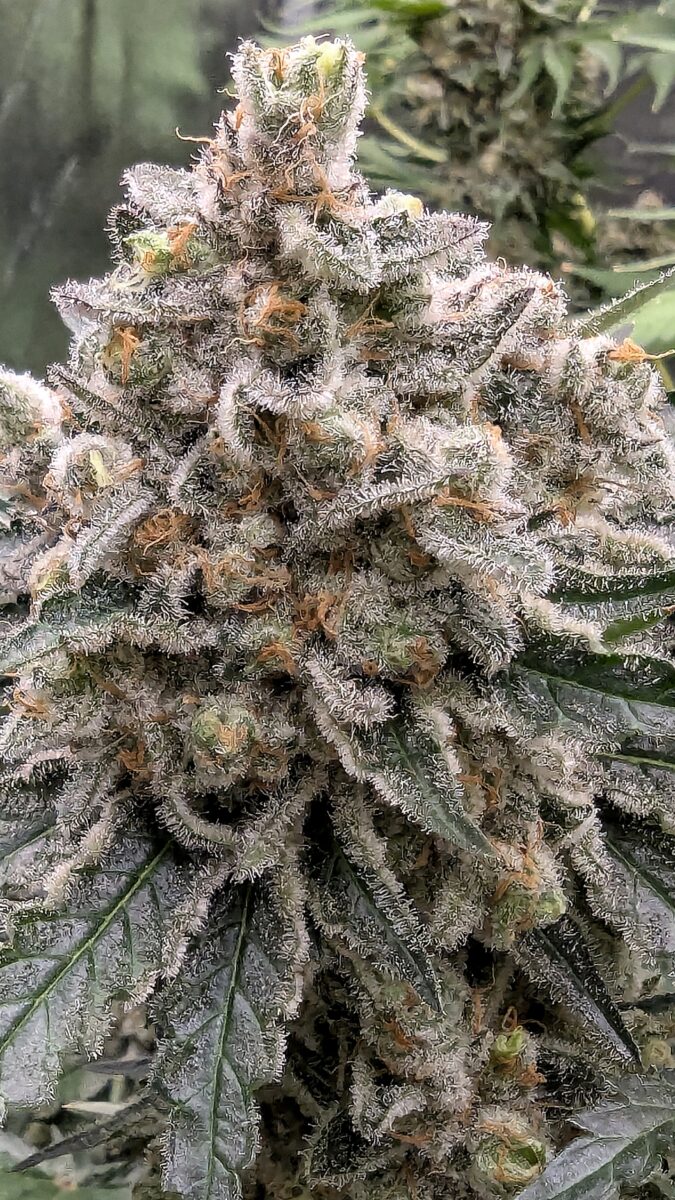
Final trichome assessments showed both plants had reached peak maturity.
- Blueberry #1: 8% clear, 78% cloudy, 14% amber
- Blueberry #2: 10% clear, 83% cloudy, 7% amber
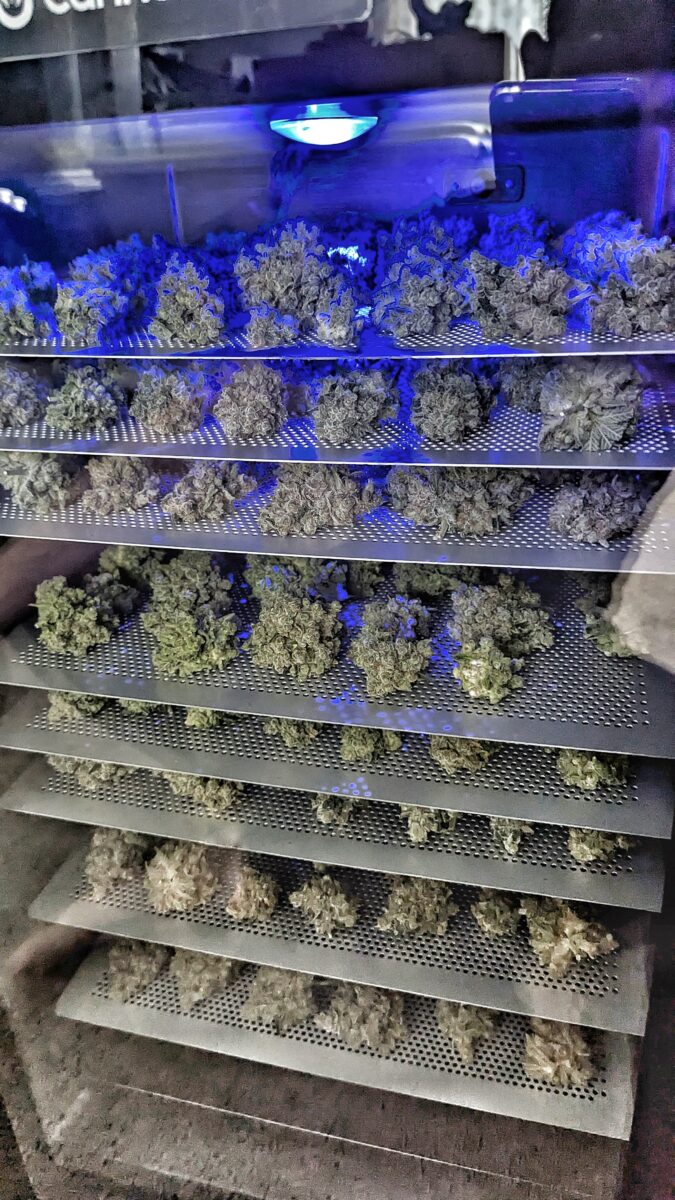
Both plants were harvested on the same day. I performed a rough wet trim and immediately transferred the buds into my Cannatrol for a controlled 10-day dry and cure cycle. After verifying that both bud and stem moisture levels had reached target ranges, I completed a dry trim and loaded the fully dried buds into Grove bags for further curing.
Final Yields:
- Blueberry #1: 173.8 g (6.1 oz)
- Blueberry #2: 176.4 g (6.2 oz)
After 3–4 weeks in Grove bags, I’ll transfer the cured buds into mason jars for long-term storage.
Note: My grow tent is 4 ft x 4 ft x 6.5 ft tall but only half of the tent was occupied by Blueberry because I grow two strains at a time typically.
FLO
13
Week
Week 13: Flowering Blueberry
Photos & videos (4)
Grow details

Plant height
36 in

Air humidity
50 %

Smell intensity
High

Day air temperature
78 °F

Night air temperature
70 °F

Lamp to plant distance
15 in

Pot size
3 gal

Solution pH
6

Nutrient strength (mS/cm)
0.76 mS/cm

Daily water per plant
3 L

Light schedule
12 h
Grower notes
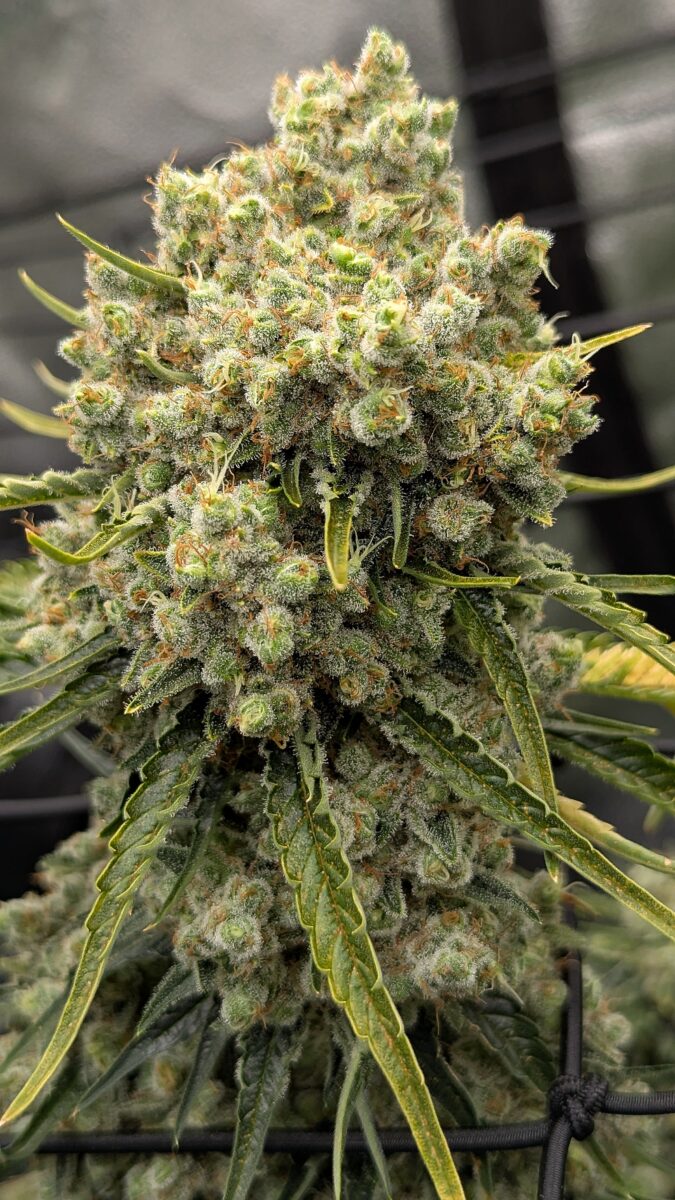
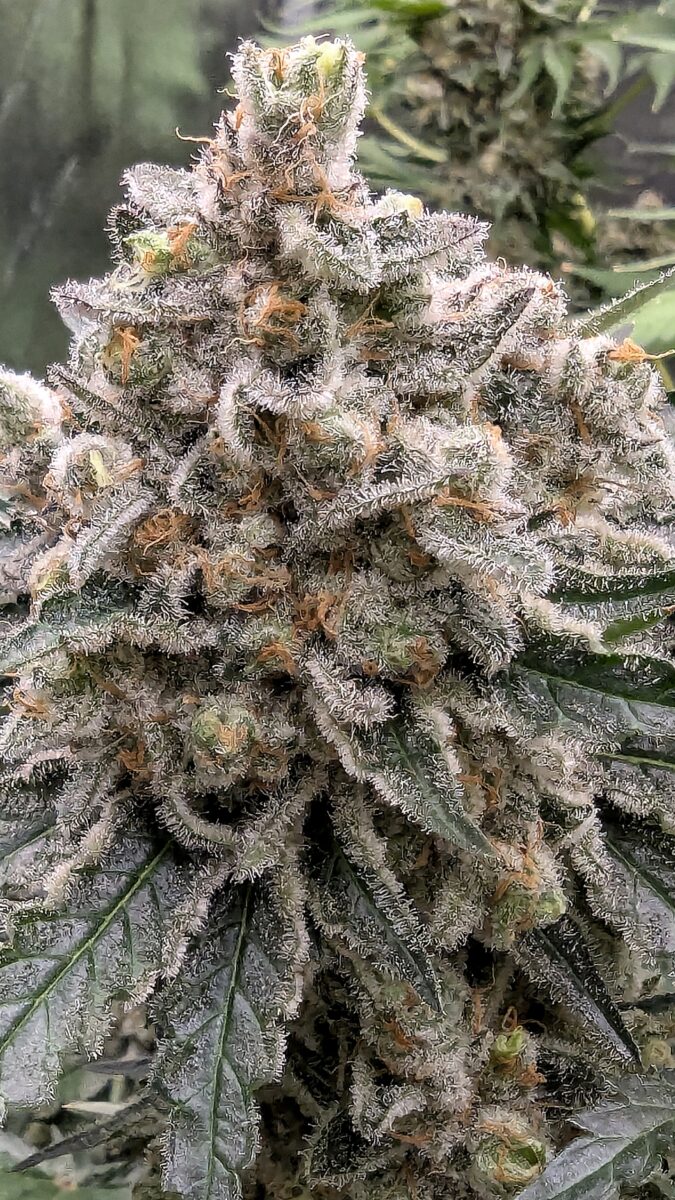
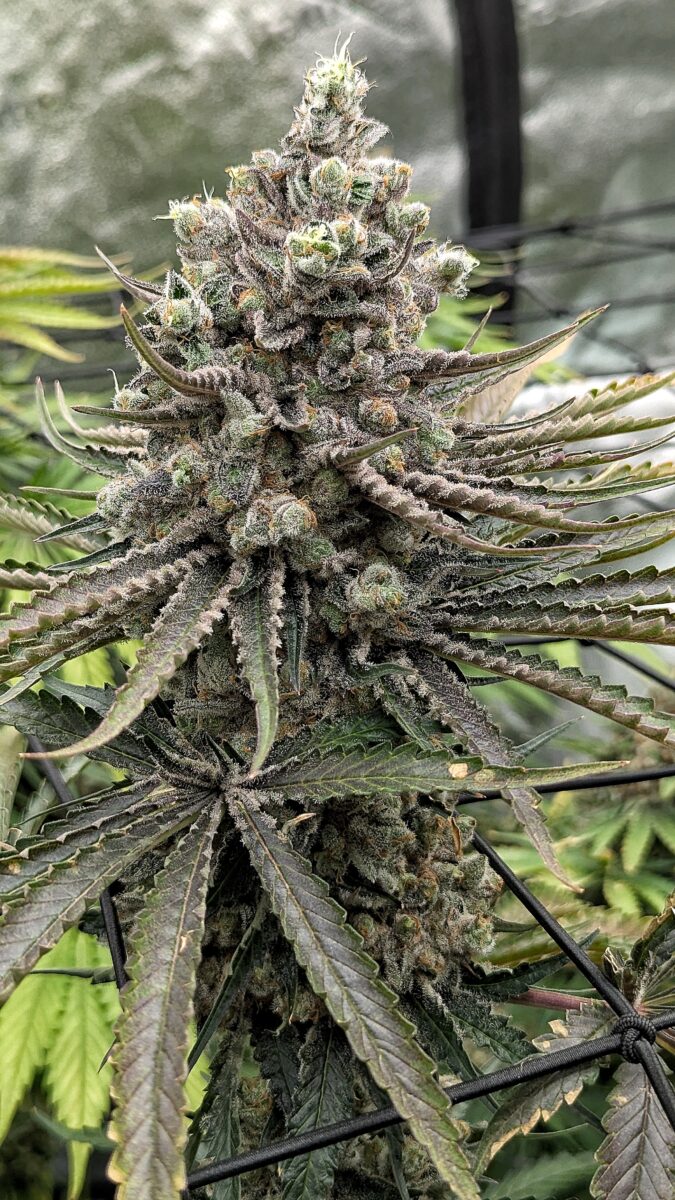
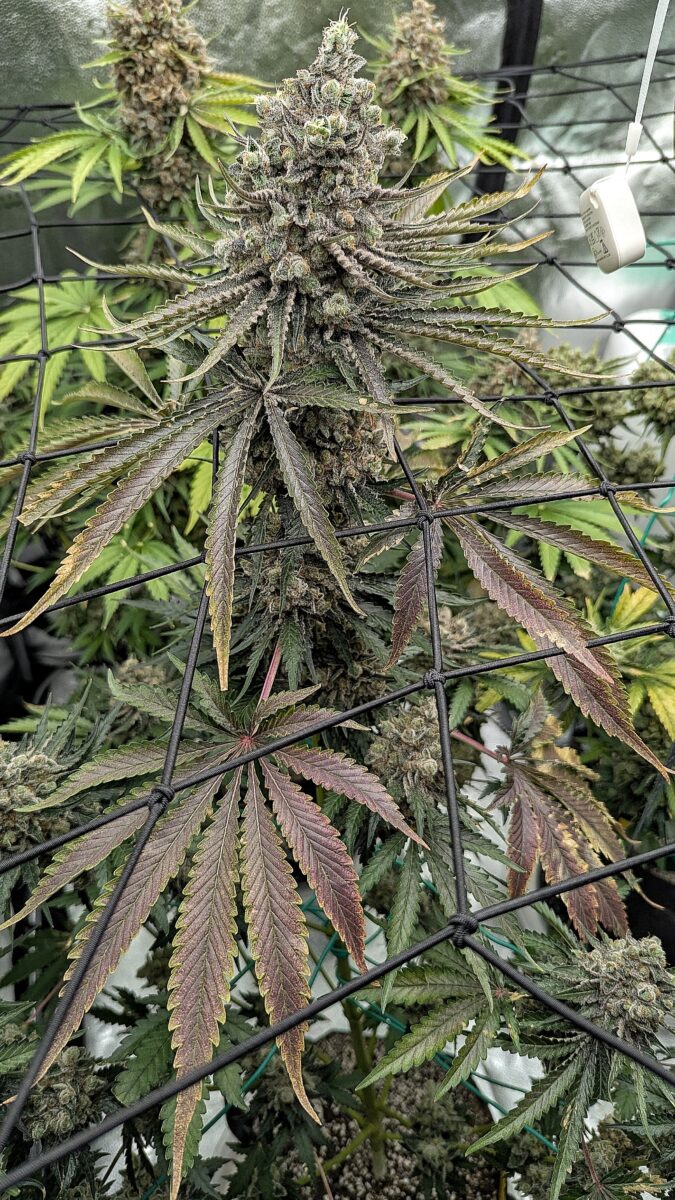
This week marked the second week of ripening. Light intensity continued its gradual decline over the past 7–10 days. At the beginning of Week 13, the canopy received 640–700 PPFD (DLI 28–30), and by the end of the week, light levels had tapered down to 550–600 PPFD to signal the approaching end of the cycle.
Ripening nutrients were applied throughout Weeks 12 and 13, with the final plain water flush scheduled for Week 14.
Water uptake slowed noticeably this week. I adjusted accordingly, alternating between heavier waterings of 3–4 liters and lighter days of 1–1.5 liters, depending on plant needs and pot weight.
FLO
11
Week
Week 11: Flowering Blueberry
Photos & videos (7)
Grow details
Plant height
36 in
Air humidity
50 %
Smell intensity
High
Day air temperature
83 °F
Night air temperature
69 °F
Lamp to plant distance
15 in
Pot size
3 gal
Solution pH
6
Nutrient strength (mS/cm)
1.34 mS/cm
Daily water per plant
4 L
Light schedule
12 h
Grower notes
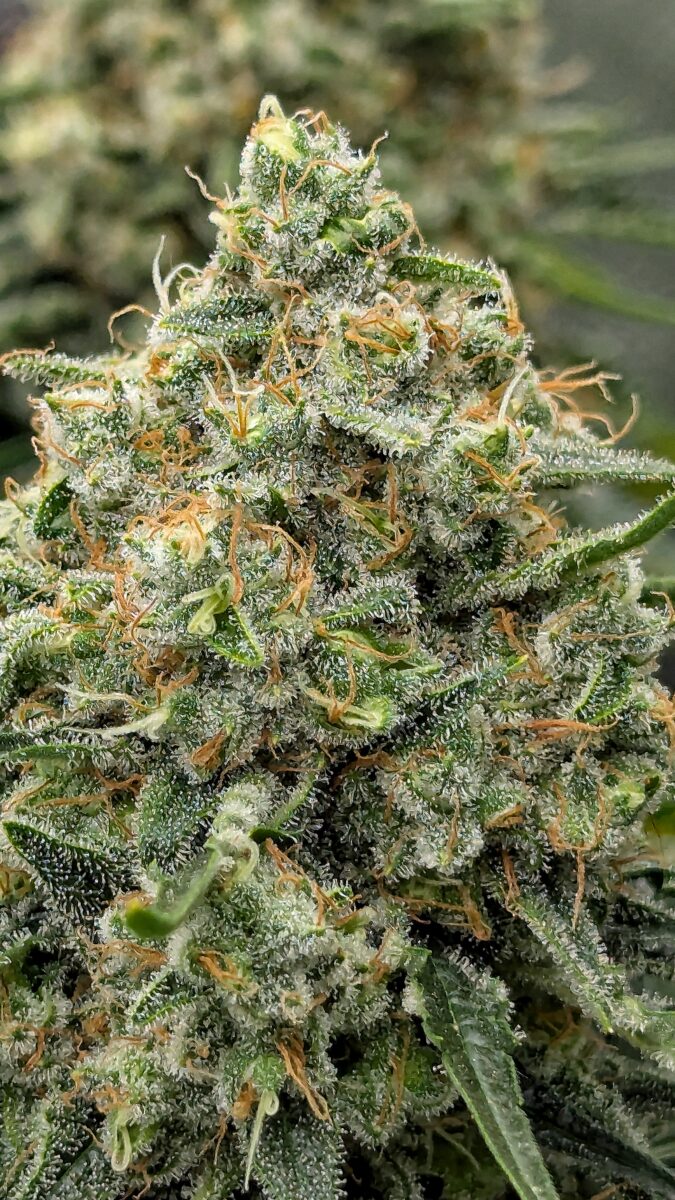
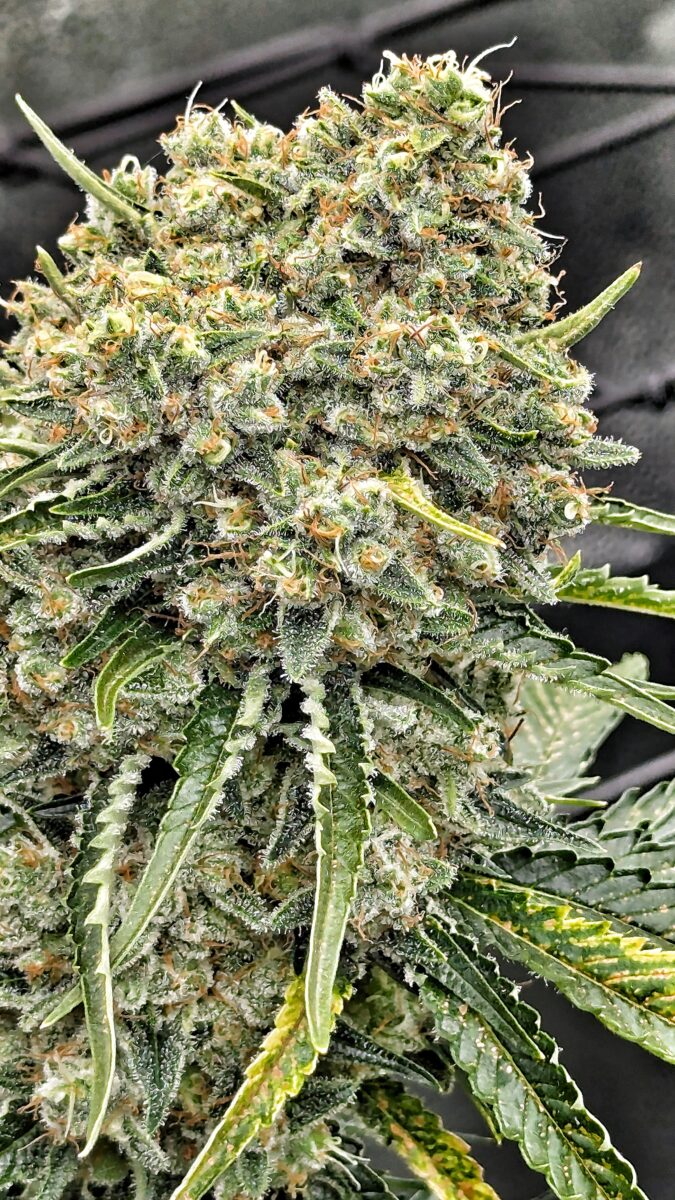
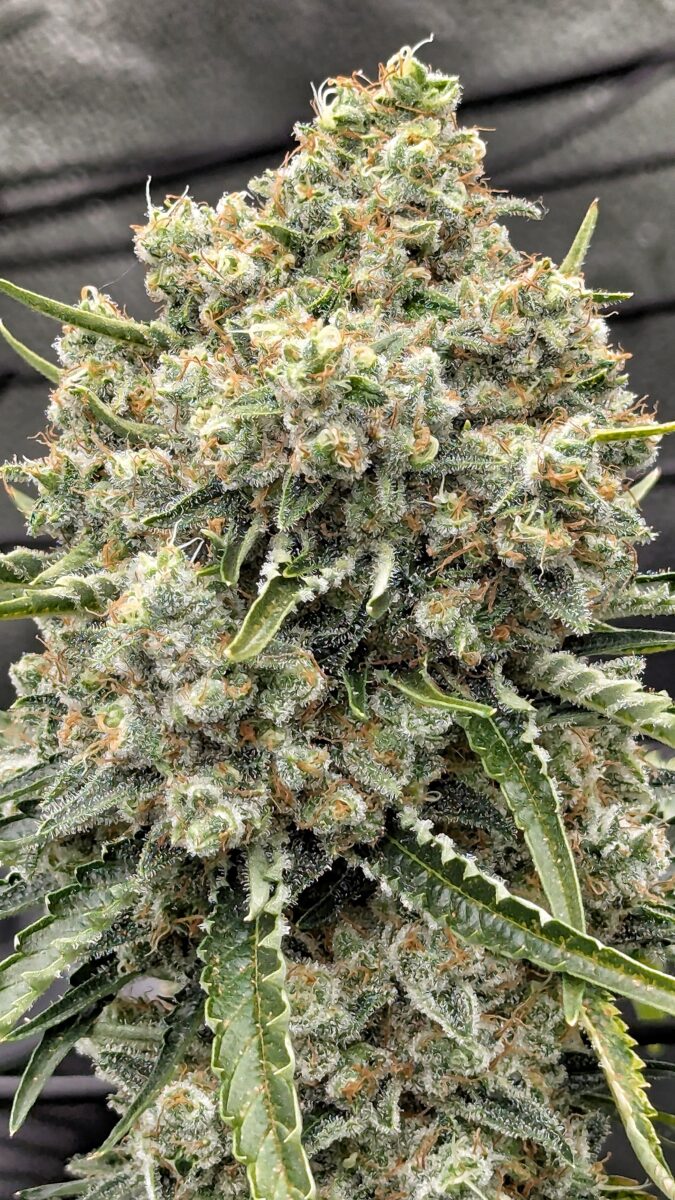
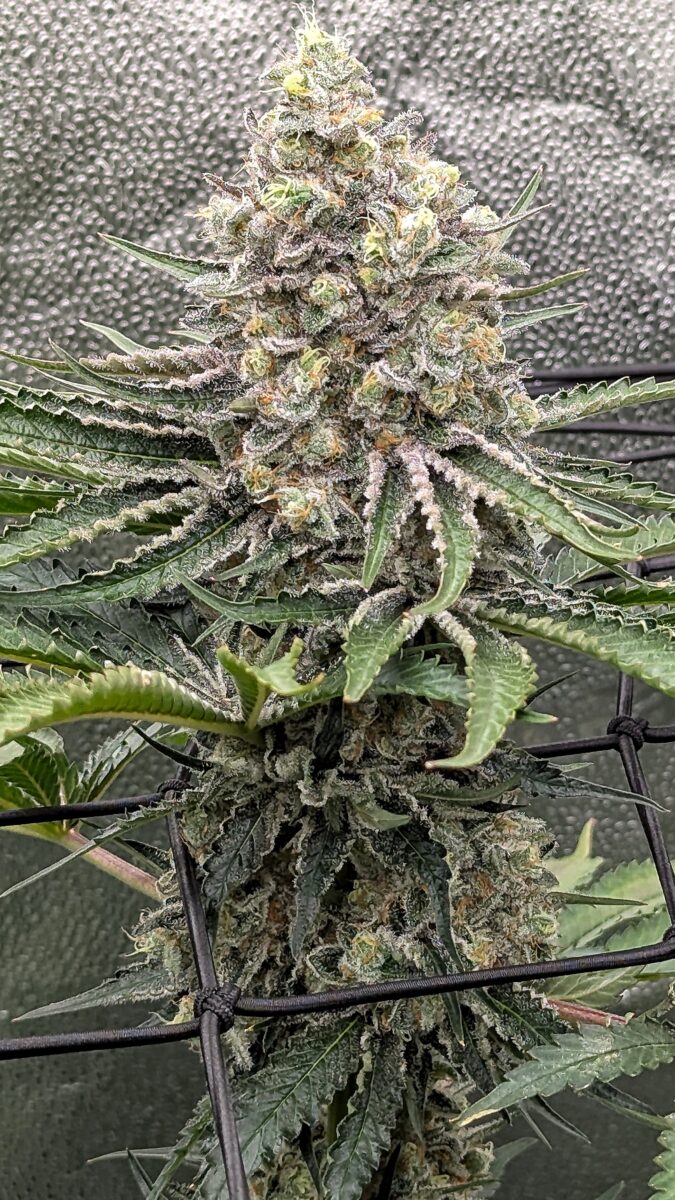
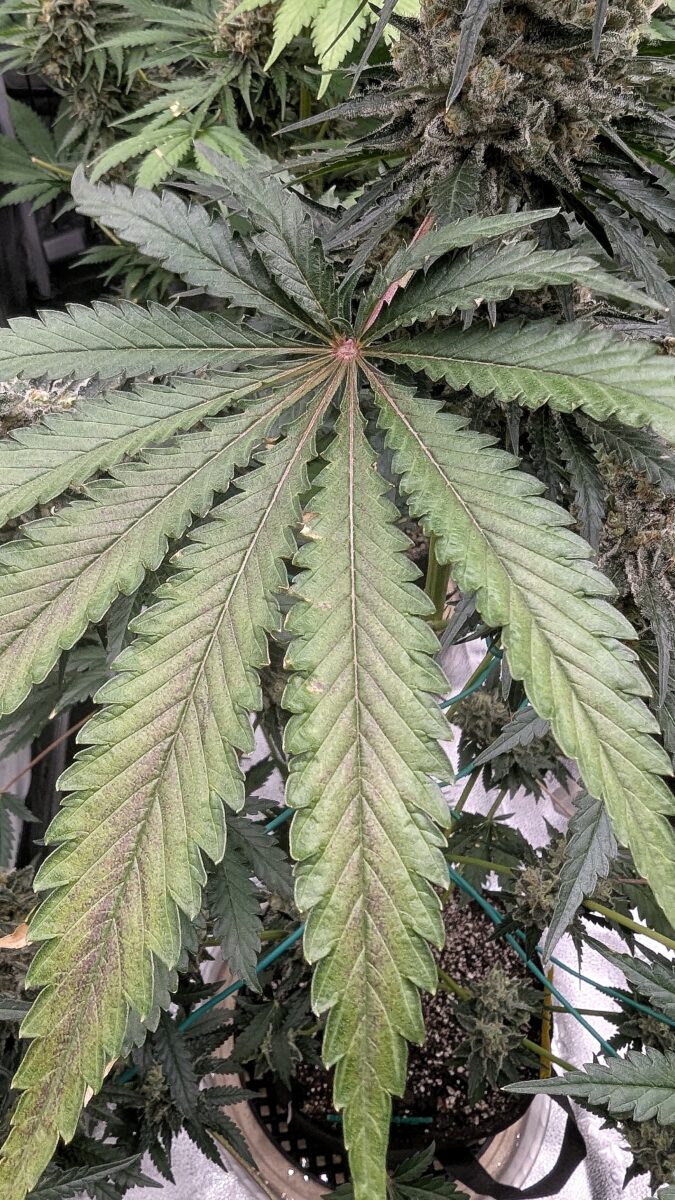
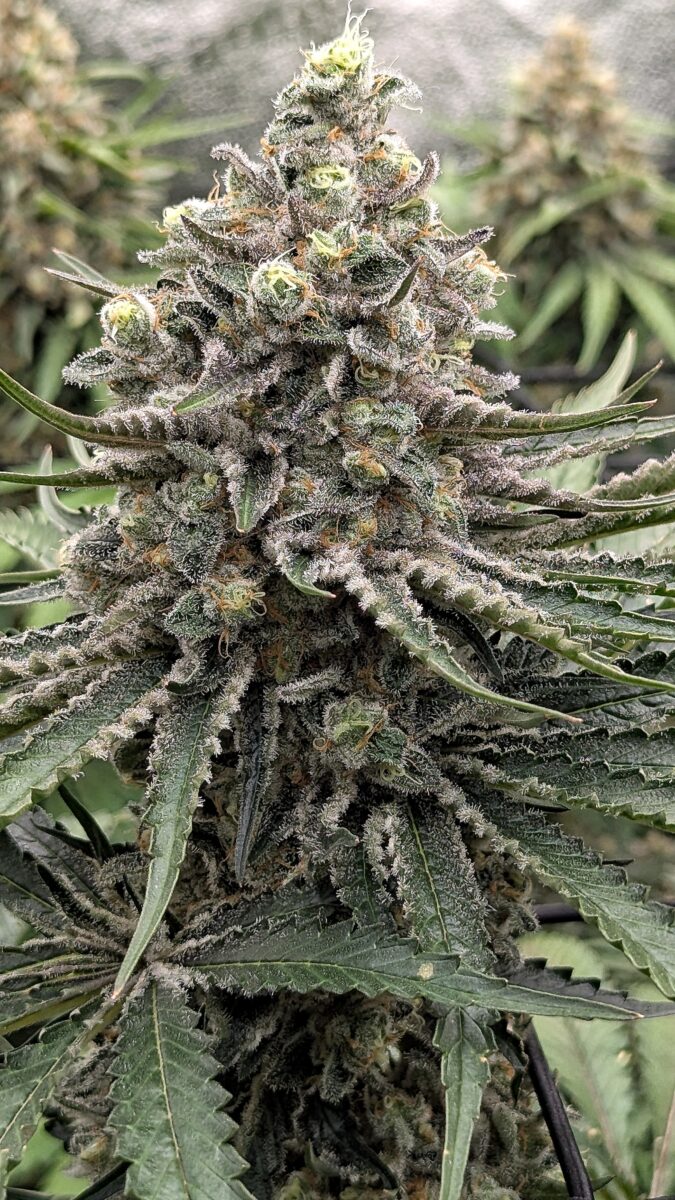
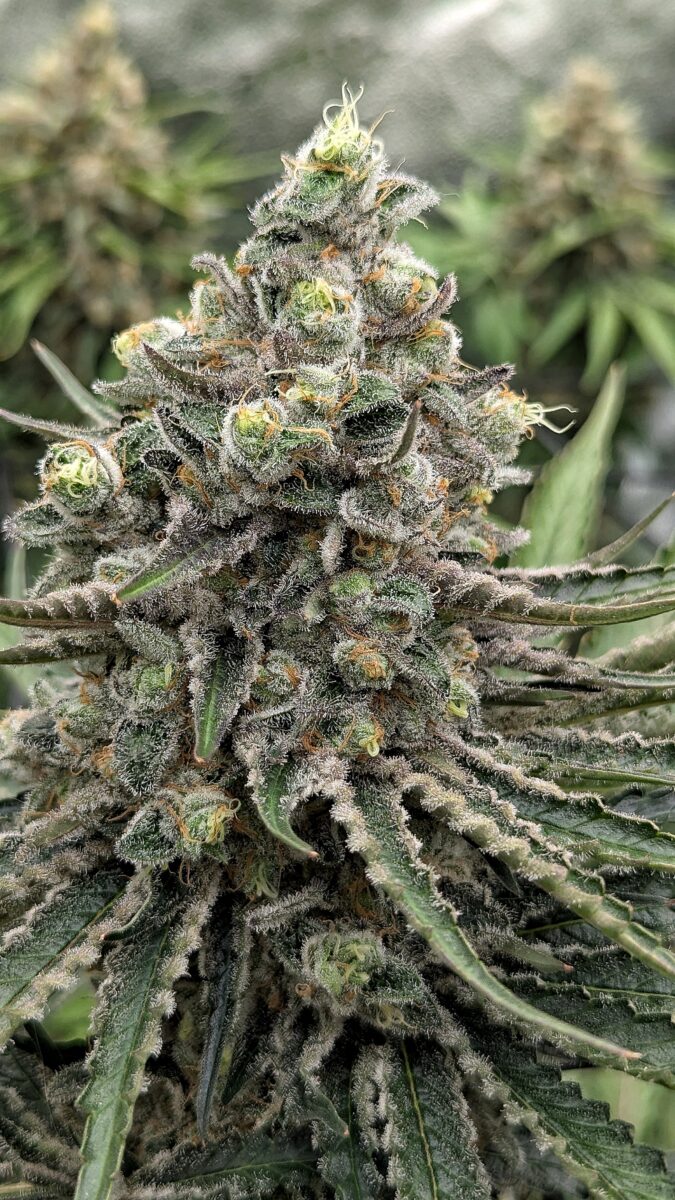
This week marked the first week of late flower for both Blueberry plants. By this point, bud weight had increased significantly, and I had to add structural support to every branch of Blueberry #1 - similar to what I did for Blueberry #2 back in Week 9.
Feeding continued a few times per week, but at a much lower strength than in mid-flower. I aimed to maintain EC levels in a healthy range, keeping nutrient concentrations between 800–1,000 ppm to support ripening without overloading the medium.
Mid-week, I performed a detailed trichome inspection to assess maturity. I took 2–3 macro images of each branch set, calculated the trichome distribution for each node, and used a weighted average to get a clear picture of overall progression for both plants. The results showed that both Blueberry plants were maturing at a similar rate, with an average trichome profile of 30% clear, 65% cloudy, and 5% amber. Individually,
By this stage, I had tapered UV-A exposure from its peak of 2 hours per day in mid-flower down to 60 minutes daily. I held steady at that duration throughout Week 11. Light intensity remained high across the canopy to keep pushing the sativa-leaning Stardawg, which continued to trail the Blueberry plants by a couple of weeks in terms of maturity.
FLO
9
Week
Week 9: Flowering Blueberry
Photos & videos (7)
Grow details
Plant height
36 in
Air humidity
50 %
Smell intensity
High
Day air temperature
82 °F
Night air temperature
72 °F
Lamp to plant distance
15 in
Pot size
3 gal
Solution pH
6
Nutrient strength (mS/cm)
2.16 mS/cm
Daily water per plant
4 L
Light schedule
12 h
Grower notes
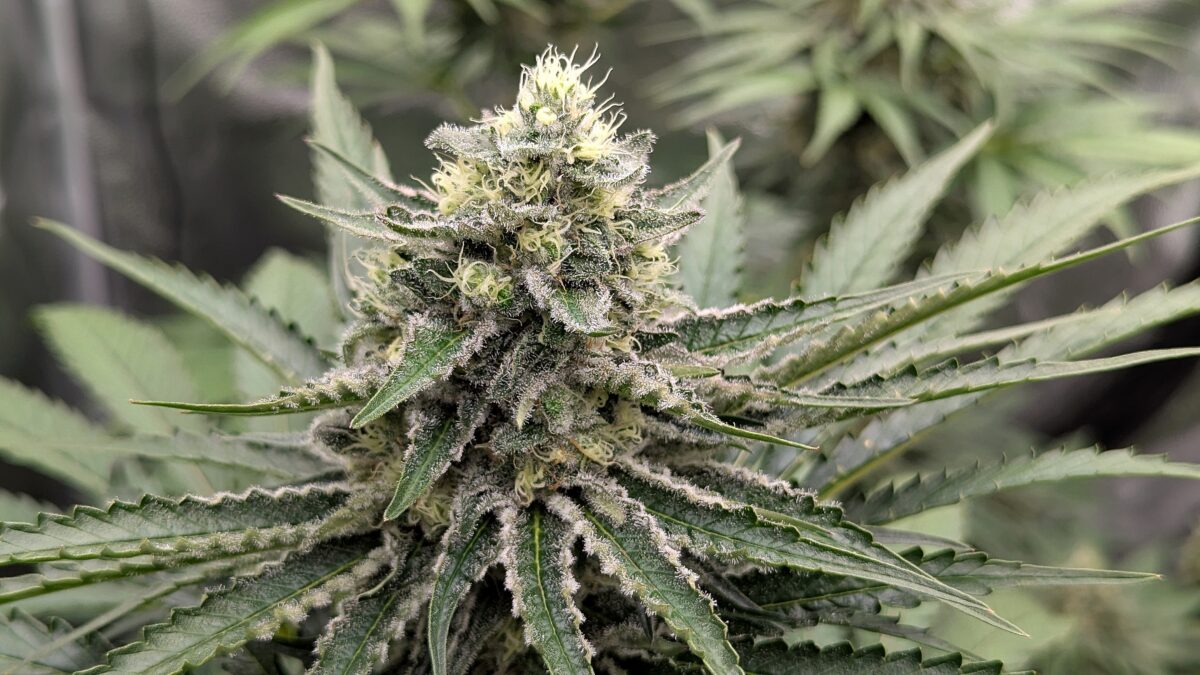
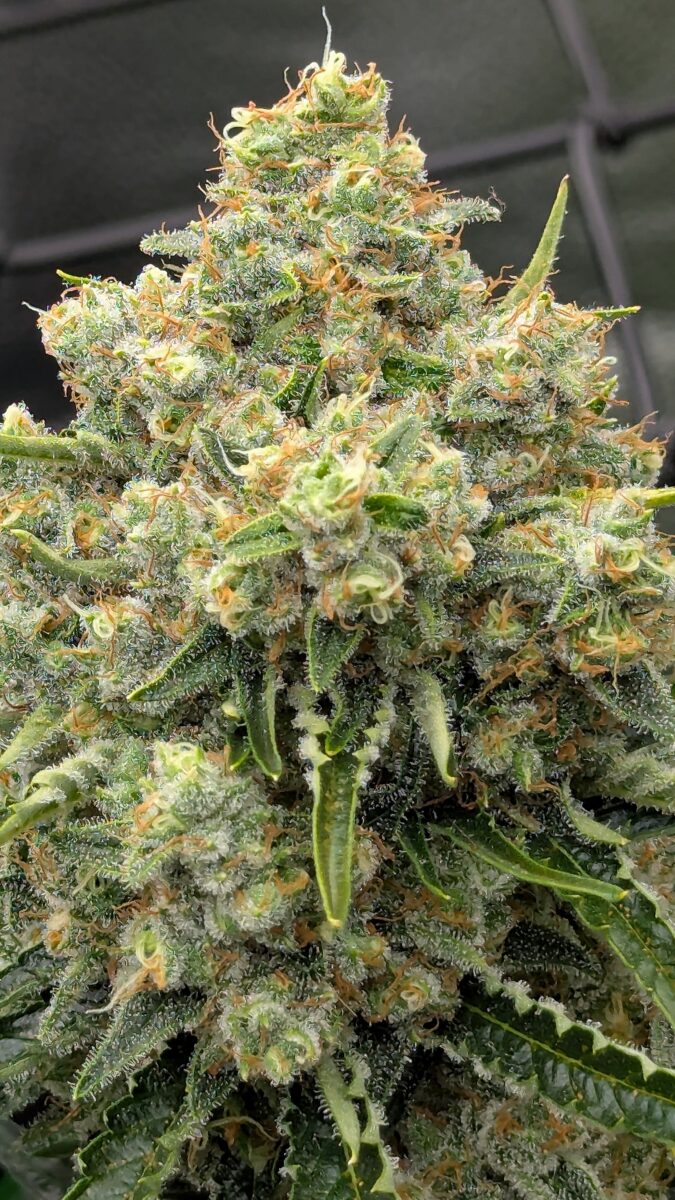
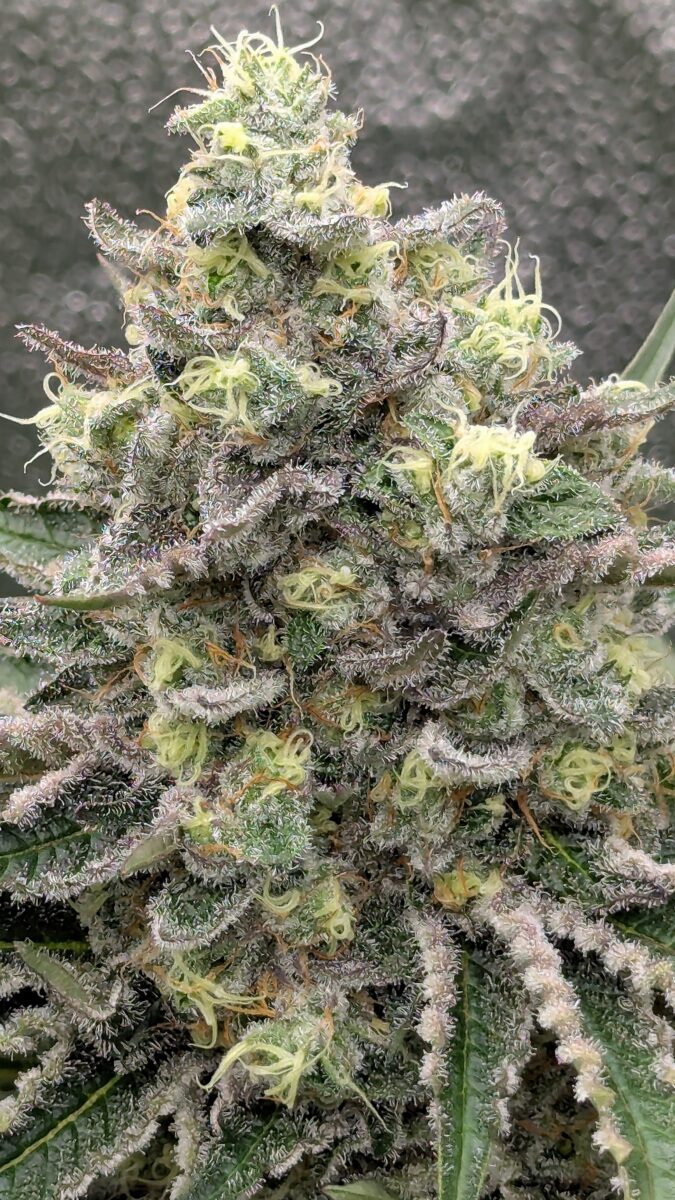
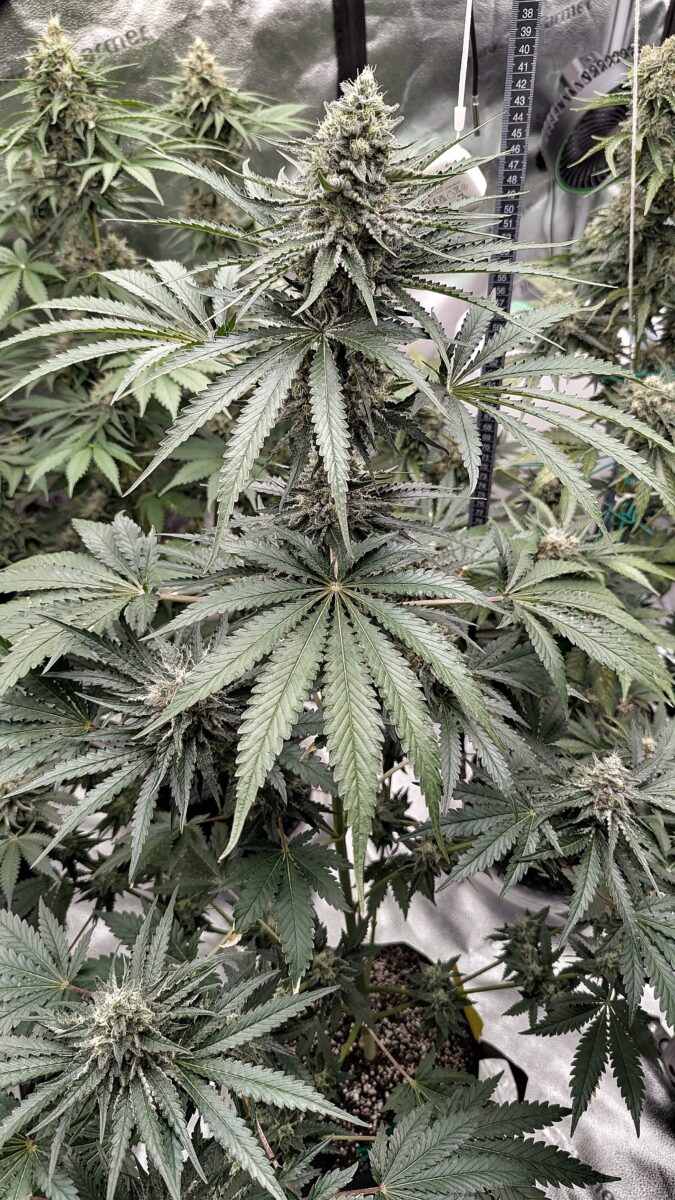
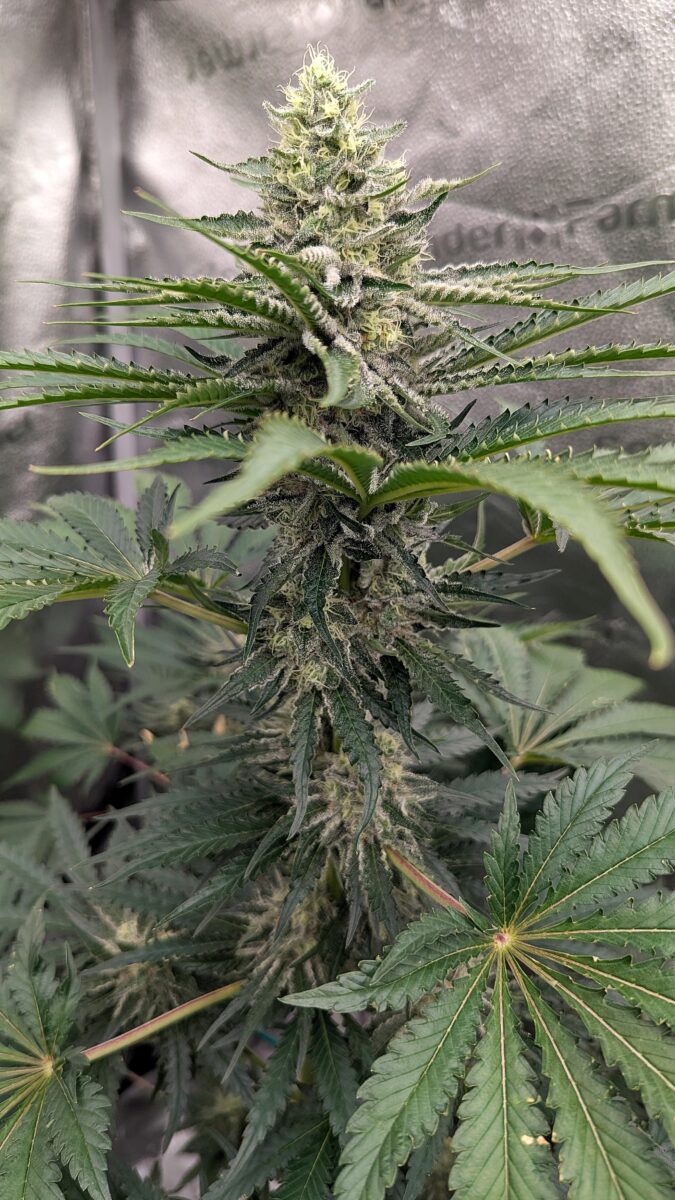
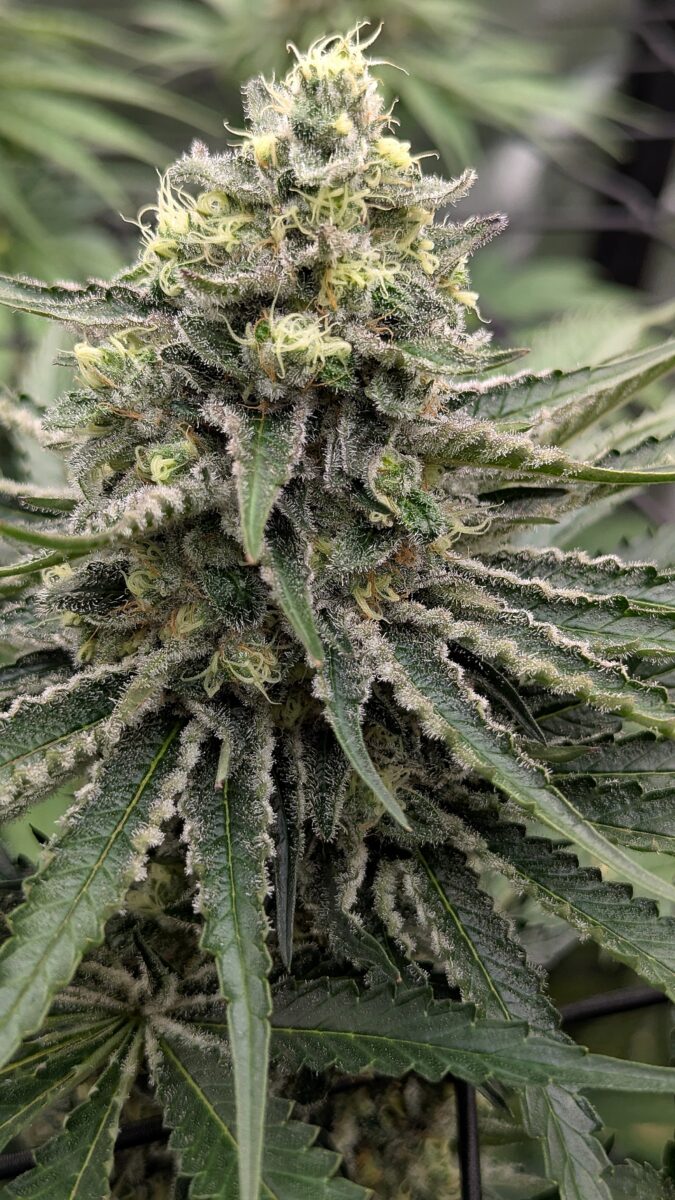
This week marked the fourth week of mid-flower in my run. Light intensity hovered between 830–890 PPFD (36–38 DLI). I continued to push mid-flower nutrients at 1,200–1,400 ppm. As the plants will begin transitioning into late flower soon, I started dialing back UV-A exposure by a few minutes each day and gradually inching down light intensity.
A mid-week trichome assessment showed approximately 45% clear, 50% cloudy, and 5% amber heads.
After Stardawg #1 formed male flowers in early mid-flower, I began checking all plants every other day at minimum to ensure none of the others were exhibiting hermaphroditic traits.
In Week 9, I observed Blueberry #2 producing five to six male flowers on its lowest branches - possibly triggered by earlier nutrient imbalances, though the exact cause is uncertain. I swiftly removed all male flowers.
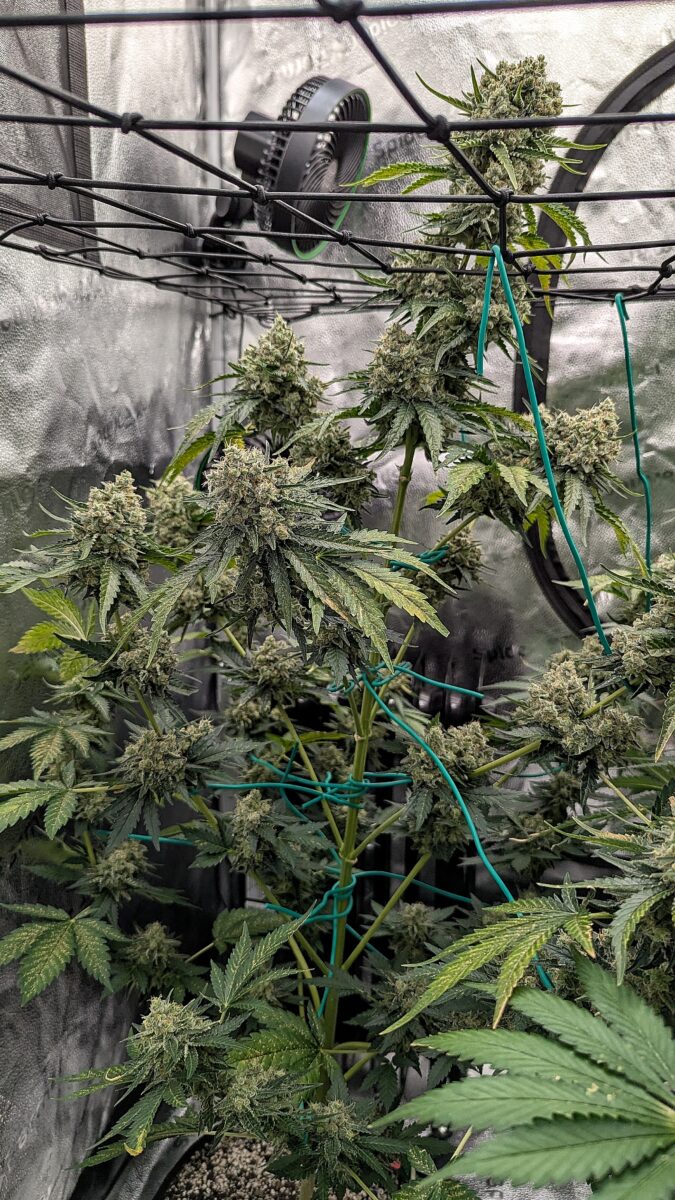
Also in Week 9, Blueberry #2 began leaning heavily under the weight of her buds. To correct her posture, I installed an AC Infinity trellis net above the canopy, wove the main colas of all plants through the grid, and gently tied each node of BB#2 back to the central stem with garden wire. This support stabilized her without stressing new growth.
FLO
7
Week
Week 7: Flowering Blueberry
Photos & videos (7)
Grow details
Plant height
36 in
Air humidity
50 %
Smell intensity
Medium
Day air temperature
82 °F
Night air temperature
72 °F
Lamp to plant distance
15 in
Pot size
3 gal
Solution pH
6
Nutrient strength (mS/cm)
2.16 mS/cm
Daily water per plant
4 L
Light schedule
12 h
Grower notes
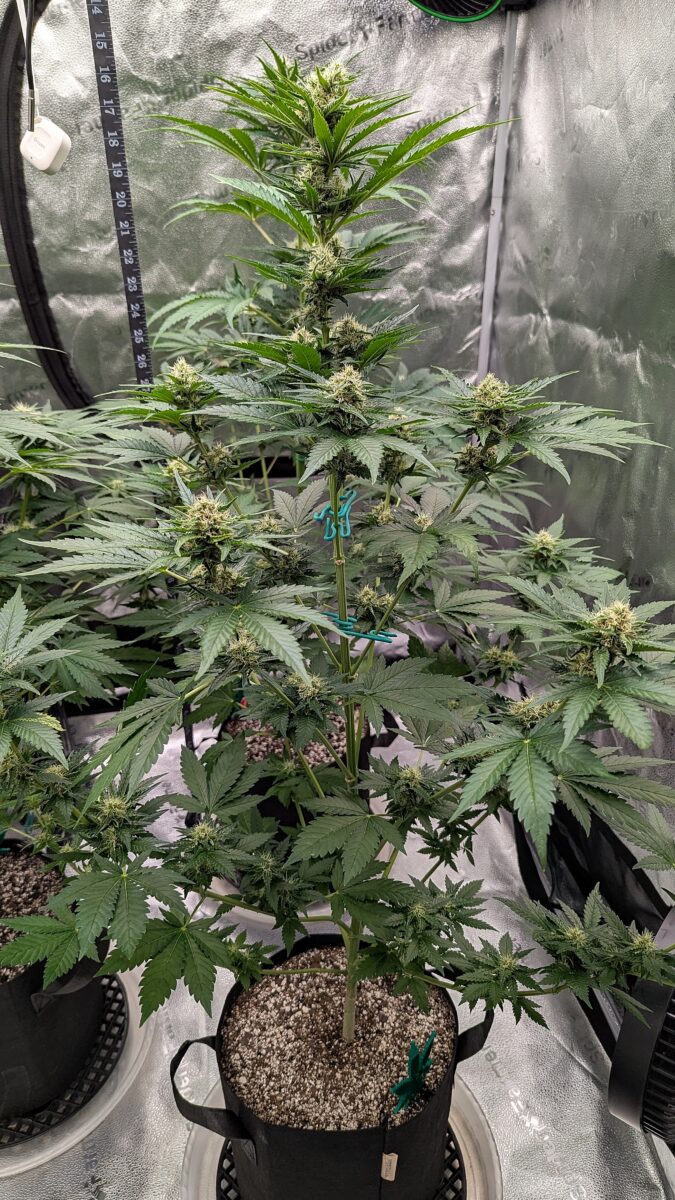
Week #7 (Mid-Flower - Week #2)
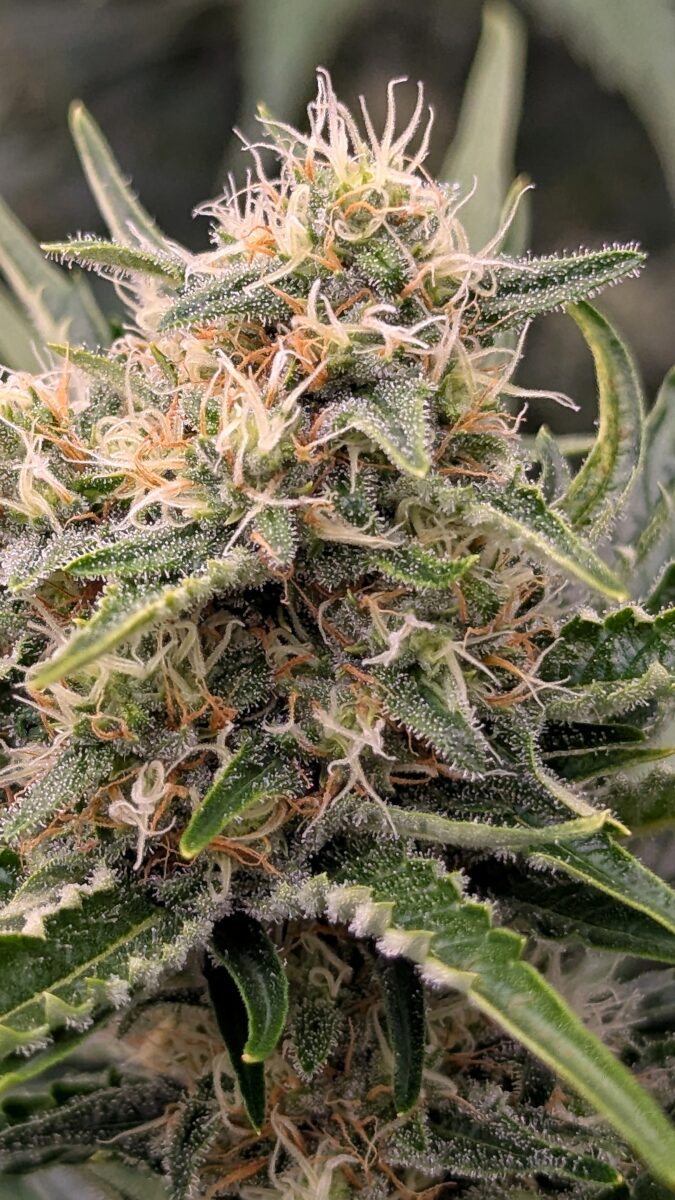
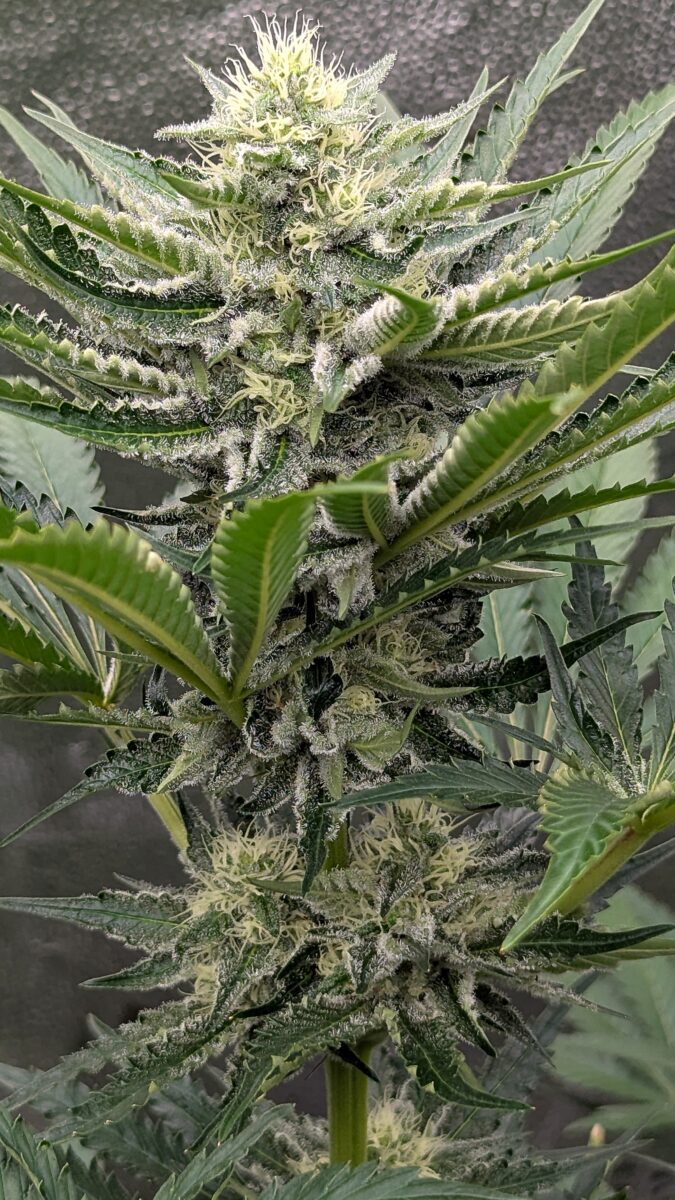
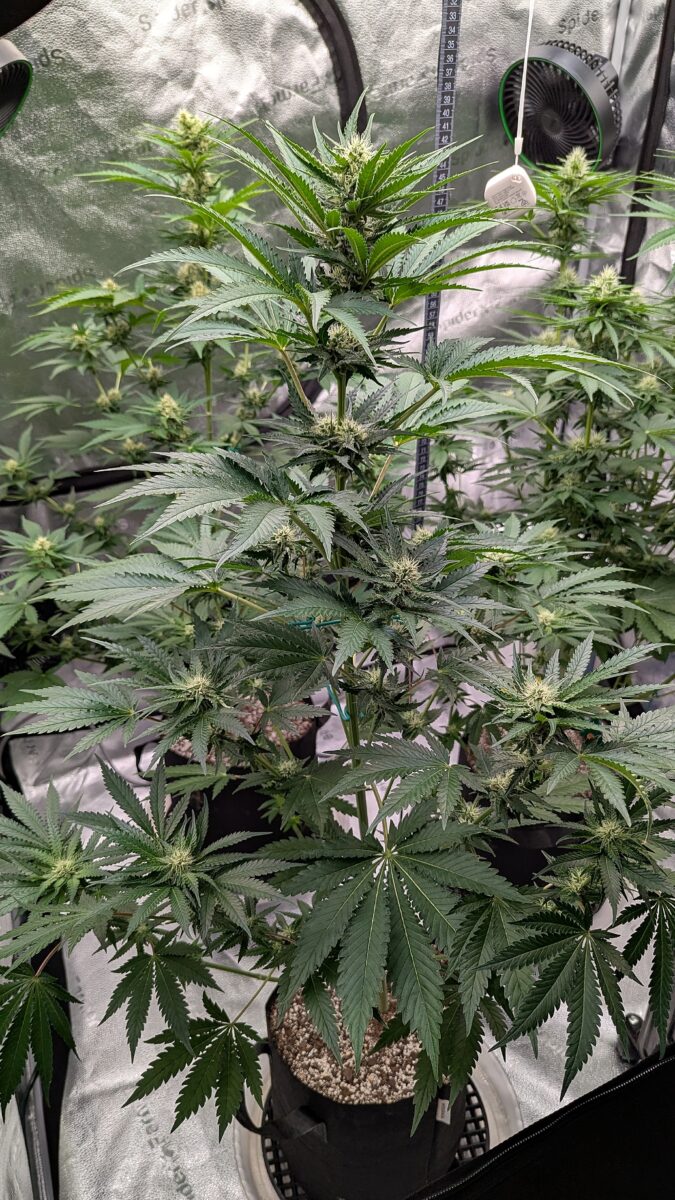
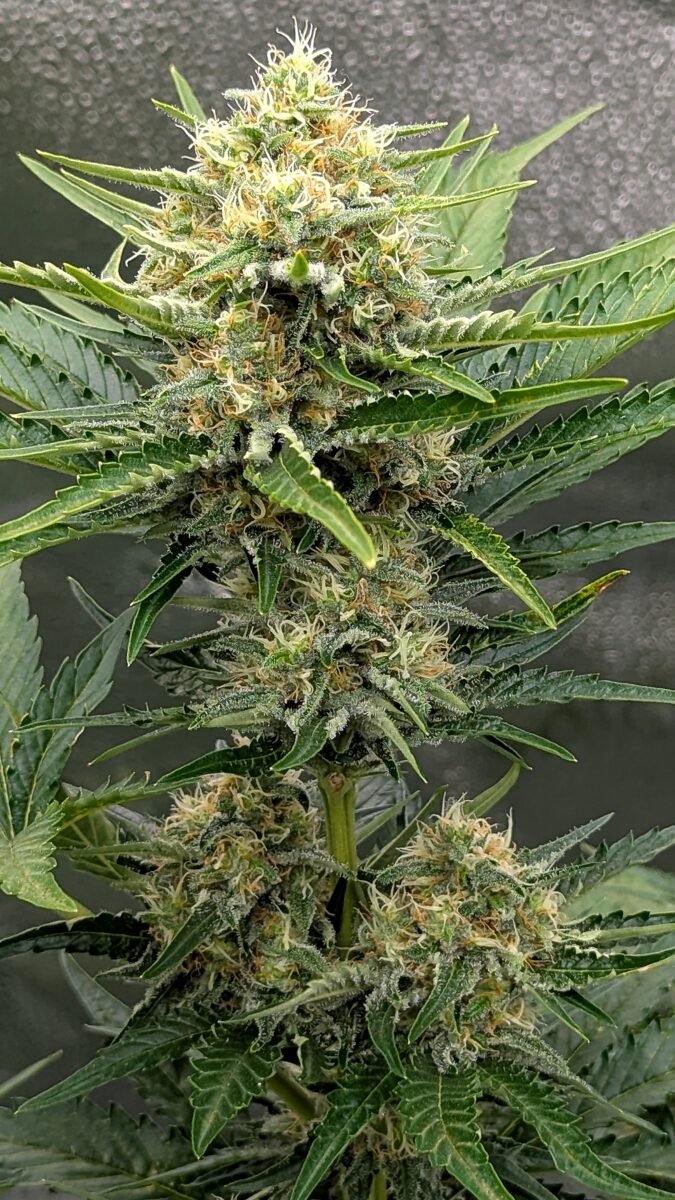
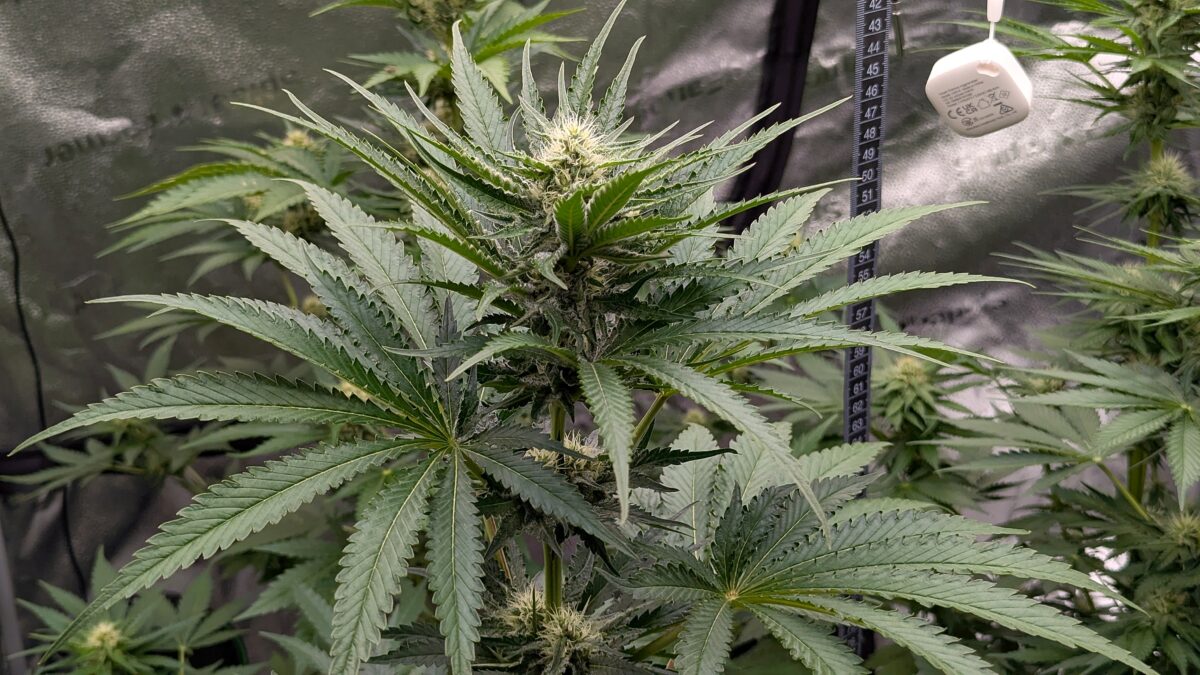
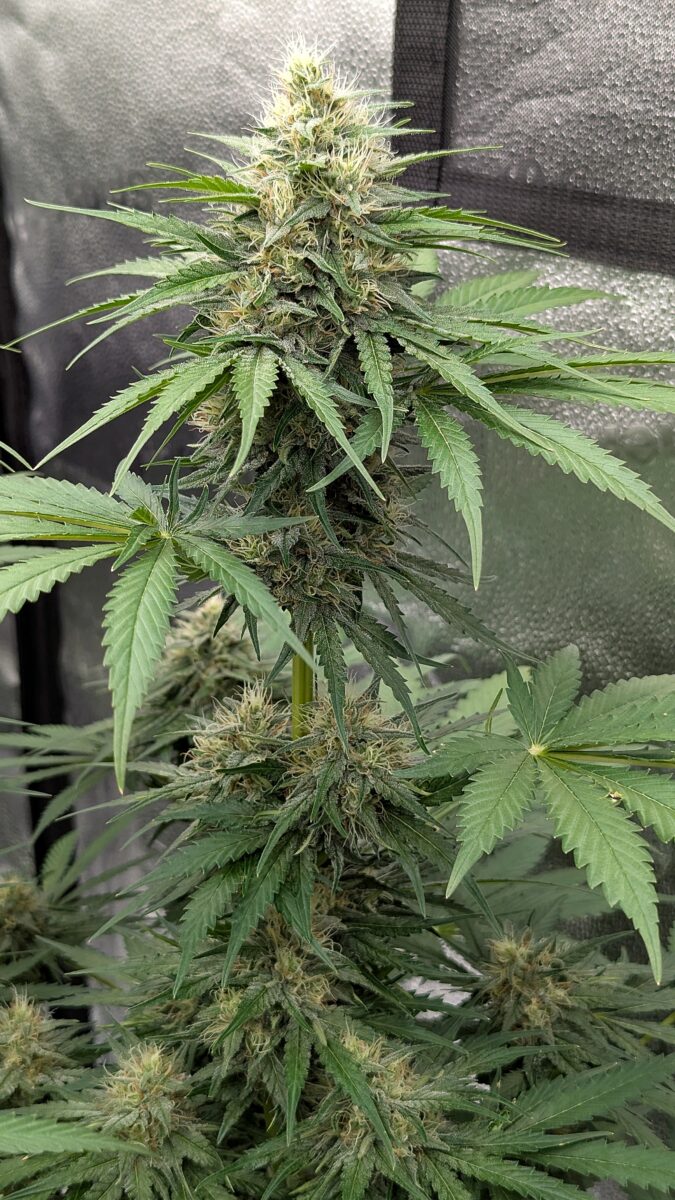
This week marked the second week of mid-flower in my run, with Blueberry now fully transitioned from stretch to bud development. The plant reached a final height of 36" in early flower and developed 9–10 nodes. Since she was never topped, the natural apical structure remained intact, and her vertical growth finished strong.
With the stretch complete, Blueberry began focusing energy into bulking up the developing bud sites. Nutrient demand increased significantly during this phase. I pushed mid-flower feedings to around 1000–1200 ppm as needed. One of my Blueberry plants (Blueberry#2) showed signs of calcium and magnesium deficiency, which prompted closer monitoring and a bit more Cal-Mag support.
Lighting was intense but that was intentional. Light intensity hovered between 850–910 PPFD for my two Blueberry plants and delivered a DLI of 37–39. I also increased UV-A exposure to a maximum of 2 hours per day at this stage.
Feeding frequency increased to meet nutrient demand. I alternated between feedings and plain water and cal-mag every 2–3 days to maintain balance without overloading the medium.
In Week #2 of mid flower, aroma development was kicking in noticeably, especially with sweet and slightly berry-forward notes starting to emerge from the Blueberry colas.
FLO
5
Week
Week 5: Flowering Blueberry
Photos & videos (8)
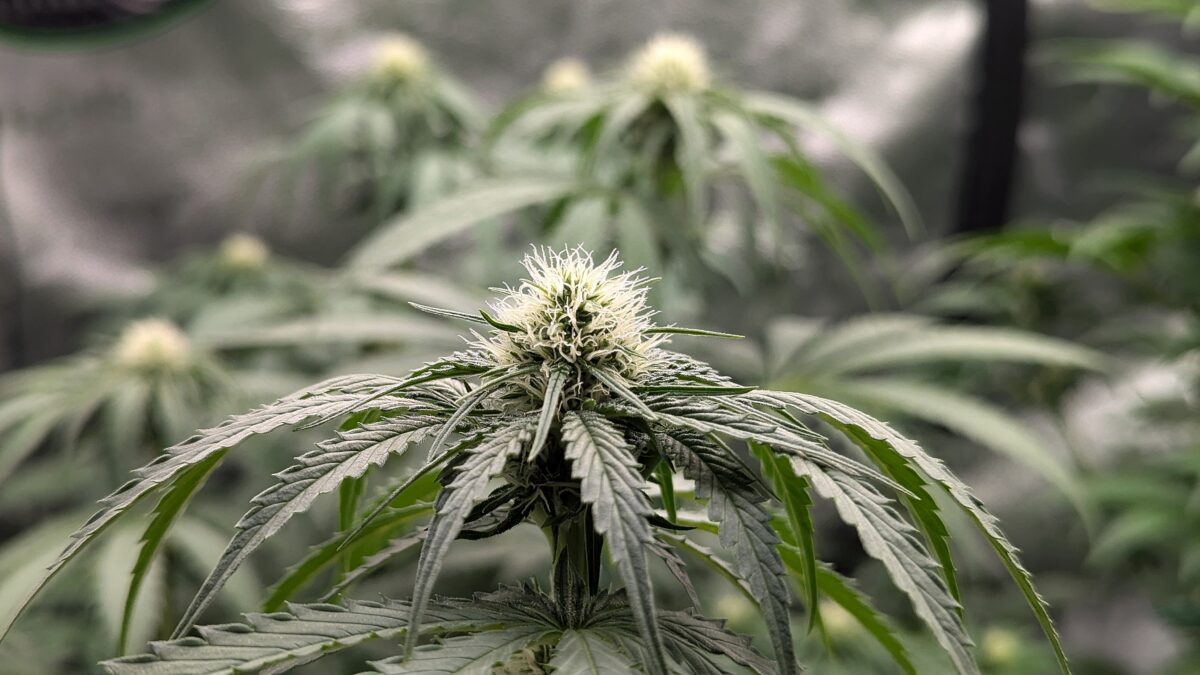
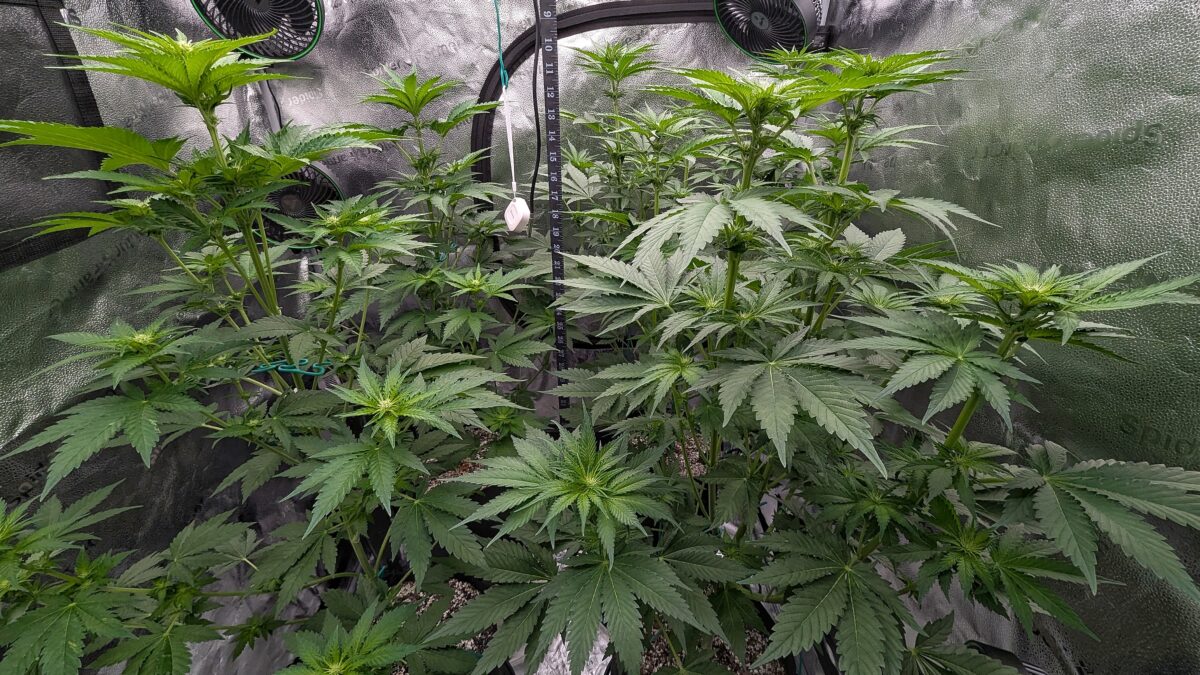
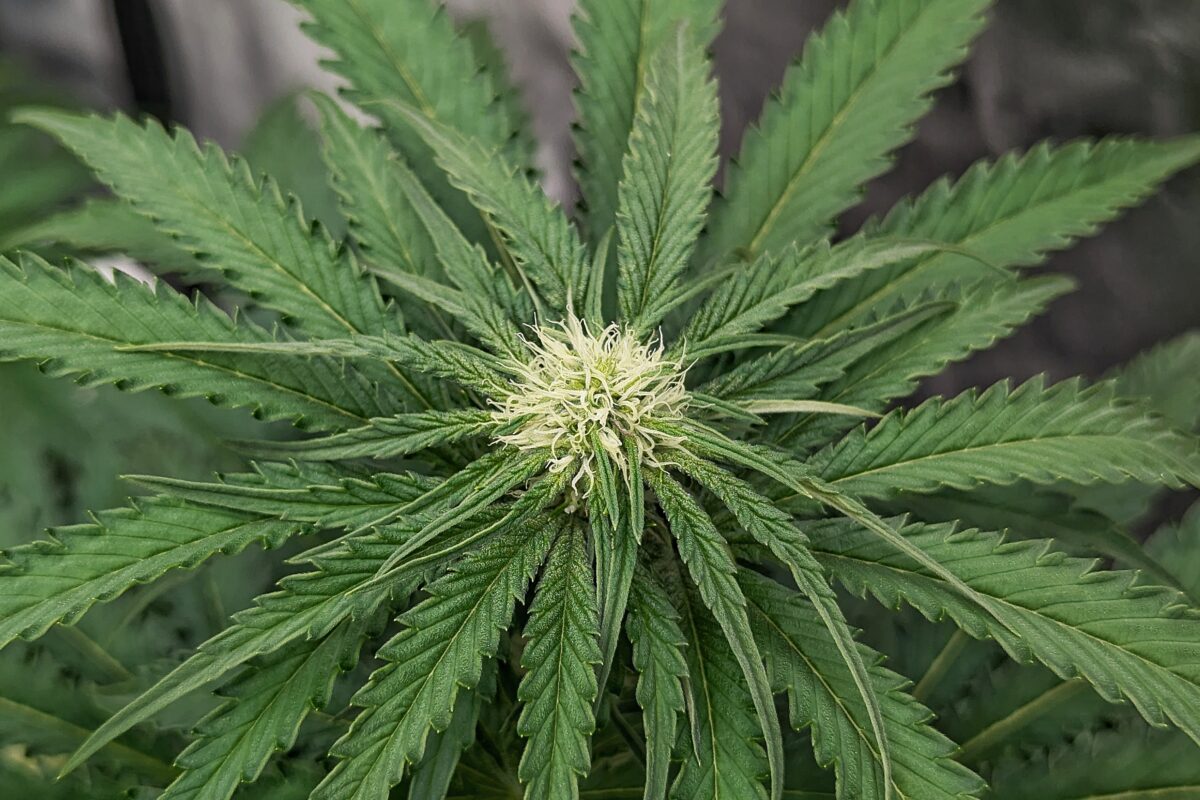
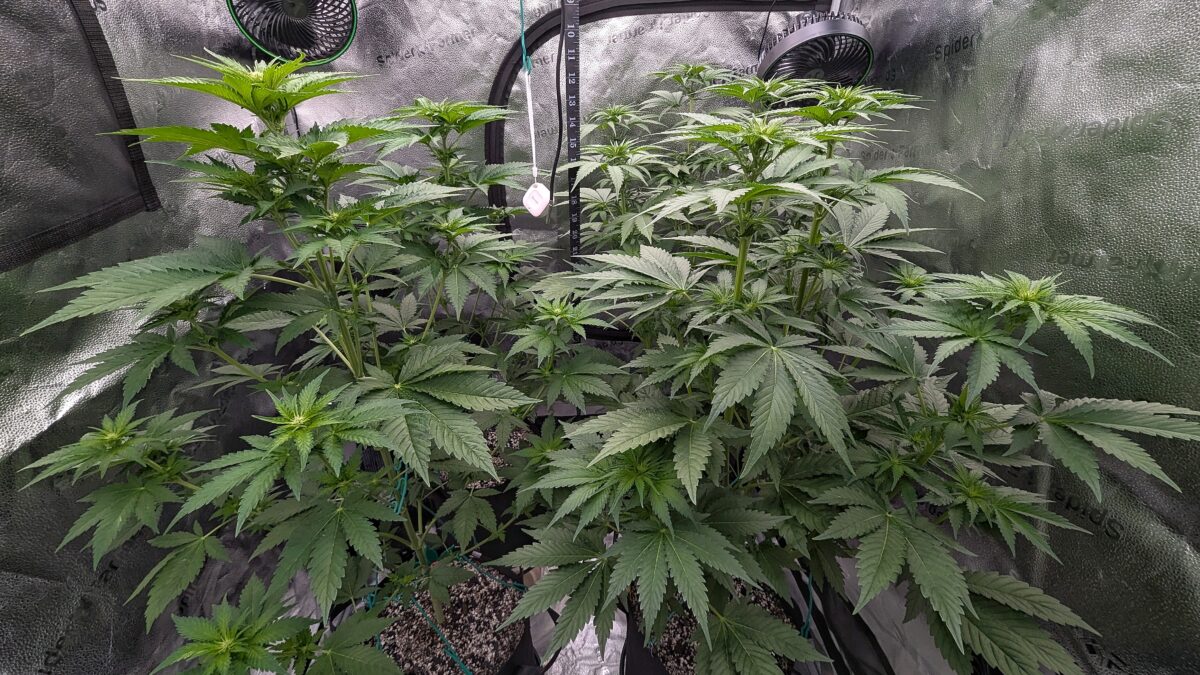
Grow details
Plant height
29.5 in
Air humidity
50 %
Smell intensity
Low
Day air temperature
80 °F
Night air temperature
70 °F
Lamp to plant distance
16 in
Pot size
3 gal
Solution pH
6
Nutrient strength (mS/cm)
2.4 mS/cm
Light schedule
12 h
Grower notes
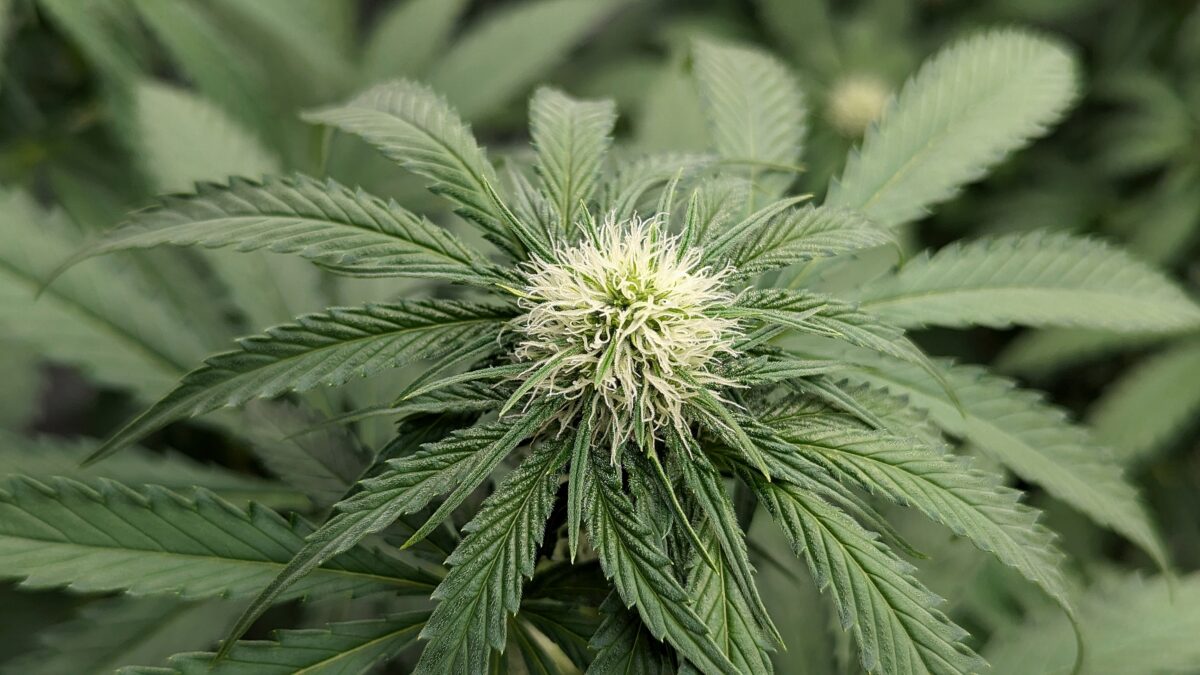
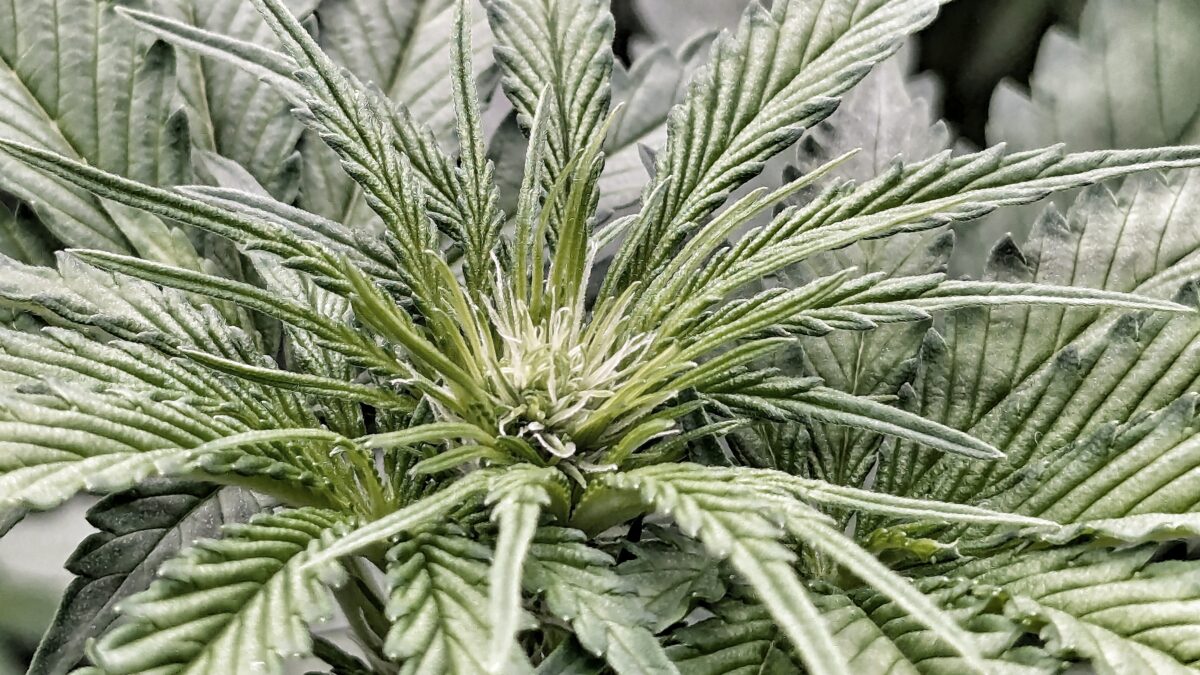
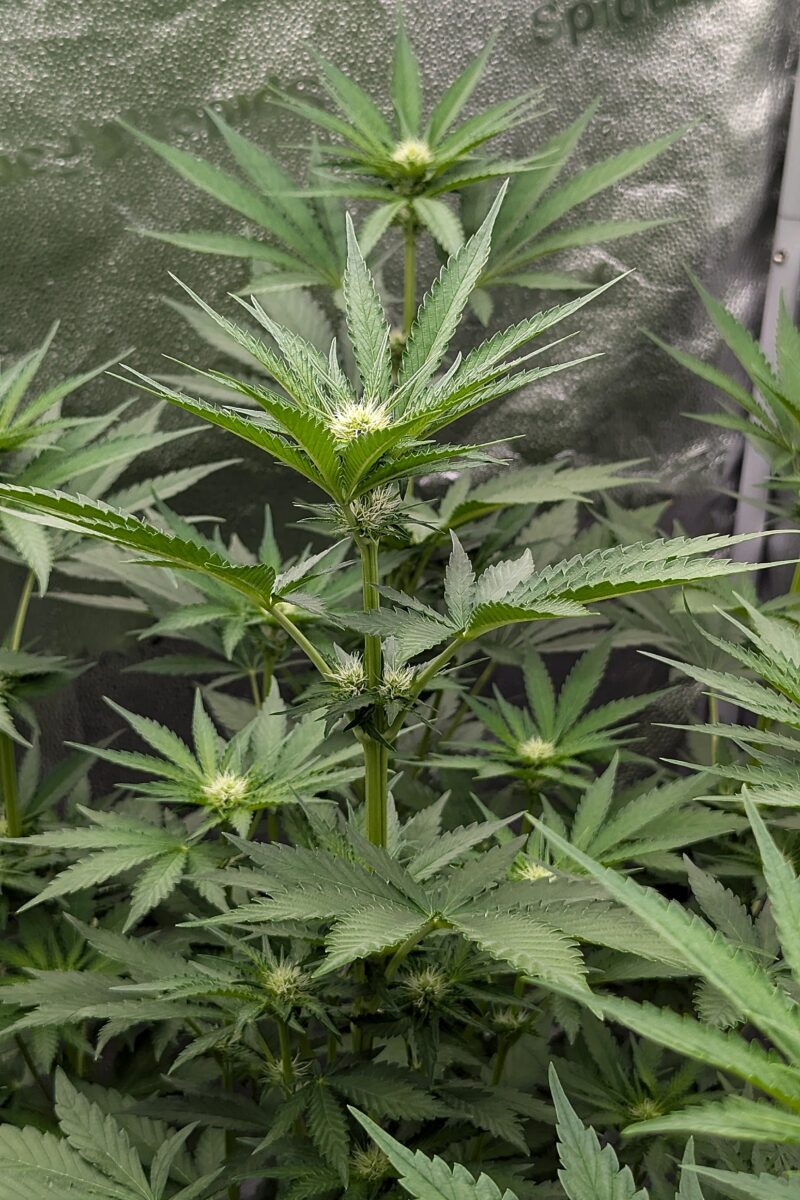
Starting in late veg and continuing until harvest, I water to the point that I get 10-20% runoff so that I can keep track of PH and PPM. With hot soil mediums like Fox Farm Ocean Forest, it is often the case that I have to initiate a light flush in late veg / early flower to bring PPM into the range the plants want, therefore mitigating lockout issues.
For early flower I am aiming for a runoff PPM of 1000-1200 and a runoff PH of 6.2-6.3. If my numbers are lower than the recommended range for the growth stage, I feed the plants at a PPM in the range of where I want them to be. If the numbers drift a little higher than the ideal number, I water for a day or two until the runoff lets me know it is time for another feeding. If PH starts to drift, I adjust the input PH of my solution to slowly bring things into range.
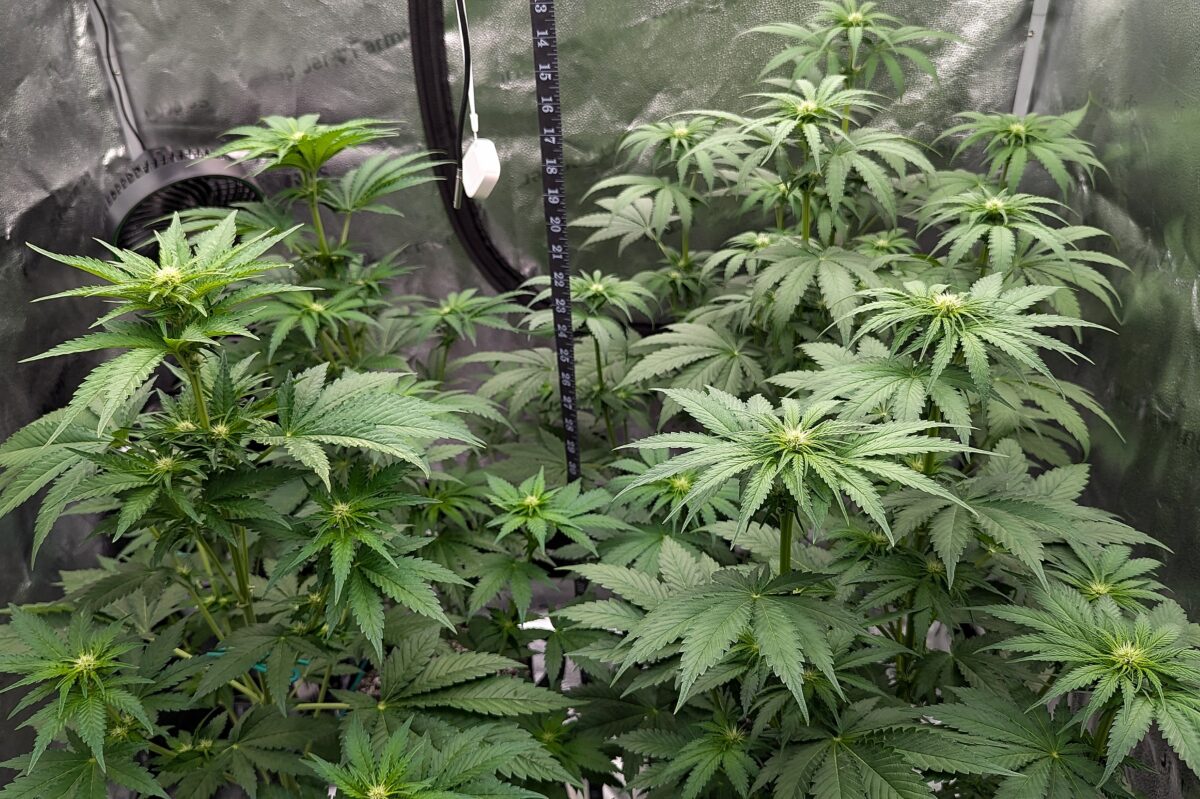
I had to feed Blueberry once in the first week of flower and water needs greatly increased at this time. Whether I water or feed, I provide the same volume and track runoff metrics. In early flower, I am typically giving 3-4 L of water every day, occasionally skipping a day so the medium can dry out a bit. At this point during the grow cycle, it is also necessary to raise the light every couple of days in order to maintain an appropriate distance between the light and the canopy.
I counted 6-7 days between the time I flipped from 18/6 to 12/12 before pistils appeared at stalk-node intersections, marking the beginning of early flower. The plants grew 7-8 inches during the transition phase and in the first week of flower all plants grew an addition 10-12 inches.
In my pictures, Blueberry is on the left and Stardawg is on the right.
VEG
3
Week
Week 3: Vegetation Blueberry
Photos & videos (2)
Grow details
Plant height
8.5 in
Air humidity
60 %
Smell intensity
None
Day air temperature
80 °F
Night air temperature
75 °F
Lamp to plant distance
18 in
Pot size
3 gal
Solution pH
6
Nutrient strength (mS/cm)
0.52 mS/cm
Light schedule
18 h
Grower notes
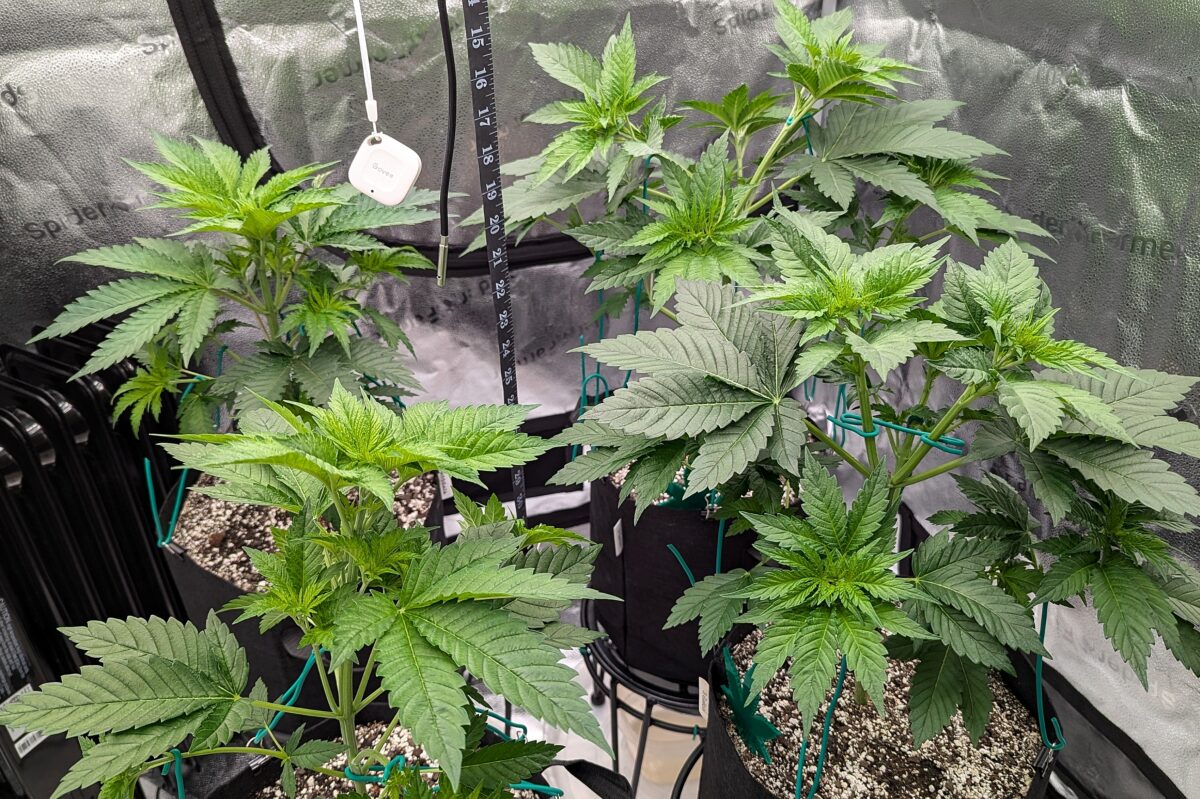
In my grows, I almost always run two strains together - typically one indica and one sativa variety. In the first image, my indica (Blueberry) is on the left, and my sativa (Stardawg) is on the right.
I begin counting “days in veg” when I observe the first set of true leaves, and I also start tracking node development at that point. I typically top my plants above the fifth node and remove the first node, leaving four sets of branches that can be low-stress trained to manage height, increase stability, and improve light distribution. This has been my standard process over the last three grows (when I was growing autoflowers), and it worked well. However, for this run, I decided to not top my Blueberry
plants because they were lagging behind Stardawg by 1-2 nodes and I needed to act quickly in the interest of both strains.
While I topped my sativa plants on Day #10 of veg, I left my indica plants alone to form additional nodes. Regardless of the variety, I applied low stress training and adjusted it on a daily basis to manage height and increase light penetration and airflow.
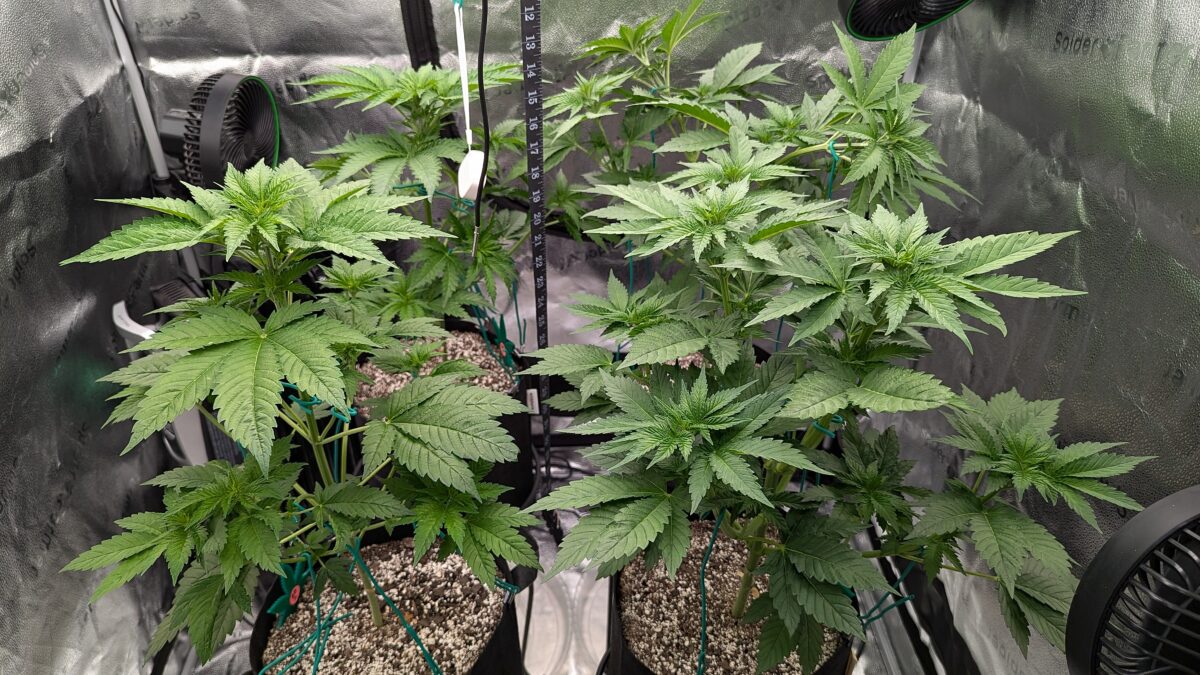
I switched the light from 18/6 to 12/12 on Day #15 of veg, or 23 days post-emergence.
The second image was taken three days after the flip, so at this point, my Blueberry plants were beginning their transition into reproductive mode but it would be another four days before pistils were observed at stalk-node intersections.
VEG
2
Week
Week 2: Vegetation Blueberry
Photos & videos (2)
Grow details
Plant height
4 in
Air humidity
60 %
Smell intensity
None
Day air temperature
50 °C
Night air temperature
50 °C
Lamp to plant distance
26 in
Pot size
3 gal
Solution pH
6
Nutrient strength (mS/cm)
0.24 mS/cm
Light schedule
18 h
Grower notes
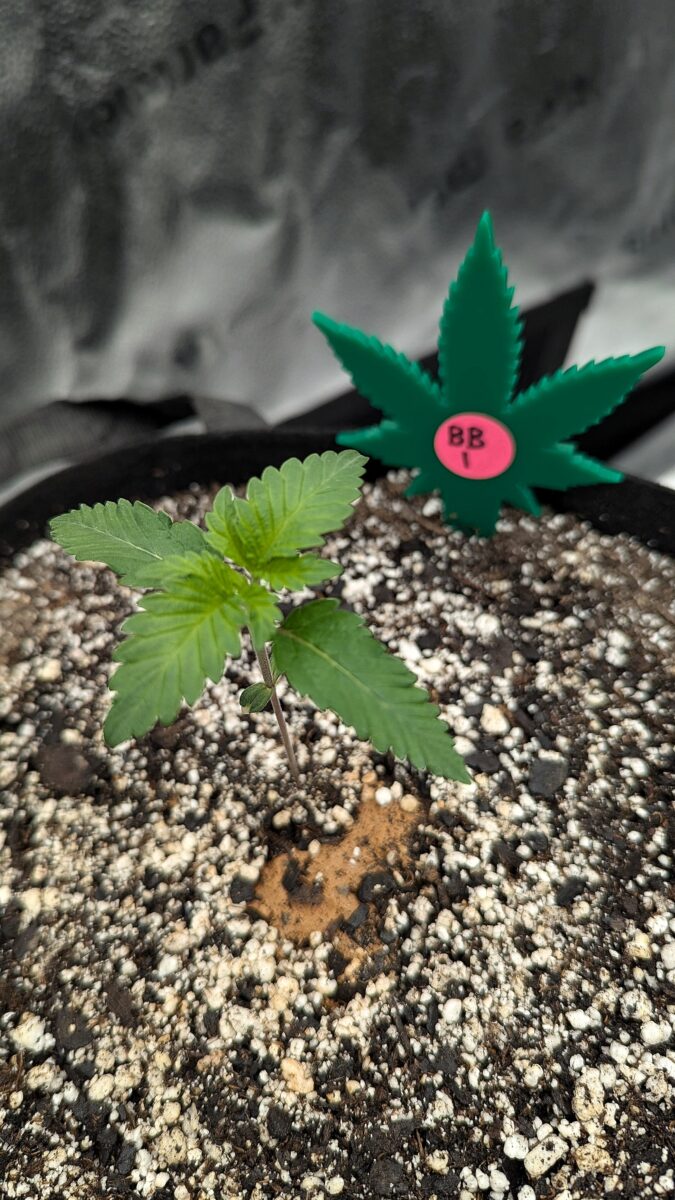
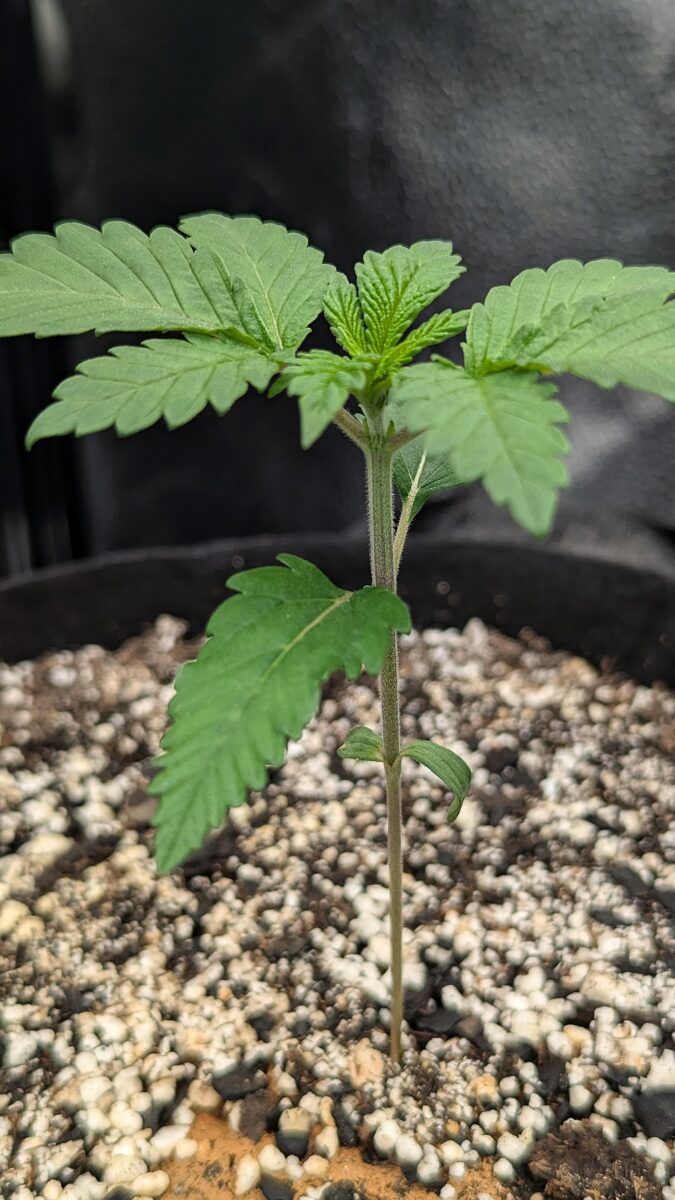
Introduced UV-A in Week #1 of veg; increasing duration by 5 minutes per day. At the start of the week I was giving 0.25 L of ph-adjusted water to each plant. By the end of Week #1, I was giving 0.75 L to each plant. Cal-Mag and Silica introduced towards the end of the first week of veg.
315-385 PPFD and 20-25 DLI.