Cannabis Curing Containers: Best Options for Optimal Results

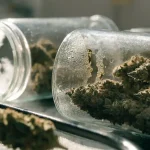
Cannabis curing containers are the airtight vessels you store dried buds in to cure them, slowly improving flavor, aroma and smoothness while preventing mold. The best choice for most growers is an airtight glass jar (such as a wide-mouth mason jar): glass is non-reactive, so it won’t taint terpenes, and a tight seal holds the right humidity. For large or commercial harvests, scale up to big airtight containers or food-grade curing buckets and stainless-steel options, while vacuum-sealed containers suit longer-term storage.
Whatever the size, the three things that matter are an airtight seal, a non-reactive material (glass or steel), and the right volume for your harvest. Add a humidity pack and a hygrometer and you’ve got a proper curing setup. Below: the container types compared, how to pick, and how to use them, separate from the question of when to stop burping.
Recommended Strains
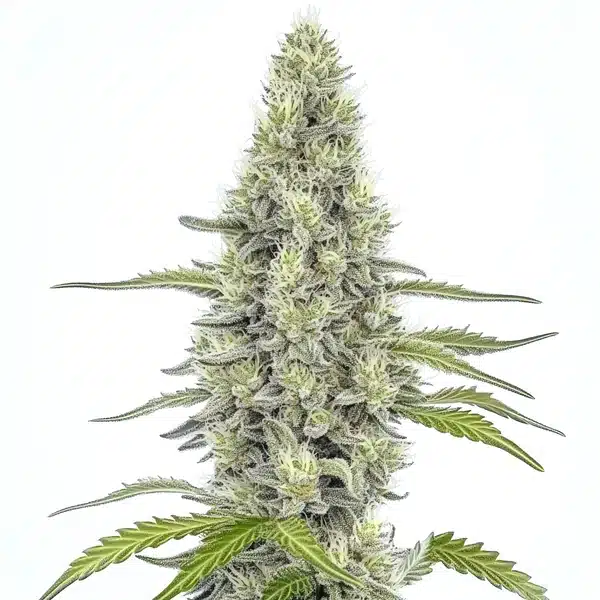
Mazar

|
THC | 20% (Medium) |

|
Type | Feminized |

|
Yield | Medium |

|
Phenotype | 90% Indica / 10% Sativa |

Mazar Regular
|
|
THC | 15% - 19% (Medium) |
|
|
Type | Regular |
|
|
Yield | High |
|
|
Phenotype | 55% Indica / 45% Sativa |
Curing Container Types Compared
Match the container to your harvest size and goal:
| Container | Best for | Notes |
|---|---|---|
| Glass mason jar | Home curing | Non-reactive, airtight; keep in the dark |
| Large airtight container / bucket | Big / commercial harvests | Food-grade, airtight; scales up volume |
| Stainless steel (e.g. CVault) | Light-proof curing | Non-reactive, opaque, durable |
| Vacuum-sealed | Long-term storage | Great for storing, less for active curing |
| Plastic | Not recommended | Porous, can taint flavor |
Promos & Deals
What Curing Containers Do
Curing is the post-harvest step where dried buds are stored in a controlled environment so their flavor, aroma and smoothness improve over time. Freshly dried cannabis still holds chlorophyll and other harsh compounds; during curing these break down while terpenes and cannabinoids stabilise, giving smoother smoke and richer flavor. The container is central to this because it controls the two things that make or break a cure: moisture and air.
A good curing container holds the buds at the right humidity (not so dry they get brittle, not so damp they mold) with minimal air exchange, letting moisture redistribute evenly from the inside of the bud outward. In other words, the container creates the stable micro-climate the cure happens in. Pick the wrong one, porous plastic, a leaky lid, too much headroom, and you get uneven moisture, lost aroma or mold. Pick the right one and it does half the work of curing for you.
What to Look For: Seal, Material, Size
Three features decide a good curing container. First, an airtight seal: this prevents the constant airflow that would over-dry buds and lets you control humidity, it’s the single most important feature. Second, a non-reactive material: glass and stainless steel don’t interact with the buds, preserving terpenes and cannabinoids, whereas plastic is porous, can absorb and taint smells, and may affect flavor over time, so it’s best avoided for curing. Third, the right size: match volume to your harvest, home growers do well with quart/half-gallon glass jars, while bigger or commercial harvests need large airtight containers or food-grade buckets that hold more while still sealing well.
Fill containers about three-quarters full to leave a little air for burping but not so much headroom that buds dry unevenly. Opaque containers (or storing clear jars in the dark) also protect cannabinoids from light. Get seal, material and size right and the rest of curing is easy.
Using Your Curing Containers
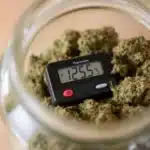
Once you’ve chosen a container, a few practices get the best cure. Start with properly dried buds (the stems should snap, not bend) before jarring, loading buds too wet invites mold. Fill jars about three-quarters full, then burp them (open briefly to exchange air and release moisture), often daily in the first week or two, tapering off as the cure stabilises; for exactly when to stop, see our guide on when to stop burping curing jars. Use a small humidity pack (around 58-62% RH) and a hygrometer in the container to hold and monitor the ideal range.
Store containers somewhere cool, dark and stable, warmth and light degrade cannabinoids and terpenes. Check periodically for any off, ammonia-like smell (a sign of too much moisture or mold) and act fast if you find it. Done this way, your containers maintain the perfect micro-climate and your buds keep improving for weeks. For the full method, see our guide to the best way to cure cannabis.
The Bottom Line on Curing Containers
The right curing container is one that’s airtight, non-reactive and correctly sized for your harvest. For most home growers that’s an airtight glass mason jar; for big or commercial harvests, scale up to large airtight containers, food-grade buckets or stainless-steel options; and for long-term storage, vacuum-sealed containers work well. Avoid porous plastic, which can taint flavor.
Pair your container with a 58-62% humidity pack and a hygrometer, fill it about three-quarters full, burp it as needed, and keep it cool and dark. Get the container right and it maintains the stable micro-climate that lets your buds cure into their best flavor, aroma and smoothness. Choosing the vessel is the easy, high-impact first step of a great cure.

FAQs About Cannabis Curing Containers
What’s the best cannabis curing container?
For most growers, an airtight glass mason jar: glass is non-reactive so it won’t taint terpenes, and a tight seal holds the right humidity. For big or commercial harvests, scale up to large airtight containers, food-grade buckets or stainless-steel options. Avoid porous plastic. Add a 58-62% humidity pack and a hygrometer for the ideal cure.
What are good large curing containers?
For big or commercial harvests, use large airtight food-grade containers or curing buckets, or stainless-steel vessels like CVault, anything that seals well, is non-reactive and holds volume. They maintain the same airtight, stable micro-climate as a jar, just at scale. Fill about three-quarters full and still burp and monitor humidity with a hygrometer.
Is plastic okay for curing?
It’s not recommended. Plastic is porous, so it can absorb and taint odors and may affect flavor over time, and many plastics don’t seal as reliably as glass or steel. For short handling it’s fine, but for actual curing choose non-reactive, airtight glass or stainless steel instead to protect your buds’ terpenes and flavor.
Are humidity packs necessary for curing?
They’re not mandatory but they help a lot, a 58-62% RH pack holds the ideal curing humidity steady, reducing the guesswork of burping and the risk of over-drying or mold. Pair it with a hygrometer so you can actually see the humidity. Experienced growers can cure by feel and burping alone, but packs make consistent results much easier.